











































































Two pieces can look identical in a listing photo and be separated by decades of service life. That gap is the whole game. A cast bronze sculpture carries physical evidence of how it was made, and once you know where to look, the metal tells you more than any product description will. Weight distribution, the way a seam was chased, the depth of a patina, the tool marks left behind on purpose or scrubbed away in a hurry: all of it is readable in about four minutes with good light and your hands.

At a Glance
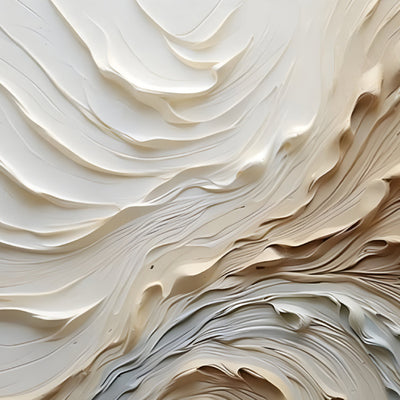
Lost-wax casting holds fine surface detail; sand casting leaves a grainier skin and softer edges.
Chased joins should be invisible under raking light. Visible ridges mean the finishing budget ran out.
Wall thickness drives weight, freight class and how a cast bronze sculpture survives a knock in transit.
Real patina is a chemical reaction into the metal. Sprayed color sits on top and chips like paint.
Scale reads differently at distance. A maquette that works at ten feet can go flat at thirty.
Lost-Wax or Sand Cast: The Surface Evidence
Run a fingertip across an unpolished area, ideally somewhere sheltered like the underside of an arm or the back of a base. Lost-wax work, which has been the standard for figurative bronze since antiquity, reproduces whatever was in the wax: thumbprints, comb marks, the fine tremor of a modeler's tool. Sand casting gives you a slightly matte, granular skin and marginally rounded detail edges, because the mold medium itself is coarse. Neither is automatically better. Sand casting suits broad geometric forms and thick plates; lost wax suits anatomy, drapery and anything with undercuts. The Getty's collection holds enough documented bronzes to show how little the core process has changed.
What matters commercially is honesty about the method. If a seller describes a piece as a cast bronze sculpture but cannot say how it was cast, that is usually a reseller who has never been to the foundry.
Where the Chasing Should Disappear
Any large cast bronze sculpture arrives from the mold in sections. A standing figure might come in six or eight pieces, welded and then chased back so the joins vanish. Hold the piece at a shallow angle to a window. Under that raking light, a rushed weld shows as a slight valley or a low ridge running through the form, often across a shoulder blade, a haunch or a fold of fabric where the eye is least likely to check. Good chasing rebuilds the modeling straight through the join so the anatomy never stutters.
Deep mane texture is where rushed chasing hides in photographs and shows up in person.
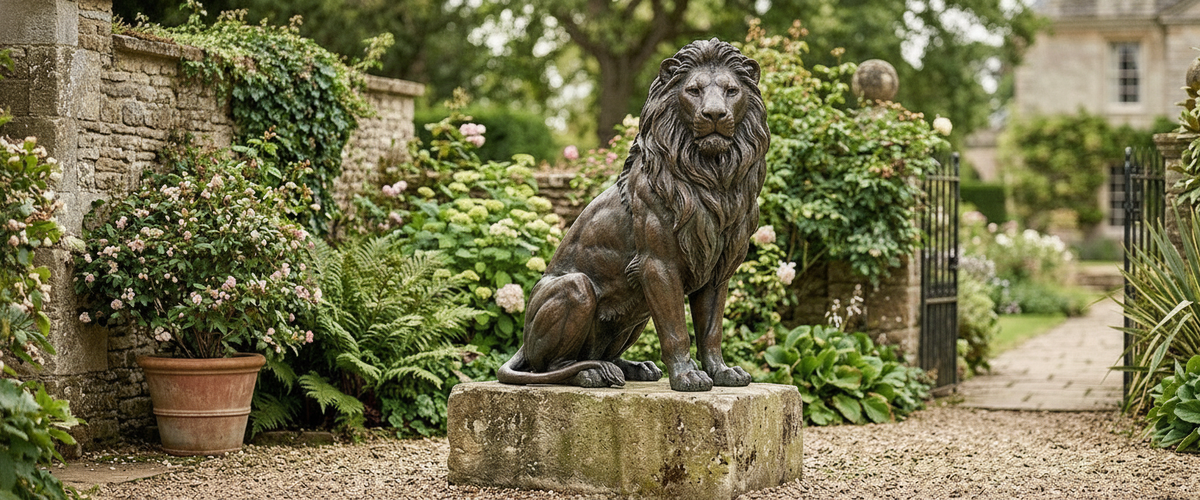
Start with the busiest passage of surface detail, not the smoothest. On a piece like the Seated Lion Patinated Cast Bronze Statue - 180cm, roughly 5 ft 11 in tall, the mane is exactly where a shortcut would hide: deep hair textures forgive sloppy work in photographs and expose it in person, while the flanks and paws are far easier to make look convincing.
File Marks, Tool Chatter and Machine Buffing
Hand-worked metal has direction. You will see short, overlapping file strokes and chasing punches that follow the muscle or the drape. Machine-buffed work has a uniform swirl that ignores the form entirely, and it tends to soften edges that should stay crisp. Neither disqualifies a piece, but two otherwise similar bronzes price differently and age differently on this evidence alone, because a flattened edge cannot hold the shadow the sculptor intended. Repeated small detail is the clearest test of all: the suckers on the 80cm Contemporary Octopus Bronze Sculpture - 80cm, about 2 ft 7 in, have to be chased individually, and that kind of surface simply cannot be buffed in afterwards.
Repeated small detail, such as individually chased suckers, is the fastest read on finishing quality.

Wall Thickness Is the Honest Number
Ask what the metal thickness is on any hollow cast bronze sculpture. Most figurative work is hollow, and the shell can be thin enough to dent under a forklift strap or thick enough to shrug it off. Thicker walls mean more bronze, higher weight, a different freight class and a pallet spec that changes the landed cost of delivering to a private garden or a hotel lobby. Thin walls save money at the quote stage and cost you later, usually at the first hard knock.
A quick field test: tap the piece with a knuckle in two or three places. A consistent, low tone suggests even wall thickness. A bright ping in one area next to a dull thud in another suggests uneven pour or heavy filler. We have opened crates where the difference was audible before it was visible.
Patina Is Chemistry, Not Paint
A true patina is grown by applying chemicals to heated bronze so the color forms in the metal surface. It shifts subtly across a form, sits deeper in recesses, and when scratched it reveals more patina, not raw yellow metal underneath. Sprayed finishes look uniform, pool at edges, and chip in flakes. Outdoors, wax and periodic care keep a cast bronze sculpture stable; the National Park Service publishes practical guidance on maintaining outdoor bronze that mirrors what we tell clients with coastal properties. Salt air speeds the whole process up, so a seafront piece needs waxing more often, not a different finish.
Round Bronze Wall Art and What a Maker's Label Tells You
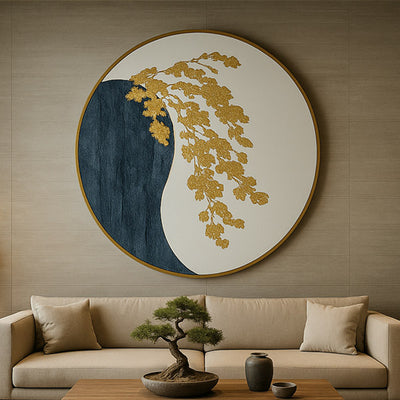
We get photos most weeks from buyers trying to identify a round wall plaque and asking whether it is solid metal. Some carry an Austin label on the reverse, and the search that follows, usually some version of cast bronze sculpture austin label round wall art, tends to end in the same discovery: many labeled decorative roundels are cast composite or bonded stone with a metallic finish rather than poured bronze. Weight settles the question fast. Genuine bronze sculpture wall art is heavy for its footprint and stays cold to the touch for several seconds after you pick it up. Composite warms almost immediately.
If you want bronze sculpture wall art at real scale, treat the mounting as part of the commission. Substrate, anchor spacing and a standoff gap for drainage all have to be specified before the pour, not improvised on site.

Why a Model Convinces at Ten Feet and Collapses at Thirty
Detail carries at conversation distance. Silhouette carries across a lawn. A closed, inward composition such as the Contemporary Seated Nude Female Figure Bronze Sculpture (Folded Pose) - 140cm, about 4 ft 7 in, rewards a courtyard you walk up to, but the same form placed at the end of a long drive will read as a lump, because the negative space between limbs closes up at distance. Open forms, raised arms and strong verticals survive the long view. Test it with a cardboard cutout at full height before you commit; ten minutes of taping saves an expensive placement mistake. It is worth browsing the wider range of bronze sculptures with viewing distance in mind rather than by subject alone.
What a Foundry Needs Before a Bespoke Pour
Bespoke work moves fastest when the brief arrives complete. Before we book a pour on a commissioned cast bronze sculpture, we want:
Overall height, and whether that includes the plinth.
Reference images or a sketch, plus one image of the actual site.
Sight lines: how far away is the primary viewpoint, and is it approached or driven past?
Patina direction (classic brown, verdigris, dark green, contrasting highlights).
Fixing conditions: soil, concrete pad, roof terrace load limits, wall substrate.
Access for delivery, including gate widths and whether a crane or hiab is possible.
Any deadline tied to an opening, a season or a build program.
Budget follows material volume, scale, complexity, engineering, finishing and installation, so a tailored quote is the only sensible answer for a one-off cast bronze sculpture. Send the seven items above and the numbers stop being guesswork. For garden schemes, the bronze garden statues collection is a good place to calibrate proportion before commissioning something bespoke, and Giant Sculptures can scale most forms up or down for the site.
For wider placement ideas, A Bronze Pegasus Sculpture Only Works if the Pose Matches the Site is useful companion reading before finalising the setting and sightlines.