





























































Most fiberglass animal sculptures that fail do it in the same three places: an ankle that cracks when a visitor leans in for a photo, a rust stain weeping from a hoof, and paint that turns chalky after two summers. None of those faults show up in a catalog photo. Buying a fiberglass animal sculpture well means knowing where to look before the workshop lays a single sheet of glass. It also means knowing what to check the morning the crate opens.

Quick answer
Judge the workshop on its layup, armature and finishing records, not on the country it sits in.
Get laminate thickness at load points (legs, necks, tails) and the resin type in writing.
Insist on a galvanized or stainless steel armature for anything going outdoors.
Match the finish to the climate. High-sun sites need UV-stable automotive clear coats.
Approve the clay or foam master from several angles. After that, changes cost real money.
Inspect seams, fixings and the touch-up kit on delivery day, before you sign anything off.
Does a China Fiberglass Animal Sculptures Factory Mean Lower Quality?
No. Many of the world's fiberglass animal sculptures factories sit in southern China, and the best of them turn out work as clean as anything made in Europe or the US. So do the worst. Region tells you almost nothing. What separates a good fiberglass animal sculptures manufacturer from a poor one is dull paperwork: written laminate specs, photographs of the armature before the shell is closed, and a named sculptor who modeled the clay rather than a scan pulled off the internet.
At Giant Sculptures we ask every workshop the same first question: show us a cut section from a finished leg. A factory that can produce one, with the layer count visible, usually knows what it is doing. A factory that changes the subject usually doesn't.
Layup Thickness and Resin Grade Decide What Survives
A fiberglass animal sculpture is a shell. Its strength comes from how many layers of glass mat went into the mold and which resin bound them. On a large piece, hand layup should be thicker at load points: legs, necks, tails and anywhere a hand will grip. A thin, even shell looks identical on day one and splits the first time someone sits on a lion's back. The Composites Lab, run by the American Composites Manufacturers Association, is a clear primer on how laminate build-up drives stiffness.
Resin grade matters as much as thickness. General-purpose orthophthalic resin is common and easy to run; isophthalic and vinyl ester resins resist water uptake and blistering far better outdoors. Ask which one your piece uses. The same questions apply to any fiberglass piece people will sit on or lean against, not just animals: a long seating form such as the Azure Blue Rippled Water Fiberglass Wave Bench - 444cm, at roughly 14.5 feet (444 cm), deserves the same written laminate and resin spec as a lion meant for children to climb.

The Steel Armature Inside an Elephant or Giraffe
Almost anything taller than a large dog carries a steel frame inside. A giraffe's neck, an elephant's legs and the base plate that bolts to your plinth all depend on it. Rust starts first where steel exits the fiberglass, usually at hooves and feet, because that is where water pools and where the shell gets drilled for fixings. A plain mild steel frame can bleed an orange streak down a hoof within a single wet season, and no amount of repainting fixes it for long. For any outdoor animal, specify hot-dip galvanized or stainless steel, with sealed exit points.
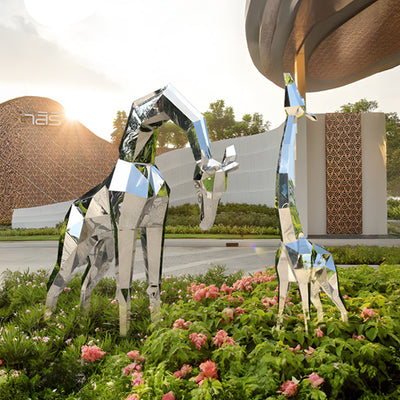
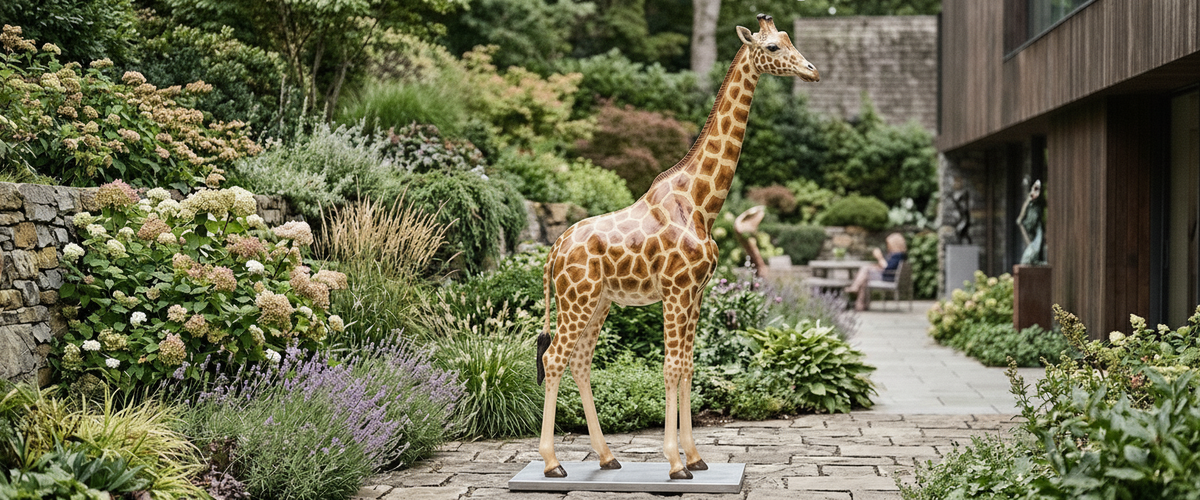
Tall, slim forms are the hardest test. The narrower the shell around the spine, the more the armature, not the fiberglass, is doing the work, so ask how the frame runs through a long neck and into the base plate before you approve anything.
Gelcoat, Automotive Paint or Hand Painting: How Each Fades
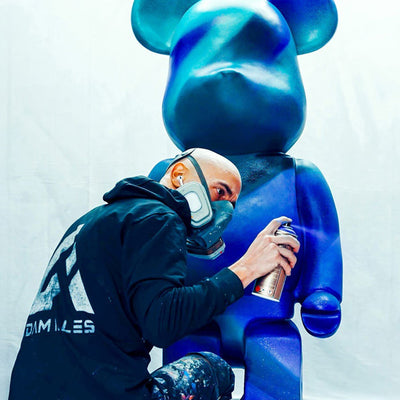
Three finishes dominate. Pigmented gelcoat is molded into the surface, chips less and fades evenly, but limits you to flat color. Automotive two-pack paint under a UV-stable clear coat gives crisp markings and the longest color life in hard sun. Hand painting delivers the most lifelike fur, spots and eyes, and fades fastest unless it is properly clear-coated.
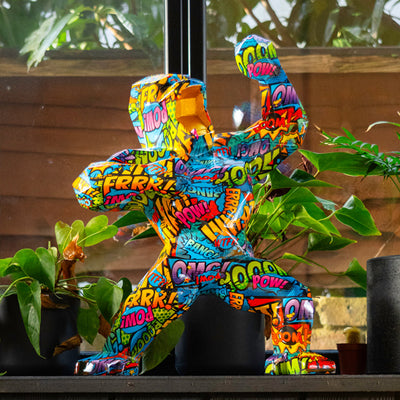
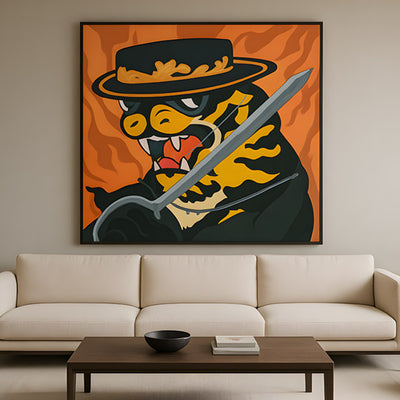
Climate changes the math. A piece in an English garden sees modest UV for most of the year; the same piece in Phoenix or Palm Springs sits under readings the EPA's UV Index scale classes as very high to extreme through summer. Reds and yellows go first. On a boldly patterned piece such as the Nordale Black & Cream Spotted Animal Sculpture - 180cm, roughly 6 feet (180 cm) tall, the contrast between markings is the whole appeal, so automotive paint under a clear coat is the right call for any Sun Belt garden.

Clay Approval Is Your Last Cheap Exit
On a bespoke commission, the full-size clay or carved foam master is where you still hold control. Once molds are pulled, changing an ear angle or a stance means remaking them. Ask for photographs from at least six angles, with a person standing beside the piece for scale, and study the animal from the height your guests will actually see it. An elephant's trunk curl can read beautifully at eye level and look limp from a terrace above. Ten minutes on a call at this stage can save a full remold.
What to Inspect the Day Your Fiberglass Animal Sculpture Arrives
Crate condition: photograph crushed corners or water marks before opening, for any freight claim.
Seams: run a hand along mold joins. A hairline is cosmetic; a step or gap is structural.
Load points: check ankles, neck joints and tail roots for pale stress whitening.
Fixings: confirm base plates, bolts and templates match your plinth drawings.
Touch-up kit: it should hold matched paint, clear coat and a color reference code. If it is missing, ask that day.
Paperwork: file the finish spec and resin type for future repairs.

Choosing a Fiberglass Animal Sculptures Supplier
A good fiberglass animal sculptures supplier answers specific questions without hedging. Use these criteria when comparing quotes:
Written laminate thickness at load points and a named resin type.
Armature material confirmed, with photos before closure.
A finish system matched to your climate, including the clear coat spec.
A clay or master approval stage built into the schedule.
A described crating method and an included touch-up kit.
Budget depends on scale, complexity, engineering, finishing and installation, so a tailored quote tells you more than any list price. If the animal must last generations in a public plaza or on a coastal estate in the Hamptons, compare fiberglass against our bronze animal sculptures, which ask more upfront and repay it with near-indefinite outdoor life. For lighter, brightly colored pieces and bespoke shapes, explore our fiberglass sculptures or the wider animal sculptures collection, then talk to Giant Sculptures about a commission engineered for your site.
For wider placement ideas, Bronze Animal Sculpture: Which Creatures Bronze Flatters and Which It Fights is useful companion reading before finalising the setting and sightlines.