







































































































A carved oak hare on a damp lawn can look perfect for three summers and then quietly turn to sponge from the feet up. That is the trap with garden wood sculptures for sale: the photos show the face of the carving, but a piece usually lives or dies by its species, its base and where you put it. Get those three right and timber weathers into something richer than the day it arrived. Get them wrong and you are buying firewood with a nice profile.
Looking for the full range in this category? Browse our Wood Sculptures collection for every available finish, size, and configuration.

At a Glance
Species matters most: durable heartwood of oak, sweet chestnut or cedar outlasts larch and any sapwood.
Keep it off the soil: a raised plinth or steel feet can add years to a carving's life.
Not every crack is a problem: fine surface checks are normal; open splits that hold water are not.
Silver beats sticky: letting timber gray naturally often outlasts a half-maintained oil finish.
Sun and airflow help: shade, leaf drop and sprinklers age a carving fastest.
Oak, Sweet Chestnut, Larch and Cedar: Realistic Outdoor Lifespans
Treat any lifespan figure as a working guide rather than a promise, because climate and placement change everything. Above ground and well drained, white or European oak heartwood and sweet chestnut can comfortably last fifteen to twenty-five years and often longer. Western red cedar resists decay almost as well but is soft, so fine detail dents and blunts over time. Larch is the honest middle option: good looking and resinous, but expect roughly ten to fifteen years before structural softening shows. The USDA Forest Products Laboratory Wood Handbook is clear on the detail most sellers skip: natural decay resistance lives in the heartwood. Sapwood of any of these species rots quickly, so a carving with a pale outer band is already starting at a disadvantage, however good the price at a garden wood sculptures sale.
Region shifts the numbers too. A cedar figure in dry Santa Barbara behaves very differently from the same piece in a humid Georgia garden or a wet Hampshire one.

Ground Contact Is the Fastest Way to Ruin a Carving
Soil is permanently wet, full of fungi and pressed against end grain, which drinks water like a bundle of straws. Put even durable oak straight onto a lawn and you can lose a large share of its life. The fix is simple: raise the piece 4 to 6 inches (10 to 15 cm) on a stone or concrete plinth, or mount it on stainless steel feet or a pin so air moves under the base. The failure pattern is predictable. A cedar heron set directly into a planted bed will typically soften at the legs while the body above is still sound, because the feet sit in the wettest few inches of the garden. Pinned onto a granite block, the same bird stays dry underneath and lasts far longer.
Checks, Splits and Cracks: Character or Warning?
Wood moves as it dries and rewets, so fine hairline checks along the grain are normal and usually close a little in damp weather. They are character. Worry about cracks that are wider than a coin edge, run across the grain, open from the top surface downward, or show dark staining inside. Those let rainwater pool and reach the core, where rot starts unseen. Top-facing splits on heads, backs and shoulders are the riskiest, since they collect water every time it rains. A carver can fill or cap them with a flexible exterior filler, but a piece arriving with them already is a reason to ask questions.
Oil It or Let It Silver?
Oiling keeps the warm honey color for a few seasons, but it only works if you keep it up, usually once or twice a year. A neglected oil finish goes patchy, traps dirt and can feed surface mold. Letting timber weather to a soft silver-gray is the low-maintenance alternative, and on dense species it often gives a longer life because you stop sealing moisture in behind a failing film. Our studio view is blunt: choose oil only if you genuinely enjoy the ritual. Otherwise, brush the piece down each spring, check the base and let it silver.

Placement: Why a Shady Corner Ages Wood Faster Than a Sunny Lawn
For wider placement ideas, Large Stone Garden Sculptures Weigh More Than You Think is useful companion reading before finalizing the setting and sightlines.
Many garden wood sculptures for sale are photographed in leafy, romantic corners, and that is exactly where they decay fastest. Tree canopies drip long after rain stops, drop leaves that hold moisture against the base and block the sun that dries timber out. Irrigation is worse; a sprinkler that clips a carving daily in a Texas or Napa summer keeps it permanently wet. An open lawn, a gravel court or a terrace edge with afternoon sun and moving air will add years. If you love the woodland look, set the piece on a tall plinth and redirect the irrigation heads.
How to Read Listings of Garden Wood Sculptures for Sale
Whether you are browsing a seasonal garden wood sculptures sale or a specialist gallery, the photo tells you more than the description if you know where to look. Use this checklist before you buy:
Color and tone: a consistent, darker tone through the piece suggests heartwood; a pale band at the edges suggests sapwood.
The base: look for a plinth, steel feet or fixing pins. No base shown usually means none supplied.
Underside shots: ask for one. Dark staining or softness at the feet is early decay.
Crack direction: fine grain-line checks are fine; cross-grain or top-facing splits are not.
Gray patches or black spots: mold or prior weathering, meaning the piece may not be as new as listed. This is common with clearance stock at an end-of-season garden wood sculptures sale.
Species named: if the seller cannot say what timber it is, assume the least durable option.

When Wood Is the Wrong Material
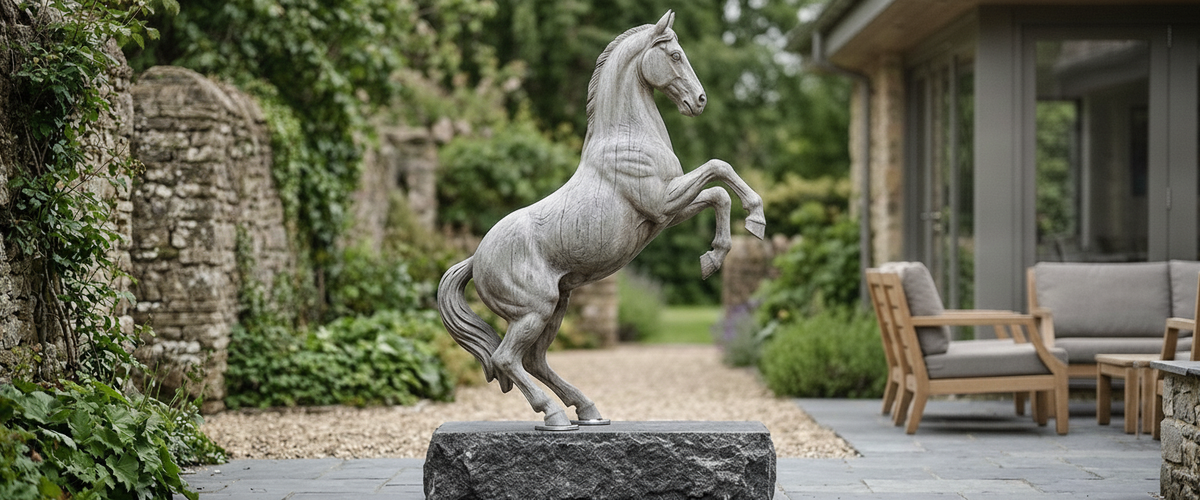
Scale and pose change the calculation. A rearing figure such as the Rising Stallion Horse Sculpture, at 160cm (roughly 63 inches), carries its whole weight over two slender hind legs. In timber, that is exactly where use, end grain and standing water meet, which is why a pose like this belongs in steel. If you are offered a rearing horse carved in wood, ask how it is pinned internally and how the base is fixed; vague answers are a reason to walk away. For clients who want a piece to outlive the planting around it, we usually steer large commissions toward bronze, Corten or stainless steel sculptures, which ignore sprinklers and shade entirely.
Wood still has a place: warm, tactile and honest about time. If that is the look you want, talk to Giant Sculptures about a bespoke piece specified for your climate, with the right species, base and fixings agreed up front. Budget depends on material, scale, complexity, engineering, installation and finishing, so request a tailored quote rather than guessing from listings.