














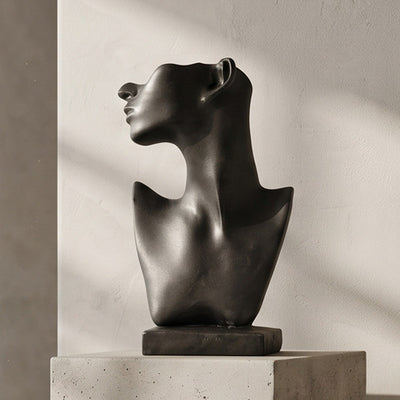

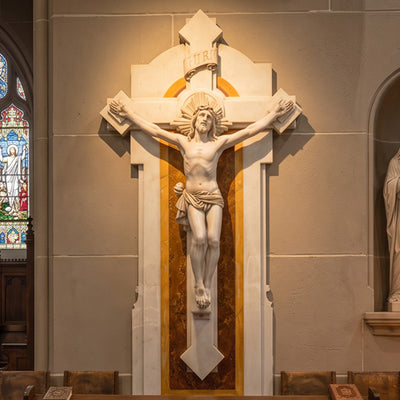


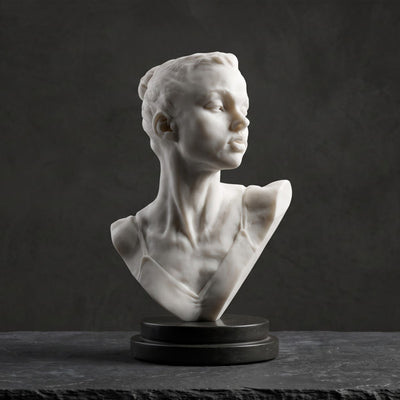





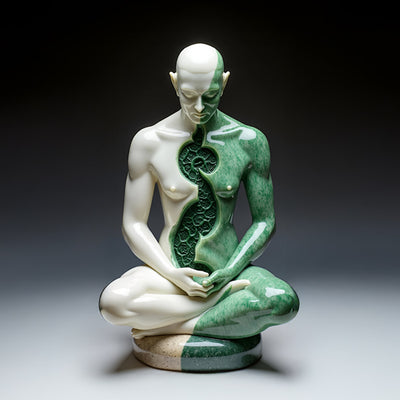



































































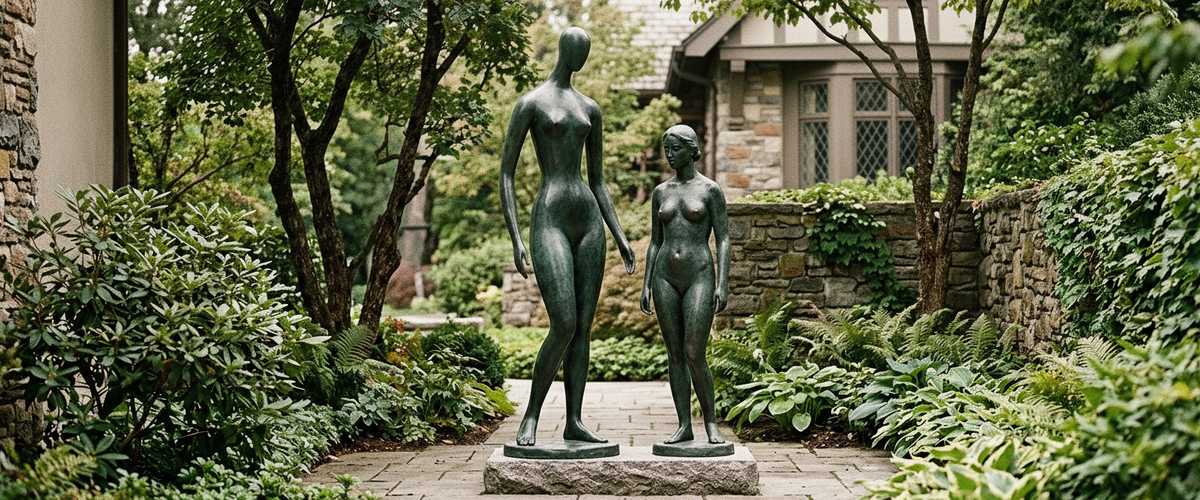

Stand a life-size bronze figure at the end of a hallway and people slow down before they reach it. Put an abstract mass in the same spot and most walk past, then turn back for a second look. That behavioral difference is the honest question behind figurative vs abstract sculpture, and it matters far more than whichever style you think you prefer on a mood board.

Key Takeaways
Figurative work reads as a presence. It has a gaze, a posture, an implied intention, and people respond to it socially.
Abstract work reads as mass and line. It anchors a space without competing for attention.
Busy rooms usually want abstraction. Patterned textiles, art walls and strong architecture fight a figure.
Scale flips the rules. Past roughly 5 feet (1.5 m), a figure stops being an object and starts behaving like a guest.
Material rewrites the argument. Marble warms a figure; mirrored stainless steel abstracts almost anything.
What Is Figurative Sculpture, and What Changes When It Goes Abstract
Before you can settle figurative vs abstract sculpture as a brief, it helps to be precise about what each term is actually doing. Figurative sculpture depicts recognizable bodies: human or animal, whole or fragment, idealized or observed. A figure sculpture can be a classical nude in carved marble, a Japanese wood sculpture figure of a standing Buddhist deity, or a contemporary bronze torso with a rough, unfinished surface. The common thread is recognition. Your brain identifies a body before it registers anything else.
Abstract sculpture removes that shortcut. You read volume, edge, rhythm and weight instead of anatomy. Tate defines abstraction as art that does not attempt to represent external reality but uses shape, form and color to work on their own terms, which is exactly why an abstract piece can sit in a room full of competing visual information and still hold. Tate's definition of abstract art is a useful anchor when a client insists that abstraction means "unfinished." It does not. It means the subject is the form itself.
Same room, same light, two completely different ways of holding attention.
Gaze and Gesture Quietly Move People Around a Space
This is the part buyers underestimate, and it is the first real difference in any figurative vs abstract sculpture comparison. A figure has a direction. Where it looks, visitors look; where it reaches, visitors drift. We set sightlines at the studio before a mold is ever finished, because a head turned fifteen degrees the wrong way will send everyone's attention into a blank wall. One client in Napa had a seated bronze figure facing the vineyard view instead of the terrace, and guests kept standing behind it, awkwardly, sharing its viewpoint rather than meeting it.
Abstract mass does not do this. It occupies and stabilizes. Where the site has no obvious front, a courtyard, a roundabout, a hotel forecourt approached from three directions at once, a form such as the Monumental Modern Abstract Biomorphic Bronze Sculpture - 340cm (about 11 feet 2 inches) earns its keep by refusing to have a front row. You can circle it, and every angle is a legitimate composition. That freedom is worth real money wherever approach directions are unpredictable.

The Busy Interior Problem
In heavily dressed rooms, figurative vs abstract sculpture stops being a taste question and becomes a legibility one. Rooms with heavy pattern, dense gallery walls or aggressive architecture rarely flatter figurative work. The figure has to win an argument against everything else claiming to be a subject, and it usually loses. Abstraction calms that situation because it reads as architecture rather than narrative. A folded bronze form near a staircase in a Manhattan duplex behaves like a structural element; a standing figure in the same spot starts a conversation the room cannot finish.
Flip it for minimal interiors. A pale, quiet space with one long wall of glass is where a figure earns its keep, because it supplies the human note the architecture deliberately withheld. Our figurative sculptures tend to go into exactly those rooms: restrained Texas ranch interiors, Aspen entryways with a lot of stone and very little decoration.
Scale Thresholds: When a Figure Stops Being Art and Becomes a Guest
Scale quietly rewrites the figurative vs abstract sculpture decision. Below about 3 feet (90 cm), a figure is an object on a plinth. Around 5 to 6 feet (1.5 to 1.8 m), it reads at eye level and people instinctively give it personal space. Beyond 8 feet (2.4 m), it becomes civic and the psychology shifts again; nobody feels crowded by something clearly monumental. The uncomfortable zone is the near-life-size figure placed in a tight room. It feels like someone standing too close.
Abstract forms have a gentler scale curve. At 100 cm (3 feet 3 inches), a piece like the Modern Abstract Female Figure Bronze Sculpture - 100cm sits comfortably on a console or low plinth without dominating the room, while the same visual language enlarged to monumental height still behaves. That tolerance makes abstraction the safer choice when you are buying before the space is finished, which happens on new-build projects constantly.
Past eye level, the psychology changes for both camps.

Marble, Bronze and Steel Change the Argument on Both Sides
Material often settles the figurative vs abstract sculpture question before form does. A figurative marble sculpture carries centuries of association: skin tone, translucency, the way light sinks a millimeter into the stone before bouncing back. Marble makes a figure gentler and more classical almost regardless of the pose. The Getty's conservation guidance on outdoor stone notes how surface weathering and soiling change the read of carved detail over time, which is worth knowing before you put white marble under trees in a humid climate.
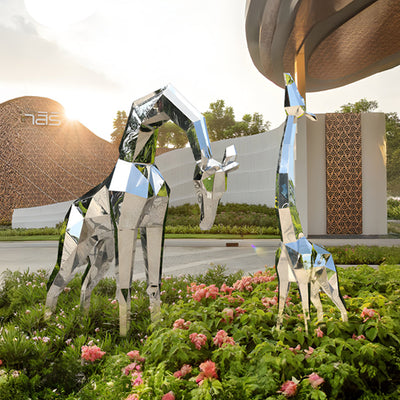
Bronze is the workhorse for both camps. Patina lets you push a figurative piece toward antiquity or modernity, and it handles fine anatomical detail and bold abstract volume equally well. Stainless steel and Corten sit more naturally with abstraction: polished steel dissolves form into reflection, and Corten's weathered orange skin emphasizes plane and edge over surface nuance. Across the bronze abstract sculptures range you can see how patina does the job that anatomy does in figurative work.
Semi-Abstract Figures and the Hybrid Trap
The most interesting pieces often blur the figurative vs abstract sculpture divide on purpose. An abstract figure sculpture keeps enough human signal (a shoulder line, a tilted head, a suggestion of stride) while dropping the detail. Where a brief asks for a human reading without literal anatomy, the Monumental Modern Abstract Piano and Figure Bronze Sculpture - 220cm (roughly 7 feet 3 inches) sits on the right side of that line: the subject stays legible from across a lobby, the treatment never turns literal.
Hybrids fail when they land in the middle without committing. If the figure is too vague to read as a person but too anatomical to read as pure form, the piece feels indecisive at close range. The test we use in the studio is simple: view it from 30 feet (9 m). If the human signal survives that distance, the abstraction is deliberate. If it only appears up close, the piece will read as an unfinished figure.

A Short Decision Test for Figurative vs Abstract Sculpture
Count the competing subjects. Three or more pattern sources, artworks or strong materials in view? Lean abstract.
Map the approach. Single fixed sightline favors a figure. Multiple approach paths favor abstraction.
Check the standing distance. If viewers will stand within 6 feet (1.8 m), avoid near-life-size figures unless the pose is seated or reclining.
Decide who the piece is for. Private contemplation suits figurative. Shared, high-traffic commercial space usually suits abstract.
Test the material against the climate. Coastal salt, freeze-thaw and hard sun all favor bronze, stainless or Corten over polished marble outdoors.
Look at it from the neighbor's side. Garden figures have a back, and boundary views matter more than people expect.
Commissioning Either Way
Most of the figurative vs abstract sculpture decisions we work through at Giant Sculptures end up being resolved by site conditions rather than taste. Bring photographs from the actual viewing positions, plus ceiling heights, plinth intentions and any wind or footfall considerations, and the answer usually presents itself. From there, budget depends on material, scale, complexity, engineering, installation and finishing, so the sensible next step is a tailored quote rather than a guess.
If you are still undecided, look at the abstract sculptures collection alongside the figurative range and note which pieces you imagine living with for twenty years rather than which photograph better. Long ownership is the real test, and it tends to reward the piece that suits the room over the piece that impressed you first.
For wider placement ideas, Abstract Gold Face Sculpture: How to Read the Finish Before You Buy is useful companion reading before finalising the setting and sightlines.