






































































































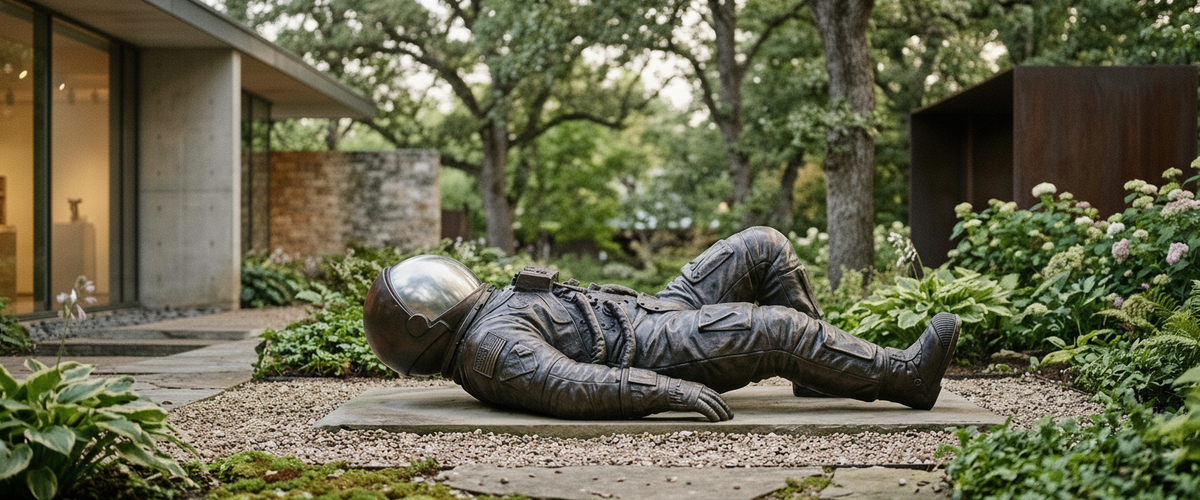

Search for a fallen astronaut sculpture for sale and you will find two very different objects wearing the same suit. One is a sprawled spaceman face-down in a lawn, played for laughs. The other is a quiet, horizontal figure that asks people to lower their voices. Both are legitimate. The mistake is buying one when your space needs the other, and that decision comes down to pose, viewing height, finish and scale long before it comes down to price.

Key Takeaways
Decide the tone first. Comic crash site or solemn tribute; the same motif can do either.
Lying figures are viewed from above. Floor space and sightlines matter more than height.
Finish drives mood. Mirror visors and gloss read playful; muted patinas read serious.
Scale changes the joke. Tabletop is a wink, full-size is a statement.
Bespoke details personalize it. Custom patches and poses work best when restrained.
Why a Tiny 1971 Lunar Tribute Still Carries Weight
The motif has a real origin. During the Apollo 15 mission in 1971, the crew left a small aluminum figure by Belgian artist Paul Van Hoeydonck, roughly 3.3 inches (8.5 cm) tall, on the lunar surface beside a plaque naming astronauts and cosmonauts who had died. It is often described as the only artwork on the Moon, and it was made as a memorial, not a souvenir.
That matters for anyone weighing a fallen astronaut sculpture for sale. The original was never meant to be commercialized, and plans to sell replicas caused controversy at the time. Giant Sculptures does not reproduce it. What we make are original fallen-figure designs that borrow the idea of a downed explorer, and knowing the history helps you choose a piece that either honors that weight or deliberately plays against it.
Lawn Crash Site or Hotel Lobby: Decide the Tone First
For wider placement ideas, How to Ship a Large Sculpture Without Losing It at the Garden Gate is useful companion reading before finalising the setting and sightlines.
A spaceman planted helmet-first in a Malibu lawn, legs in the air, is a garden gag. It works at a beach house, a rooftop bar in Austin or a private pool terrace in Palm Springs, where guests expect a bit of theater. Nobody will mistake it for a monument, and that is the point.
Put a fallen astronaut in a hotel lobby, a corporate atrium or a museum-adjacent courtyard and the reading flips. People slow down. A figure lying calmly on its back, arms loose, visor up toward the ceiling, suggests rest or loss rather than slapstick. If your venue hosts weddings, client meetings or anything formal, lean that way.
A Lying Figure Is Read From Above
Standing sculpture is judged at eye level. A horizontal figure is judged looking down, which changes everything about placement. A piece that looks balanced at floor level can feel cramped or lost once you see it from a staircase or balcony, and that elevated view is how most visitors will actually meet it.
Plan for the overhead view before you shortlist any fallen astronaut sculpture for sale. Give the figure clear floor around it so it reads as intentional, not as something dropped. A mezzanine, grand staircase or second-floor balcony gives a lobby piece real drama. In a garden, a low plinth of 6 to 12 inches (15 to 30 cm) lifts the figure out of the grass, keeps mower blades clear and makes it look placed rather than abandoned. Set directly in turf, it leans comic every time.
A low plinth makes a garden figure look placed, not dropped.

Chrome Visor, White Suit: How Finish Sets the Mood
Finish does more tonal work than most buyers expect. A mirror-polished visor and glossy white suit push wit and pop-art energy; the visor reflects passersby, which turns the figure into a gentle joke on the viewer. Gold and bright colored finishes go further, and the palette across the astronaut sculptures collection makes clear how quickly color tips a spaceman toward celebration.
Gloss and mirror finishes push a fallen figure toward wit.
Muted finishes push solemnity. A bronze figure with a dark brown patina, a brushed stainless steel visor rather than mirror, or a matte stone-gray suit will read as a memorial piece. Silver sits in the middle, cool and composed without losing its sense of fun. If that middle register is what you are after, a single-tone metallic figure such as the Lunar Silver Astronaut Beats On Moon Sculpture, about 4 ft 7 in (140 cm), is closer to the right palette than either bright gold or dark bronze, even though its pose stays upright and lighthearted. For outdoor commissions, bronze and engineered stainless steel age well; the Smithsonian Museum Conservation Institute is a useful starting point on how outdoor metals weather.
Tabletop, Floor-Level or Full-Size: Scale Changes the Message
Small pieces wink. A tabletop or shelf-height fallen astronaut on a desk or bar back is a conversation starter and rarely risks seeming heavy-handed. Step up slightly, to a low pedestal or the corner of a lounge, and a white-suited figure around the size of the White Space Astronaut Explorer Serve Sculpture, about 2 ft 9 in (85 cm), holds a room without dominating it.
Floor-level medium pieces sit between gag and statement, and the medium astronaut sculptures range is a good guide to proportion. Full-size or larger is where the figure stops being decor. A lying spaceman of 6 to 7 feet (1.8 to 2.1 m) reads as a body, and that carries emotional weight whether you intend it or not. Before committing to a horizontal figure of that length, it helps to picture something of comparable height; an upright piece like the Galactic Blue Astronaut Beats On Moon Sculpture, around 6 ft 11 in (210 cm), gives a fair sense of how much presence that length claims once it is laid flat. Browse large astronaut sculptures before committing to a footprint.

Custom Patches and Poses Without the Novelty
If no fallen astronaut sculpture for sale quite fits your venue, bespoke details are where a commission earns its keep. A mission patch with a family crest, a company founding date or a venue's initials personalizes the figure quietly. Keep text short and patch scale realistic; oversized logos turn a sculpture into signage.
Pose is the bigger lever. A slight turn of the helmet, one hand resting on the chest or a knee raised can shift a piece from crash to repose. We usually sketch two or three pose options with clients and mock them up at scale before casting, because a few degrees of rotation can change the whole mood.
Fallen Astronaut Sculpture for Sale: A Buying Checklist
Tone: comic, celebratory or memorial? Agree this with everyone who signs off.
Viewpoint: where will most people stand, and will they look down on it?
Footprint: measure clear floor or lawn, not just the figure's length.
Setting: indoor or outdoor; outdoor favors bronze, stainless steel or stone.
Finish: gloss and mirror for wit, patina and brushed for gravitas.
Base: plinth height, anchoring and drainage for garden sites.
Personalization: patch artwork and pose options, approved before fabrication.
Budget: depends on material, scale, engineering, finishing and installation; request a tailored quote.
A ready-made fallen astronaut sculpture for sale suits most tabletop and medium placements. If you want a horizontal full-size figure, a specific finish or a custom patch, a bespoke commission from Giant Sculptures gives you control over every variable that decides whether your fallen astronaut gets a laugh or a moment of silence.