








































A life size bronze statue almost never looks life size once it is installed. Put a 6-foot figure on a 3-foot plinth at the far end of a lawn and it reads like a garden ornament. Stand it on the floor of a double-height atrium and it can look oddly short. Most complaints we hear about life size bronze statues bought elsewhere come down to scale rather than casting quality, and nearly every one could have been caught before the deposit.

Quick Answer
Know the scale band. Life size, heroic and monumental figures are engineered and quoted differently.
Plinth height changes perceived size. Raise a figure above eye level and it loses visual height.
Distance shrinks everything. Garden and atrium placements often need a larger figure than the space suggests.
Ask for the weight. It tells you more about wall thickness and real dimensions than any photo.
Judge patina at full height. A finish that works on a tabletop piece can look flat across a whole body.
Life Size, Heroic, Monumental: The Three Scale Bands Behind Every Foundry Quote
Foundries sort figures into rough bands, and knowing which one you are asking about saves weeks of back-and-forth. Life size means close to 1:1 with a real adult. Heroic scale usually runs around one and a quarter times life, which is why so many civic statues feel imposing without looking cartoonish. Monumental starts at roughly double life size and quickly becomes a structural project, with internal armatures, engineered footings and a crane on install day.
The jump between bands is not linear. Scaling a figure up by a quarter grows it in every direction at once, so surface area rises by roughly half, and mold work, metal, chasing and patina all grow with it. On a long formal garden axis, where a true 1:1 figure would simply disappear, a standing figure pushed past heroic toward monumental, such as the Life-Size Classical Standing David Bronze Statue - 300cm, is closer to the height the space actually needs: about 10 feet (3 m) tall.
Why Life Size Bronze Statues Read Smaller Than They Are
The Plinth Problem
A true 1:1 figure on a plinth above eye level reads noticeably shorter than it is. You are looking up at the underside of the chin, and foreshortening compresses the torso. Classical sculptors understood this and sometimes lengthened the upper body or enlarged the head slightly for elevated placements. If your life size bronze statue is going on a tall base, raise it with the maker early, or consider stepping up to heroic scale.
Viewing Distance
Distance shrinks a figure faster than buyers expect. A client in Napa once sent us photos of a 200cm dancer (about 6 ft 7 in) placed at the far end of a long lawn, framed by the terrace doors. From the house it looked like a figurine. We suggested moving it two-thirds of the way toward the terrace and dropping the plinth height, and the same bronze suddenly had presence. Before you commit, stake a cardboard silhouette at the proposed spot and look at it from where you will actually stand: the kitchen window, the pool deck, the atrium mezzanine.
Pose matters as much as height. Where the figure will be seen from above, on the edge of a pool or along a low wall, a reclining pose such as the Life-Size Classical Reclining Mermaid Bronze Sculpture - 250cm works better than a standing one, because it spreads its size horizontally. Set the same figure behind tall planting and it will vanish.

Buying Life Size Bronze Statues for Sale Online: Questions to Ask
Many listings for life size bronze statues for sale are shot against a blank backdrop with nobody in frame. Without a human for scale, a 4-foot figure and a 6-foot figure look identical. Before you pay anything, ask the seller for:
Overall height, and whether that includes the base
A photo of the actual casting, or one from the same edition, with a person standing beside it
Net weight of the bronze alone, separate from crate and plinth
The alloy and casting method
How the figure fixes to its plinth: threaded rods, a baseplate or a cast-in anchor
Patina photos taken in daylight, not under studio lights
A seller who hesitates on any of these is telling you something. At Giant Sculptures we send scale photos and weights as standard, because a bronze this size should never be bought from a thumbnail.
What the Weight Figure Really Tells You
Weight is the most honest number on a spec sheet. Bronze is dense, so a hollow-cast figure's weight is driven mostly by wall thickness and true surface area. If two listings claim similar heights and one weighs far less, the walls are thin, the figure is smaller than advertised, or the metal is not what it claims to be. Thin walls dent in transit and ring tinny when tapped. Properly made figures come through the lost-wax casting process with walls consistent enough to be welded, chased and patinated without burn-through.
Weight also shapes your install plan. A standing life-size figure typically weighs several hundred pounds (well over 100 kg) before its base, and a stone plinth can outweigh the bronze. On a Manhattan roof terrace or a cantilevered deck in Malibu, that calls for a structural engineer's sign-off before anything is craned in.
Patina Across a Full-Size Body
A tabletop bronze can carry a single even brown because the eye takes it in all at once. Stretch that finish over a 6-foot body and it goes flat, like a mannequin sprayed one color. Good patineurs work a full-size figure in zones: darker in the recesses of hair and drapery, warmer on the high planes of shoulders, thighs and cheekbones where light naturally lands. In our studio, the patina on a life-size piece goes on by torch over many passes, with the figure turned so no side is judged under different light from the others.
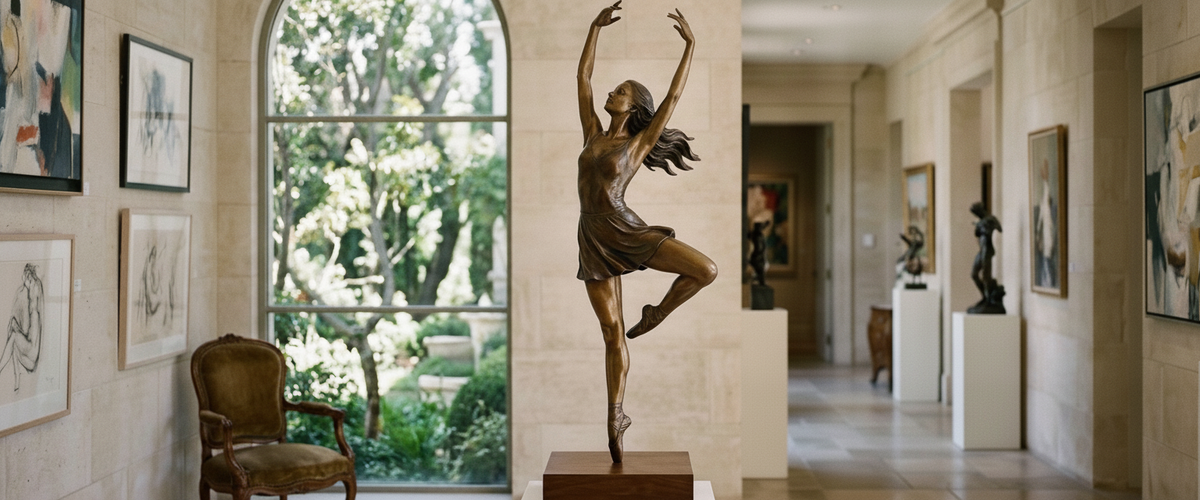
Long, extended poses expose a flat finish fastest. On a figure like the Life-Size Classical Female Ballet Dancer Bronze Sculpture - 200cm, the lines of the legs and arms only read properly when the tone shifts subtly along them, so ask to see how the patineur handles those transitions before you approve a finish. Outdoors, wash the surface with mild soap and water and rewax once or twice a year so the patina matures slowly instead of streaking.

Commissioning Checklist
Measure viewing distance from the main vantage point, not from the planting bed
Decide plinth height before choosing scale
Pick a scale band: life size, heroic or monumental
Confirm weight, fixing method and ground or floor loading
Agree patina color and request a sample
Check delivery access: gate widths, stairs and crane reach
Budget follows from those choices. Cost depends on scale, pose complexity, edition or one-off, engineering, patina, shipping and installation, which is why we quote each piece individually. Browse our life size bronze statues or the wider bronze garden statues collection, then send us photos of your site. If nothing fits exactly, Giant Sculptures can adapt a pose, adjust the scale or commission a figure from scratch.
For wider placement ideas, One Figure or Two? How to Place Life Size Figure Sculptures is useful companion reading before finalising the setting and sightlines.