

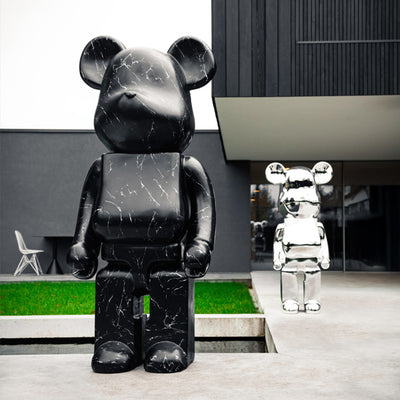

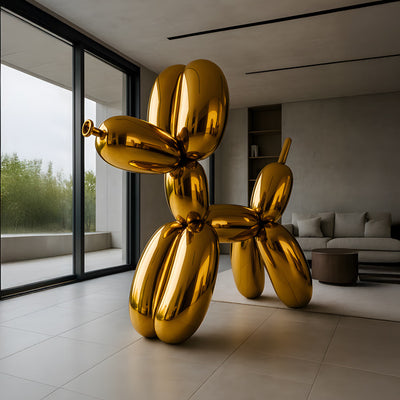
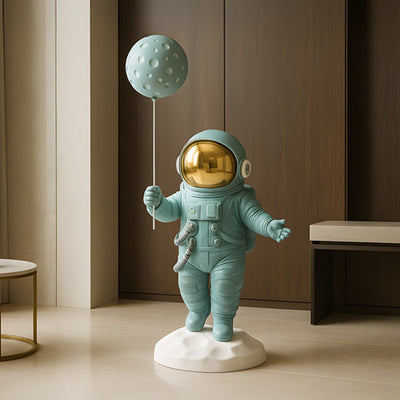




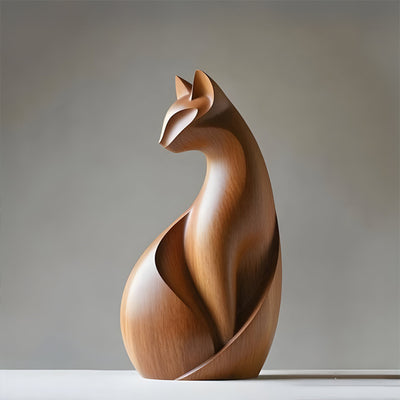
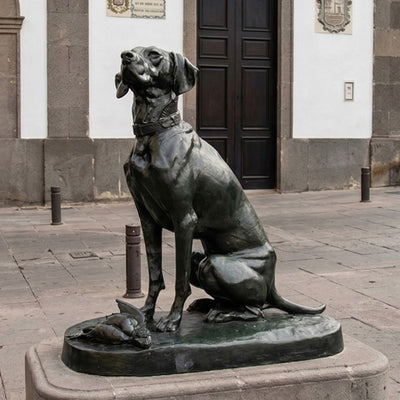


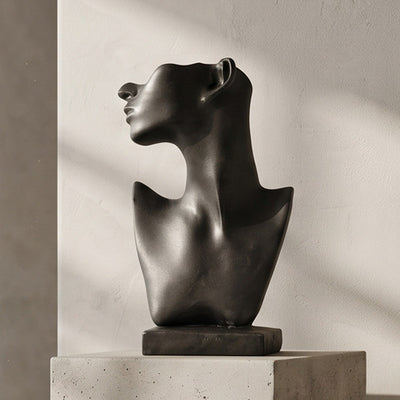

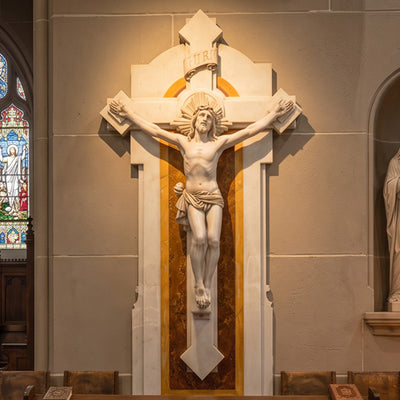



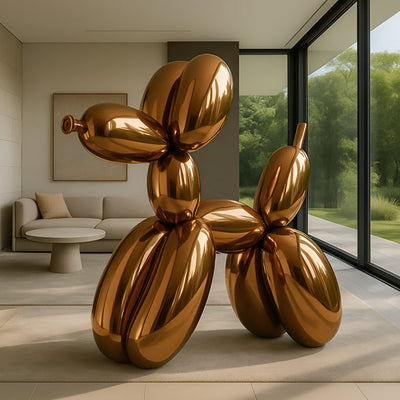



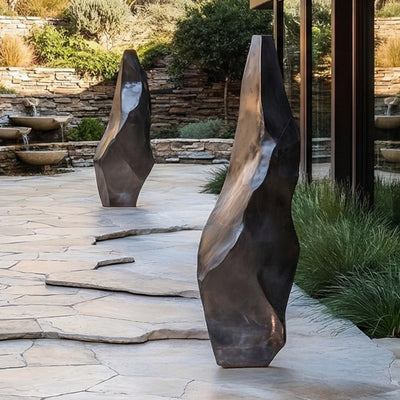























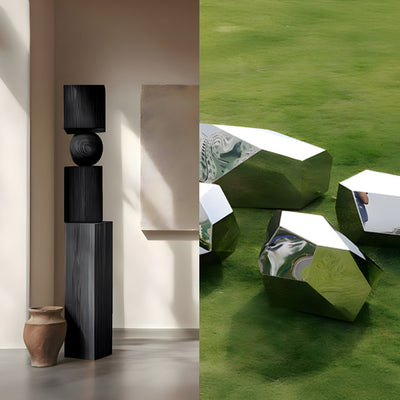


Two sculptures can leave the same studio in the same month and age completely differently. One sits in a Napa courtyard and looks better at year fifteen than it did on day one. The other goes to a coastal property in Florida, gets hit by salt spray and irrigation overspray, and starts streaking within two seasons. Buyers usually ask how long outdoor sculptures last as if the answer lives in the material alone. It does not. Material sets the ceiling; casting quality, mounting detail, drainage and site conditions decide how close you get to it.
We have shipped work to ranches, rooftop terraces, hotel arrival courts and private gardens across the US, and the pattern is consistent. The pieces that age well were engineered for their site before they were sculpted for it. That one fact predicts how long outdoor sculptures hold their surface better than any material chart does.

Quick Answer: How Long Do Outdoor Sculptures Last by Material
Here is the short version of how long outdoor sculptures survive in the open, arranged by what they are made from.
Cast bronze: centuries, realistically, with periodic waxing. Bronze forms its own protective surface layer and keeps going.
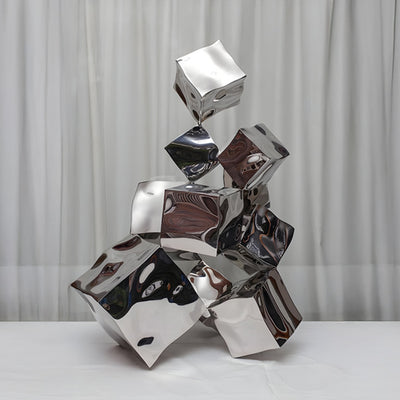
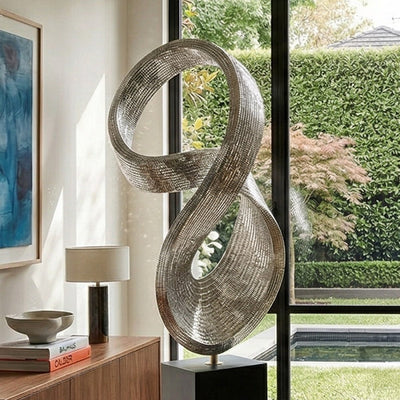
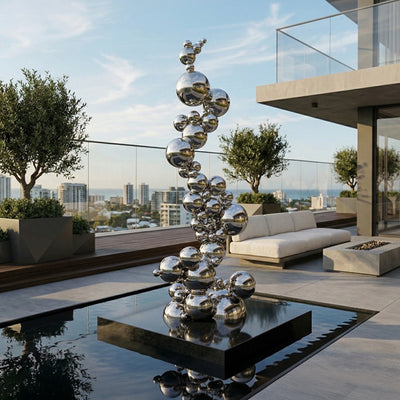
Stainless steel (316 marine grade): many decades outdoors, including coastal sites, if the welds and fixings are the same grade as the shell.
Corten weathering steel: decades. The rust layer stabilizes and becomes the protection, provided water can never pool inside or against the base.
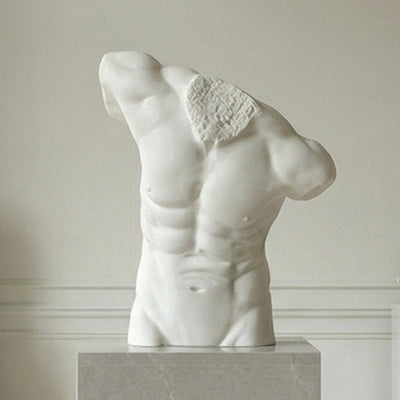
Stone and marble: extremely long-lived in dry inland climates. Fine carved detail softens faster than the mass in freeze-thaw or acid rain regions.
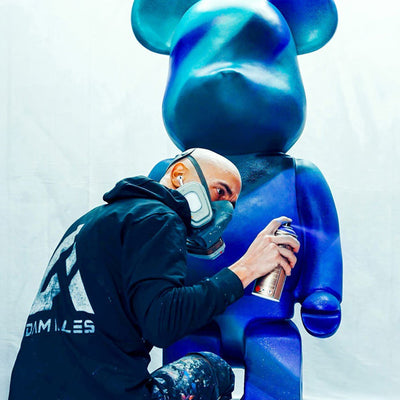
Resin and composite: the shortest-lived of the group. Useful under cover or indoors, not the right call for an exposed permanent commission.
The real variable: base detail, internal drainage, fixings and annual care will move any of these numbers more than the brochure ever will.
What Sculptors Actually Think About Before Taking On a Commission
The first conversation in the studio is rarely about style. It is about site. Which way does the prevailing weather come from? Is there tree cover dropping tannins and sap? Is there a lawn sprinkler that will pepper the bronze with hard water every morning at six? Is the piece within reach of pool chemicals, road salt, or a Texas summer that pushes surface temperatures well above air temperature?
Those answers change the brief. A figure destined for a sheltered Hamptons walled garden can carry fine undercuts and delicate extremities. The same design heading to an exposed Aspen ridge needs thicker walls, reinforced ankles and a mounting plan that assumes snow load, plow spray and ground movement. When people ask us how long outdoor sculptures last, they are usually asking a question about their own site without realizing it.
We also flag maintenance access early. If a sculpture ends up in the middle of a reflecting pool with no dry approach, nobody will wax it. A piece that cannot be reached is a piece that will not be cared for, and that shortens life expectancy faster than weather does.
Craft Decisions That Change the Final Result (and the Cost)
Longevity is mostly bought at the fabrication stage, and a handful of choices there quietly set how long outdoor sculptures hold their line:
Wall thickness. Thin casting saves metal and creates weak points at joins and thin limbs. Monumental work needs metal where the stress is, not evenly everywhere.
Internal armature material. Mild steel inside a bronze shell will rust, expand and split the casting from within. Stainless internals cost more and are worth every cent.
Weld and chase quality. Large bronzes are cast in sections. Badly finished seams become moisture traps and, eventually, visible scars.
Patina chemistry. A hot-applied patina bonded into the metal behaves differently from a sprayed color coat. Bronze corrosion products are naturally protective, which is why the metal has such a long service record outdoors; the Copper Development Association covers how those surface films develop on copper alloys.
Drainage. Every hollow form needs weep holes in the right place. Water that gets in must get out, or the first hard freeze will do the arguing for it.
Fixings and plinth interface. Stainless studs, isolation between dissimilar metals, and a plinth that drains away from the foot rather than holding a puddle around it.
All of that shows up in the quote, which is why comparing two large sculptures on headline figures alone tells you very little. Budget on a bespoke piece tracks material, scale, complexity, engineering, finishing and installation, so the honest route is a tailored quote against your actual site rather than a guessed range.

Why Some Pieces Read Right at 10 Feet and Wrong at 30
Scale is the other half of the question, and it is the part buyers most often get wrong. A sculpture designed to be met at conversational distance carries detail: fingers, texture, expression, surface tooling. Push that same piece to the end of a 100 ft (30 m) driveway and the detail disappears. What remains is silhouette. If the silhouette is not strong, the piece reads as a smudge.
Elongated figurative work handles distance unusually well because its whole argument is line. Where a piece has to hold against open sky and a tree line from a long way back, a height-led form such as the Monumental Contemporary Elongated Female Figure Bronze Sculpture - 350cm at 350cm (roughly 11 ft 6 in) keeps its shape at range, then rewards the closer walk with surface. Open linework asks for the opposite treatment: at 250cm, the Giant Contemporary Elongated Figures on Bicycle Bronze Sculpture - 250cm belongs at a mid-distance viewing position, because the bicycle frame is deliberately delicate and thins out past 100 ft.
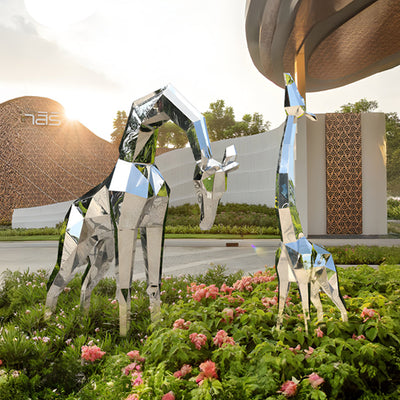
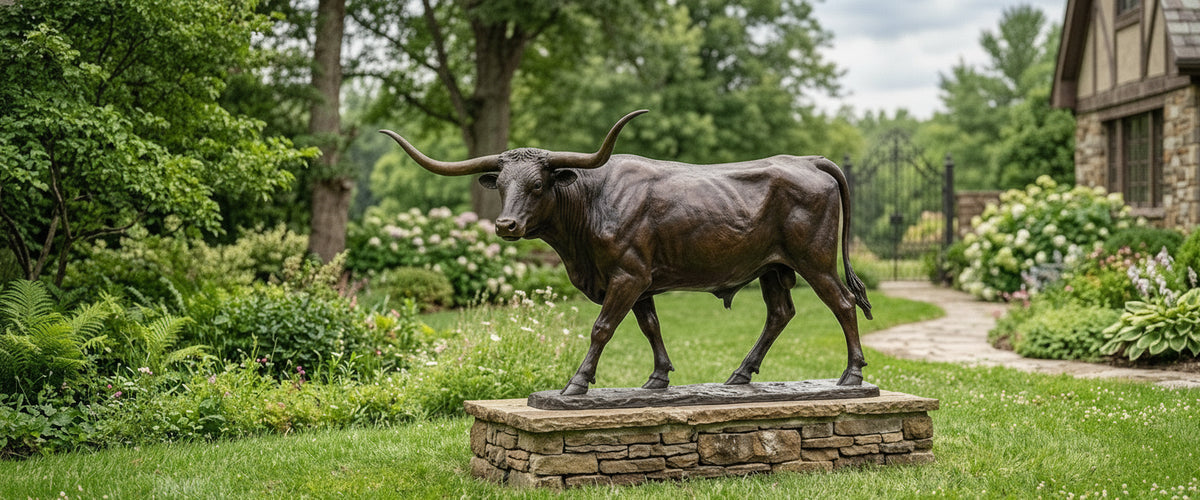
Animal work behaves differently again. Mass carries. We shipped a bronze longhorn to a ranch entrance outside Fort Worth where the client's first instinct was a smaller piece near the house. On site we walked the approach and moved it to the gate, because the horn spread is the whole gesture and it needed sky behind it. For that kind of long-approach placement, a mass-led form like the Life-Size Walking Longhorn Bull Bronze Sculpture - 200cm works better than a detailed figure, precisely because the outline is unmistakable at a glance. Placement also feeds back into maintenance: a piece people walk past every day gets noticed, rinsed and looked after.
Studio Process: Maquette, Sample, Fabrication, Install
A bespoke commission at Giant Sculptures follows a sequence designed to catch problems while they are still cheap to fix, and every stage adds years to the finished piece.
Brief and site review. Photographs, sight lines, approach speed, orientation, climate, and any existing hardscape or planting that constrains the footprint.
Maquette. A scale model, usually reviewed from several angles and at least one mock viewing distance. This is where proportion arguments get settled.
Patina or finish sample. A physical plate in the chosen alloy and finish. We ask clients to hold samples outdoors at their site, in daylight, not under showroom lighting. A brown patina that looks warm indoors can read flat gray under overcast Pacific Northwest skies.
Engineering and fabrication. Wall thicknesses, internals, weld schedule, fixing design and base plate detail. For anything monumental, wind loading and anchor specification are drawn before casting starts.
Delivery and install. Access route, crane or gantry requirements, foundation, isolation, leveling, final patina touch-in and a first protective wax on site.
The install stage matters more than most buyers expect. A perfect casting bolted onto a slab that ponds water will disappoint within a few years. Whether it lives among planting, on a plinth, or as the centerpiece of a water feature such as those in our bronze fountains collection, the interface between sculpture and ground is where the maintenance story begins.
Red Flags to Ask About Before You Commit
Use this as a short interrogation list with any supplier. The replies tell you more about how long outdoor sculptures will really last than any specification sheet, and vague answers are the answer.
"What grade is the metal?" "Bronze" and "stainless" are families, not specifications. Ask for the alloy and, for stainless, whether fixings and welds match it.
"What is inside it?" Any mild steel armature in a permanent outdoor bronze is a future crack.
"Where does water leave?" If nobody can point to the weep holes on a hollow form, the piece was not designed for a freeze.
"Is the color a patina or a paint?" Sprayed finishes on outdoor work fade unevenly and are hard to repair invisibly.
"Who specifies the foundation?" For monumental pieces there should be an engineered anchor detail, not a suggestion to "set it in concrete".
"What does year-one care look like?" A supplier who cannot describe a wax cycle has not thought past delivery.
Lead time honesty. Casting, chasing, patination and curing take real time. A quoted turnaround that sounds too fast usually means stages are being skipped.
The Care Routine That Buys You Decades
Long life is unglamorous. It is mostly rinsing and waxing.
Rinse bronze and stainless with clean water two to four times a year; more often within a mile or two of salt water.
Apply a microcrystalline wax to bronze annually, warm and thin, on a dry surface. Two light coats beat one heavy one.
Keep irrigation heads aimed away. Hard water spotting is the single most common complaint we hear, and it is entirely preventable.
Never pressure-wash stone or marble. Soft brushes and water only; conservation guidance from the American Institute for Conservation is consistent on avoiding abrasive cleaning of outdoor sculpture.
Check Corten bases annually for trapped leaf litter and standing water at the foot.
Inspect fixings after the first winter, then every few years.
Do that, and the answer to how long outdoor sculptures last stops being a gamble. A well-cast bronze or a properly specified stainless piece from our stainless steel sculptures range should outlast the person who bought it, and quite possibly the planting scheme around it.
If you are weighing a commission, send us the site photographs and the viewing distances before you settle on a subject. Half of the longevity decisions get made in that first conversation, and we would rather have it early than fix something later.
For wider placement ideas, Resin Garden Angel Statues: Placement, Scale, and When to Buy Something That Lasts Longer is useful companion reading before finalising the setting and sightlines.