

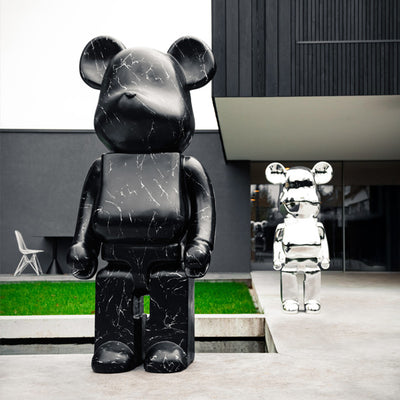

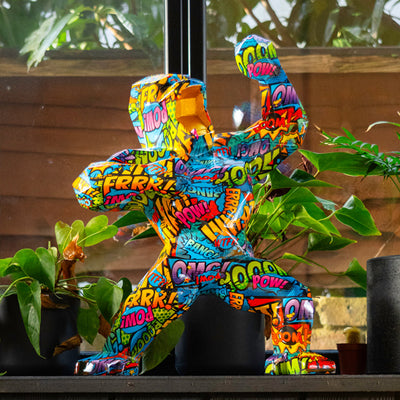
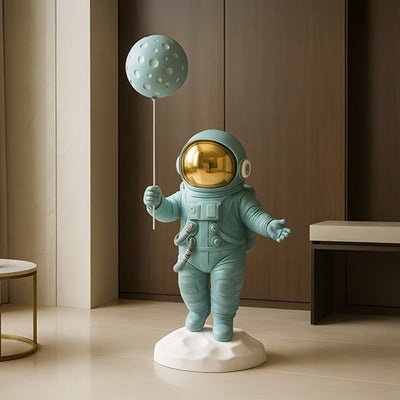







































Buy a mirror-polished sculpture and you are really buying a moving picture of whatever stands around it. That is the first thing we tell clients considering stainless steel sculptures. The metal has almost no color of its own, so the sky, the lawn, the pool house and the delivery van in the driveway all become part of the artwork. Get the finish and the placement right and a piece glows for decades. Get them wrong and you own a very large mirror pointed at your trash cans.

At a Glance
Mirror polish reflects its setting, so plan the view around it before you plan the pose.
Brushed finishes often read richer under overcast skies and hide fingerprints better.
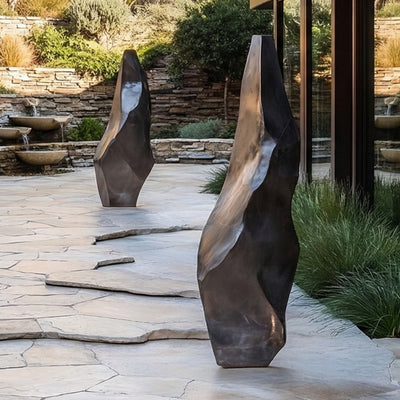
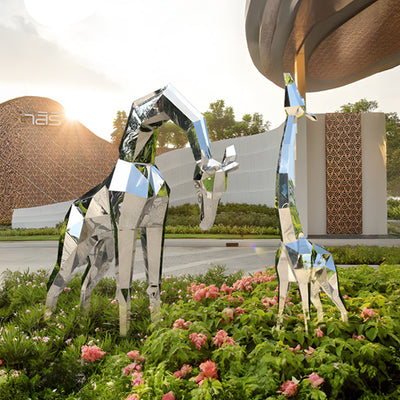
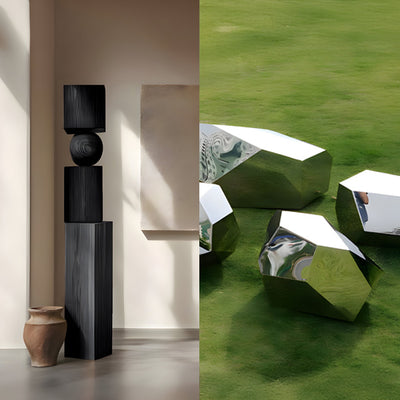
Smooth curves distort reflections gently; faceted forms break them into flickering shards.
Grade 316 is the safer choice near the coast or chlorinated pools.
Weld quality decides whether a mirror finish looks liquid or patched.
Mirror Polish Has No Color of Its Own
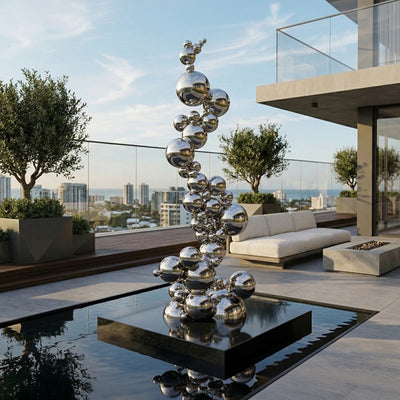
A polished stainless steel metal sculpture borrows everything. In a Napa vineyard at golden hour it turns honey and green; on a Manhattan rooftop it goes cool and blue-gray, picking up glass towers and the odd air-conditioning unit. Clients often fall for a studio photograph shot against a clean backdrop, then discover their real setting is far busier. Before committing, stand where the piece will go and take photos in every direction. Hedges, water and open sky reflect beautifully. Parked cars, a neighbor's windows and pool equipment do not.
A mirror finish takes its color entirely from the setting around it.
Color can also be added on purpose. Where a setting is too busy for pure mirror, a tall form that carries its own palette, such as the White and Gold Blossom Columns Stainless Steel Sculpture at 320cm (about 10.5 feet), lets the surroundings become an accent rather than the whole picture. On a vertical piece of that height, the finish choice carries a lot of weight, because there is so much surface catching light at once.

Why Brushed Steel Often Wins Under Gray Skies
Under a gray British sky, or through a long Seattle winter, mirror polish can look flat because it is reflecting a flat, colorless ceiling. Brushed and satin finishes behave differently. The fine directional grain catches light along its lines, giving the surface a soft sheen that holds tone on overcast days. That is why it pays to view finish samples outdoors, ideally in the worst light your site gets, before deciding. In sun-drenched Texas or Arizona the argument flips: mirror becomes the livelier choice, though it can throw hot glare across patios at midday.
Directional grain keeps a brushed surface lively on gray days.
Smooth Curves Versus Facets: How Form Changes the Reflection
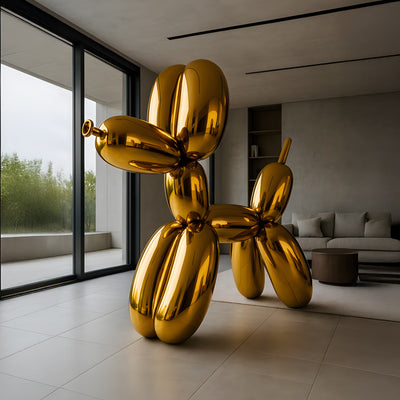
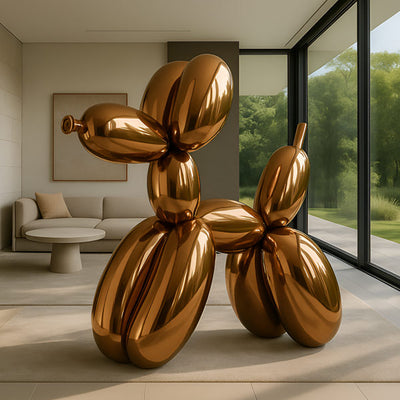
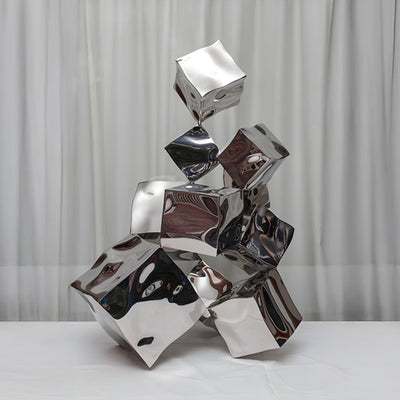
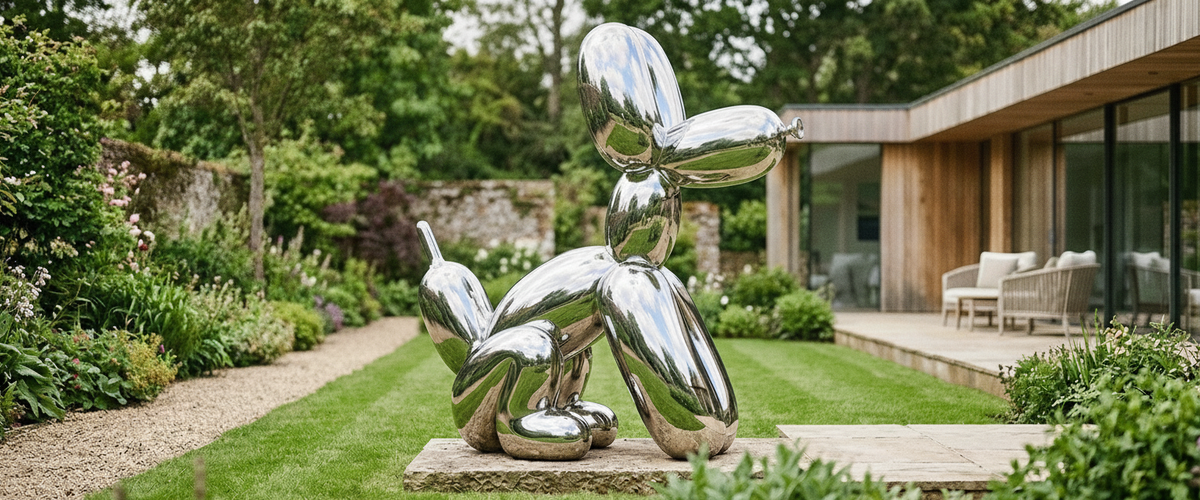
Shape decides how the reflection moves. A polished stainless steel dog sculpture in the balloon style is all continuous curves, so it stretches the surroundings into smooth, funhouse distortions that shift gently as you walk past. Look through our balloon dog sculptures and you will often spot the photographer's own silhouette bent across the belly of the piece. Faceted forms do the opposite. Each flat plane catches a different slice of the scene, so the surface flickers between bright and dark as the sun or the viewer moves. Facets suit busy urban plazas where you want energy; curves suit calm gardens where you want the reflection to feel liquid.
Water, Glass and Knowing When to Stop
Set mirror steel beside a pool, a reflecting pond or inside a glass atrium and the reflections double. Water bounces light up onto the underside, and glass walls repeat the sculpture back at itself. Handled with restraint, that effect is magical. Handled carelessly, the eye cannot find an edge and the piece dissolves into glitter. In atriums we often suggest a mixed-material piece so the steel has something solid to play against. At 150cm (about 5 feet), a piece like the Bronze Stainless Steel & Acrylic Boat Sculpture - 150cm keeps the polished highlights in check, because the warm bronze tones give the eye a fixed edge to rest on. Beside water, consider brushed steel on the faces turned toward the surface and mirror on the faces turned toward the house.

304 Versus 316 for Stainless Steel Outdoor Sculpture
Grade matters more for stainless steel sculptures than most buyers expect. Grade 304 performs well inland, but within reach of salt spray, de-icing salts or pool chemicals, grade 316, which contains molybdenum, resists pitting and tea staining far better. The British Stainless Steel Association publishes clear guidance on grade selection for marine and polluted sites. Finish matters too, in two directions. A smooth, polished surface sheds salt more readily than a coarse brushed grain, which can trap deposits in its grooves, yet a mirror finish puts every faint brown speck on display. For a stainless steel outdoor sculpture in the Hamptons, Malibu or the Florida Keys, specify 316, keep any brushed finish fine rather than coarse, and ask about electropolishing, which smooths the surface at a microscopic level and helps it shed contaminants. Our outdoor sculptures are a good place to compare how different materials handle exposure.
Questions to Ask Stainless Steel Sculpture Manufacturers
A mirror finish shows every seam, ripple and patch of uneven grinding. Large pieces are fabricated from many panels welded over an internal frame, and the quality of that hidden work is what separates a liquid surface from one that looks like a dented fender. Workshop strip lights can hide waviness that open sky reveals in seconds, so a good maker inspects finished pieces in daylight before crating. When you speak to stainless steel sculpture manufacturers, including us, ask:
How are welds ground and blended, and can I see a close-up of a finished seam in daylight?
Which grade is used, and is it consistent throughout, including the internal frame and fixings?
What finish standard do you polish to, and is the piece electropolished?
How is the sculpture anchored, and who signs off the engineering for wind load?
How is the surface protected in transit, and what happens if a panel is scratched on delivery?
Choosing Stainless Steel Sculptures: A Buyer's Checklist
Setting: photograph what the piece will reflect from every viewing angle.
Climate: brushed for overcast skies; mirror for bright sun and clean backdrops. On the coast, keep any brushed grain fine.
Grade: 316 near the sea or pools; 304 is usually fine inland.
Form: curves for calm reflection, facets for movement.
Scale: large polished surfaces amplify glare, so check sun paths against windows and seating.
Care: plan a gentle wash routine, more often on the coast.
Budget: cost depends on material, scale, complexity, engineering, installation and finishing, so request a tailored quote.

Commissioning a Piece That Suits Its Site
For wider placement ideas, Salt, Sand and Steel: Choosing a Metal Abstract Garden Sculpture for the Coast is useful companion reading before finalising the setting and sightlines.
The best bespoke commissions start with a site photo rather than a sketch. Send us the view, the orientation and a note on your climate, and we can advise on finish, grade and form before any steel is cut. Explore the full stainless steel sculptures collection, compare it with bronze and Corten in our wider metal sculptures range, or ask Giant Sculptures about a commission sized and finished for your garden, lobby or venue.