










































Most buyers fall for an outdoor sculpture in a photograph taken in perfect light, then install it somewhere with sideways rain, January frost or 110°F afternoons. That mismatch sits behind nearly every disappointing garden piece we hear about. The best materials for outdoor sculptures are the ones that suit your weather, so start with the climate and open the catalog second.
At a glance
Wet, mild climates: bronze and granite age well; marble and untreated timber need more care.
Freeze-thaw regions: choose dense, low-porosity stone or well-drained metal. Porous stone is the real risk.
Desert sun: metal and stone outlast resin and fiberglass. Plan for glare from polished steel.
Coastal sites: 316 stainless steel and bronze hold up; Corten tends to stain whatever sits below it.
Materials that change: Corten, oak and cedar are meant to weather. Buy them only if you like where they end up.

Start With Your Weather, Not the Catalog
Durability and weather resistance depend on where the piece lives, and a spec sheet can only tell you so much. A bronze that holds an even brown patina for twenty years in Napa can streak green within a few seasons under a dripping oak in Seattle. A marble figure that thrives in a Santa Barbara courtyard can crack in its first Vermont winter. When clients ask us for the best materials for outdoor sculptures for durability and weather resistance, our first question is always the zip code, followed by what sits overhead and underfoot: trees, sprinklers, pool decking, pale paving.
Wet Winters: Bronze and Granite Settle In
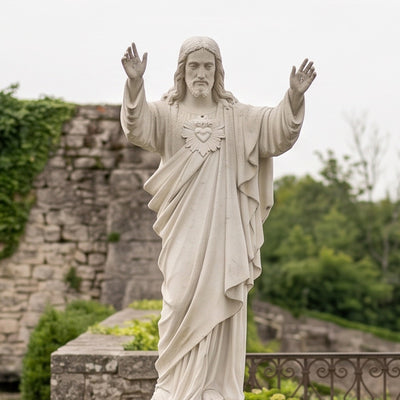
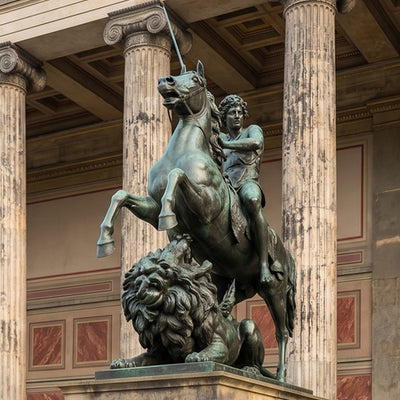
Steady rain suits bronze. The surface forms a stable patina that protects the metal beneath, and the Copper Development Association documents how copper alloys build that protective layer over time. A light wax once or twice a year keeps the color even. Our bronze garden statues are cast with that kind of long, damp exposure in mind, which is why bronze remains our default for gardens in the Pacific Northwest and the UK alike.
In damp, mild gardens, bronze and granite are the best materials for outdoor sculptures when durability and weather resistance both matter.
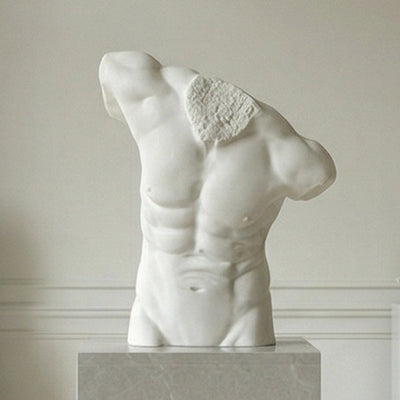
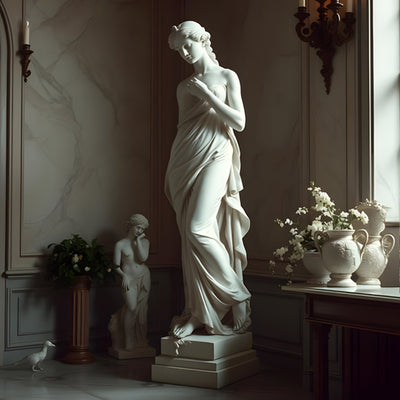
Granite shrugs off rain entirely. Marble is softer: it is calcium carbonate, and mildly acidic rain slowly dissolves the surface, softening crisp carving and leaving a sugary texture. Untreated timber in constant damp invites rot at the base, where water pools. Neither is a bad choice, but both ask more of you.

Freeze-Thaw Country: Porosity Splits a Sculpture, Not Cold
Cold on its own does little damage. Water does. When moisture soaks into stone and freezes, it expands by roughly 9 percent, and repeated cycles pry the material apart from inside. In Aspen, Denver or upstate New York, choose dense granite or a low-porosity marble, and raise the piece on a plinth that sheds water rather than holding it against the base.
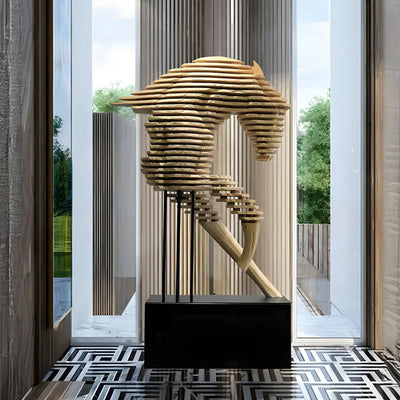
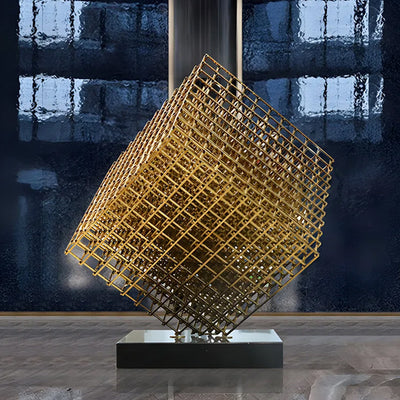
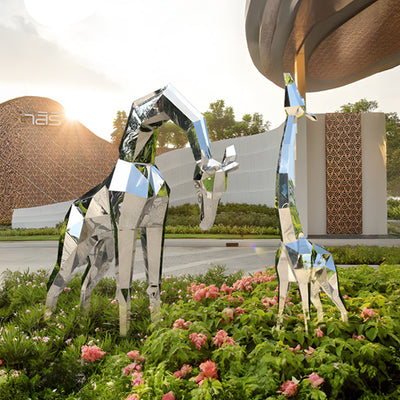
Metal has its own version of this problem. Hollow castings and fabricated forms need drainage holes so trapped water cannot freeze inside a leg or seam. It is one of the first things we check on any commission heading to a snow climate, and one of the easiest details for a budget maker to skip. Open forms carry less of this risk: a wireframe figure such as the Deer Silver Geometric Wireframe Outdoor Sculpture - 180/280cm lets snow and meltwater pass straight through rather than settling in enclosed volumes, which makes it an easier fit for a snow-country lawn than a closed, solid form. The welded joints still deserve a look each spring.
Desert Sun: UV Shortens Resin, and Polished Steel Turns to Glare
Arizona, Palm Springs and West Texas punish plastics. UV breaks down resin and fiberglass, so surfaces chalk, colors fade and gelcoats craze within a few summers. Bronze, stone and stainless steel do not degrade the same way, which is why they top our list of the best materials for outdoor sculptures in high-desert and low-desert gardens alike.
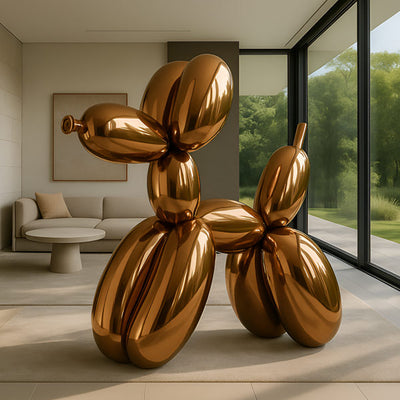
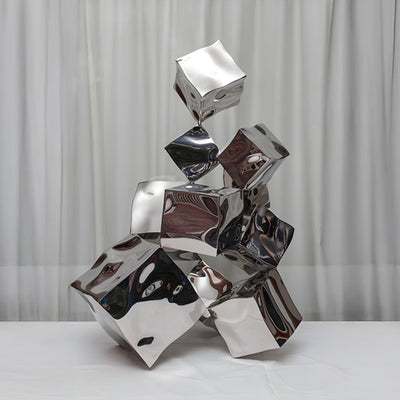
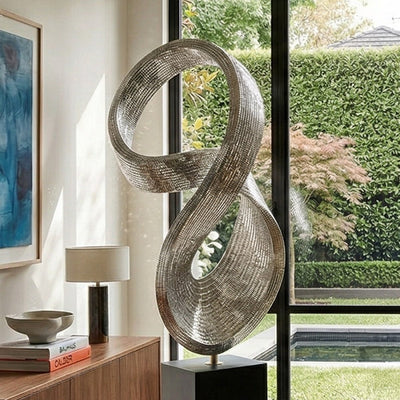
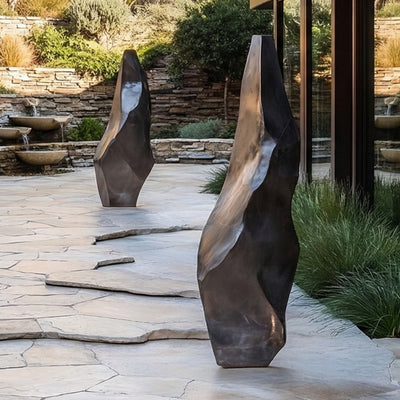
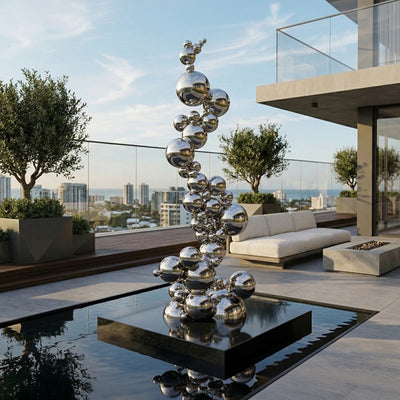
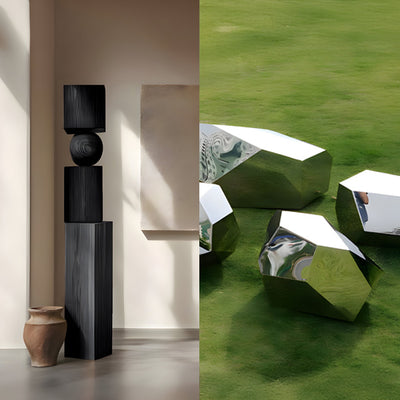
Mirror-polished steel brings a different issue. Curved, organic pieces like the Raindrop Organic Steel Outdoor Sculpture - 120/220cm look glorious against a desert sky, but those same curves concentrate reflected sunlight. On a Palm Springs patio, the afternoon hotspot can land squarely on the lounge chairs, and turning the piece a few degrees is often enough to move it. Map the sun path before you fix the footing, or ask about a brushed finish that diffuses light.

Salt Air on the Coast: 316 Stainless and Bronze Hold, Corten Runs
Salt spray is the hardest test on this list. Grade 316 stainless steel contains molybdenum, which resists chloride pitting far better than standard 304, a point the Nickel Institute covers in its guidance on stainless steel selection. Specify 316 within sight of the ocean and rinse the surface with fresh water a few times a year to stop tea staining. Bronze also performs well, taking on deeper blue-green tones near the water.
Near the ocean, weather resistance means chloride resistance: 316 stainless keeps its finish where lesser grades pit.
Corten is the cautionary tale. Put a weathering-steel piece on a pale bluestone terrace in the Hamptons and rust runoff will streak that stone permanently, which is why we steer coastal clients toward bronze. Salt also stops Corten from forming the stable oxide it relies on, so it keeps flaking. If you are weighing alternatives for a waterfront garden, our metal sculptures collection makes it easy to compare coastal-friendly options side by side.
Corten, Oak and Cedar: Materials Meant to Change
Some materials are bought for how they age. Corten moves from bright orange to deep umber over a year or two. Oak and cedar silver to gray. These shifts are honest and often beautiful, but they are permanent and only partly predictable. If you want a piece to look on day 3,000 much as it did on day one, choose granite or stainless steel, or bronze with a regular wax. If you enjoy a sculpture that records its seasons, give these materials space, drainage and a hard surface beneath that can take staining.
How to Choose the Best Materials for Outdoor Sculptures: A Buyer's Checklist
Before you shortlist anything, run through these decision points. They narrow down the best materials for outdoor sculptures on your specific site faster than any material chart, because they weigh durability and weather resistance against the conditions you actually have.
Name your dominant threat: rain, frost, UV or salt. Pick for the worst month of the year, not the best.
Check what sits below: pale stone, decking and pools rule out materials that run or stain.
Check what sits above: trees drip sap and tannins; sprinklers leave mineral spots on polished metal.
Decide how much change you accept: stable patina, gradual weathering or near-permanent finish.
Be honest about maintenance: an annual wax and rinse, or nothing at all.
Plan the footing: large pieces need engineered fixings and drainage regardless of material.

Commissioning for Your Climate
Off-the-shelf pieces work well when the climate is forgiving. Exposed, extreme or high-traffic sites usually justify a bespoke approach, where Giant Sculptures can adjust alloy grade, wall thickness, finish and fixings to the location. Even the best materials for outdoor sculptures perform better when the specification is matched to the site.
Faceted geometric work tends to be the most adaptable here. For a design like the Bull Geometric Steel Outdoor Sculpture - 120/200cm, ask whether it can be specified in 316 for a coastal terrace or in a brushed rather than mirror finish for a desert courtyard, without changing the form you fell for.
Budget depends on material, scale, complexity, engineering, installation and finishing, so the most useful step is to request a tailored quote with photos of the site. Browse our outdoor sculptures to find the form, then let the weather choose the material.
For wider placement ideas, Large Metal Garden Sculpture: Pick the Finish Before the Form is useful companion reading before finalizing the setting and sightlines.