


































































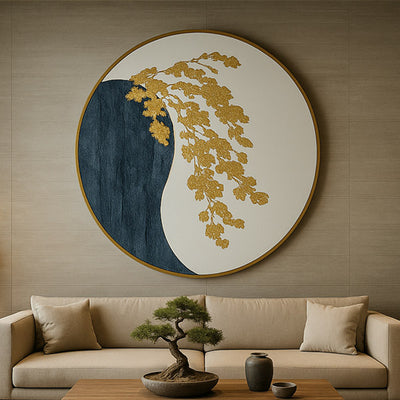






























Most living room art fails for one reason: it is too small for the wall it sits on. A single framed print floating above a nine-foot sofa reads like an afterthought, no matter how good the image is. Get the scale right and even a quiet piece anchors the whole room. Get it wrong and the most expensive artwork in your home looks like a placeholder. This guide is written for people buying living room art as a deliberate design decision, not filler to cover a blank wall.
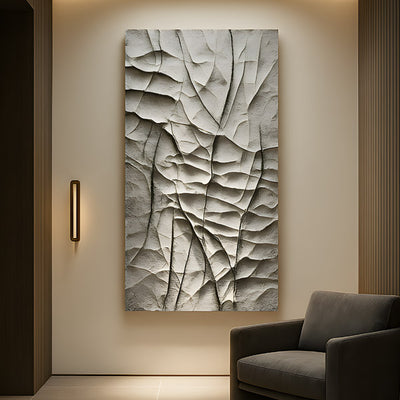
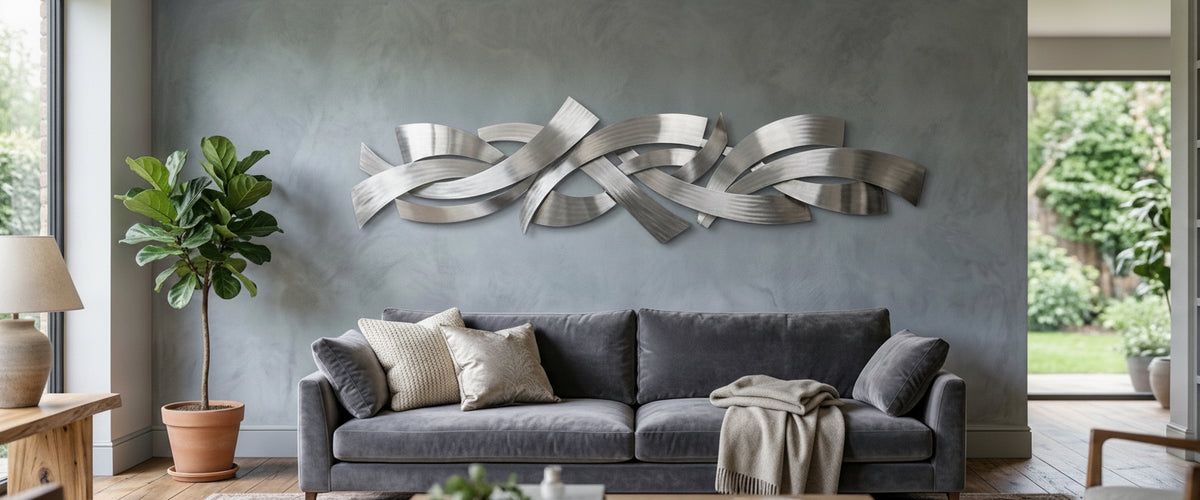
A single well-scaled piece anchors the wall above a three-seat sofa.

Key Takeaways Before You Buy
Scale first. Aim for art (or a grouping) that fills roughly two-thirds to three-quarters of the wall or furniture width below it.
Material sets the mood. Metal reads modern and reflective, wood reads warm, canvas reads soft and painterly, stone and bronze read weighty and permanent.
Hang lower than you think. Center height should sit around 57 to 60 inches (145 to 152 cm) from the floor, not up near the ceiling.
One hero beats five small pieces for impact; galleries of small work suit long walls and hallways better.
Budget follows material, size, and finishing, so it is worth requesting a tailored quote rather than guessing.

What Living Room Art Means, and Who It Suits
Living room art covers everything from a large canvas over the fireplace to a sculptural metal panel spanning a feature wall, a carved wood relief, or a freestanding piece near a window. In a room where you actually sit, eat, and entertain, the art works harder than it does in a hallway. It sets the tone the moment someone walks in.
The buyers we hear from fall into a few camps. There are homeowners refitting a main reception room and finally treating the wall above the sofa as a design surface. There are interior designers specifying pieces for clients who want something that photographs well and lasts. And there are collectors who want a genuine statement piece rather than mass-produced decor. If any of that sounds like you, scale and material matter more than the subject.

How to Compare Living Room Art Options Before Buying
Before you fall for a specific image or shape, compare candidates against the room, not against each other in isolation. A piece that looks strong in a showroom can shrink against a large plaster wall at home.
Run every option through the same short test:
Wall width. Measure the wall and the furniture beneath it. Your artwork or grouping should cover most of that furniture width, not sit marooned in the middle.
Sightline. Where do people look first when they enter? That wall is your prime candidate, and it deserves the boldest piece.
Light. Reflective metal and glossy finishes bounce daylight and can throw glare; matte canvas and wood absorb it. South-facing rooms behave very differently from north-facing ones.
Palette anchor. Choose art that either extends your existing palette or deliberately breaks it with one confident contrast. Avoid matching everything; it flattens the room.
Permanence. A canvas can be swapped in a few years. A commissioned metal or stone piece is closer to architecture, so treat it as a long-term decision.
If you are still weighing categories, our living room art collection is a useful place to see how different formats read at scale before you commit.

Materials, Finishes, and Scale Decisions
Material does more heavy lifting than subject in a living room. Here is how the main options behave.
Metal Wall Art
Metal is the most architectural choice and the one clients gravitate toward for modern interiors. Brushed stainless steel holds a cool, contemporary edge; layered or oxidized metal adds depth and shadow that shifts through the day. Because metal catches light, it keeps a large wall from feeling static. Browse the metal wall art range if your room leans clean-lined or double-height. One practical note from the studio: on a very sunny wall, a fully polished finish can throw harsh reflections, so a brushed or textured surface is often the smarter pick.
Metal is also the most common request when people search for living room wall art with a contemporary edge, precisely because it holds its own on a large surface.
A sculptural metal panel holds a double-height feature wall.
Wood Wall Art
Wood warms a room instantly and reads well against neutral plaster, stone fireplaces, and mid-century furniture. Carved or layered wood wall art brings grain and relief that photographs beautifully in soft light. It suits relaxed, natural interiors and anywhere you want texture without cold shine.
Canvas Art
Canvas is the flexible workhorse: lighter to hang, easier to rotate, and forgiving on budget. A large-format canvas can dominate a wall for a fraction of the weight of metal or stone. Explore canvas art when you want painterly softness or plan to change pieces as the room evolves.
Sculptural and Freestanding Work
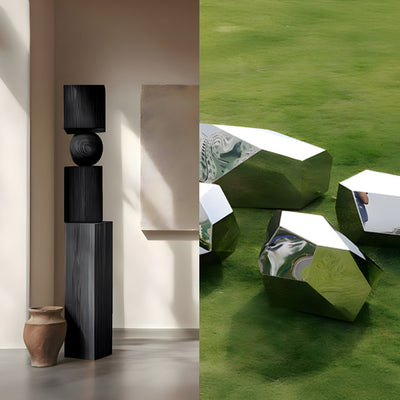
Not all living room art hangs. A freestanding bronze, a carved stone form, or an engineered metal piece near a window adds a third dimension that flat art cannot. This is where Giant Sculptures spends most of its time: large-scale, durable, bespoke pieces built to last decades. Bronze develops a patina that conservators treat as part of its character rather than a fault, which is one reason it remains a favorite for lasting interiors; the Metropolitan Museum of Art's objects conservation department documents how these surfaces age and stabilize over time.
Scale, in Plain Numbers
Over a standard three-seat sofa (roughly 84 inches / 213 cm wide), aim for a single piece or grouping around 56 to 63 inches (142 to 160 cm) wide. Over a fireplace, match the width of the mantel or slightly under. In a double-height room, think in feet, not inches; small work simply disappears on a wall over ten feet (3 m) tall.
Where to Place Living Room Art for the Strongest Impact
For wider placement ideas, Botanical Basket Metal: How a Woven Metal Wall Piece Actually Gets Made is useful companion reading before finalising the setting and sightlines.
Placement makes or breaks the piece. A few rules earn their keep.
Hang for the eye, not the ceiling. Center the artwork around 57 to 60 inches (145 to 152 cm) from the floor. Over a sofa, leave roughly 6 to 10 inches (15 to 25 cm) between the top of the furniture and the bottom of the frame so they read as a connected group.
Use the first sightline. The wall you see when entering should carry your boldest piece. Secondary walls can hold quieter work or a small grouping.
Let big work breathe. A large sculpture or metal panel needs empty wall or floor around it. Crowding it with shelves and lamps kills the effect.
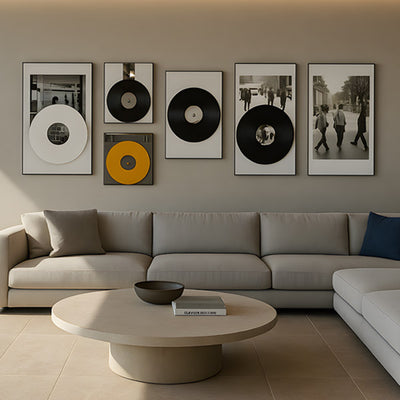
Arranging a gallery wall. If you are grouping several pieces, lay them on the floor first and treat the whole cluster as one rectangle. Keep gaps consistent, usually 2 to 3 inches (5 to 8 cm), and anchor the arrangement to the furniture below, not the ceiling above. A gallery of living room wall art suits long walls and stairwells; over a sofa, one strong piece usually wins.
Budget, Commissioning, and Delivery
There is no honest flat price for living room art, because the cost is driven by material, size, complexity, engineering, finishing, and installation. A large hand-finished bronze and a printed canvas of the same footprint sit worlds apart on cost. Rather than guess, tell us the wall, the material direction, and the effect you want, and we will prepare a tailored quote.
A few things worth planning early:
Weight and fixings. Heavy metal and stone need proper wall structure or floor support. Flag this before you buy, not after delivery.
Access. Large pieces have to physically get into the room. Measure doorways, stairwells, and elevators. We have redesigned mounting on a large panel more than once so it could clear a tight apartment lobby.
Lead time. Bespoke work takes time to make and finish. Start early if it is tied to a renovation date.
Shipping. We crate and ship worldwide; larger pieces travel in purpose-built crates with clear handling guidance.
How Giant Sculptures Helps With Bespoke Living Room Art
Where we add the most value is the piece you cannot find off the shelf: a specific size, a particular finish, a sculptural form matched to a room's proportions. We work in bronze, stainless steel, Corten, stone, marble, and engineered metalwork, and we build for the long term. If you have a nine-foot feature wall and everything you have found looks too small for it, that is exactly the brief we like.
Send us your wall dimensions, a photo, and the mood you are chasing. We will talk through material, scale, and placement honestly, including when a simpler solution serves you better than a full commission. For long-term ownership, we also advise on care so the piece looks right in ten years, not just on delivery day. Conservation bodies such as the American Institute for Conservation publish sound general guidance on caring for metal and stone artworks that we echo in our own recommendations.