
































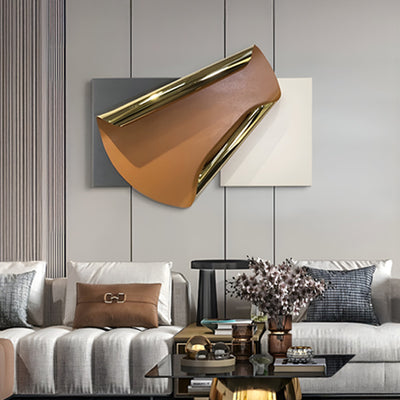
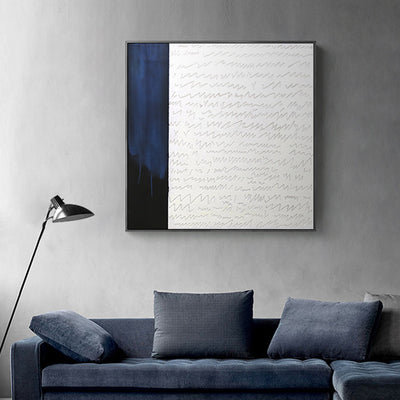
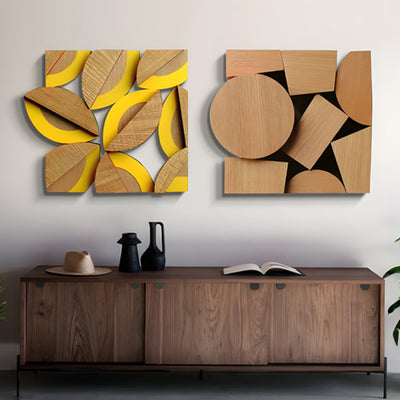

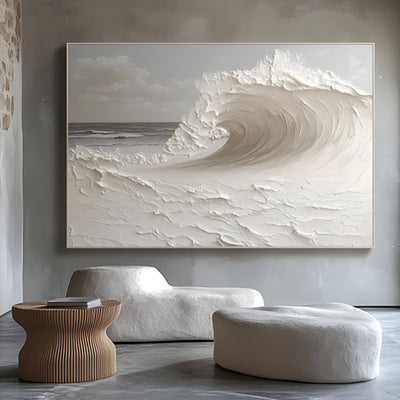
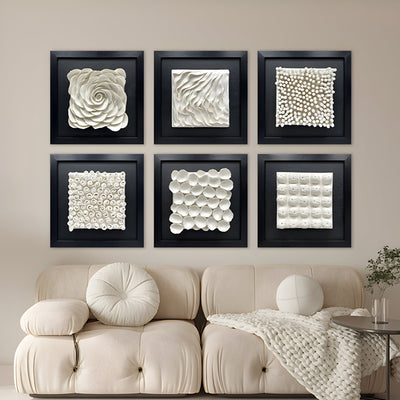
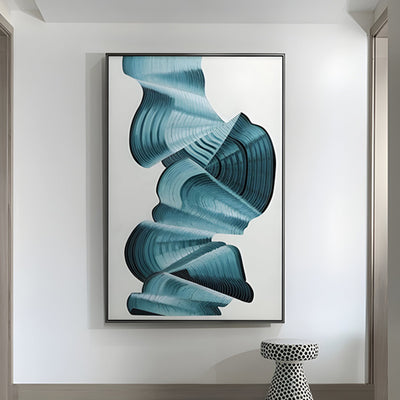
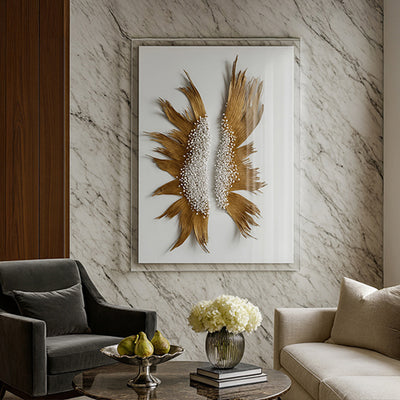
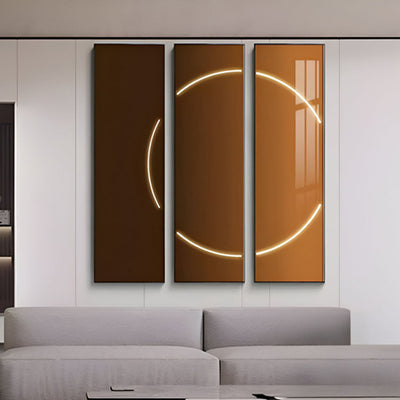
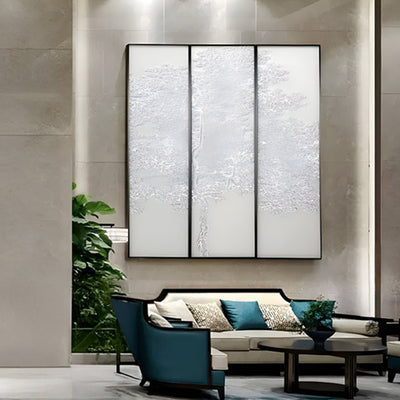
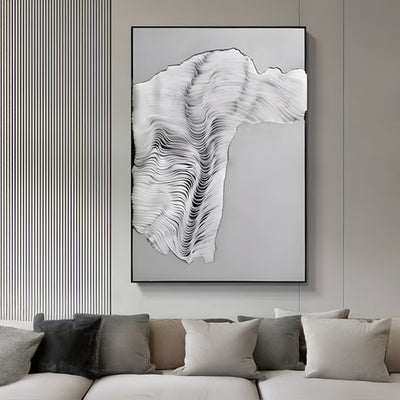
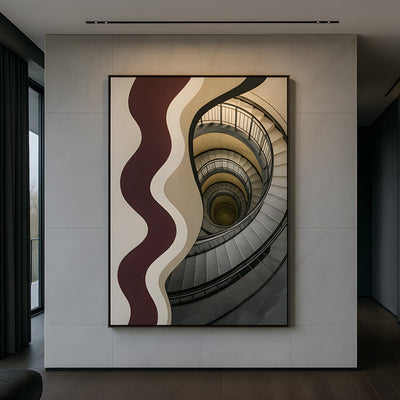
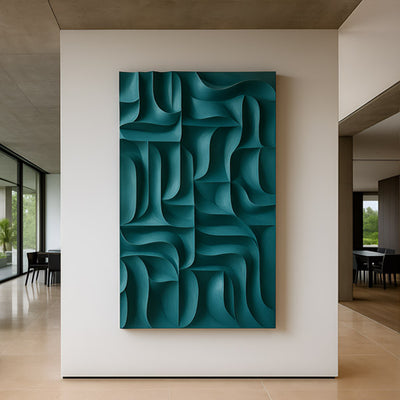














The most common mistake we see with wooden wall art panels is not the panel itself. It is the wall. A carved multi-panel piece that would command a double-height entrance gets hung above a console table in a standard eight-foot room, and suddenly it looks apologetic. Wood has warmth and depth on its side, but scale and placement decide whether a panel reads as a statement or as a placeholder waiting for something better.
This guide is about getting that decision right the first time with your wooden wall art panels, whether you are furnishing a great room, a lobby, or a covered terrace.

Key Takeaways
- Match the panel width to the wall it lives on, not the furniture below it. Aim to fill roughly two-thirds of the usable wall span.
- Hang to the eye, not the ceiling. The visual center of a wood panel wall art group should sit around 57 to 60 inches (145 to 152 cm) from the floor.
- Indoors, wood carvings reward raking light and quiet backdrops. Outdoors, only stable, protected settings make sense unless the piece is engineered for weather.
- Contrast between the wood tone and the wall is what makes carving read from across the room.
- Bespoke sizing exists for a reason. If the wall is unusual, commission wooden wall art panels to fit rather than force a stock size.

What Wooden Wall Art Panels Actually Look Like in a Room
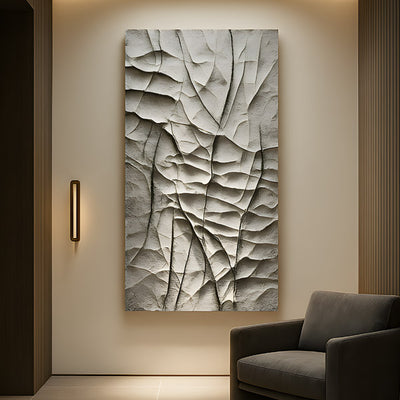
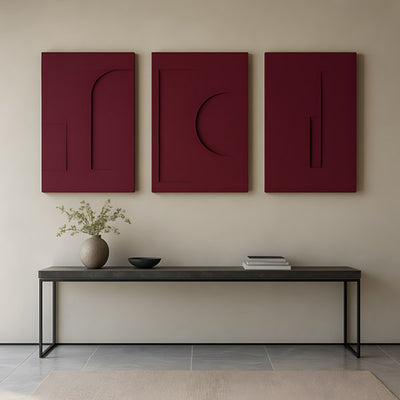
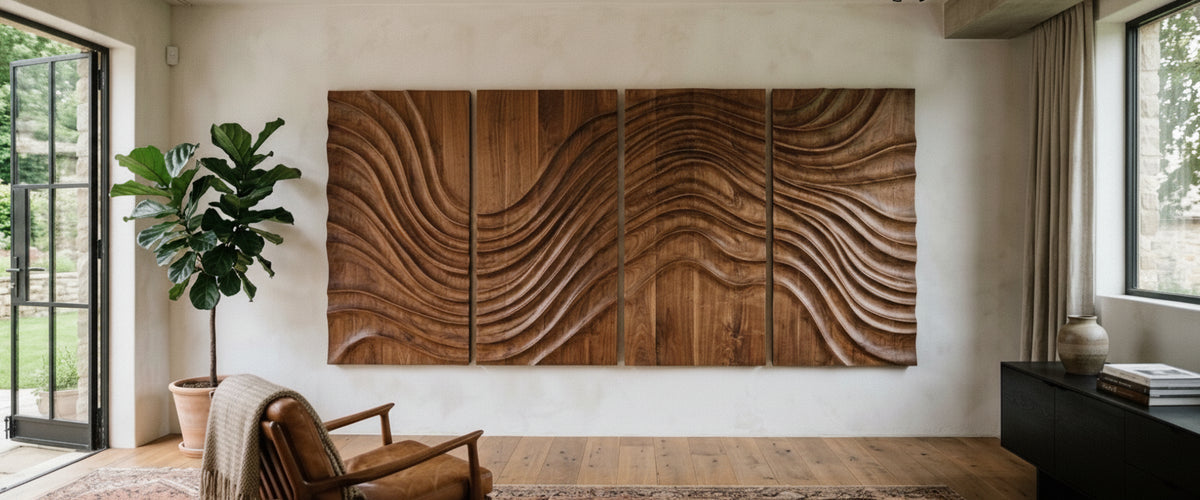
A single flat plaque and a deep 3D carved multi-panel piece are barely the same category. The wooden wall art panels worth building a room around have relief: ridges, wave forms, layered cuts that throw shadow and change through the day. Where a long wall needs to be broken into rhythm rather than filled with a single slab, a four-panel carving such as the Harmonic Forms 4-Panel Brown Wood Carving 3D Wall Art divides the span while the sculpted surface catches side light. Flatten that same idea into a printed board and it dies.
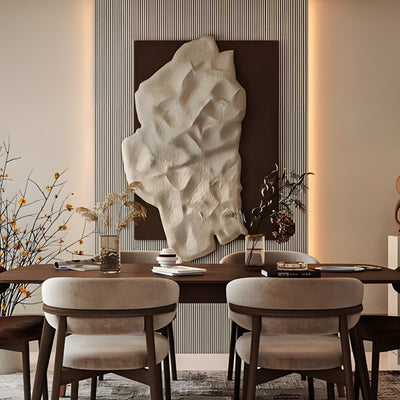
In a living room, wood panel wall art tends to do the job a fireplace surround used to: it gives the eye a warm focal point and a reason to slow down. In a corporate reception or a boutique hotel, the same carved timber panels signal that someone spent money on materials rather than wallpaper. The wood grain does quiet work here; it reads as considered rather than loud, which is exactly why designers reach for it over a bright metal panel in calmer schemes.
Outdoors, the picture changes. On a sheltered loggia or a covered patio, carved wooden wall art panels can look extraordinary against stone or render. Leave them fully exposed to sun and rain and you are fighting physics. More on that below.

Scale, Sightlines and Hanging Height
Start with the wall, measured honestly. A panel or panel group should occupy about two-thirds of the wall it sits on. Undersize it and the wall swallows the piece; oversize it and the room feels crowded. For a multi-panel set, treat the whole arrangement as one shape and measure the outer edges as a single block.
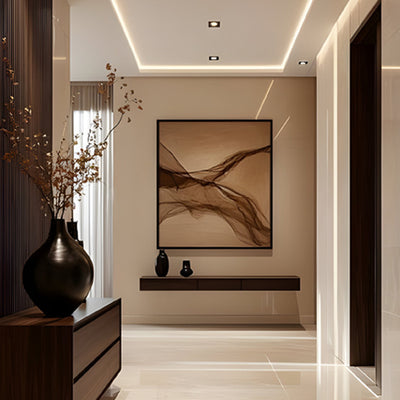
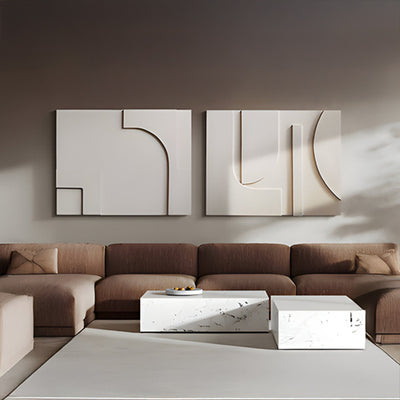
Height is where most people slip. The instinct is to hang high, near the ceiling or the top of a doorframe. Resist it. The visual center of the arrangement wants to land around 57 to 60 inches (145 to 152 cm) from the floor, which is standard gallery eye level. If the panel sits above a sofa or credenza, leave roughly 6 to 10 inches (15 to 25 cm) of breathing space between the furniture top and the bottom of the frame so the two do not read as one clumsy stack.
Sightlines matter as much as raw height with wooden wall art panels. Walk the approach. Where do people first see the wall, from a doorway, from the top of a staircase, from a seated position in the lounge? The panel should be composed for the view people actually get, not for someone standing dead center with a tape measure. In one commission we shipped to a hillside home, the client's main view of the piece was from a lower floor looking up, so we set the arrangement higher than the textbook rule and let the relief read against the light from below.

Indoor Versus Outdoor: When Each Wins
Indoors is the natural home for most wooden wall art panels. Stable humidity, no UV bleaching, no freeze-thaw cycling. Wood is a living material that moves with moisture, and museum guidance on caring for wooden objects is blunt about it: swings in relative humidity are what crack and warp timber over time (Smithsonian's conservation resources cover this well). Keep panels off exterior walls that sweat, away from radiators, and out of direct afternoon sun through unshaded glass.
Outdoor placement can absolutely work, but only in the right spot. A deep covered porch, a courtyard wall with an overhang, a spa or pool house with roof cover. These give you the drama of outdoor scale without full exposure. If the brief genuinely calls for an unprotected exterior wall, that is where we steer clients toward a weather-engineered metal panel instead, or a version specified with marine-grade sealing and mounting. This is one reason our studio treats outdoor commissions as a materials conversation first, not a styling afterthought.
Light, Backdrop and Contrast
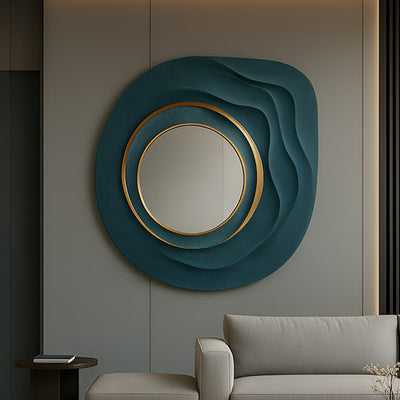
Carving lives or dies on light. Flat, even, head-on lighting erases relief and turns a sculpted panel into a brown rectangle. What you want is raking light, hitting the surface at a shallow angle so every ridge casts a shadow. A picture light angled down, a wall wash offset to one side, or simply a window that throws morning light across the piece will all do it. Where a room lacks a good side source, or the piece needs to hold up after dark when a picture light would feel harsh, an integrated-light panel such as the Ventus Azure Depths Wood Carving 3D LED Wall Art builds that glow into the piece so the relief keeps working at night.
Backdrop is the other half. A busy patterned wallpaper competes with carved wood and both lose. Give the panel a quiet field: a plaster wall, a muted paint, a smooth stone. Then think about contrast. A dark walnut-toned panel on a pale gray wall reads sharply from across the room; the same panel on a dark espresso wall goes muddy and disappears. If you want the wood to feel warm and enveloping rather than graphic, narrow that contrast on purpose. Both are valid; just decide which one you are doing.
Common Placement Mistakes We See
For wider placement ideas, Art 3d Wall Panels: How to Place Them so They Actually Read is useful companion reading before finalising the setting and sightlines for your wooden wall art panels.
- Hanging to the ceiling instead of the eye. The single most frequent fix we suggest. Drop it.
- Undersizing for the wall. A panel that looked big in a showroom shrinks in a real room. Measure the wall, not the packaging.
- Fighting the light. A great panel under flat overhead downlights loses all its depth. Add a side source.
- Crowding it with art. A sculpted wood panel is already a three-dimensional event. Do not flank it with three framed prints.
- Ignoring the wall build. Heavy multi-panel wood needs proper fixings into studs or masonry anchors, not drywall plugs.
What to Put Beside a Large Wood Wall Art Panel
Less than you think. A large carved panel wants negative space around it to breathe. If you must add something, keep it low and simple: a console with a single sculptural object, a tall plant that echoes an organic line in the carving, a floor lamp that doubles as your raking light. Avoid symmetrical pairs of framed pictures on either side; they turn a sculpture into a headboard. In a wider layout, companion wooden wall art panels from the same material family work better than mismatched decor, which is worth browsing across our wood wall art range so tones and finishes actually agree.
Commissioning to Fit
Standard sizes suit standard walls. Plenty of the walls we work with are not standard: a stairwell double the height of a normal room, a curved reception desk backdrop, a fireplace chimney breast at an awkward width. This is where bespoke wooden wall art panels earn their keep. We can scale a carved concept, adjust panel counts, change the wood tone, and specify mounting for the exact wall construction you have. Because we build large and durable pieces, weight and fixing are engineered in from the start rather than solved on installation day. If a piece will live in a demanding spot, tell us the environment early and we will spec the finish to match.
Budget on bespoke wooden wall art panels depends on material, scale, carving depth, engineering and installation, so the honest answer is to send us the wall dimensions, a photo, and the setting, and ask for a tailored quote. That gives you a real number instead of a guess.
A Quick Placement Checklist
- Measure the wall span; aim to fill about two-thirds.
- Set the visual center at 57 to 60 inches (145 to 152 cm) from the floor.
- Leave 6 to 10 inches (15 to 25 cm) above any furniture below.
- Add a side or raking light source; avoid flat overhead only.
- Choose a quiet backdrop and decide your contrast on purpose.
- Confirm the wall build and use fixings rated for the weight.
- Keep the surrounding decor sparse so your wooden wall art panels read as sculpture.