





































































































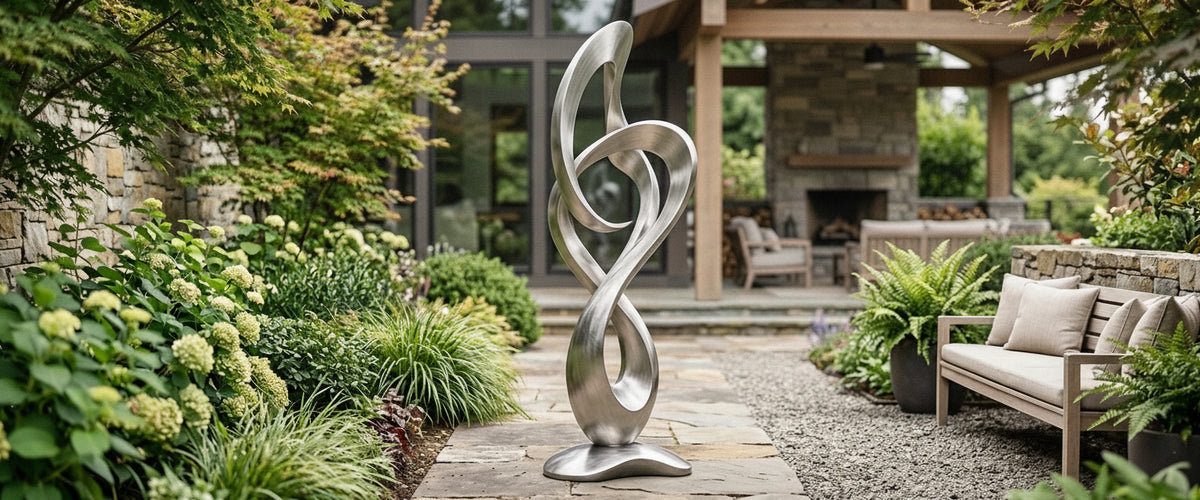

A six-foot steel piece can look monumental in one room and apologetic in the next, and the difference is almost never the sculpture. It is placement. Metal art sculptures reward planning more than any other medium we ship, because their surfaces catch light, throw reflections, and change character depending on what sits behind them. Get the position right and a single form anchors an entire lobby or garden. Get it wrong and the same piece reads as a stray object nobody meant to leave there.
This guide walks through the decisions that actually move the needle: how a piece reads at scale, where indoor beats outdoor and the reverse, and the placement mistakes we untangle most often on commissions. If you are a designer, collector, or venue owner weighing an office art statue sculpture or a garden centerpiece, the questions below are the ones worth settling before you buy metal art sculptures.

Key Takeaways
- Scale is relative. A sculpture's presence depends on the volume of the room or garden around it, not its raw height.
- Sightlines decide the hero view. Place for the angle people see first and most often.
- Pedestal height changes the whole read. Raising a piece a foot can shift it from decorative to commanding.
- Light and backdrop are half the design. Polished steel needs contrast; matte and patinated finishes need direction.
- Indoor and outdoor demand different finishes. Marine-grade stainless and Corten belong outside; delicate copper detail often prefers a controlled interior.

What Metal Art Sculptures Look Like in Real Rooms and Gardens
Start with what the piece is doing for the space. A polished stainless abstract in a double-height reception mirrors the glass and movement around it, so it feels alive even when the building is quiet. Drop that same form into a low-ceilinged waiting room and the reflections turn busy and cramped. Finish drives this more than shape. Mirror-polished steel amplifies its surroundings; brushed steel calms them; a copper or patinated surface reads warmer and holds its own line against a plain wall. This is why metal art sculptures ask for a plan, not a hunch.
Outdoors, the rules loosen and the stakes rise. A garden gives you sky, planting, and distance, so a taller piece has room to breathe. We have shipped abstract steel forms to gardens where the sculpture sits at the end of a lawn sightline, framed by hedging, and reads cleanly from a hundred feet out. Where the setting needs warmth against greenery rather than a cold mirror finish that fights it, a copper-toned piece such as the Strata Copper Abstract Steel Sculpture is closer to the right design language.
For a doctors office or clinic, buyers often ask us where metal art sculptures for a professional interior are sold, and the honest answer is that the search matters less than the fit. A statement piece in a medical or corporate reception should reduce anxiety, not add visual noise. Softer organic forms in brushed steel, such as the Flow III Silver Organic Steel Sculpture, tend to work better in those rooms than sharp geometric work that can read as clinical.

Scale, Sightlines and Pedestal Height
These three choices change how metal art sculptures read more than any material decision. Take them in order.
Scale Against the Space
Measure the room, not the sculpture. A useful rule from years of commissions: a hero piece should occupy roughly a third to a half of the visual height it sits against, whether that is a wall, a stairwell, or an open sky. In a standard eight-foot ceiling interior, a 5-foot (1.5 m) sculpture on a low plinth reads as generous. Push a ceiling to double height and that same piece can disappear. This is exactly why we offer many designs in more than one size; the Crane Contemporary Outdoor Steel Sculpture comes in two heights precisely because a garden and a courtyard ask for different mass.
Sightlines and the Hero View
Every sculpture has an angle it was made to be seen from first. Walk your space the way visitors actually move through it. Where does the eye land as someone enters the lobby, turns onto the terrace, or reaches the top of the stairs? Aim the strongest profile at that moment. Then check the secondary views, because these metal art sculptures are almost never flat; a form that reads beautifully head-on can look thin from the side, and you want to know that before it is bolted down.
Pedestal Height
Pedestal height is the most underused tool we see. Raising a piece even 12 inches (30 cm) shifts its relationship to the viewer from something you look down at to something you meet at eye level or look up toward. For figurative or animal work, we usually set the focal point near standing eye line. For abstract forms meant to feel like landmarks, a taller base adds authority. A geometric piece like the Cubic Geometric Steel Sculpture reads very differently on a low floor plate versus a waist-high plinth, and both can be correct depending on the room.

Indoor Versus Outdoor: When Each Wins
Material choice should follow the environment, not the other way round. For permanent outdoor placement, we steer buyers toward marine-grade 316 stainless steel or weathering steel (Corten), both of which are built to live with weather. The American Institute of Steel Construction notes that weathering steel forms a stable protective layer of rust that slows further corrosion, which is exactly the quality that makes Corten a favorite for large exterior metal art sculptures (aisc.org). Polished stainless outdoors stays bright but needs occasional cleaning to keep salt and pollution from dulling the finish.
Indoors, you gain range. Fine copper detailing, delicate joins, and finishes that would weather unevenly outside can all live comfortably in a controlled interior. Light is steadier, there is no wind loading to engineer around, and the piece stays cleaner. An LED-integrated design such as the Luminous Stag Gold Steel LED Sculpture earns its keep in a lobby or private interior where the lighting can be controlled after dark, though it works outdoors too with the right power routing.
The deciding question is simple: is this piece meant to be a year-round outdoor landmark, or a controlled interior statement? Answer that first and the material shortlist for metal art sculptures narrows fast. When in doubt, ask us; a bespoke sculpture commission lets us specify the alloy, finish, and fixings for the exact spot you have in mind.
Light, Backdrop and Contrast
Metal is a reflective medium, so the light and the wall behind it do half the work on metal art sculptures. Three things to plan:
- Direction of light. Raking light from the side sculpts texture and reveals form. Flat, head-on light flattens everything. For polished steel, position it where it can pick up movement and daylight rather than staring into a blank wall.
- Backdrop contrast. A brushed silver piece vanishes against pale marble and pops against dark planting or a charcoal wall. A warm copper form does the reverse. Choose the background before you choose the finish, or plan them together.
- Reflections. Mirror-polished surfaces borrow whatever surrounds them. In a cluttered room that becomes chaotic; in a clean architectural setting it becomes an asset. Stand where visitors will stand and check what the piece is reflecting back at them.
A tall abstract like the Flare Silver Abstract Steel Sculpture depends heavily on this. Against a busy backdrop it competes with itself; against clean sky or a plain rendered wall its line reads clean and deliberate.
Placement Mistakes We See on Commissions
For wider placement ideas, Contemporary Abstract Metal Sculpture: A Buyer's Guide to Form, Scale, and Placement is useful companion reading before finalising the setting and sightlines.
Some errors come up again and again with metal art sculptures, and all of them are avoidable.
- Buying to fill a corner. A hero sculpture pushed into a dead corner loses its sightline and its presence. If a piece deserves floor space, give it a position people approach, not one they pass.
- Ignoring the second view. Buyers plan the front and forget that visitors circle the piece. Check every angle a person can reach.
- Skipping the pedestal decision. A well-made sculpture sitting flat on the floor often looks unfinished. Decide base height as part of the design, not after delivery.
- Wrong finish for the environment. Specifying a polished interior finish for a coastal garden, or a heavy patina for a bright modern lobby, sets the piece up to look wrong from day one.
- Underestimating weight and fixing. Large metalwork can run to several hundred pounds. Foundations, wind loading, and floor loading are engineering questions, not afterthoughts. We plan fixings before a piece leaves the studio.
If you are choosing between designs, browse the full metal sculptures range or narrow to stainless steel sculptures for exterior-ready options. Well-placed metal art sculptures repay the planning many times over, and if nothing fits the exact spot, a bespoke commission from Giant Sculptures lets us build to your scale, finish, and fixing requirements from the start, which is usually the surest way to get placement right the first time.