






















































































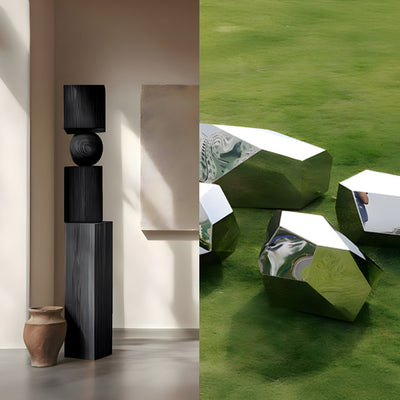



The most common problem with office art decor is not taste. It is placement. A well-chosen piece hung two feet too high, or a floor sculpture parked in a corner where nobody stands, reads as an afterthought no matter how good the work actually is. We see it constantly when clients send photos of a reception area or a home study and ask why the room feels flat. The art is usually fine. The position is fighting it.
Looking for the full range in this category? Browse our Wall Art and Wall Decor collection for every available finish, size, and configuration.
Getting office art decor right is less about spending more and more about respecting sightlines, scale and the way light moves through a space during a working day. Below is how we think about it in the studio, drawn from commissions we have shipped to corporate lobbies, law-firm boardrooms and home offices.

Key Takeaways for Office Art Decor
- Scale to the wall, not the furniture. A piece should read from across the room, not just up close.
- Center point matters more than size. Most art sits too high; aim the visual center near standing eye level.
- Indoor and outdoor placement follow different rules. A courtyard or entrance garden can carry weight that an interior wall cannot.
- Backdrop and contrast decide impact. A dark bronze against a pale wall reads; the same bronze against dark paneling disappears.
- Bespoke scale solves the awkward wall. When nothing off-the-shelf fits, a commission sized to the space is usually the answer.

What Office Art Decor Actually Looks Like Across Different Spaces
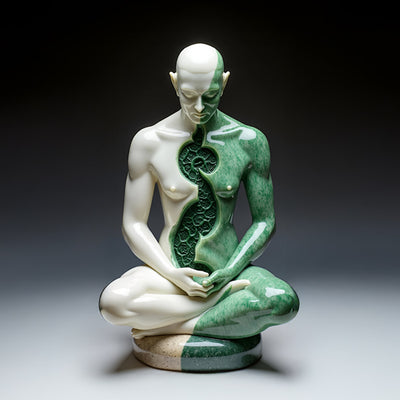
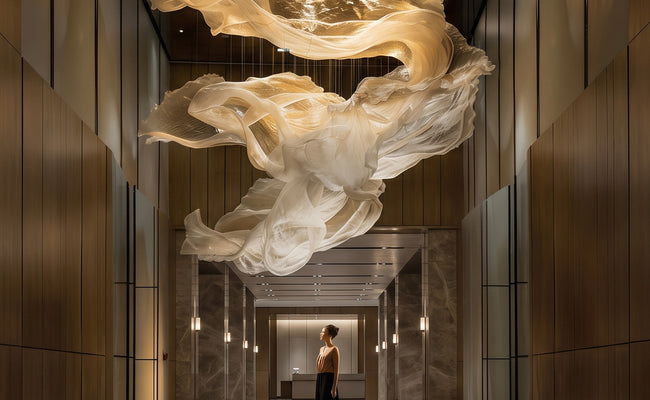
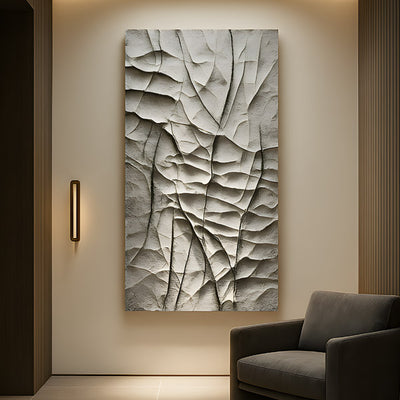
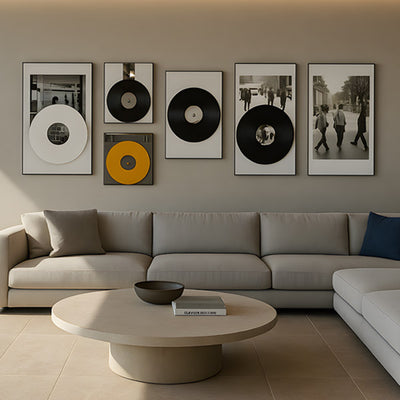
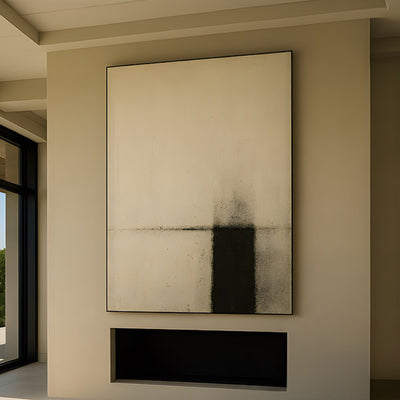
Office art decor covers far more than a framed print behind a desk. In a corporate reception, it might be a freestanding stainless steel sculpture that catches the entrance light and gives visitors something to look at while they wait. In a boardroom, it is often a single large wall piece that anchors the head of the table. In a home office, the scale drops but the logic holds: one considered piece beats three small ones scattered around.
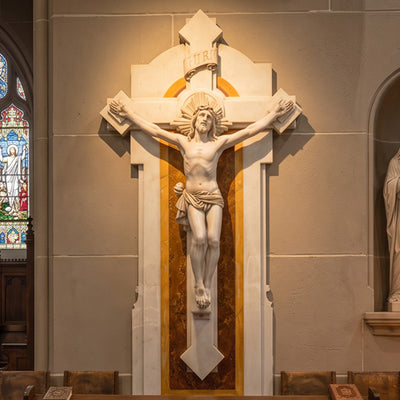
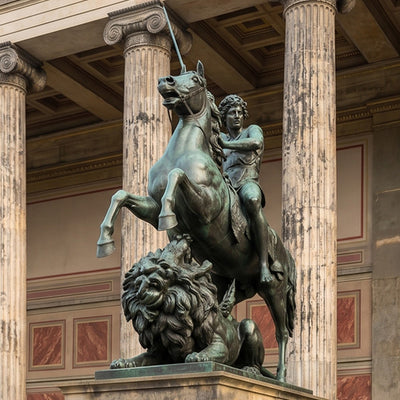
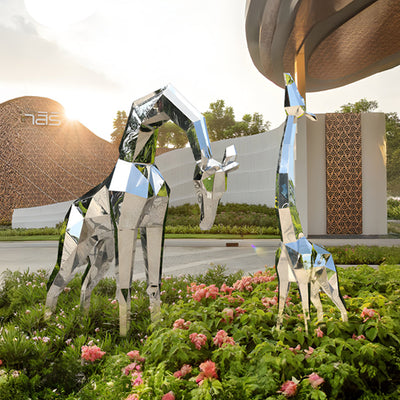
Outdoor settings change the brief again. A tech campus courtyard, a law firm's entrance garden, or the approach to a private studio can all take a large-scale metal or stone piece that would overwhelm an interior. We have placed Corten and bronze work at building entrances where the sculpture does double duty as art and as a wayfinding landmark. Browsing our office art collection gives a sense of the range, from wall-mounted work to floor-standing figures.
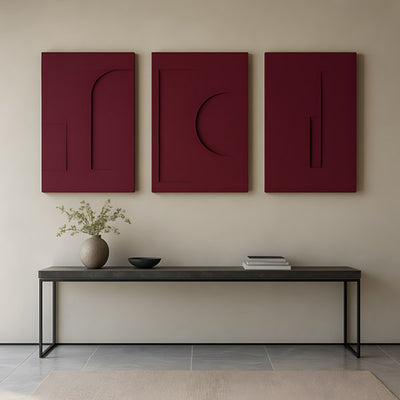
For home office art decor, the constraint is usually the wall itself. Studies and home offices tend to have shorter runs of uninterrupted wall, broken up by windows, shelving and doors. That pushes many buyers shopping for home office art decor toward metal wall art or a compact freestanding piece on a credenza rather than a large floor sculpture.

Scale, Sightlines and Pedestal Height: The Choices That Change How a Piece Reads
Three measurements decide whether a piece of office art decor works: the size relative to its wall, the height of its visual center, and the sightline from where people actually stand or sit.
Start with scale. A good rule for wall art is that the piece should fill roughly two-thirds to three-quarters of the available wall width above a console or credenza. Go smaller and the wall swallows it. For freestanding sculpture, the test is different: can it be read from the far side of the room? A piece under about 3 feet (0.9 m) tall on the floor tends to get lost in an open-plan office unless it sits on a pedestal.
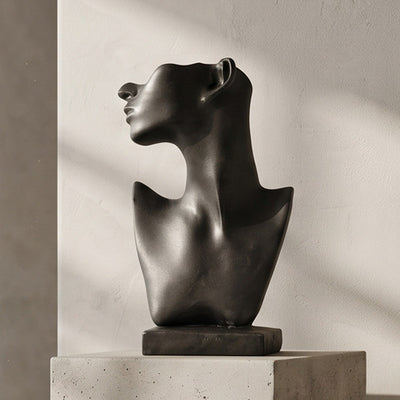
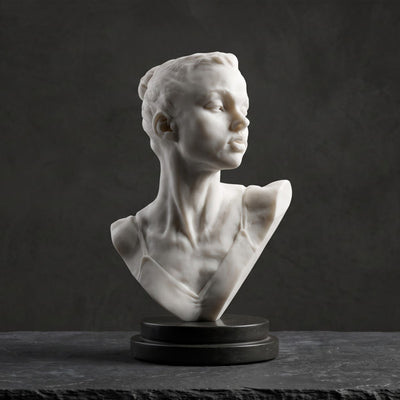
That brings us to pedestal height. A plinth is not just a base; it sets the eye line. For a bust or a smaller figurative piece, we usually aim to bring the focal point of the work close to standing eye level, around 5 feet to 5 feet 6 inches (1.5 to 1.7 m) off the floor. Too low and viewers look down on the piece, which flattens it. Too high and it feels defensive, held out of reach.
Sightlines are the part most people skip when planning office art decor. Before you commit, stand where visitors will stand and sit where people will sit. A reception sculpture is read standing; a boardroom wall piece is read seated, which lowers the effective eye line by nearly a foot. We have adjusted commission heights by 4 to 6 inches (10 to 15 cm) purely because the room's main viewing position was a low lounge chair.

Indoor Versus Outdoor Placement: When Each Wins
For wider placement ideas, Inspirational Wall Art for the Office: What Sculptors Weigh Before They Start is useful companion reading before finalizing the setting and sightlines.
Indoor placement wins when you want a piece read up close, in controlled light, as part of a curated interior. Bronze busts, marble figures and fine metal wall art all reward proximity. The detail carries the piece, so you want people within a few feet of it. This is where most office art decor lives.
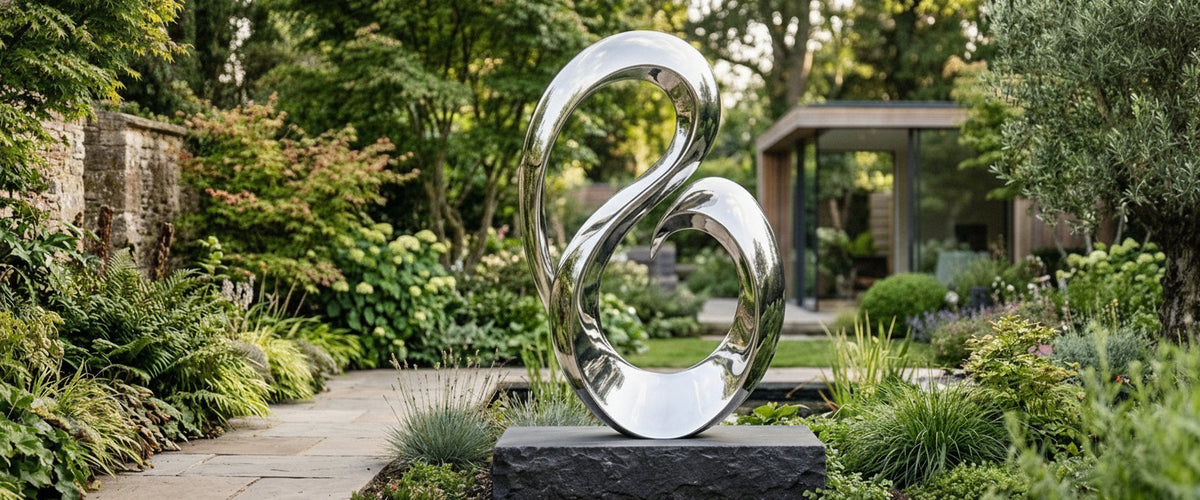
Outdoor placement wins when scale is the point. A large stainless steel or Corten sculpture at a building entrance, or a stone figure in a courtyard, does work that no interior piece can: it establishes the character of a place before anyone walks through the door. Weather-durable materials matter here. Bronze develops a patina over decades, and stainless steel and Corten are engineered to handle exposure, which is why they dominate our exterior commissions. The Getty's conservation notes on outdoor bronze are a useful primer on how these surfaces change over time (Getty Conservation Institute).
The mistake is treating the two as interchangeable. An interior-finished piece placed outside without the right coating or alloy will not age gracefully. If a commission is destined for a courtyard or entrance garden, we specify the material and finish for that exposure from the start rather than adapting an indoor design.

Light, Backdrop and Contrast: The Details That Decide Visual Impact
A piece of office art decor can be perfectly scaled and still fall flat because the light and the wall behind it are working against it. Contrast is the lever. A polished stainless steel sculpture needs something for its reflections to catch; place it against a busy window and it competes with the view instead of standing apart from it. A dark bronze needs a lighter backdrop to hold its silhouette, while a pale marble figure can vanish against white paneling.
Light direction changes everything for three-dimensional work. Flat, even overhead light kills the shadows that give a sculpture its form. A raking light from one side, whether daylight from a window or a directed fitting, brings out the modeling and makes the surface read. In offices with a lot of daylight, track where the sun falls at different hours; a piece that glows at 10 a.m. can go dead by mid-afternoon.
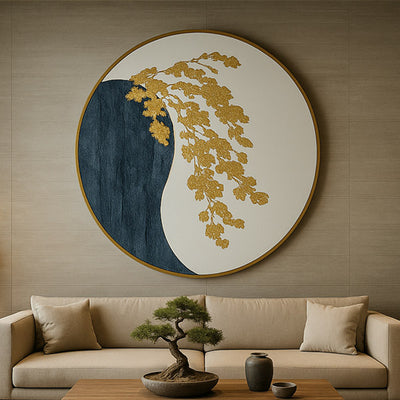
For wall art specifically, backdrop texture matters. A wood wall art piece brings warmth to a cool, glass-heavy office and can soften an otherwise hard-edged space. Metal work does the opposite, adding a crisp graphic line to a room full of soft furnishings. Choose the material that contrasts with the room, not the one that matches it.

Common Placement Mistakes We See in Commissions
The same handful of errors come up again and again with office art decor. Here is a quick checklist to run before you commit:
- Hanging too high. Art center-lined to the ceiling instead of the viewer. Bring it down.
- Undersizing the piece. A small work on a large wall reads as timid. Fill more of the wall or add a freestanding companion piece.
- Ignoring the seated eye line. Boardroom and lounge art is read from a chair, not standing.
- No contrast with the backdrop. Dark on dark, or pale on pale, erases the piece.
- Corner exile. Sculpture pushed into a dead corner where no traffic passes. Put it on a sightline.
- Wrong material for the exposure. Interior finishes placed outdoors. Specify for the environment up front.
- Forgetting the approach. Reception and entrance pieces are seen first from a distance; check how it reads from the door.
When a wall or space defeats every off-the-shelf option, that is usually the moment to commission office art decor. A bespoke piece sized and finished for the exact wall, courtyard or lobby removes the compromise entirely. Giant Sculptures works with buyers, designers and architects on exactly this: large-scale and bespoke work in bronze, stainless steel, Corten, stone and marble, engineered to last and sized to the room rather than the catalog.

Refreshing an Existing Office Without Starting Over
You do not always need a new commission to reset a space. Rehanging existing office art decor at the correct height, adding a single directed light, or moving a freestanding piece onto a sightline can transform how a room feels for the cost of an afternoon. If the budget allows one addition to your office art decor, a well-scaled statement piece at the entrance or behind the main desk usually does more than several smaller pieces spread thin.
Budget for a piece like this depends on material, scale, complexity, engineering, installation and finishing, so the honest answer is to request a tailored quote once you know the space and the effect you are after. That way the price of your office art decor reflects the actual brief rather than a guess.