



















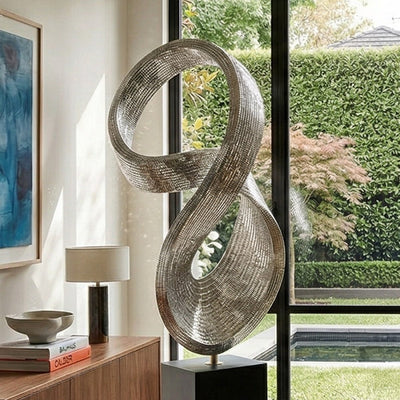

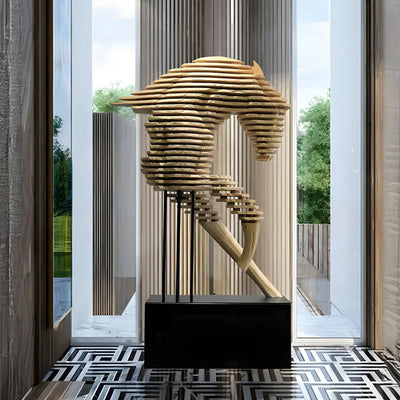
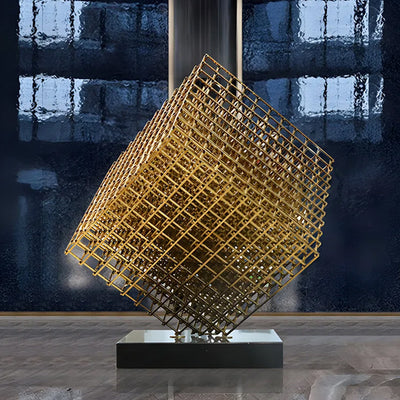
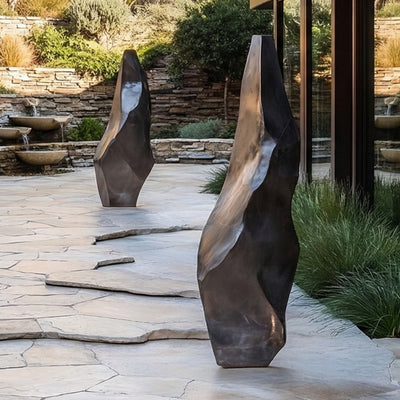













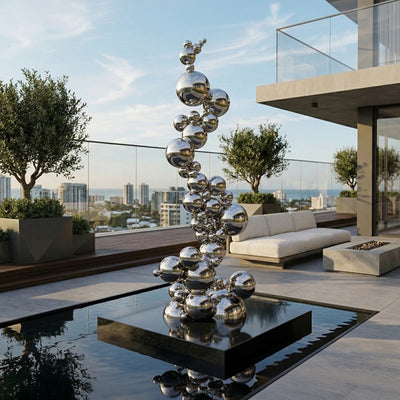

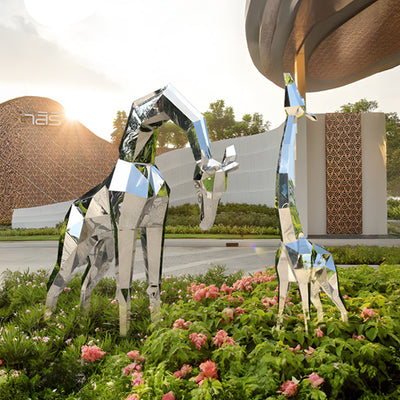


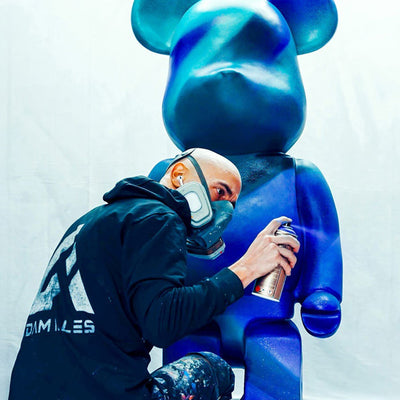
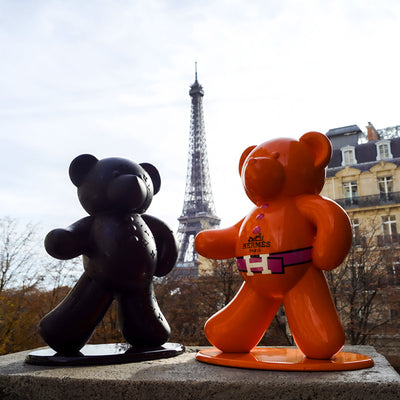





Plenty of studios make work that photographs well at 2 feet tall and falls apart at 12, sometimes literally. When you compare sculptors offering large sculptures, the portfolio is the least useful thing they send you. What matters is whether the studio can engineer, lift, finish and deliver a piece that may weigh as much as a car and must stand in the wind for decades.
At Giant Sculptures we make and ship large-scale bronze, stainless steel, Corten and stone work for gardens, hotels and private estates worldwide. The same failure points come up again and again. Here is how we would vet any studio, including our own.

Quick Answer: What to Ask Before You Commission
Engineering: Who designs the internal armature, base plate and lifting points, and who signs the wind-load calculation?
Facilities: Ask for photos or a video of the overhead crane, welding bay and finishing area alongside the finished work.
Process: Expect a maquette or digital model, a material sample and progress photos at agreed stages.
Delivery: Confirm whether "free shipping" means a curbside drop or a craned, anchored installation.
A 10-Foot Sculpture Is Not a Scaled-Up Tabletop
Scale changes the physics. Double the height of a solid form and you roughly multiply its volume by eight, while the surface catching the wind grows fourfold. That is why monumental bronze is cast hollow around an internal stainless steel armature, why fabricated stainless figures are skinned over a welded frame, and why large stone pieces rely on pinned and doweled joints rather than glue.
Lifting points have to be designed in from the first drawing. On our larger bronzes, threaded sockets sit hidden in the shoulders or crown, and are plugged and patinated after installation. Without them, trouble follows. A big figure with no lifting points leaves the rigger slinging it around the legs, the thinnest and most fragile part of the casting. Ask any studio to point to where its slings go. If the answer is vague, so is the engineering.
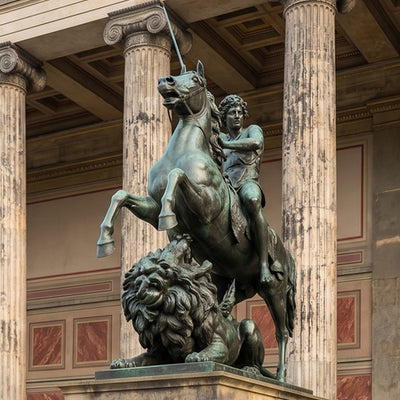
Designed-in lifting points let the rigging crew lift a bronze without slinging it around fragile limbs.
The base plate matters just as much. A heavy steel plate, welded or bolted to the armature and fixed with anchor bolts into a concrete footing, is what keeps a 10-foot (3 m) piece upright through a Texas thunderstorm.
Gantry Cranes and Welding Bays Tell You More Than a Portfolio
Ask for a short video walk-through of the workshop. Good sculptors offering large sculptures will have overhead gantry cranes rated well above the weight of the pieces they sell, enough ceiling height to stand a work upright, and welding bays big enough to assemble it in one piece before it ships.
Crane capacity and ceiling height show what a studio can really build.
Pay attention to where finishing happens. In our studio, stainless steel is polished in a separate area from any carbon steel work, because stray grinding dust lands on the surface and rusts, leaving the brown tea staining that buyers often blame on the material. A studio that grinds, welds and polishes on the same floor will have trouble keeping a mirror finish clean. Subcontracted casting or fabrication is common and perfectly acceptable. The studio should simply tell you who does what.

Who Approves the Structure? In-House Engineering Versus Outside Calculations
Some sculptors offering large sculptures employ engineers in-house. Others commission a site-specific calculation from an outside structural engineer. Either can work well. What should worry you is a quote where nobody is named. In the US, wind loads are generally worked out using the ASCE 7 standard, and a sculpture on an exposed site in the Hamptons or on the Florida coast will face very different forces from one in a sheltered Napa courtyard.
Many US municipalities and commercial clients also need stamped drawings from an engineer licensed in that state. Find out early whether the studio provides them, coordinates with your local engineer, or leaves the footing design to your contractor.
Maquette, Sample Panel, Progress Photos: What a Serious Studio Shows You
Serious sculptors offering large sculptures do not make you ask for proof of progress. Expect a maquette or 3D model to fix the proportions, then a physical sample of the patina, polish or Corten weathering, then photographs at the armature, assembly and final finishing stages.
Sample panels deserve more attention than buyers usually give them. We send them to the site whenever we can, because a bronze patina that reads warm and rich in a Dallas courtyard can look flat under the gray coastal light of Long Island. Approving a finish from a screen photo is how disappointing installations happen.
Free Shipping on Large Sculptures Often Means Curbside
Sculptors offering free shipping for large sculptures usually build freight into the price and deliver to the curb on a flatbed. For a crated piece weighing a ton or more (900 kg plus), that leaves you with a very heavy box at the end of the driveway and a driver who is not insured to move it.
A craned installation adds a site survey, crane hire, sometimes a permit to close a lane, a rigging crew, a footing poured and cured in advance, anchoring, and on-site touch-up of any finish marks. Access is the hidden variable. On a vineyard or walled garden where a mobile crane cannot reach over a pergola, a compact spider crane brought in through a side gate may be the only option. For overseas deliveries, the crates themselves must use heat-treated timber that meets ISPM 15, or they risk being held at customs.
Cost depends on material, scale, complexity, engineering, site access, installation and finishing. A tailored quote that lists each line will tell you far more than the word "free."

Checklist for Vetting Sculptors Offering Large Sculptures
Ask them to show you exactly where the lifting points and anchor bolts go.
Get the name of the engineer who signs the structure, and check whether the calculation is specific to your site.
Ask for a video of the crane capacity and the finishing area.
Agree on approval stages for the maquette, sample panel and progress photos before you pay a deposit.
Get delivery terms in writing: curbside, placed, or fully installed and anchored.
Ask for care guidance written for your chosen material and climate.
If you are planning a bespoke commission, Giant Sculptures handles engineering, crating and installation as one project. You can also browse our stainless steel sculptures to get a sense of scale and finish before we talk about your site.
For wider placement ideas, Anime Character Art at Full Scale: Why a Capsule Figure Can't Simply Be Enlarged is useful companion reading before finalising the setting and sightlines.