




































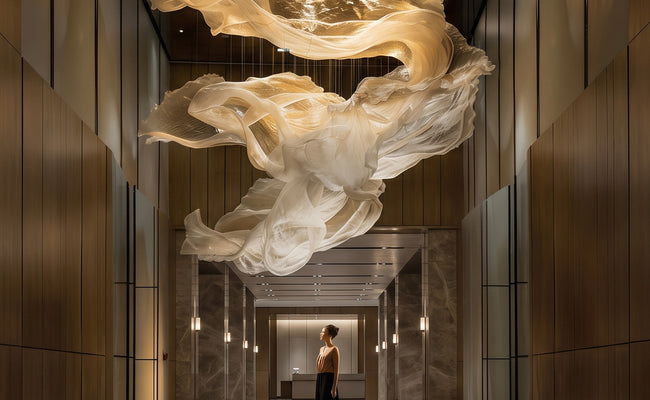
























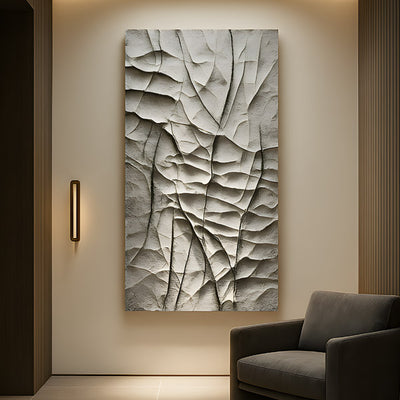
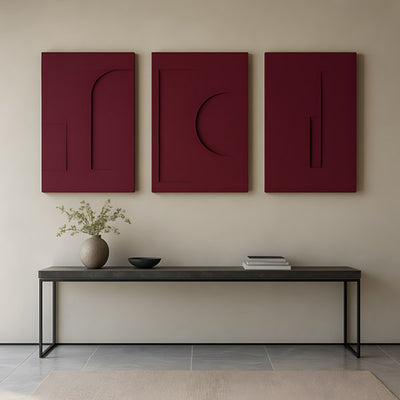

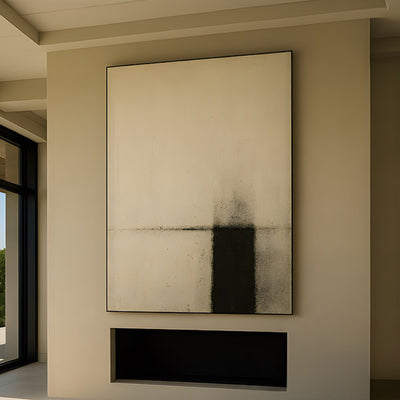




























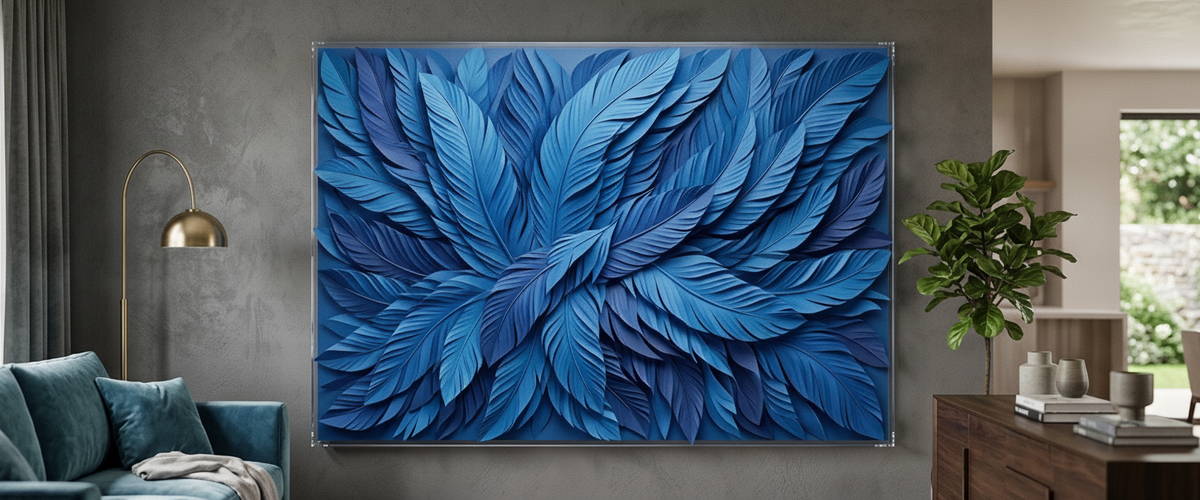

A paper relief panel peaks the week it goes up. Pleats are crisp, folds throw a hard shadow, and the wall behind does half the work. Textured paper wall art sells itself on that shadow line, which is why material honesty matters more here than with almost any other piece you hang. Shadow depends on sharp edges, and a room erodes edges quietly, over years, until the install photographs look better than the wall does now.

Key Takeaways
Paper relief loses depth by softening, not by breaking. The change is gradual and easy to miss.
Light, humidity swings and dry radiator heat cause more damage than dust or handling.
Papier-mache and plaster give similar texture but very different lifespans and repair options.
If you love a texture and want it to outlive the room, cast it in metal or a high-grade composite rather than paper.
Sealing, a floating mount and a breathing gap behind the panel buy years of life for textured paper wall art at very little cost.
Budget for a commissioned relief depends on scale, material, complexity, engineering and finish, so ask for a tailored quote.
Year One to Year Five: How Raking Light Softens a Paper Relief
Year one, nothing happens that you can see. Year two, the highest folds start to lose their bite where the sun lands hardest. By year three the paper has taken on a faint warmth, and because the shift is even across the panel you read it as "the light in here changed." By year five, side-lit texture that used to read from across the room only reads from six feet away. The relief has not collapsed; it has gone soft.
Two things drive this. Fiber relaxes under repeated humidity cycling, so folds creep back toward flat, and pigment shifts under cumulative light exposure. Conservation guidance for works on paper is unusually blunt on the second point: light damage is cumulative and it does not reverse, which is why the Library of Congress advises keeping paper works out of direct sunlight and away from unfiltered light sources. A framed print fades. A textured paper wall art panel fades and flattens, and the flattening is what kills the piece.
Raking light is what makes a paper relief work, and it is the first thing a room quietly takes away.
Radiator Walls, Bathroom Steam and South-Facing Glass, Ranked
Not every bad wall is bad in the same way, and textured paper wall art fails differently depending on which one it lands on. From our own returns and remake conversations, here is the honest ranking.
Directly above a radiator or forced-air vent. The worst. Rising dry heat pulls moisture out of the fibers all winter, then the room re-humidifies in summer. That cycle does more to a relief in three years than a decade of gentle light.
Bathrooms and enclosed steam rooms. Fast and visible. Adhesive lines soften, layered petals sag, and mold risk climbs. Conservators are consistent that swinging relative humidity, not one high reading, does the real structural damage to paper-based work; the NEDCC preservation leaflets spell out why stability beats any single ideal number.
South-facing glass with no film or shade. Slower, but relentless. On one sun-drenched wall we were asked about, the owner rotated the panel 180 degrees at the two-year mark and the color line between the shaded and exposed halves was obvious.
Over a working fireplace. Soot plus heat plus the one place everybody wants to hang art. Say no to this wall and thank yourself later.
Interior hallway, north-facing room, stable HVAC. The good wall. Paper relief can hold up beautifully here for a long time.
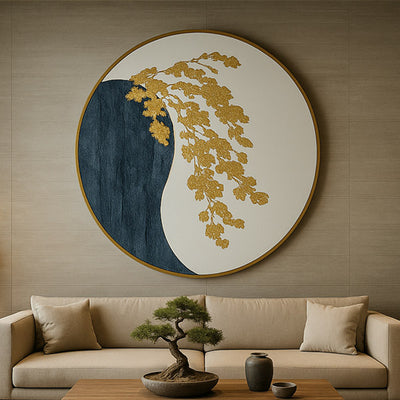
If the good wall is the one you actually have, paper stops being a compromise. A north-lit study or a climate-controlled hallway is where a piece like the Volara Flame Ring Paper & Acrylic 3D Wall Art keeps its shadow line, because nothing in that room is cycling the fibers twice a year.

Papier-Mache Versus Plaster Relief: Same Texture, Very Different Decade
Most textured paper wall art is papier-mache or a laminated paper build, and plaster relief is its rigid cousin. Both give you deep, hand-shaped surface. They age nothing alike. Papier-mache is light, forgiving to hang, and cheap to ship, but it stays hygroscopic forever. It takes on and gives up moisture with the room, which is exactly the mechanism that softens edges. Plaster relief is rigid and holds a crisp arris for decades, but it is heavy, brittle at the corners, and unhappy with building movement. Hairline cracking in plaster is common, usually cosmetic, and genuinely repairable by a decorative plasterer.
The practical read: papier-mache is a five-to-ten-year piece in a good room and a three-year piece in a bad one. Plaster is a multi-decade piece if it is mounted on something that does not flex and nobody knocks the edges. Neither belongs outdoors, in a pool house, or in a coastal room with the windows open.
That shorter horizon is not always a problem. Where the brief is a phase of life rather than a lifetime, a nursery or a child's room for instance, a light petal-built panel such as the Blossomkin Bird 3D Floral Wall Art is built and priced for exactly that span, and it hangs on a plasterboard wall without fixings that need thinking about.
When Cast Resin, Fiberglass or Metal Is the Honest Answer
Sometimes the thing you actually love is the form, not the paper. Layered feather shapes, a bloom radiating from a center point, a ring of flame-like petals. Those reliefs translate extremely well into cast or fabricated materials, and once they do, the aging problem disappears.
The same layered petal profile, first in paper and acrylic, then reinterpreted in fabricated metal.
Concentric layered petals that live entirely on shadow depth, the geometry behind the Volara Indigo Bloom Paper & Acrylic 3D Wall Art, are the profile we get asked to reinterpret most often. In paper and acrylic it is elegant and light. Cast in bronze or fabricated in brushed stainless, the same profile becomes a permanent architectural feature that shrugs off a hot, glass-heavy sunroom. If the piece is going into a hospitality lobby, a stairwell with skylights, or any wall you cannot easily reach, skip paper and go straight to metal from our metal wall art range or a commissioned bronze wall art panel.
Cast resin and fiberglass sit in between. They hold fine surface detail, they can be finished to look like plaster, stone or patinated metal, and they do not care about humidity. For a scaled-up version of a design you first saw as paper, resin is often the sensible middle path, especially at wide formats where metal weight starts driving structural work into the wall build. Carved timber is worth a look at the same decision point: wood wall art gives you real depth and warmth with none of paper's sensitivity to a damp season.
Sealing, Floating Mounts and Breathing Gaps
Small interventions, large payoff. Most textured paper wall art arrives ready to hang flat against plaster, and flat against plaster is where trapped moisture does its work.
Leave a breathing gap. A quarter-inch to half-inch (6 to 12 mm) standoff behind the panel lets air move and stops cold-wall condensation soaking the back sheet.
Float the mount. Cleat or standoff fixings let the panel move slightly with the season instead of fighting the wall.
Seal edges, not faces. A conservation-grade consolidant on cut edges slows moisture ingress without glazing over the texture you paid for.
Filter the glass. UV window film on the nearest window is the single cheapest life extension available.
Dust with air, not cloth. A soft blower or low-suction brush attachment. Cloth catches folds and tears them.
Rotate where the design allows. Even a symmetrical piece turned once a year evens out exposure.
Watch the wall, not just the art. Damp patches, new cracks and radiator upgrades all change the equation.

What Restorable Looks Like, and When a Paper Panel Is Finished
Restorable: lifted layers that can be re-adhered, a torn edge behind the frame line, surface grime, one crushed fold from a move. A skilled paper conservator or the original maker can usually bring these back.
Finished: fibers gone brittle and cracking when flexed, mold staining through from the back, or overall flattening across the whole surface. That last one is the quiet ending. Nothing is broken, so nobody calls it damage, but the shadow is gone and the piece no longer earns its wall. At that point the smart move is to take the design you loved and have it remade properly. We have done exactly that for an entryway relief that had gone flat under skylight glare; the replacement went up in fabricated stainless and the shadow line has not moved since.
Commissioning a Relief That Outlives the Room
Giant Sculptures builds large-scale bespoke work, and wall relief is one of the areas where buyers most often start in the wrong material. Bring us a photograph of a paper piece you like and we will talk through scale, wall structure, fixings, finish and how the light in that specific room will behave over ten years. Pricing depends on size, material, complexity, engineering and installation, so we quote each commission individually rather than publishing bands that would mislead you.
If you are still shopping and the room is genuinely stable, textured paper wall art is a legitimate choice with real charm. Work through the full wall art and wall decor range, then match the material to the wall rather than the mood board.
For wider placement ideas, Bronze Metal Wall Art: How Placement Changes What You See is useful companion reading before finalising the setting and sightlines.