
































































Most resin statues that look tired after a few summers have been cleaned badly, placed badly, or both. If you want to clean outdoor resin statues without stripping the paint or letting water into the casting, the method matters far more than the bottle you buy. Below is the routine we give clients, along with the placement changes that mean you reach for the brush much less often.
Looking for the full range in this category? Browse our Resin Sculptures & Statues collection for every available finish, size, and configuration.

At a Glance
Use a soft brush, a few drops of pH-neutral soap and cold water. Nothing harsher.
Never use a pressure washer, solvent or bleach on painted resin.
Lift bird droppings and sap within days. Treat lichen slowly and gently.
A chalky surface that comes back after washing is UV damage. It is not dirt.
Raise the piece on a plinth and move it out from under trees.
Why Outdoor Resin Gets Dirty Unevenly
Garden resin is usually a cast polymer shell, often fiberglass-reinforced, finished with paint or a faux-stone coating. It collects dirt differently from carved stone or bronze. North-facing sides stay damp longer, so green algae settles there first. Drip lines form wherever rain runs off a nose, a chin or the fold of a robe and pools on the surface below. In spring, pollen sticks to any slightly tacky coating and turns gray-yellow in the creases.
The result is a statue that looks clean on one side and grubby on the other. That tempts owners to scrub hard at the bad side, and the outcome is a patchy finish that looks worse than the dirt did. Uneven grime calls for even, patient cleaning across the whole piece.
Put the Pressure Washer Away
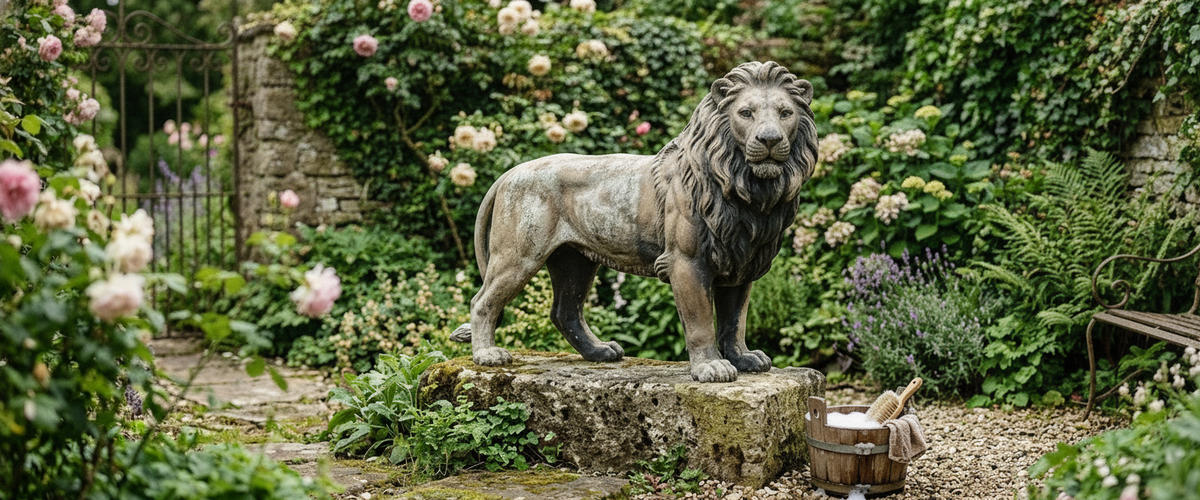
We see the same pattern every spring. A pair of painted resin lions comes through a pressure wash looking bright. By January, fine white lines have spread across both manes. A typical consumer jet, around 1,500 psi (about 100 bar), lifts paint at the edges and forces water into hairline gaps along the seam where the casting halves meet. Freeze-thaw does the rest, and the owner ends up pricing a replacement.
That damage rarely shows the day you clean. It appears after the first hard frost. When you clean outdoor resin statues, a garden hose on a gentle shower setting is the most force the casting should ever meet.

How to Clean Outdoor Resin Statues, Season by Season
Whenever you clean outdoor resin statues, the same gentle kit works all year: a soft nylon brush, an old paintbrush for detail, a bucket of cold water with a few drops of mild, pH-neutral dish soap, and a clean cotton cloth. Cold water matters, because hot water can soften some coatings and leave them dull.
Spring: This is the main wash. Rinse first to float off loose grit, then work from the top down so dirty water never runs over clean areas. Rinse thoroughly and let the statue dry in shade.
Summer: Rinse off dust and pollen about once a month. Clean early in the morning. On a hot afternoon in Texas or Arizona, soap dries in streaks before you can rinse it.
Fall: Clear leaves from the base and recesses, then check closely for chips and cracks. Touch up bare spots with matched exterior paint before winter rain reaches them.
Winter: In freezing climates, never wash below about 40°F (4°C). Empty any hollows that hold water, then cover the piece with a breathable cover or bring smaller statues indoors.
Bird Lime, Lichen and Tree Sap: Act Before They Set
Bird droppings are acidic. Left baking in the sun, they can etch a painted finish within weeks. Lay a soaked cloth over the deposit for ten minutes, then lift it away. Don't scrape. Tree sap responds to the same soak followed by soapy water. If it won't budge, test a dab of isopropyl alcohol on a hidden spot before you use it sparingly on the stain.
Lichen is slower and more stubborn. The Royal Horticultural Society notes that lichens grow slowly and do plants no harm, and on resin they are mostly a cosmetic problem. Soften patches with water and brush them out over several sessions. A wire brush or bleach will take the paint with it.
When the Chalky Film Isn't Dirt
If a pale, powdery bloom wipes onto your fingers and returns a week after washing, the surface itself is breaking down. UV light degrades the binder in paints and polymers, a process known as chalking. More cleaning removes a little of the finish every time.
A clear UV-resistant coat can slow this on a sound surface, but it cannot rebuild resin that has already degraded. Sealing over chalk traps the powder, and the coat peels within a season. The real fix is a light scuff, primer, repaint and then a clear coat, or an honest acceptance that resin has a working life outdoors.
Placement Changes That Cut the Cleaning
For wider placement ideas, How to Clean a Marble Statue Without Ruining the Finish is useful companion reading before finalizing the setting and sightlines.
The easiest way to clean outdoor resin statues less often is to place them well. We tell clients that much of the maintenance is decided on installation day.
Set the statue on a stone or concrete plinth at least 12 inches (30 cm) high, so soil splash and standing water never reach the base.
Keep it outside the drip line of trees. Sap, honeydew and leaf litter fall across the whole canopy, not just near the trunk.
Avoid spots beneath bird perches, eaves and feeders.
Allow airflow around north faces so they dry faster.
Keep it out of the sprinkler arc. Hard water leaves mineral spots that look like chalking.

Quick Cleaning Checklist
Run through these steps every time you clean outdoor resin statues.
Check the forecast. You want dry, mild weather that stays above freezing.
Rinse gently with a hose, never a pressure washer.
Wash top down with cold, mildly soapy water.
Soak stains instead of scraping them.
Rinse fully and dry in shade.
Inspect seams and repaint chips the same week.
Resin or a Material Built to Outlast It?
Resin suits lightweight, decorative pieces and short-term schemes. It struggles in high-UV regions, hard freeze-thaw zones and at real scale, where tall resin forms need internal armatures to resist wind load. Before you buy, weigh four things: how long you expect the piece to last, how harsh your climate is, how large it needs to be, and how much upkeep you will realistically do.
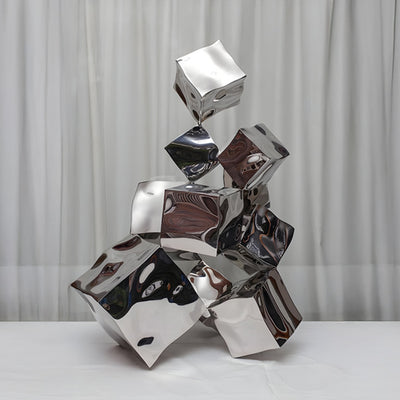
If the honest answers point to decades of ownership, a landmark scale, or a coastal garden in Malibu or a sun-baked Napa estate, metal and stone make more sense. Bronze develops a patina rather than chalking. Stainless steel sculptures need little more than an occasional rinse. At Giant Sculptures, we build bespoke commissions in bronze, stainless steel, Corten and stone. Budget depends on material, scale, complexity, engineering, installation and finishing, so ask us for a tailored quote before you commit to a finish you will be cleaning for years.