






































































































The fastest way to ruin a good indoor sculpture is to treat "indoors" as a single, safe environment. A bronze figure in a dry Napa hallway and the same bronze in a humid Miami sunroom age on completely different timelines. A durability comparison indoor buyers can actually use has to start with the room, not the material, because the room decides what the material has to withstand.
Looking for the full range in this category? Browse our Indoor Sculptures & Statues collection for every available finish, size, and configuration.
We ship large, bespoke pieces into homes, hotels, and corporate lobbies across the US, and the questions before a commission are almost always the same: will it mark, will it fade, will it need constant fussing. A useful durability comparison indoor starts here, because the honest answer depends on where it stands and what it is made from. Here is how we think about it in the studio.

Indoor Sculpture Durability at a Glance
Think of this list as a quick durability comparison indoor buyers can scan before the detail:
- Toughest indoors: stainless steel and bronze. Both shrug off touch, temperature swings, and decades of ownership.
- Beautiful but demanding: marble and stone. Structurally durable, but porous surfaces stain from oils, wine, and acidic spills.
- Context-dependent: Corten steel, which is built for outdoor weathering and rarely the right call for a clean interior.
- Temporary by nature: an indoor ice sculpture, which is an event piece measured in hours, not years.
- The real variable: humidity, direct sun, and foot traffic decide durability more than the material label on the invoice.

What Durability Comparison Indoor Really Looks Like Room by Room
A room-by-room durability comparison indoor is less about impact resistance and more about slow, invisible stress. Light, humidity, and handling do the damage, and they behave differently in each room.
An entrance hall is the harshest interior spot most people never think about. Doors open onto changing weather, boots track grit, and everyone touches the piece nearest the door. Here, indoor floor sculptures in bronze or stainless steel earn their place because fingerprints wipe away and a scuff buffs out. A polished marble base in the same spot will show shoe marks and salt within a season, which is the sort of detail any honest durability comparison indoor should flag.
Living rooms and galleries are gentler, but sunlight is the quiet enemy. South-facing glass in a California or Texas home delivers UV that fades patinated finishes and warms one side of a piece more than the other, which matters for stone that expands and contracts. The Getty Conservation Institute has documented how sustained light and temperature cycling stress museum objects over time (getty.edu/conservation); a home is no different, just less monitored.
Bathrooms, spa rooms, and sunrooms are humidity traps, and this is where a durability comparison indoor pays off. Bronze handles this well thanks to a stable patina, stainless steel barely notices, but untreated iron and some stone will suffer. This is also the room where an indoor water sculpture lives most happily, provided the metalwork and pump are specified for constant moisture rather than adapted from a dry-room design.

Scale, Sightlines, and Pedestal Height
Resilience keeps a piece intact; scale decides whether anyone actually looks at it. The two get confused constantly, even in a careful durability comparison indoor.
A common mistake is buying for the showroom, not the room. A sculpture that reads as generous in an open studio can vanish against a ten-foot (3 m) wall of glass at home. As a rough starting point, a floor piece wants to reach at least a third of the ceiling height to hold its own, and a hero piece in a double-height lobby often needs to clear 7 to 8 feet (2.1 to 2.4 m) before it commands the space.
Pedestal height changes the read entirely. Lift a figurative bronze so its focal point sits near eye level and it feels intentional and composed. Leave it low and viewers look down on it, which flattens the pose. For abstract and kinetic work the opposite can be true; an indoor kinetic sculpture often wants room above and around it so the movement has air, which means a lower base and a clear ceiling zone rather than a tall plinth.
Sightlines matter more than square footage. Before we finalize scale on a commission, we ask where the piece is seen from: the sofa, the top of a stair, the far end of a room. A piece engineered to be approached head-on can look awkward when the main view is a three-quarter angle from a landing. Getting this right does more for long-term satisfaction than most buyers expect.

Indoor Versus Outdoor Placement: When Each Wins
For wider placement ideas, 3 Indoor Decorative Sculptures That Anchor a Room is useful companion reading before finalising the setting and sightlines.
The durability comparison indoor vs outdoor sculpture materials question usually comes down to one thing: does the piece need to survive weather, or survive people?
Outdoors, the enemies are UV, rain, freeze-thaw cycling, and salt air. Materials like Corten steel and cast bronze are built for it, and Corten in particular develops its protective rust layer specifically because it is left exposed. Bring that same Corten inside and a durability comparison indoor turns unfavorable fast; you get a material that wants to weather with nothing to weather against, plus the risk of rust bleed onto floors before it stabilizes. It rarely belongs in a clean interior.
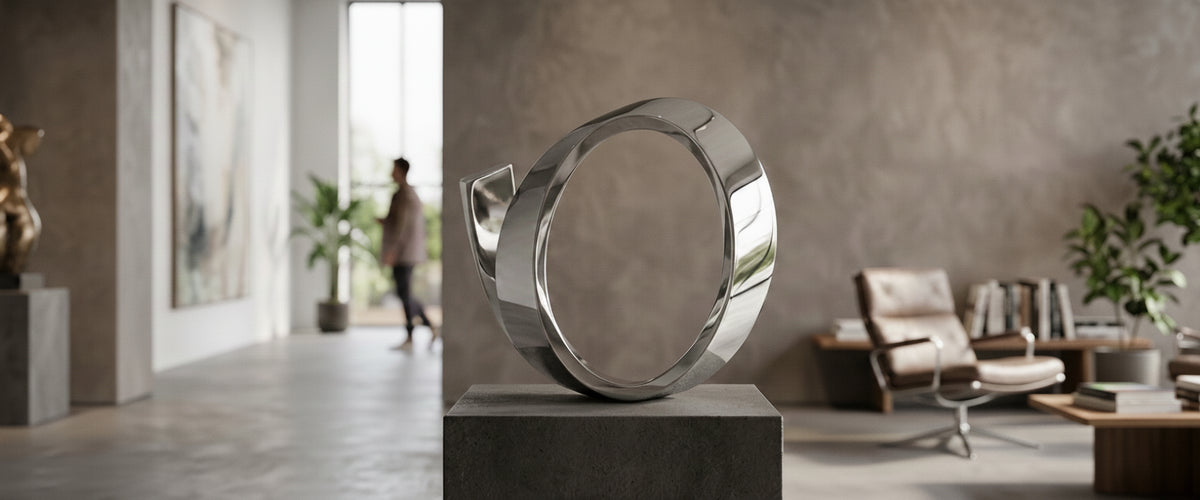
Indoors, the enemies shift to fingerprints, cleaning products, dropped objects, and dry heating that cracks stone over years. This is where stainless steel sculptures quietly win any durability comparison indoor. A mirror-polished stainless piece reflects a room, resists corrosion, and tolerates the occasional bump from a vacuum or a curious guest. Bronze is close behind and brings warmth that steel cannot.
Some pieces genuinely move between the two. If you own an iron garden sculpture, the seasonal question of whether to store it inside over winter is a real one, and the answer is usually yes in any climate that freezes and thaws, because trapped moisture in cast iron expands and cracks. A dry garage or utility room beats a wet garden bed every time. If a piece is going to migrate, tell us at the commission stage so we can specify a finish that behaves in both settings.
Light, Backdrop, and Contrast
A hard-wearing piece still needs to be seen well, and lighting is where interior sculpture is most often let down. A durability comparison indoor means little if the lighting hides the form.
Contrast against the backdrop decides visual impact. A dark patinated bronze reads beautifully against a pale plaster wall and disappears against dark walnut paneling. Polished stainless does the reverse; it needs something to reflect, so a busy or dark backdrop gives it life while a flat white wall leaves it looking blank.
Directional light carves form. A single angled spot at roughly 30 to 45 degrees pulls out the modeling in a figure and throws a shadow that doubles the presence of the piece. Flat overhead lighting kills the same sculpture. Warm light flatters bronze and marble; cool light suits steel. These are small choices that cost almost nothing and change everything.
Common Placement Mistakes We See
These come up again and again in commissions and consultations, and most trace back to skipping a durability comparison indoor at the start.
- Buying without measuring sightlines. Bring us the room's dimensions and the main viewing angles, not just the floor area.
- Ignoring humidity. A sunroom or pool house needs materials and fixings rated for moisture from the start.
- Under-scaling the hero piece. In tall rooms, buyers routinely go a size too small and regret it.
- Forgetting the base. A heavy indoor floor sculpture needs a floor that can carry it and a fixing plan that keeps it from tipping.
- Direct sun with no thought to fading. Position patinated and painted finishes away from all-day glass, or accept some change over years.
Commissioning for a Lifetime Indoors
Bespoke work lets you match the material to the exact room rather than compromise, and it bakes a durability comparison indoor into the design. When we take on a commission, we ask about humidity, sun exposure, foot traffic, and how the piece will be viewed before anyone talks about size. That conversation is what separates a sculpture that looks right for one photo shoot from one that still looks right in twenty years.
Giant Sculptures specializes in large-scale, bespoke pieces engineered for long ownership, in bronze, stainless steel, stone, and marble. Whether you want a quiet interior figure or a kinetic piece for a lobby, a durability comparison indoor is answerable; it just needs the room in the conversation. For anything specific, request a tailored quote, because budget depends on material, scale, complexity, engineering, and finishing rather than any single number.