





































































































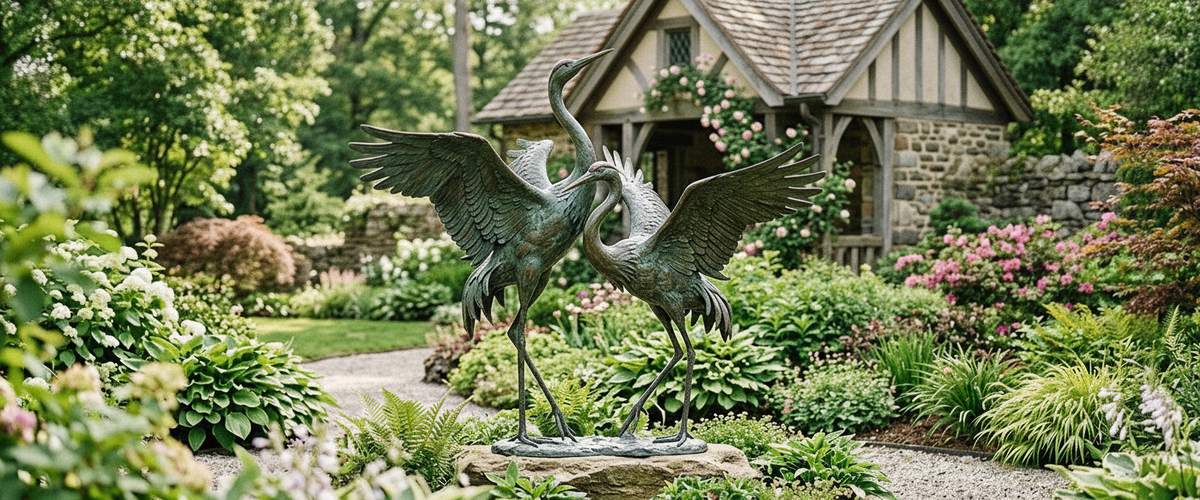

Most of the bronze damage we see started with a bucket, a green scouring pad and good intentions. An owner decides the piece looks tired, reaches for a household cleaner, and takes decades of patina off in a single afternoon. Learning to clean bronze sculpture surfaces properly takes about ten minutes and saves an expensive conversation with a metals conservator later. The short version of every clean bronze sculpture routine we recommend: warm water, a soft brush, no chemicals, and wax applied at the right moment.
Looking for the full range in this category? Browse our Bronze Sculptures collection for every available finish, size, and configuration.

Key Takeaways
That green or brown film is usually the patina, and on outdoor bronze it is a protective corrosion layer, not grime.
Wash with warm water and a soft natural-bristle brush. Nothing abrasive, no vinegar, no bleach, no pressure washer.
Wax outdoor bronze once or twice a year on a warm, dry surface. Indoor bronze needs far less.
Bird droppings, hard-water sprinkler overspray and de-icing salt do more harm than weather ever will.
Cleaning a bronze sculpture is subtraction only: lift what has landed on the metal, keep what has grown out of it.
Streaking, blotching or bright raw metal showing through means stop and get professional advice.
That Green Film Is Not Dirt
Bronze is a copper alloy, and copper alloys react with air and moisture to form a surface layer of copper compounds. Foundries accelerate and control that reaction with heat and chemistry to create the patina you buy: chestnut brown, verde green, near-black, or the warm honey tones popular on contemporary figures. Left outside, the piece keeps developing. A sculpture in coastal Malibu air will shift faster than the same casting in dry Santa Fe. That drift is normal, and it changes nothing about how you clean bronze sculpture surfaces.
That layer is doing structural work. Stable copper corrosion products form a barrier that slows further attack on the metal beneath, which is why the Copper Development Association treats natural patination as a performance feature of architectural copper alloys rather than a defect. Scrub it off and you expose fresh metal that will re-corrode unevenly, usually in ugly patches you cannot hide.
So the goal of any clean bronze sculpture routine is narrow: remove what has landed on the surface, and leave what has grown out of it.

The Wash Routine We Give Every Client
This is the clean bronze sculpture routine we send out with delivery paperwork on large outdoor commissions. It works on a 3 ft (0.9 m) garden figure and on a monumental piece at 15 ft (4.6 m).
Pick your weather. A dry, mild day. Avoid full midday sun on dark patinas; hot metal dries water into mineral spots before you can sheet it off.
Rinse first. Plain warm water, low pressure, from the top down. Loosen grit before anything touches the surface.
Brush gently. A soft natural-bristle brush works into drapery folds, feathers, manes and undercuts. Use distilled or filtered water if your supply is hard.
Skip the soap unless you need it. If there is greasy film, a few drops of pH-neutral, non-ionic detergent in warm water is the limit. Rinse thoroughly afterward.
Dry properly. Soft cloths, then compressed air or a hairdryer on low for trapped water in seams and hollow sections. Standing water is what causes streaks.
Low pressure, warm water and a soft brush lift surface deposits without touching the patina underneath.
Surface complexity decides how long it takes to clean a bronze sculpture. A smooth contemporary form can be washed and dried in twenty minutes, while a deeply modeled figurative group with heavy drapery and undercuts, of the kind seen in the Life-Size Classical Goddess and Deer Bronze Sculpture - 250cm, holds water in its folds and needs a slower, more deliberate drying stage.
Never use: wire brushes, abrasive pads, steel wool, vinegar, lemon, ketchup remedies, brass polish, bleach, patio cleaner, or a pressure washer. Every one of those will thin or strip the patina, and brass polish will leave a hard, bright shine on a sculpture that was never meant to look like a doorknob. Keep all of them out of your bronze sculpture cleaning kit.
Waxing: Timing Matters More Than Product
Washing is only half of clean bronze sculpture patina care and maintenance; waxing is the half that makes it last. Wax is the sacrificial layer that takes the punishment instead of the patina. Use a microcrystalline conservation-grade wax rather than a household furniture polish, which can contain silicones and solvents you do not want sitting on a patinated surface. The National Park Service guidance on outdoor bronze care sets out the same approach for public monuments: gentle washing, then a protective wax coating renewed on a set cycle.
The trick is surface temperature. Warm bronze, roughly the temperature of a sunny spring morning, lets the wax flow thin and even. Cold bronze leaves drag marks and cloudy build-up in the recesses. Apply sparingly with a lint-free cloth or soft brush, let it haze, then buff with a clean cloth. Two thin coats always beat one thick one, and wax only after you clean a bronze sculpture, never before, because sealing grit under a coat is worse than leaving it there.
Thin coats of microcrystalline wax on a warm, dry surface protect the patina through a full season.
Frequency depends on exposure. A sheltered courtyard piece may need waxing once a year. A sculpture facing salt spray, sprinklers or hard freezes wants a coat in spring and another before winter. Water features change the calculation again: something like the Large Traditional Crane Pair Bronze Fountain - 190cm spends its life in contact with recirculated water, so mineral scale management matters more than wax across the wetted zones, while the dry upper surfaces still want waxing on the usual schedule.

The Three Fastest Patina Killers
Bird lime. Droppings are acidic and they etch. On a Napa garden commission we shipped a life-size figure that sat under a favorite perch; within one season there were pale runs down one shoulder that no amount of washing would even out. Deal with droppings within days, softening them with warm water and lifting, never scraping.
Hard-water sprinklers. The most common problem we get emails about. Irrigation overspray deposits calcium and magnesium in the same spot several times a week, building chalky white tide lines. Move the head, change the arc, or move the sculpture. No clean bronze sculpture schedule will out-run a badly aimed sprinkler, and cleaning around the symptom will not fix the cause.
De-icing salt. Chloride is aggressive on copper alloys. A Hamptons client had a bronze on a salted gravel drive and the splash zone in the lower third patinated differently from the rest of the piece within two winters. If you salt a path, keep sculpture out of the throw distance or rinse the base after each thaw.

When to Stop and Call a Conservator
Home care handles maintenance, not repair. There is a point where you should stop cleaning the bronze sculpture yourself and get a specialist opinion, so pause if you see any of the following:
Bright, pinkish-orange raw metal showing through where a cleaner has cut into the patina.
Powdery, pale green spots that reappear after washing, which can indicate active chloride corrosion.
Heavy blotching or streaking that a normal wash and wax cycle will not even out.
Water weeping from a hollow casting, or movement at a weld or mounting point.
Re-patination and localized repair are studio work, involving controlled chemistry and heat. Assessment always comes before treatment: guessing at the cause on a large casting usually makes the repair bigger and the color match harder. Where we supplied the piece, contact us first, because we hold the original patina specification and can advise on matching.
Indoor Bronze Needs Less Attention Than Owners Assume
Inside a climate-controlled house, bronze is unusually stable. No rain, no UV, no chlorides, so the clean bronze sculpture schedule relaxes a long way. A soft dry dusting brush every few weeks and a light wax coat every couple of years is genuinely enough for an entrance-hall piece at the scale of the Classical She-Wolf Nursing Two Infants Bronze Sculpture - 85cm at 85cm (33 in). The two real risks indoors are hand oils on frequently touched areas, which show as darker polished patches over time, and humidity swings in unheated rooms.
Scale changes the maintenance conversation more than location does. Anything above roughly 8 ft (2.4 m) needs access planned in, and at monumental heights the annual wash and wax becomes a lift-and-scaffold job rather than a stepladder one. Working out how you will clean a bronze sculpture at that height is a discussion worth having at the commission stage rather than after installation.

Buying With Maintenance in Mind
If you are still choosing, ask three things before you commit: what patina formula was used, whether the piece was waxed before shipping, and how the mounting handles water drainage. Finish choice decides how often you will clean bronze sculpture surfaces once the piece is on site. Darker patinas hide mineral spotting better in hard-water regions. Lighter verde finishes read beautifully in green planting but show white deposits sooner. Browse the bronze figures and statues collection to see how different finishes behave across subjects, and ask us for the specific patina notes on anything you shortlist.
Bespoke commissions give you the most control. Patina depth, wall thickness, internal armature, drainage and base detailing all get specified for the site the sculpture is going to. Get that right and a clean bronze sculpture routine of warm water and wax is the only upkeep the piece will ever ask for, across its first three owners. Cost tracks material, scale, complexity, engineering, installation and finishing, so ask us for a quote on the specific piece rather than working from a general figure.
For wider placement ideas, Bronze Wolf Sculpture: How Stance, Fur and Patina Decide the Piece is useful companion reading before finalizing the setting and sightlines, and the same clean bronze sculpture rules apply wherever the piece ends up.