

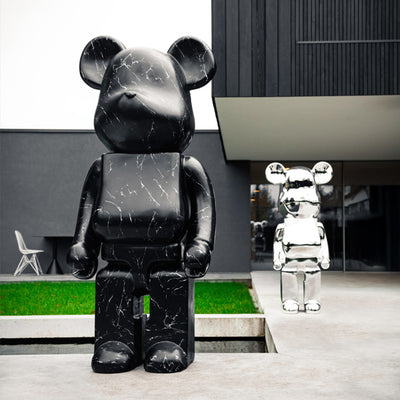

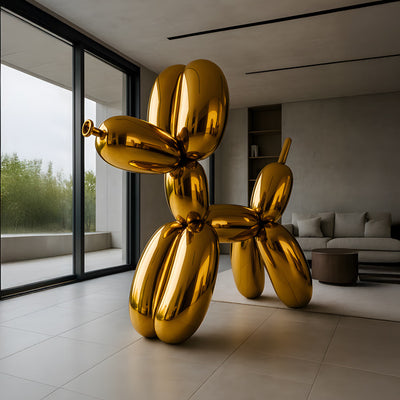
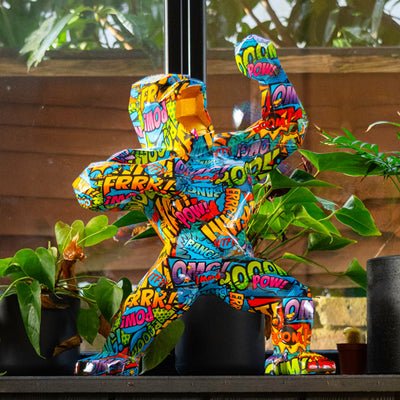
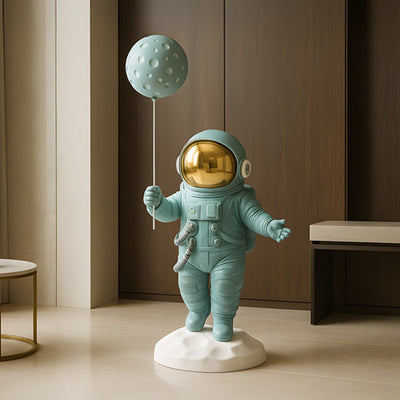
















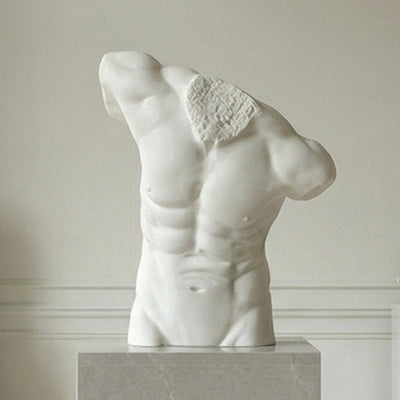



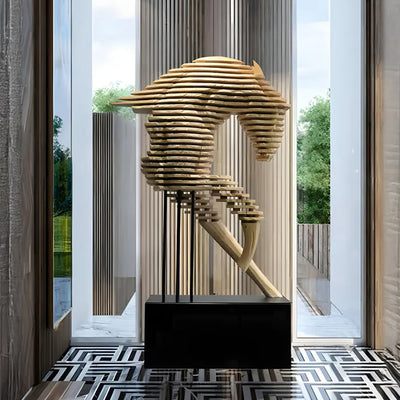




























A resin statue can look almost identical to bronze from ten feet away and cost a fraction of the price. That gap is exactly why buyers get burned. Some resin garden statues hold their finish for years; others chalk, fade, and crack after two hard winters. The difference is rarely visible in a product photo, so you have to know what you are actually buying before it lands in your yard.
Looking for the full range in this category? Browse our Large Garden Statues collection for every available finish, size, and configuration.
We ship large statement pieces to gardens across California, the Hamptons, and the Texas Hill Country, and resin comes up constantly with first-time buyers. It has a real place. It also has limits worth understanding.

Resin Garden Statues at a Glance
- Best for: buyers who want a specific look (angel, animal, classical figure) at a lower entry cost, or who need something light enough to move.
- Weight: a large resin piece may weigh 30 to 80 pounds (14 to 36 kg) versus several hundred for cast bronze or stone.
- Weakness: UV fade, surface chalking, and brittleness in freeze-thaw climates.
- Lifespan: a well-made, UV-stable resin can last many years outdoors; a bargain casting often does not.
- Upgrade path: for a permanent centerpiece, bronze, Corten, or stone will outlast resin by decades.

What Resin Garden Statues Are, and Who They Suit
Most resin garden statues are cast from polyresin, often reinforced with a filler such as stone powder or bonded to fiberglass for strength. The material pours into fine molds, so it captures crisp detail: feathers on a wing, folds in drapery, the face of a cherub. That detail-per-dollar is the whole appeal.
Resin suits buyers who want a decorative figure without the freight bill and installation crew that a heavy bronze demands. If you rent, restyle your garden often, or want to try a piece in several spots before committing, light resin is genuinely practical. It is also a sensible choice for balconies and rooftop terraces where load matters.
Where resin struggles is permanence. Sun breaks down cheaper resins over time, and thin castings can crack when water gets into a hairline gap and freezes. If you want a sculpture that reads as a lifetime purchase, that is a different conversation, and one we have with collectors regularly.

How to Compare Resin Garden Statues Before Buying
Treat the listing photo with suspicion and interrogate the specification instead. A few checks separate the pieces worth owning from the throwaways.
- UV stability: ask whether the resin is UV-treated or coated. This is the single biggest predictor of how it will look in year three.
- Wall thickness and reinforcement: hollow, thin-walled castings crack more easily. Fiberglass reinforcement helps large pieces hold their shape.
- Finish type: is the color molded through, hand-painted, or a faux-metal coating? Painted and coated finishes need occasional upkeep.
- Base and fixing: a light statue needs anchoring or ballast, or the first storm will topple it.
- Climate rating: if you get real freeze-thaw cycles, confirm the piece is rated for it or plan to bring it in over winter.
Searches for resin garden statues cheap are understandable, but the cheapest castings are usually the thinnest and least UV-stable. There is a difference between good value and false economy. A slightly better resin bought once beats replacing a bargain figure every couple of seasons.

Materials, Finishes, and Scale Decisions
Scale is where most buyers misjudge. A statue that looks large on a screen can look apologetic on an open lawn. As a rule, a freestanding garden figure wants to reach at least chest height on an average adult to hold its own in an open space; smaller pieces work better tucked into planting or against a wall where they have a backdrop.
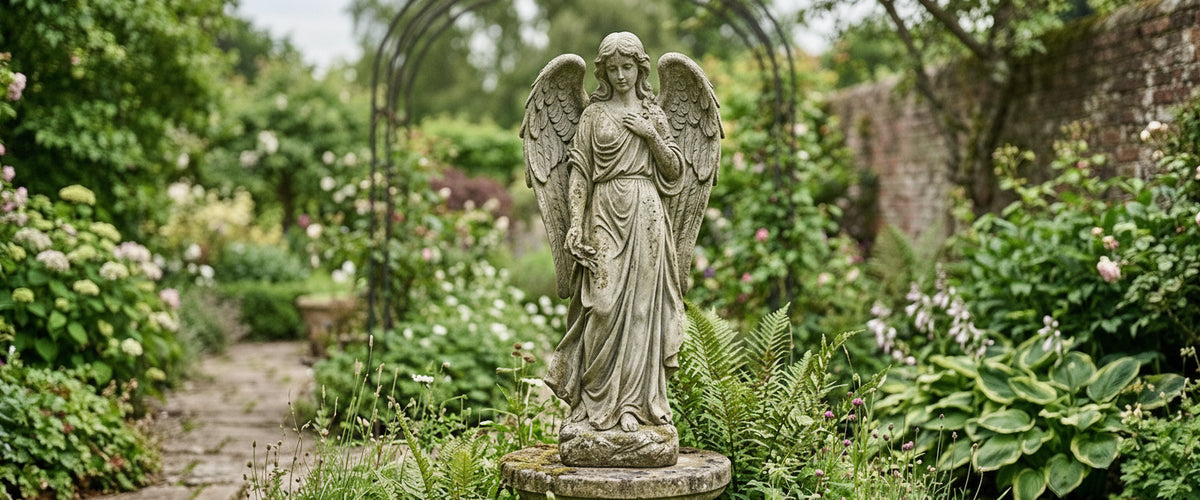
Finish drives the mood. A resin garden angel statue in aged-stone tones reads calm and traditional, ideal for a memorial corner or a formal border. A bronzed or verdigris coating gives you the look of metal at a lighter weight, though it will never patinate the way real bronze does over decades. If you love that living, changing surface, resin is imitating it rather than doing it.
Large resin garden statues demand honesty about handling. Bigger castings are more prone to stress cracks and need solid anchoring. For a genuine focal-point piece that stays out year-round in a harsh climate, we usually steer buyers toward cast metal or stone. A bronze figure carries weight both literally and visually, and it will not chalk. You can see how that permanence reads across our bronze sculptures collection, where the material earns its keep over the long term.
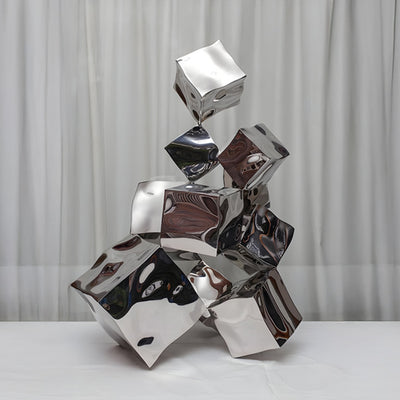
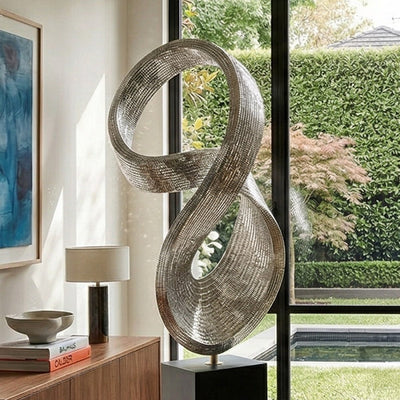
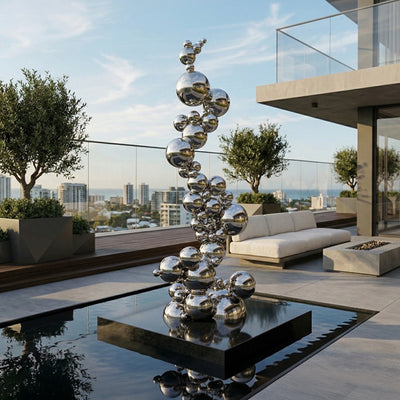
For contemporary gardens, a polished or brushed metal abstract often does what resin cannot: throw light, hold sharp edges, and shrug off weather. Our stainless steel sculptures are a useful comparison point when you are weighing a light decorative resin piece against something engineered to stand for generations.

Where to Place Outdoor Resin Garden Statues for Impact
For wider placement ideas, How a Large Garden Angel Gets Made: A Sculptor's Honest View is useful companion reading before finalising the setting and sightlines.
Placement makes or breaks the piece. Outdoor resin garden statues look strongest when they have a job to do in the composition rather than sitting as an afterthought on the grass.
- End a sightline: place a figure at the far end of a path or lawn so the eye travels to it. This is the highest-impact position in most gardens.
- Give it a backdrop: a dark hedge, a stone wall, or dense planting frames a light statue and stops it disappearing.
- Raise it: a plinth lifts a figure into eye line and reads far more deliberate than a piece standing on soil.
- Respect shade for color: painted and coated resins fade fastest in full southern sun. Dappled light is kinder to the finish.
- Anchor for wind: because resin is light, ballast or a fixed base is essential in exposed gardens and coastal sites.
One lesson from the studio: buyers almost always underestimate how much a plinth changes the read. We had a client near Napa who felt a mid-size figure looked lost on the lawn; the same piece on a simple stone base became the anchor of the whole terrace. No new statue required, just height.

Budget, Commissioning, and Delivery
Resin's low entry cost is real, but final cost depends on size, finish quality, reinforcement, and shipping. Rather than quote figures, we scope each project properly, because a large hand-finished piece with a faux-bronze coating is a different order from a small molded figure. Budget for a bespoke or large-scale sculpture always comes down to material, scale, complexity, engineering, installation, and finishing, so the honest answer is to request a tailored quote.
On delivery, resin's advantage is real: lighter freight, easier handling, and often no crane. That said, large hollow castings still need careful packing, because impact damage in transit is the most common problem we see. Always inspect on arrival and photograph any damage before you sign.
If a resin piece is a stepping stone toward a permanent commission, say so early. Some buyers use resin to test scale and placement in a garden, then commission the final piece in bronze or stone once they know it works. That is a smart way to spend.
How Giant Sculptures Helps with Bespoke Projects
Giant Sculptures is a bespoke supplier of large-scale statement sculpture, and while resin has its place for lighter decorative work, our core is durable material: bronze, stainless steel, Corten, stone, and marble engineered to stand outdoors for decades. When a client wants a garden centerpiece that will not fade or chalk, we design for permanence from the first sketch.
A commission with us covers scale, pose, finish, engineering, and installation as one conversation, not a shelf pick. If you have fallen for the look of a resin figure but want it to last a lifetime, we can translate that idea into a material built for the job. Send us the space, the sightlines, and the mood you are after, and we will scope it.
Care Checklist for Resin Garden Statues
- Clean gently: wash with warm water, a drop of mild soap, and a soft brush. Skip abrasive pads and harsh solvents that dull the finish.
- Protect the surface: a UV-protective clear sealant, reapplied per the maker's guidance, slows fading and chalking.
- Winter care: in freeze-thaw climates, cover or store the piece to avoid water ingress and cracking.
- Check the base: confirm anchoring each season, especially after storms.
- Inspect early: catch hairline cracks before water gets in and worsens them.
On finishes, the broad principle conservators apply to painted outdoor surfaces holds here too: gentle cleaning and stable coatings extend life far more than aggressive scrubbing. The American Institute for Conservation offers general guidance on caring for objects that is worth reading before you reach for a cleaner.