





































































































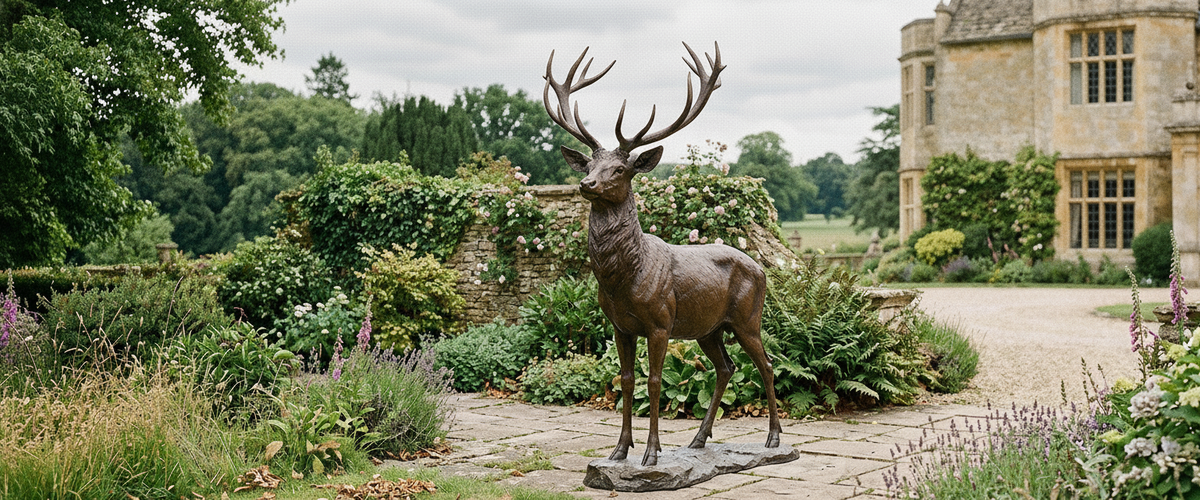

What makes life-size statues life-size? A sculpture counts as life-size when it matches its living subject at true 1:1 scale, but no industry standard says where that measurement starts and stops. Two bronze stags can both be sold as life-size and still differ by a foot and a half when they reach your lawn, because one seller quotes shoulder height and another quotes the antler tip. The confusion runs across life-size statues and life-size sculptures of deer alike: head-to-toe, shoulder height, antler tip and nose-to-tail all get called life-size. The short answer is to ask which dimension is being quoted and get it in writing. At Giant Sculptures we hear this question every week from designers and collectors comparing quotes, so here is how to read the numbers properly before money changes hands.

Quick Answer: What Life-Size Means on a Spec Sheet
No industry standard defines what makes life-size statues life-size. Always ask which dimension is being quoted.
Human figures are usually quoted head-to-toe. Animals may be quoted at the shoulder, to the antler tip, or nose-to-tail.
Seven-eighths and heroic scale are deliberate choices, and each suits a different setting.
Plinths and raised arms can quietly inflate an overall height figure.
Before approving a commission, confirm two numbers in writing: figure height and overall envelope.
Head-to-Toe, Shoulder or Nose-to-Tail: The Rulers Sellers Switch Between
For a human figure, the honest measurement that keeps life-size statues life-size runs from the crown of the head to the sole of the foot. Some listings measure to the top of a hat, a topknot, or a raised hand instead. Each choice adds inches without adding any person.
Animals are messier. Hoofed animals are conventionally measured at the shoulder, because that point stays fixed while the head moves. Sellers of life-size statues often prefer overall height to the tip of the antlers or horns, simply because it is the larger number. Big cats and dogs get quoted nose-to-tail, which makes a crouching panther sound enormous. None of these is dishonest on its own. Mixing them across a comparison is where buyers lose track, because nobody can call two life-size statues life-size on equal terms when each was measured a different way.
1:1, Seven-Eighths and Heroic: What Foundries Mean by Each Scale
1:1 is true scale: the bronze matches the living subject. Seven-eighths is a long-standing figurative convention. A figure on a plinth already reads taller than it is, so trimming an eighth keeps it from looming, and it saves bronze. Heroic scale usually sits somewhere between one and a quarter and one and a half times life, the scale of most civic monuments. Beyond roughly twice life, foundries tend to call the work monumental.
The trouble is that some sellers list seven-eighths figures alongside true 1:1 work and call all their life-size statues life-size. Loose usage allows it, yet you deserve to know which you are buying.

How Plinth Height and a Raised Arm Get Counted Into the Number
An overhead gesture can add well over a foot (30 cm or more) to a standing figure. Fold in a cast base, and a figure of ordinary human height can carry a listing that implies someone much taller. Base-inclusive heights are the usual trick, and the figure alone is what makes life-size statues life-size. Grouped compositions compound this. On a two-subject piece such as the Life-Size Classical Goddess and Deer Bronze Sculpture - 250cm, quoted at 250 cm (about 8 ft 2 in) overall, the useful question is how that height splits between figure, animal and base. Ask for the split. A good maker will have it on the drawing already.
Antlers, Ears and Tails: Why Life-Size Sculptures of Deer Can Stand a Hand Short
A white-tailed deer stands roughly three to three and a half feet (about 90 to 105 cm) at the shoulder, according to the National Wildlife Federation. Red deer and elk run larger, and roe deer smaller, so the species behind the model matters before anyone reaches for a tape.
Even with the species settled, life-size sculptures of deer can measure up to a hand (about 4 inches, 10 cm) shorter overall than the animal. Antlers get thickened and slightly shortened so the tines survive casting, crating and the occasional curious visitor. Ears are tucked a touch closer to the skull for strength, and tails are simplified. These are sensible engineering decisions. A buyer simply needs to know about them.
Measuring points cause the bigger mix-ups. A buyer compares two quotes and assumes the "larger" stag is the bigger animal, only to find it was measured to the antler tip while the other was measured at the shoulder. Measured the same way, the order can flip. So when a stag-and-doe pairing like the Life-Size Traditional Deer Pair Bronze Sculpture (Doe Companion) - 170cm is quoted at 170 cm (about 5 ft 7 in), ask where that number starts and stops: shoulder, ear tip or antler tip, and on which of the two animals. The same test keeps life-size statues life-size across every quote you compare. The full range sits in our bronze deer statues collection.

The Two Dimensions to Put in Writing Before You Approve a Commission
Every bespoke commission we sign off now carries two dimensions on the approval drawing, because that is the only reliable way to keep life-size statues life-size from quote to delivery. Insist on the same wherever you buy.
Figure height, measured on the figure alone, with the reference points named: crown to sole for people, ground to shoulder for animals.
Overall envelope: total height, width and depth including base, antlers, horns and raised limbs. This is what the site, the crate and the crane actually deal with.
Then run through this before approving:
Is the scale stated as 1:1, seven-eighths or heroic, in words?
Which species or sitter is the reference?
Are antlers, tails or gestures altered for strength, and by how much?
Is the plinth included in any quoted height?
Does the overall envelope clear doorways, gates and access routes on site?
Budget follows from these answers. Material, scale, complexity, engineering, installation and finishing all move the price, and so does how strictly you want your life-size statues life-size rather than seven-eighths. Request a tailored quote once the two dimensions are agreed.

Where Life-Size Statues Feel Right: Indoors 1:1, Open Ground Heroic
Inside a Manhattan foyer or a Dallas stairwell, true 1:1 feels correct. The viewer stands close, the ceiling frames the piece, and a heroic figure would crowd the room. A room keeps life-size statues life-size to the viewer, because the figure meets you at eye level.
Outdoors, distance and sky shrink everything. A true-scale figure on an open lawn in the Hamptons or a hillside in Aspen can look like a garden ornament from the terrace. Open ground makes it hard to keep life-size statues life-size to the eye, so heroic scale earns its keep there. The other route is to choose a subject that is already tall at true scale: at a Texas ranch entrance, an animal such as the Life-Size Standing Giraffe Bronze Sculpture - 400cm, at 400 cm (about 13 ft 1 in), holds the long view without any enlargement. Browse our life-size and large statues or life-size bronze statues for scale references, then tell us the viewing distance. That single number shapes our scale advice more than anything else.
For wider placement ideas, Buying Life Size Bronze Statues: What the Listing Photo Won't Tell You is useful companion reading before finalizing the setting and sightlines. Get those right, and the measurement that makes life-size statues life-size on paper will hold up on site too.