







































































































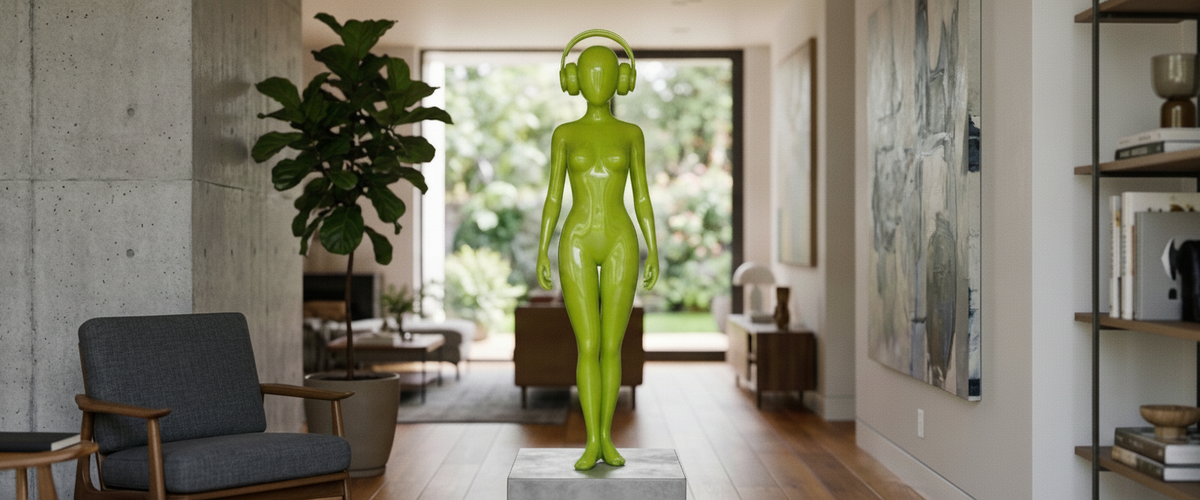

Most pop art sculpture sale listings tell you the color and the size, then go quiet. That silence is the problem. A high-gloss figure photographed under studio lights could be a numbered edition from a known studio, an open-run casting pulled from a factory mold, or a resin copy riding on a character someone else owns. The price tag rarely tells you which. Before you buy, read the paperwork as closely as you look at the finish.

Quick Answer
Get the edition status (limited edition, artist proof or open run) in writing.
Find out who designed the piece and who fabricated it. They are often different people.
Confirm what sits under the paint: fiberglass, cold-cast resin or cast metal.
Check that the subject is original or properly licensed.
Ask for real dimensions and a photo beside an object you recognize.
Read the crating, condition report and returns terms before paying.
Edition, Artist Proof or Open Run: What the Certificate Must Say
An edition number such as 4/12 means twelve casts exist and yours is the fourth. An artist proof (AP) sits outside that run, usually in small numbers kept by the artist or studio. An open run has no cap at all. The Tate's definition of an edition is a useful baseline if a seller gets vague.
A proper certificate names the title, the artist or studio, the edition number and total, the material, the dimensions and the finish. It should be signed. A card that says "limited edition" with no total gives you nothing to resell on, and any future buyer will spot the gap immediately.
Who Made It? Signature, Studio and the Fabricator
Pop pieces are rarely sculpted, molded, laminated and sprayed by one pair of hands. A designer creates the character, and a specialist workshop builds it. That is normal. What matters is that both are named. On bronze, look for a foundry mark near the base; on fiberglass, the signature is often under the foot or on a plate.
When a pop art sculpture sale lists only a brand name and no studio, ask directly. For higher-value pieces, the International Foundation for Art Research is a good starting point on provenance and authentication. On our own commissions we record the fabrication workshop alongside the design, because that record matters when a piece is resold.

What Sits Under the Color: Fiberglass, Resin or Cast Metal
Paint hides everything, so ask. Fiberglass is light, strong for its weight and, with a UV-stable automotive clear coat, can live outdoors. Cold-cast resin is heavier and more brittle; it suits shelves and consoles rather than patios in Phoenix. Cast bronze or fabricated stainless steel under a two-pack or powder-coat finish is the long-term outdoor option, and it costs more to make for good reason.
One studio habit worth borrowing: tilt the piece toward a window and look along the gloss. Cheap laminating shows print-through, a faint weave pattern rising through the paint. If a seller won't send a raking-light photo, that is your answer. Every piece in the pop art sculptures collection has its material listed for exactly this reason.
Original Character or Licensed Lookalike
Subject shapes resale more than most buyers expect. A figure that borrows a famous cartoon face without a license can be delisted by marketplaces, refused by auction houses and, in some cases, seized at customs. You may enjoy it at home, but you will struggle to sell it.
Original characters avoid that trap and often age better. A candy-colored rabbit or a gloss-finished ape reads as pop without imitating anyone, which is why pop-finished animals such as those in the gorilla sculptures collection can hold their appeal long after a borrowed character dates. If you are browsing any pop art sculpture for sale and the character looks familiar, ask for the license paperwork.

Is the Product Photo Hiding the Scale?
Clean white backgrounds flatten size. Picture a 120cm (about 47-inch) headphone figure bought for a double-height entry. In photos it looks commanding. On a plinth beneath a high ceiling, it can read as half the size, and the buyer starts wishing they had gone larger.
The lesson cuts both ways. On a credenza in a Brooklyn loft, a 58cm (about 23-inch) original such as the Sunset Pop Bunny Figure - 58cm holds its own at eye level. A floor-standing figure like the Lime Pop Vibella Headphone Sculpture - 120cm at 120cm, by contrast, feels substantial in a living room or a standard-height hallway, but needs a taller plinth or a larger scale before it can carry a double-height space.
Tape the footprint on the floor. Mark the height on the wall with painter's tape. Ask the seller for a photo beside a doorway or a dining chair. Ceiling height and sightline distance decide what feels right far more than the room's square footage.
Crating, Condition Reports and Returns
This is where a pop art sculpture sale gets expensive after the fact. Ask for a written condition report with photos taken before dispatch, then compare it on arrival before you sign the delivery note. Gloss finishes show transit scuffs instantly.
Large sets need extra planning. A multi-figure arrangement on the scale of the Multi-Colour Pop Art Garden Floral Figurine Sculpture Set - 370cm, which spans about 370cm (roughly 12 feet), needs a crate plan, an access route and a placement drawing before it ships. Freight elevators and service doors are not always as wide as a building's paperwork claims, and measuring them yourself takes ten minutes. Then read the returns clause twice: who pays return freight on a crated piece, and is there a restocking charge?

Your Pop Art Sculpture Sale Checklist
Edition: numbered with a total, AP, or open run, stated in writing.
Maker: designer and fabricator both named, signature location confirmed.
Material: core material and topcoat specified, indoor or outdoor rating clear.
Subject: original design or license documentation supplied.
Scale: height, width, depth and weight given, plus a photo in context.
Logistics: crate dimensions, condition report and returns terms agreed before payment.
If a seller can answer all six without hesitation, you are probably dealing with a serious source.
When a Commission Beats the Sale Rack
Sometimes the right piece is in the wrong color or a size that doesn't fit the wall. Giant Sculptures builds bespoke pop figures at the scale your space needs, in fiberglass for interiors or engineered metal for gardens and hotel courtyards, with the certificate and fabrication record supplied from the start. Budget depends on material, scale, complexity, engineering, installation and finishing, so we quote each commission individually. Browse our contemporary and modern sculptures for a sense of range, then ask us for a tailored quote.
For wider placement ideas, Pop Art Figure Sculpture: Why the Finish Decides if It Stays Loud is useful companion reading before finalising the setting and sightlines.