















































































A Madonna set loose on an open lawn looks lost, and visitors can tell within seconds. Most religious garden statues that disappoint their owners are not badly made. They are badly placed, or made from a material that was never meant to spend a winter outside. These figures were designed for specific settings, and they still look best when you give them something close to that setting.

Quick Answer
Give the figure a backdrop. A niche, wall or clipped hedge reads as intentional. Open lawn rarely does.
Raise it. A plinth puts the face near or slightly above eye level, which is how these figures were meant to be seen.
Choose the material for the climate. Stone and bronze belong outdoors. Carved wood needs shelter, and vintage chalkware belongs indoors.
Buy vintage with care. Even weathering is fine. Fresh paint over old damage is a warning sign.
Commission when the setting is unusual. A bespoke carving can be sized and posed for one exact spot.
Cloister, Churchyard and Wayside: The Original Homes of Outdoor Religious Statues
Outdoor religious statues were never meant to stand in the middle of a lawn. They stood in cloister arcades, over church porches, beside churchyard paths and in wayside shrines at crossroads. Each setting gave the figure three things: a frame, shelter overhead and a clear approach. The viewer walked toward the figure and stopped in front of it.
That history still matters for a garden in Napa or a courtyard in Austin. If you copy the logic of the setting (frame, shelter, approach) instead of copying its architecture, a modern religious statue will look settled from the first day rather than dropped in. The Victoria and Albert Museum's sculpture collection holds many figures that were made for exactly these architectural settings, and you can see the framing built into the carving.
Why Period Carvers Cut Deep Drapery and Simple Faces
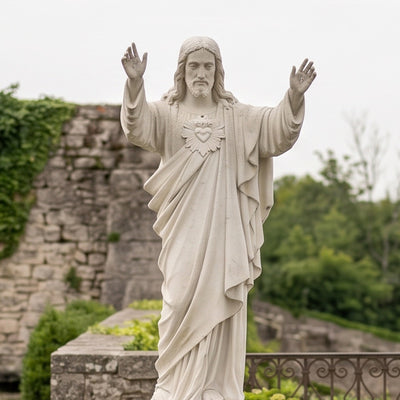
Medieval and Baroque carvers knew much of their work would be seen from twenty feet (about 6 m) or more, often in flat or shifting light. Fine facial detail fades at that distance. Deep folds in drapery do not, because they cast hard shadows that read clearly from across a churchyard. So carvers working for outdoor and elevated settings kept faces broad and legible, deepened robes and exaggerated gestures such as a raised hand or a bowed head.
This is the most useful thing to know when you judge religious garden statues today. A figure with shallow, fussy detail may look lovely in a catalog photo and turn into a pale blur at the end of a garden path. When we review drawings for an outdoor commission, we push the sculptor toward deeper undercuts and a stronger silhouette than the client often expects. Once the piece is in place, nobody wants it softened.

Stone Outlasts Winter, Wood Weathers, and Chalkware Belongs Indoors
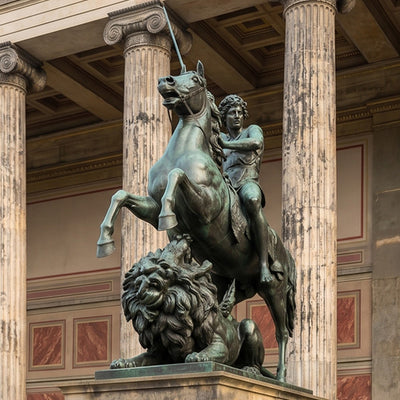
Material decides how long religious garden statues last outside. Marble and dense limestone hold up well across most US climates if they are sealed sensibly and kept off waterlogged ground. Bronze is the most forgiving choice for harsh freeze and thaw winters in places like Aspen or upstate New York, because it does not absorb water. Over time it develops a patina rather than cracking.
Bronze sheds water, so it patinates instead of cracking through freeze and thaw winters.
Wooden religious statues are a different case. Oak and cedar carvings look warm and handmade, but outdoors they will check, gray and eventually rot unless they sit under a roof or porch. Treat them as sheltered pieces. Vintage chalkware religious statues are made of cast plaster, and plaster softens with moisture. A mid-century chalkware Madonna left on a covered patio through one humid summer can come out of it with lifting paint and a base that has begun to crumble. Chalkware is collectible and charming. Keep it inside.
Honest Weathering Versus Hidden Repairs
Older outdoor pieces show their age, and that is part of their appeal. Lichen, softened edges and even darkening on stone are normal. What you want to avoid is damage that someone has disguised.
Look for fresh paint or filler on noses, fingers and hands, which are the first parts to break.
Check the base and neck for hairline cracks, especially on cast stone.
Tap gently. A dull or hollow sound in one area can point to an old repair or internal void.
Ask for provenance photos that show the figure before any cleaning or restoration.
Cleaning old stone also calls for restraint. Pressure washers and acid cleaners can strip the surface for good. The US National Park Service's preservation guidance on cleaning historic masonry recommends starting with the gentlest method that works, which is sound advice for any weathered statue.
Placing Religious Garden Statues: Niche, Hedge and Plinth
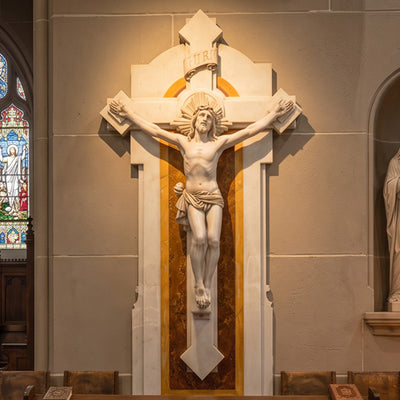
Placement is what separates a devotional setting from yard decoration. A carved niche in a garden wall is the strongest option, because it echoes the church facade and shelters the figure from rain. A clipped yew or boxwood hedge is the next best thing: dark green behind pale marble gives the silhouette a crisp edge, which is why formal gardens have relied on the pairing for centuries.
A dark hedge, a raised plinth and a short path give the figure a frame, height and an approach.
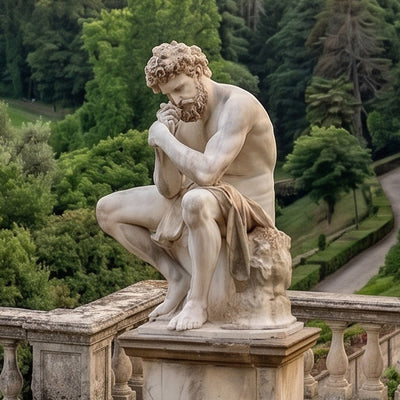
Plinth height matters more than most buyers think. Set too low, a figure reads as an ornament. Raise it so the face sits at or a little above standing eye level, which usually means a plinth of around 12 to 18 inches (30 to 45 cm) for a life-size figure and closer to 3 feet (90 cm) for a half-size one, and it becomes something you approach rather than step past. Add a short gravel path or a pair of low plantings to frame the approach. Religious lawn statues placed without any of these cues tend to look temporary, however good the carving is.

When a Bespoke Carving Earns Its Cost
A mass-cast religious lawn statue is fine for a casual corner. A bespoke piece makes more sense when any of these apply:
The niche or setting has fixed dimensions that stock sizes do not fit.
You need a specific saint, pose or attribute that is not cast commercially.
The climate calls for bronze or dense stone instead of cast concrete.
The piece is meant to stay in the family or on the property for generations.
At Giant Sculptures we size religious garden statues from site photos and measurements, then adjust drapery depth and facial detail for the real viewing distance. Budget depends on material, scale, complexity, engineering, installation and finishing, so the most useful first step is to request a tailored quote. If you would rather start with finished work, browse our religious statues collection and note which poses and materials suit your setting before you talk to us about a commission.
For wider placement ideas, Why Hare Statues for the Garden Belong at Meadow Height is useful companion reading before finalizing the setting and sightlines.