






























































































Most bronze sculptures that end up on a conservator's bench were not wrecked by weather. They were wrecked by good intentions: a bottle of metal polish, a green scouring pad, a pressure washer turned up too high. Bronze will outlive everyone reading this, but the colored surface you actually paid for is thinner than a sheet of paper. Learning how to clean a bronze sculpture well is mostly about learning what to leave alone.

Key Takeaways
Patina is the finish, not dirt. Removing it is permanent.
Distilled water and a pH-neutral, non-ionic soap handle almost all routine cleaning.
Microcrystalline wax is the protective layer; two thin coats on slightly warm metal beat one thick one every time.
Indoor bronze runs on a yearly rhythm. Outdoor bronze runs on a seasonal one, twice a year in most climates and more often near salt air or chlorinated water.
Powdery pale green pitting, not smooth green film, is the signal to stop and call a conservator.
Patina, Verdigris and Corrosion Are Three Different Greens
Foundry patina is applied deliberately, with chemicals and heat, while the bronze is still in the workshop. Brown-black, chestnut, deep green, matte graphite: all of it is a controlled surface chemistry that a patineur built by hand. Natural weathering then adds its own layer over years, and on a well-maintained outdoor piece that layer is stable and protective.
Verdigris, the smooth blue-green film of copper salts, is usually part of that stable story. What you do need to stop is active chloride corrosion, sometimes called bronze disease: light, powdery, almost lime-green spots that sit in small pits and reappear after you brush them off. The Canadian Conservation Institute's notes on metal care are a good grounding here. Stable green is a coat. Powdery green is a leak.
Dust, Bird Lime and Fingerprint Salts Each Need a Different Fix
Most attempts to clean a bronze sculpture start with dust, and dust is abrasive. Wiping it with a dry rag drags grit across the wax layer, so use a soft natural-bristle brush or a genuinely clean microfiber cloth and lift rather than scrub. Indoors, that is a five-minute job every few weeks.
Bird droppings are acidic and they etch fast, especially on horizontal surfaces such as shoulders, antlers and outstretched arms. Soften them with distilled water on a damp cloth, wait, then lift. Never scrape a dried deposit; you will take patina with it.
Fingerprint salts are the quiet one. Any bronze within reach of a hand gets touched, and human sweat is mildly corrosive. A reachable piece such as the Seated Lion Patinated Cast Bronze Statue - 180cm, set at a driveway entrance, will show a bright halo on the paw and muzzle within a year of visitors stroking it. The fix is simple: wash those contact points with a little more attention and re-wax them twice as often as the rest of the piece.

What Metal Polish and Kitchen Spray Actually Remove
Household brass polish is an abrasive slurry, often with ammonia in it. Used on a patinated sculpture it takes the chemistry straight back to raw metal, leaving bright pink-gold streaks in the high spots. That color will never grow back evenly, because the original was created with heat and timed chemical application rather than exposure. Re-patination means stripping and starting again, which for a large outdoor piece is studio work, not weekend work.
Bleach, vinegar, glass cleaner and multi-surface sprays are worse in a slower way. They introduce chlorides and acids that sit in crevices and feed corrosion for years. Pressure washing drives water into joints and under the base. When you clean a bronze sculpture, the whole kit is distilled water, a pH-neutral non-ionic conservation soap, soft brushes, lint-free cloths, and patience.
The Microcrystalline Wax Routine: Two Thin Coats, Warm Metal, No Shortcuts
Wax is the sacrificial layer that takes the punishment instead of the patina. The method matters more than the brand.
Two thin coats of microcrystalline wax on warm, dry metal outlast one thick coat every time.
Wash, rinse with distilled water, and let the piece dry completely. Trapped moisture under wax causes cloudy blooms.
Work on metal that is warm to the touch, not hot. Early morning sun on a garden bronze is ideal; indoors, a hairdryer on low over a section works.
Apply microcrystalline wax in a thin coat with a lint-free cloth, using a soft brush to push it into recesses, undercuts and lettering.
Let it haze, then buff with a clean cloth. Repeat with a second thin coat.
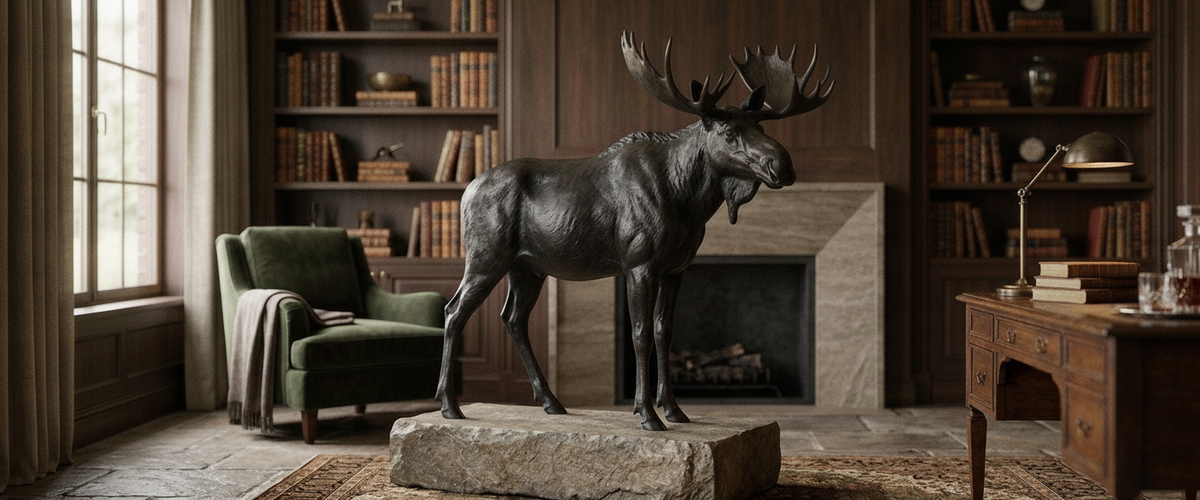
Skip silicone-based furniture sprays entirely. They build a film that is difficult to remove and interferes with future conservation. And budget realistically for scale. At the top of the life size bronze statues range, something like the Life-Size Traditional Bull Moose Bronze Sculpture (Black-Brown Patina) - 260cm stands around 8 ft 6 in (260 cm) at the antlers, and waxing it properly is a half-day job for two people with a step ladder, not a quick wipe-down.

Indoor Yearly Rhythm, Outdoor Seasonal Rhythm
How often you clean a bronze sculpture comes down to where it lives. An interior bronze in an apartment or a gallery hallway needs dusting through the year and one full wash and wax annually. Heating systems and cooking aerosols are the real enemies indoors, so pieces near kitchens want more frequent attention.
Outdoors, work to spring and fall. Spring removes winter salts and organic staining; fall lays down protection before freeze-thaw cycles begin. Coastal properties, poolside placements and anywhere with lawn sprinkler overspray need a third visit. Hard-water overspray is the most common problem we hear about, and it leaves mineral streaks that look like corrosion but are not.
Patina care and maintenance is a calendar job: wash and wax in spring, protect again before the first frost.
Write the dates down. Treat clean bronze sculpture patina care and maintenance as a scheduled task rather than a reaction to visible dirt, because that single habit is what keeps a bronze looking like the day it was delivered.
Water features are their own category, because the metal is permanently wetted rather than occasionally rained on. Where a piece runs as a fountain, as the Classical Dual Mermaid Bronze Fountain - 130cm does, the sculpture is rarely the variable; the water chemistry is. Keep it clean, avoid chlorine tablets, drain before hard frost, and descale the wetted areas gently rather than aggressively.
Streaks, Pooling and Black Spotting: Warnings You Can Still Reverse
Dark vertical streaks running from a seam usually mean water is sitting inside the casting and weeping out. Standing water in an upturned palm, a shallow bowl or a hollow base means a drainage point has blocked or was never specified. Black spotting on a green patina generally signals that the wax has failed locally and sulfides are attacking bare metal. All three are reversible if you catch them in the first season. Left for three or four years, they become pitting.

When to Stop and Call a Conservator
There is a point where you should not try to clean a bronze sculpture yourself. Put the cloth down if you see powdery green in pits that returns after cleaning, flaking or blistering surface, corrosion creeping around the anchor bolts at the base, gilding or painted detail, or previous polish damage you are tempted to "even out". A professional can stabilize chlorides and re-patinate matched areas; an owner with a scouring pad cannot. The American Institute for Conservation runs a public Find a Conservator directory that is the fastest route to someone qualified.
Think About Cleaning Before You Commission
Patina choice changes the maintenance you will live with. A deep black-brown hides water spotting better than a flat matte black, which shows every drip and fingerprint under raking afternoon light. Textured surfaces hold wax longer than highly polished ones. Anything destined for a windy coastal site should be specified with drainage and fixings in mind from day one, because it is far easier to clean a bronze sculpture that was engineered to shed water.
Those decisions are worth raising when you order rather than after delivery. Our team can advise on patina, finish and site conditions across the bronze sculptures range, and on bespoke commissions we will tell you honestly how a given finish will age in your climate. Browse the bronze garden statues collection or talk to Giant Sculptures about a commission, and ask for a tailored quote: cost depends on material, scale, complexity, engineering, installation and finishing.
For wider placement ideas, Antlers Break First: An Insider's Guide to Bronze Deer Garden Statues is useful companion reading before finalizing the setting and sightlines.