





































































































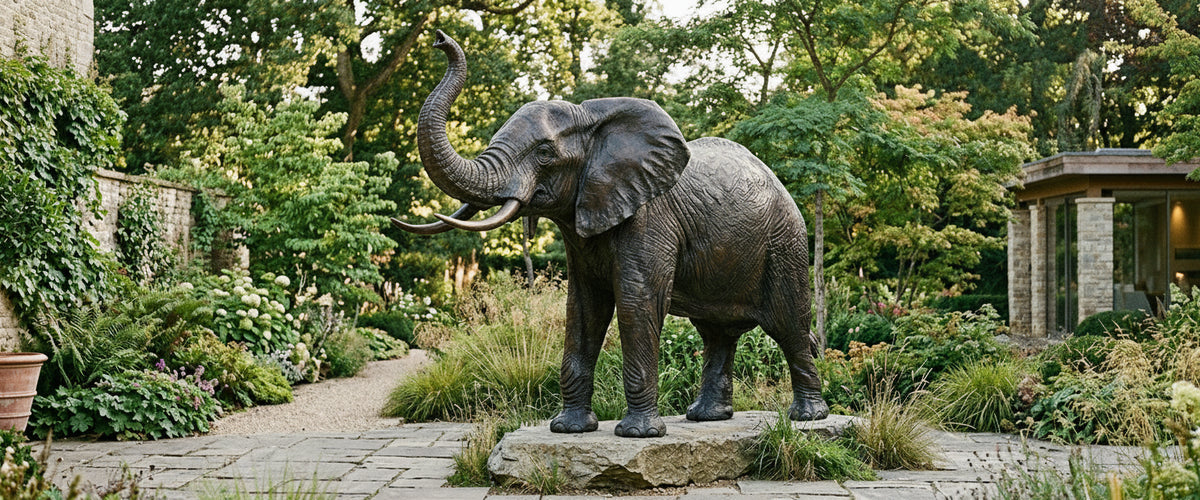

A bronze elephant that looks commanding in a photo can land in a garden and feel like a coffee-table ornament left out in the rain. Scale is the trap most first-time buyers fall into, and it is the one mistake bronze animal sculptures punish most. Get the proportions right against the space, and a single cast figure can anchor a courtyard, a corporate forecourt, or a Napa terrace for generations.
Bronze has carried animal subjects for thousands of years because it does two things at once: it holds fine detail (the texture of a mane, the tension in a haunch) and it survives outdoors with very little fuss. That combination is why serious buyers keep coming back to it.
A monumental cast figure holds an open courtyard where smaller pieces would be lost.

Key Takeaways for Bronze Animal Sculpture Buyers
Scale first. Measure the placement, the viewing distance, and the backdrop before you fall for a pose.
Patina is a choice, not a default. Dark brown, verdigris green, and polished highlights read very differently in sun versus shade.
Bronze is a long-term material. Properly cast and waxed, it outlasts resin and most painted metals by decades.
Subject sets the mood. A stalking tiger reads as drama; a grazing horse reads as calm.
Bespoke is normal at this scale. Size, base, and finish are usually tailored to the site.

What Bronze Animal Sculptures Are, and Who They Suit Best
An animal bronze sculpture is a figure cast in bronze, usually through the lost-wax process, then finished with a chosen patina and a protective wax or lacquer. The result is a solid, weather-stable piece that handles frost, salt air, and full sun far better than composite alternatives.
These pieces suit buyers who want a focal point with weight, literal and visual. Landscape designers use them to terminate a sightline. Collectors buy them for the craft. Hotels, vineyards, and corporate campuses use them as recognizable markers that photograph well and survive heavy footfall. If you want a piece that still looks intentional in twenty years, bronze is the honest answer.
It is also worth being clear about who bronze does not suit: anyone chasing the cheapest possible garden ornament. These cast figures are an investment in material and craft, and they behave like one.

How to Compare Bronze Animal Sculptures Before You Buy
Once you move past the photo, a few practical criteria separate a good purchase from a regret.
Casting Quality
Look at the surface. Crisp, deliberate detail in the fur, feathers, or musculature tells you the mold and chasing work were done with care. Soft, mushy edges often signal a worn mold or a rushed finish. With animals, the eyes and the feet are where shortcuts show first.
Weight and Wall Thickness
A genuine cast bronze piece has real mass. A life-size figure can run from a couple of hundred pounds (roughly 90 kg) into the high hundreds depending on subject and wall thickness. That weight matters for stability and for how the piece will be fixed down. Ask for the actual weight before you plan delivery.
Subject and Pose
Pose carries the emotion. Where a setting needs tension and movement rather than calm, a low, predatory stance like Life-Size Contemporary Stalking Tiger Bronze Sculpture (Head Lowered Prowl) - 180cm brings energy to a lawn or a wide entrance, where a static seated figure would feel passive. Decide whether you want stillness or motion before you shortlist.
Crisp surface detail on a prowling figure shows careful mold and chasing work.
Base and Mounting
The base is part of the design, not an afterthought. A naturalistic foundation such as the one beneath Large Traditional Striding Bull Bronze Sculpture (Rocky Terrain Base) - 120cm reads as grounded and at home in planting, while a plain plinth pushes the piece toward formal, gallery-style display. The right base also solves the practical problem of anchoring the work to stone, decking, or soil.

Materials, Finishes, and Scale Decisions
Bronze itself is consistent in quality terms, but the finish changes everything you see.
The patina is the chemically induced surface color. A dark brown or near-black patina, like the finish on Large Contemporary Horse Head Bronze Sculpture (Head and Chest, Dark Patina) - 120cm, reads modern and graphic and holds up well against pale stone or render. A green verdigris finish feels older and more classical, and it can disappear against heavy planting, so think about your backdrop. The Smithsonian American Art Museum has good public material on how bronze surfaces form and age over time, which is worth reading before you commit to a color.
On scale, the single most useful habit is to mock up the footprint. Cut the base dimensions out of cardboard, lay them where the piece will sit, and stand back at the distance people will actually view it. A 330cm (about 11 ft) monumental figure that feels enormous indoors can look correct, even modest, in an open forecourt. For exactly that kind of open commercial setting, something on the scale of Monumental Traditional African Elephant Bronze Sculpture - 330cm holds the space where anything smaller would be swallowed by it.
Bronze African animal sculptures, elephants, big cats, and the like, tend to demand more room than people expect, precisely because the real animals are large and the brain reads them against that memory.

Where to Place Bronze Animal Sculptures for Real Impact
For wider placement ideas, Bronze African Animal Sculptures: A Placement and Scale Guide is useful companion reading before finalising the setting and sightlines.
Placement is where a good piece becomes a great one. A few principles we keep returning to:
Give it a backdrop. A dark hedge, a pale wall, or open sky all flatter bronze differently. Avoid busy backgrounds that compete with the silhouette.
Respect the approach. Animals have a natural "front." Place the piece so the strongest view greets people as they arrive, not as they leave.
Use water and light. A leaping marine subject set near a pool or fountain plays off reflection and movement; the same piece dry on a lawn loses half its story.
Think about the seasons. A sculpture framed by summer planting may stand alone and stark in winter. Both views should work.
For a Hamptons garden we worked on, a single crouching cat figure placed at the turn of a gravel path did more than three smaller ornaments scattered across the same beds. One confident piece beats a collection of timid ones almost every time. If you are weighing a single statement animal such as Large Traditional Crouching Leopard Bronze Sculpture - 110cm against several smaller pieces, the one with real presence usually wins.

Budget, Commissioning, and Delivery
People always want a price up front, and the honest answer is that pricing depends on the variables. Size, the complexity of the pose, the amount of hand-chasing, the finish, the base, crating, and installation all move the number. A compact piece like this wild boar at 150cm and a monumental multi-figure group are not in the same conversation. The right move is to share your site, your scale, and your finish preference and ask for a tailored quote rather than working from a guessed range.
On commissioning: bespoke is the norm at this end of the market, not the exception. Buyers regularly adjust size, change a patina, alter a pose, or add a custom base to suit a specific spot. If you have a subject in mind that is not in our catalog, that is a starting point for a commission, not a dead end. Working with experienced bronze animal sculpture artists means the pose can be modeled, reviewed, and refined before anything is cast.
On delivery: large bronze ships crated and palletized, and heavier pieces often need mechanical lifting on site. Plan access early. The most common avoidable delay we see is a gate or path too narrow for the crate, discovered on delivery day rather than at the planning stage. Measure your access route as carefully as you measure the placement.

How Giant Sculptures Helps With Bespoke Bronze Projects
Giant Sculptures is a bespoke supplier of large-scale bronze, stainless steel, stone, and engineered metalwork, and bronze animals are one of the most requested categories we handle. We help buyers match subject, scale, and finish to a real site, advise on bases and fixing, and manage crating and worldwide shipping from a single point of contact.
If you are early in the process, browse the full bronze animal sculptures range to gauge subject and scale, then look at the wider life-size bronze statues collection for figures and groups. Where you want an animal woven into a larger narrative rather than standing alone, Life-Size Traditional Robed Saint with Wolf and Animal Companions Bronze Sculpture - 180cm is closer to the right design language, and opens up options if you want something with a story rather than a single creature.
Bronze rewards patience. Choose the scale honestly, pick a patina that suits your light, place it where it earns its keep, and it will hold that spot long after the planting around it has changed several times over.