



























































































A piece of contemporary sculpture can hold a room or vanish into it, and the difference is rarely the sculpture itself. It is where you put it. We have shipped bronze figures that looked commanding in the studio and then arrived at a client's home swallowed by a wall of glass, or perched on a plinth so tall it felt nervous rather than confident. Placement is the quiet skill behind every strong install of contemporary sculpture, and it is the part most buyers underestimate.
Looking for the full range in this category? Browse our Adam Illes - Contemporary Sculptures collection for every available finish, size, and configuration.
So before you fall for a form, a finish, or a pose, think about the space that has to carry it. This guide walks through how contemporary sculpture reads in different settings, how scale and sightlines change the whole effect, and the placement errors we see again and again on contemporary sculpture commissions.
A single figure reads best when the eye meets it on arrival and has space to circle it.

Key Takeaways
Scale is relative to the space, not the sculpture. A 6 ft (1.8 m) figure reads small against a double-height wall and huge in a hallway.
Pedestal height controls where the eye lands. Get it wrong and even a strong piece looks awkward.
Indoor placement rewards intimacy and detail; outdoor placement rewards silhouette and distance.
Backdrop contrast decides whether a form is legible or lost.
Material choice should follow the environment: bronze, stainless steel, Corten, and stone all behave differently outdoors.

What Contemporary Sculpture Looks Like in Real Rooms and Gardens
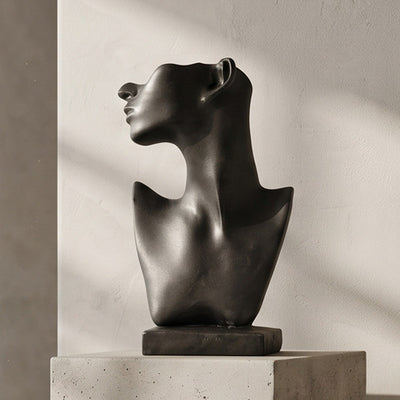
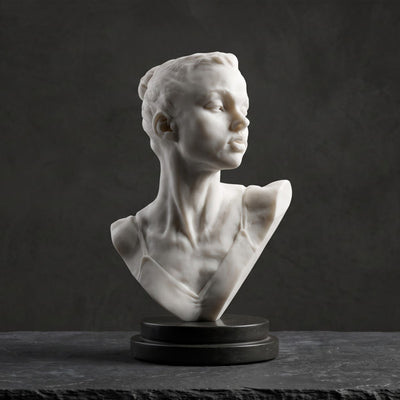
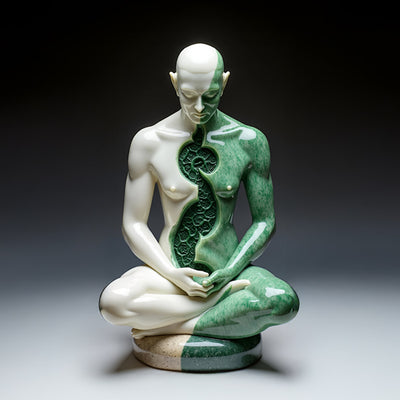
This kind of work covers a wide range: pared-back abstract forms, reworked figurative pieces, animal studies with an edge, and surface treatments that would have looked alien a century ago. What ties them together is intent. A contemporary art sculpture usually wants space around it and a clear point of view, rather than the symmetrical, centered placement that suited classical work.
In a home, that plays out in specific ways. A modern contemporary sculpture in an entryway works because the eye meets it on arrival and has room to move around it. Put the same piece in a crowded living room and it competes with the sofa, the art, and the lamps. Outdoors, the rules loosen and tighten at once: you get more room, but weather, sightlines, and seasonal planting all start voting on how the piece reads.
Where a modern form needs breathing room to be understood, a reworked figure such as Large Contemporary Headless Figure Bronze Sculpture (220cm) is a clear case. At over 7 ft (2.2 m), it needs a sightline that lets you take in the whole silhouette before you get close to the surface. Crowd it and the tension in the form disappears.

Scale, Sightlines, and Pedestal Height
Scale is the single choice that most often goes wrong. Buyers measure the piece and forget to measure the space around it. A useful habit: judge scale by how much empty air surrounds the work, not by its own dimensions. A tall stainless steel contemporary sculpture can feel modest in a garden that opens onto acreage and overpowering in a courtyard.
Sightlines matter just as much. Walk the route people actually take. Where does the eye first catch the piece? From the front door, the top of a stair, a kitchen island, a terrace? The strongest installs reveal a form from a distance, then reward you again up close. A tall figure like Large Contemporary Violinist Bronze Sculpture (220cm) earns its height at the end of a long approach, where the elongated pose stretches into view before the detail arrives.
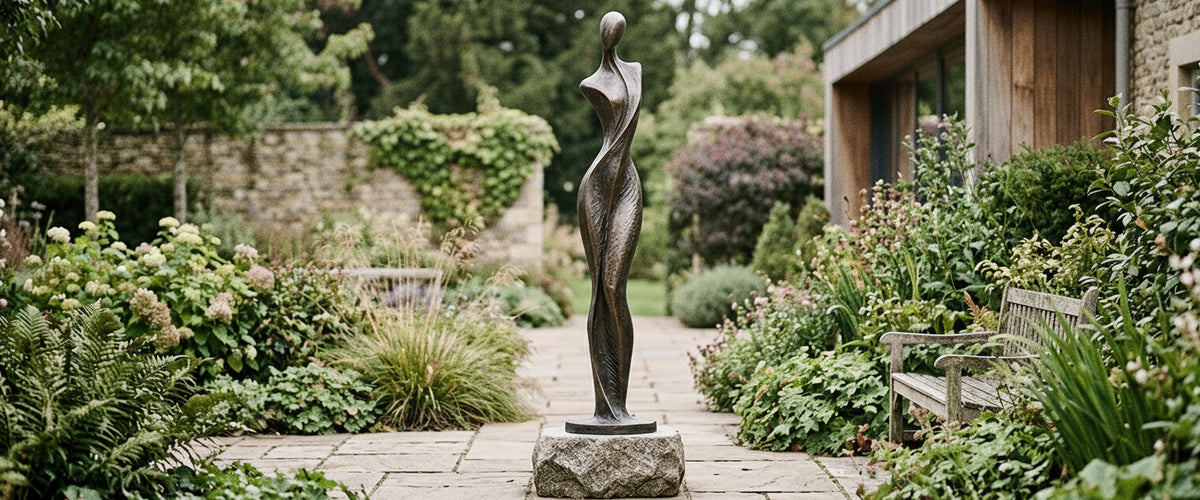
Outdoors, silhouette carries the piece, so a clear backdrop and correct plinth height matter most.
Pedestal height is the third lever, and the one most people leave to chance. As a rough guide for indoor figurative work, you want the visual focus around eye level for a standing adult, roughly 5 ft to 5 ft 6 in (1.5 to 1.7 m). For abstract forms, the plinth becomes part of the composition, so its proportions and material should be considered alongside the work, not bolted on afterward. We often adjust plinth height during a contemporary sculpture commission after seeing the piece against the actual wall or planting.

Indoor Versus Outdoor: When Each Wins
Indoor placement is about intimacy. You are close, the light is controlled, and surface detail carries the piece. A tactile bronze with a hand-worked patina rewards this proximity. For a console, a library shelf, or a plinth in a study, a smaller characterful piece of contemporary sculpture such as Contemporary Boar Head Bronze Sculpture (45cm) lets people read the modeling from a foot away, which is exactly what an indoor spot rewards.
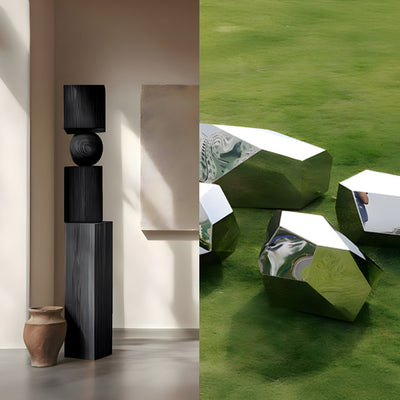
Outdoor placement is about silhouette and distance. You lose fine detail to daylight and viewing range, so the profile has to do the work. This is where large-scale figures and animal studies come into their own. It is also where material choice stops being cosmetic. Bronze develops a natural patina over years; stainless steel throws light and reads crisp; Corten forms a stable rust surface prized for warm color against greenery. Stone and marble weather more slowly but demand attention to freeze-thaw cycles in colder climates.
If you are buying a piece of contemporary sculpture for a garden by the coast or somewhere with hard winters, tell us. Salt air, sub-zero spells, and irrigation overspray all change the maintenance conversation. The Metropolitan Museum of Art's guidance on outdoor bronze care and conservation is a useful primer on why patina and protective coatings are maintained rather than left to chance.

Light, Backdrop, and Contrast
Light decides whether a form is legible. A dark bronze against a dark hedge disappears; the same piece against a pale limestone wall or open sky snaps into focus. Before you commit a location, look at it at three times of day. Morning side light models a surface beautifully. Flat midday light can wash out detail. Evening backlight turns a figure into pure outline, which can be spectacular or can erase everything you paid for.
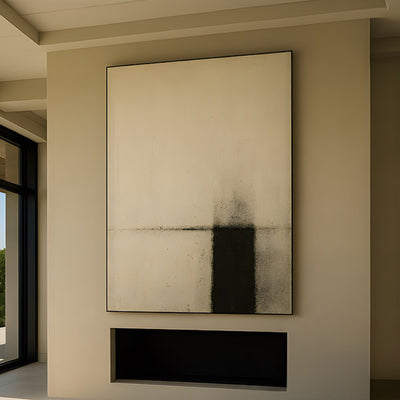
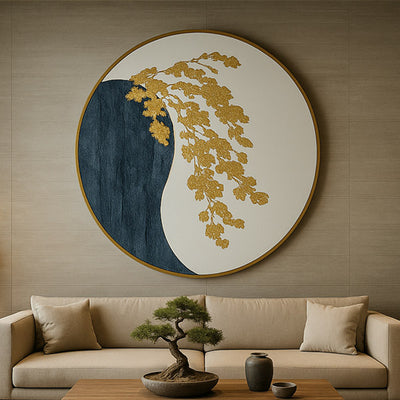
Backdrop contrast is the companion decision. A contemporary bronze sculpture with a warm dark patina wants a lighter or cooler ground behind it. A polished stainless piece needs a backdrop with texture or planting so it has something to reflect. Indoors, a contemporary wall sculpture behaves differently again: it lives on the vertical plane, so raking light from a nearby window or a directional fitting is what gives it depth. Hang it flat-lit and it reads like a picture rather than a relief.

Common Placement Mistakes We See on Commissions
For wider placement ideas, Affordable Contemporary Bronze: Where to Place It so It Actually Reads is useful companion reading before finalising the setting and sightlines.
Some errors come up so often they are almost predictable. Here is what to check before you sign off a location for your contemporary sculpture.
Buying to fit the gap, not the view. A piece chosen to fill an empty corner rarely commands attention. Choose for the sightline first, then find the spot.
Underscaling outdoors. Open air shrinks everything. A form that looks generous in a showroom often needs to go up a size class for a large garden.
Pedestals that fight the piece. A shiny modern plinth under a raw textured bronze creates a mismatch the eye keeps snagging on.
Ignoring the approach. Placing a directional figure so guests mostly see its back is more common than you would think.
No contingency for weight and foundations. Large bronze and stone need proper footings. A 220 cm figure can weigh several hundred pounds (well over 100 kg), and soft ground or an undersized base is a real problem later.
Forgetting seasonal change. A backdrop of full summer foliage becomes bare branches in winter. Placement should work in both.
One contemporary sculpture commission stays with me. A client set on a tall upright form for a pool terrace insisted on a corner near the house. We mocked it up and the corner killed it; the piece had nowhere to breathe and the roofline cut across its top. Moved to a freestanding spot with sky behind it, the same work finally sang. A vertical form like Contemporary Upright Dolphin Bronze Sculpture (170cm) lives or dies on that kind of open sightline.

How to Choose: A Quick Buyer Checklist
Identify the primary viewing point and the approach route.
Measure the empty space around the intended spot, not just the piece.
Check the backdrop for contrast and seasonal change.
Test light at morning, midday, and evening.
Match material to environment: bronze, stainless steel, Corten, or stone.
Plan pedestal height around the visual focus.
Confirm foundations and weight before delivery, not after.
Working through those points before you buy saves the most expensive mistake in this field, which is a good piece of contemporary sculpture in the wrong place. This is exactly the trap the best contemporary sculpture artists design around from the start. If you are weighing options, our contemporary and modern sculptures collection is a sensible starting point, and any of them can be scaled or adapted as a contemporary sculpture commission. Giant Sculptures works with buyers, designers, and architects to size, finish, and site large pieces so they read the way they should from day one.