






















































































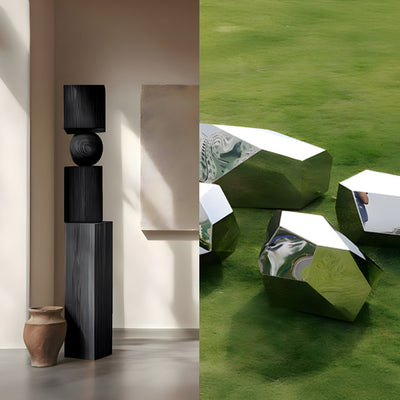



A life size bronze statue can dominate a room or disappear into it, and the difference is rarely the sculpture. It is where you put it. We have shipped bronze figures and animals to entrance halls in Manhattan, hillside gardens in Napa and lobby atriums in Texas, and the same casting reads completely differently depending on the wall behind it, the height it sits at, and how a visitor first meets it. Get the placement right and life size bronze statues earn their scale. Get it wrong and you have spent serious money on something people walk past.
This guide is about placement, not polishing. If you already know you want bronze, here is how to make it land.
A standing figure at the base of a stair sets the tone before anyone reaches the living space.

Key Takeaways
Sightlines matter more than square footage. Where a viewer first sees the piece decides its impact.
Pedestal height changes the entire reading of a figure; a few inches shifts it from intimate to commanding.
Indoor placement rewards contrast and controlled light; outdoor placement rewards space and a clear backdrop.
The most common mistake is crowding a life size bronze statue against a busy wall or a fussy planting bed.
Budget depends on material volume, scale, complexity, patina, engineering and installation, so ask for a tailored quote rather than assuming a figure.

What Life Size Bronze Statues Actually Look Like in a Real Space
Life size means the piece reads at human or animal scale, and that scale carries weight both literally and visually. A standing figure at roughly six feet (about 1.8 m) fills a sightline the way a person does. A life size animal, say a greyhound at 100cm or an elk pushing 280cm, occupies floor space and asks for room to be seen in the round.
Indoors, one of these life size bronze statues at the base of a staircase or centered in a double-height entry hall behaves like a permanent guest. It sets a tone before anyone reaches the living space. A draped or contrapposto figure like the Life-Size Classical Standing Nude Female Bronze Sculpture - 220cm works in exactly this role; it needs an approach, a few feet of clear floor, and a plain surface behind it so the silhouette reads cleanly.
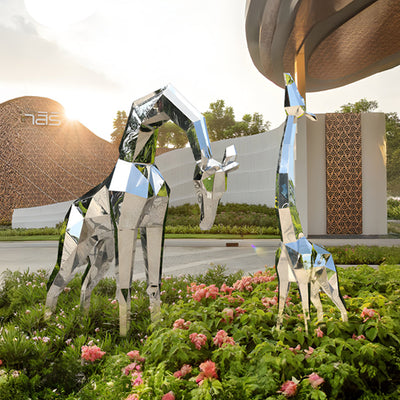
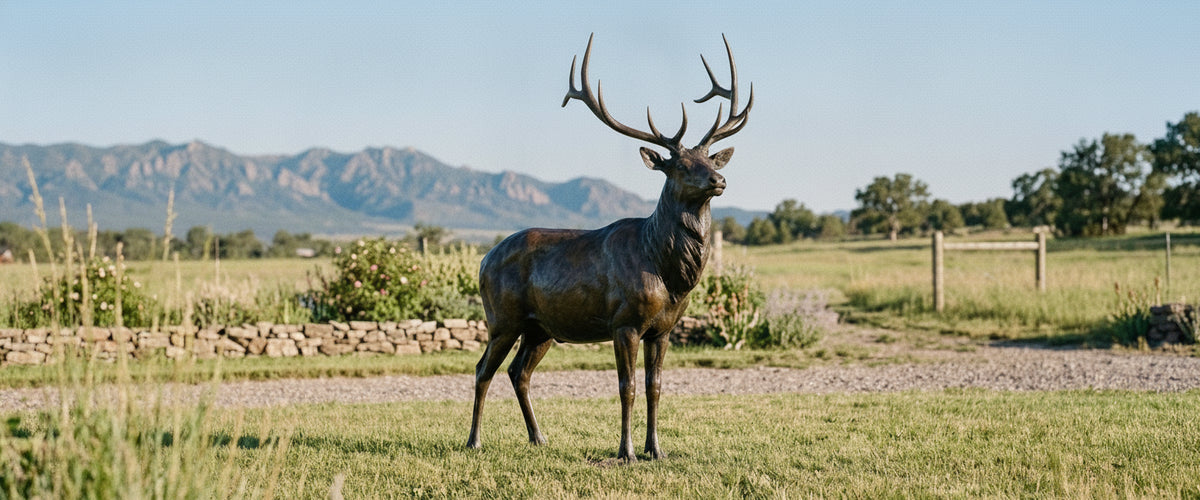
Outdoors the rules loosen and the scale grows. A life size bronze animal in a garden reads best when the landscape gives it context: a stag at the edge of a lawn, a dog set on a lower terrace where you glimpse it from the house. Bronze animals from our life size bronze statues collection look most convincing when they sit as if they belong to the setting rather than being displayed on it.

Scale, Sightlines and Pedestal Height
The single most underrated decision is how high the piece sits. Pedestal height changes the relationship between the viewer and the sculpture. Set a figure at eye level and it feels like a peer. Raise it a foot or two on a plinth and it becomes formal, distant, a little monumental. Drop an animal to ground level and it feels alive and encountered rather than presented.
Think about the approach. Where does someone first see the statue, and from how far? A life size bronze statue read from thirty feet across a lawn needs a taller base or an open backdrop so the outline holds. The same piece in a tight courtyard wants to sit low and close, because you meet it at conversational range.
A quick working method we use with clients:
Mark the main viewing point. Stand where guests will first see the piece and look at the eye line.
Mock up the height. Stack boxes or use a stand-in at the intended pedestal height before you commit.
Walk the full circle. A life size bronze statue is meant to be seen in the round; check the least flattering angle, not just the hero shot.
Leave breathing room. A piece needs clear space roughly equal to its own height on at least one side.
Outdoors, a large animal wants a lawn edge or broad terrace where its outline reads against sky.

Indoor Versus Outdoor: When Each Wins
Indoors, life size bronze statues win when you can control light and keep the background quiet. A bronze figure in a gallery-style hallway, lit from one side, casts the kind of shadow that gives the surface depth. The limit indoors is space; a life size animal can crowd a room fast, and doorways and floor loading become real constraints for a piece that weighs several hundred pounds.
Outdoors, bronze comes into its own. It handles weather well, develops patina over time, and has room to be seen from multiple distances. A leaping tiger or a standing elk needs that room. At 280cm, the Life-Size Standing Bull Elk Bronze Sculpture - 280cm is not a piece for a small patio; it wants a lawn edge or a broad terrace where the antlers read against sky rather than a fence.
Bronze is a copper alloy, and its outdoor patina is part of the appeal rather than a fault. Conservation guidance from the National Park Service and museum conservators is consistent on this: a stable patina protects the metal beneath, and periodic waxing helps maintain it. That durability is why we steer buyers toward life size bronze statues for exposed positions rather than materials that need constant defending.
Light, Backdrop and Contrast
A life size bronze statue is a three-dimensional object that lives or dies on how light hits it. Flat, even light kills the form. Directional light, morning or late-afternoon sun outdoors, a single strong source indoors, models the surface and reveals the detail the sculptor put in.
Backdrop decides contrast. Bronze sits somewhere between warm brown and near-black depending on the patina, so it reads strongest against a lighter, plainer field: a pale rendered wall, clipped hedge, gravel, or open sky. Put a dark casting against a dark yew hedge in shade and the silhouette vanishes. We have re-sited more than one commission for exactly this reason.
For outdoor lighting at night, aim for grazing angles rather than a flat floodlight straight on. A low uplight to one side rakes across the surface and keeps the drama the daytime sun gives you for free. Brief a landscape electrician on directional accent lighting rather than a single blunt spotlight, and the piece keeps its depth after dark.
Common Placement Mistakes We See in Commissions
For wider placement ideas, Life Size Statues: Ideas, Materials, Placement and Buying Tips is useful companion reading before finalising the setting and sightlines.
Most placement problems fall into a handful of repeatable errors, and they show up with life size bronze statues again and again. Here is what we flag before a piece ships.
Crowding a busy wall. A life size bronze figure against wallpaper, art or a cluttered shelf loses its outline. Give it a plain field.
Wrong pedestal height. A base that is too tall makes an intimate figure feel remote; too low and a commanding animal looks stranded.
Ignoring the approach. People meet a statue from a direction. If the strongest angle faces a wall, you have hidden the sculpture from its own audience.
Planting it into a fussy bed. Bronze animals drown in dense, colorful planting. A calmer ground, lawn or gravel, lets the form dominate.
Underestimating weight and load. A life size bronze statue can run into the hundreds of pounds; interior floors, decking and roof terraces need checking before delivery.
Buying scale off a screen. A greyhound at 100cm and a tiger at 300cm are wildly different commitments. Always translate the centimeters into a physical footprint in the actual space.
Where a smaller setting such as a terrace corner or an interior landing calls for restraint, the Life-Size Contemporary Greyhound Bronze Sculpture - 100cm at 100cm flatters the space in a way a larger animal would overwhelm. Matching the piece to the space is the whole game.
Commissioning for a Specific Spot
Where a stock casting will not sit right, a bespoke commission solves it. If your entrance hall wants a figure at a precise height, or your garden calls for an animal in a specific pose to face the house, we can adjust scale, stance, patina and base to the site. That is where Giant Sculptures spends most of its time: large-scale life size bronze statues made to land in one particular place rather than fit a catalog.
Bronze life size statues built for a known position almost always outperform something bought first and squeezed in later. Bring the sightlines, the backdrop and the light, and the placement decisions above stop being guesswork.