





































































































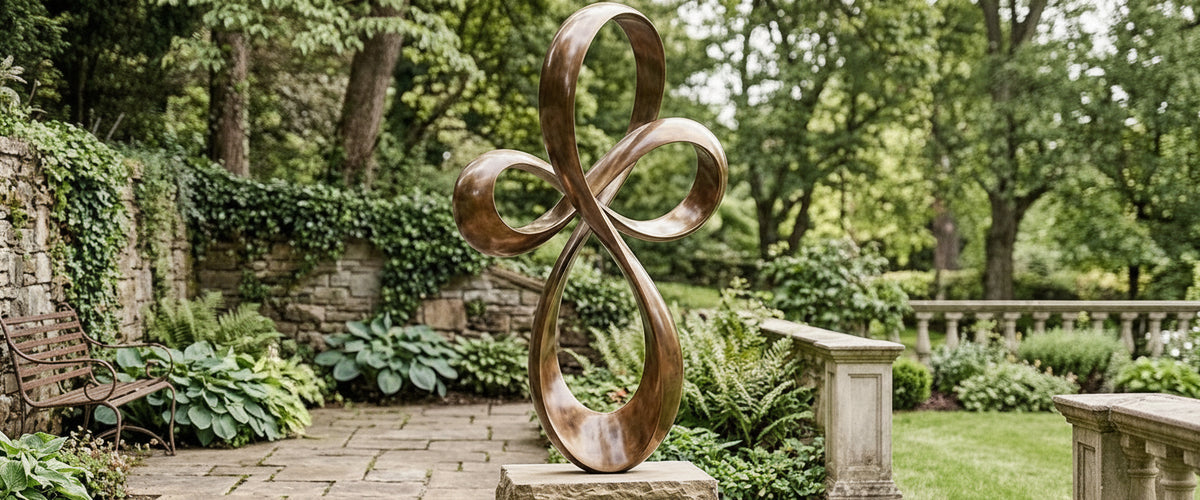

A sculpture that looks commanding in a photograph can vanish the moment it lands in a real office. Too small for the atrium, too tall for the desk, lost against a busy wall, or facing the wrong way so visitors only ever see its back. The piece itself is rarely the problem. Placement is. Whether you are searching for an office sculpture, a signed bronze for a boardroom, or a desk piece with real presence, the decisions that govern impact happen before delivery, not after.
We ship large and bespoke work into corporate lobbies, private studies and landscaped commercial grounds, and the same lesson keeps repeating: buyers underestimate scale and overestimate how forgiving a room is. An office sculpture lives or dies by that judgment.
A focal piece lifted toward standing sightline in a double-height reception.

Key Takeaways
Scale beats detail from across a lobby. Fine surface work rewards close viewing; mass and silhouette carry a room.
Pedestal height sets the read. Raise a focal point to sightline height and it reads as intentional, not stranded.
Indoor vs outdoor is a material and light decision, not just a taste one.
Backdrop and contrast decide visibility more than the sculpture's own color.
Budget depends on material, scale, engineering, finishing and installation. Ask for a tailored quote rather than assuming a figure.

What an Office Sculpture Actually Looks Like in Different Rooms
Context rewrites a piece. A desk sculpture that feels confident on a walnut credenza becomes a jumble on a glass boardroom table with cables running underneath. A figurative bronze that reads as dignified in a stone-floored reception can look severe on a soft, carpeted open-plan floor. The same office sculpture can win one room and sink another.
Start with the room's job. A reception or lobby wants a single strong focal point that a visitor registers within a few seconds of arriving. A private office or study can hold something more personal and detailed, because people spend time near it. An outdoor courtyard or entrance forecourt for a commercial building needs a piece that holds up against sky, weather and distance, which usually means larger and heavier than clients first expect.
Office desk sculptures follow their own rules. On a desk you are viewing from two to three feet (0.6 to 0.9 m) away, so surface, patina and small gestures carry the whole effect. A monumental figure works the opposite way; the silhouette does the work from thirty feet (9 m) out. Trying to make one office sculpture do both jobs is the fastest route to disappointment.
Scale, Sightlines and Pedestal Height
The single most common misjudgment we correct in commissions is height. An office sculpture placed on the floor of a double-height lobby often sits below the natural eyeline of someone walking in, so it feels dropped rather than displayed. The fix is a plinth that lifts the visual center of the piece toward standing sightline, roughly the viewer's chest to eye level at the distance they first see it.
Think about the approach path. Where does a visitor stand when they first clock the piece, and what sits behind it? If a reception desk, a staircase or a bank of glass sits directly behind, the sculpture competes for attention and usually loses. Give it a calmer backdrop and a clear approach, and even a modest piece gains authority.
Mass and pedestal working together to settle a monumental bronze into its space.
Large equestrian and figurative bronzes are a good illustration of how mass and pedestal interact. Where a forecourt or grand atrium needs a piece that commands from a distance, a full-height work such as the Monumental Classical Military Officer Riding Horse Bronze Sculpture - 350cm is built for exactly that throw of space; on a low base in a tight room it would overwhelm, but given distance and a considered plinth it settles into scale. Match the pedestal to both the piece and the throw of the space, not to a generic height.
Indoor Versus Outdoor Placement: When Each Wins
For wider placement ideas, Wall Art for Office Spaces: How Scale and Placement Change the Room is useful companion reading before finalizing the setting and sightlines of any office sculpture.
Indoors, you control light, humidity and handling, which widens your material options. Polished marble, delicate patinated bronze and fine stainless steel all behave predictably in a climate-controlled interior. A reception or executive floor is where surface quality earns its keep, because people pass within touching distance.
Outdoors, the material list narrows to work that shrugs off weather. Bronze develops and holds a patina; the Smithsonian's guidance on outdoor bronze is a useful primer on how these surfaces age and why maintenance matters. Corten steel forms a stable rust layer that suits contemporary commercial landscaping. Stainless steel stays bright and reflective, which reads well against planting and sky. Stone and marble suit outdoor use too, though finish choice affects how they weather.
The deciding question is rarely taste. It is exposure. An office sculpture under a covered entrance canopy faces different demands than one standing free in an unshaded courtyard in Texas heat or an Aspen winter. Tell us the site conditions and we specify material and fixing accordingly.
Light, Backdrop and Contrast
Light is the quiet variable that decides whether an office sculpture looks intentional or accidental. A reflective stainless steel form needs directional light and something worth reflecting; put it in flat, even lighting against a white wall and it goes lifeless. A dark patinated bronze needs enough light to reveal its modeling, or it collapses into a silhouette that hides all the detail you paid for.
Contrast against the backdrop matters more than the sculpture's own color. A pale marble figure reads beautifully against a dark paneled wall and disappears against pale plaster. A dark bronze pops against light stone and vanishes in a dim corner. Before you commit a position, look at what sits directly behind the piece from the main viewing angle and ask whether it helps or fights.
For outdoor commercial settings, plan for how the sun moves. A piece that looks resolved at midday can throw awkward shadows or fall into shade by late afternoon. We often advise clients to walk the site at two or three times of day before fixing a plinth position.
Common Placement Mistakes We See
Some errors recur often enough that they are worth naming when you place an office sculpture.
Buying for the photo, not the room. A catalog image flattens scale. Measure the space and tape out the footprint before deciding.
Undersizing for a large lobby. A piece that feels big in a showroom often looks timid in a double-height reception. When in doubt, go larger.
Ignoring the back. If people circulate around the piece, every angle needs to hold up. A sculpture designed to face one way should be positioned so its strong side greets arrivals.
Skipping the floor loading check. A heavy bronze or stone piece on an upper floor needs a structural sign-off. We flag weight early so this is never a surprise on delivery day.
Crowding the piece. Sculpture needs breathing room. Furniture, planters and signage pushed too close kill the effect.
A Quick Placement Checklist
Confirm the primary viewing distance and angle of approach.
Set pedestal height to bring the visual center toward sightline.
Check the backdrop for contrast and for competing detail.
Test light at more than one time of day.
Verify floor loading and fixing for the weight and site.
For outdoor pieces, confirm the material suits the exposure.
Commissioning With Placement in Mind
The advantage of a bespoke office sculpture commission is that placement drives the design rather than following it. When we know the room, the sightlines and the intended distance, we can adjust scale, pose orientation, patina and base together so the finished piece is resolved for its actual home. A well-briefed office sculpture engineered around its site outlasts and outperforms one bought off the shelf and squeezed in afterward, which is exactly how Giant Sculptures works as a matter of course.
Long-term ownership sits inside the same conversation. A patina choice that suits an indoor executive floor may need a different specification for a coastal courtyard. Fixing method, drainage under an outdoor plinth and access for cleaning all belong in the brief, not the afterthought. Get those right and a serious office sculpture becomes a fixture of the building rather than a thing that gets quietly moved into a corridor a year later.