
Why Resin Has Become the #1 Material for Garden Sculptures
Twenty years ago, if you wanted a substantial resin garden sculpture, you didn't have one. Your options were three: stone, bronze, or cast iron. Each had significant downsides. Stone was prohibitively heavy. Bronze was extraordinarily expensive. Cast iron rusted without constant maintenance.
Resin changed everything.
Over the past two decades, high-quality resin has become the dominant material for garden statues and outdoor sculptures — for excellent reasons. Modern UV-stable resins are weather-resistant, lightweight relative to traditional materials, hold intricate detail beautifully, and can be finished to look like bronze, stone, ceramic, or pure contemporary design. They don't rust, don't crack in winter, don't fade in sunlight, and don't require the specialist installation and maintenance of stone or bronze.
If you're considering adding a sculpture to your garden, outdoor space, or patio in 2026, resin should almost certainly be at the top of your list. This guide explains everything you need to know: what resin is, how it compares to other materials, what styles work best outdoors, how to care for resin garden sculptures to maximise their lifespan, size guides, placement advice, and where to buy the best pieces in the UK.
At Giant Sculptures, resin is central to what we do. We specialise in premium-grade resin garden sculptures and statues — hand-finished in the UK, designed to last decades outdoors. This guide draws on years of helping customers choose the right pieces for their outdoor spaces.
What Is a Resin Garden Sculpture?
A resin garden sculpture is a statue or decorative piece moulded from synthetic resin — a type of durable plastic — and designed for outdoor use. The base material is typically polyester resin or, for premium pieces, polyurethane or epoxy resin. Modern resin formulations include UV-stabilising additives that prevent colour fading, plus hardeners that give the finished piece exceptional durability.
To produce a resin sculpture, the resin is poured or injected into a mould (usually made from silicone or fibreglass), left to cure, then released. The result is a lightweight but solid piece that takes extraordinary detail — every texture, every contour, every nuance of the original sculpt is captured. The piece can then be hand-finished in any colour or finish: painted, lacquered, given metallic patinas to mimic bronze, stone-effect textured finishes, or clean contemporary solid colours.
Crucially, good-quality resin is designed for outdoor environments. It doesn't absorb water the way stone does, doesn't rust like metals, and doesn't crack in frost cycles. The combination of detail, durability, and finish flexibility makes resin ideal for garden statues.
Resin vs Stone vs Bronze vs Fibreglass: Material Comparison
Here's how resin compares to the other major garden sculpture materials.
Resin
Strengths:
- Lightweight — much easier to move, install and position than stone
- Durable — premium resin lasts 15-30 years outdoors with minimal maintenance
- Detailed — holds intricate details better than stone or bronze casting
- Versatile finishes — can look like any material (bronze, stone, ceramic, contemporary colour)
- Good value — a fraction of the price of bronze for similar sizes
- Weather-resistant — doesn't rust, doesn't absorb water, doesn't crack in frost
Considerations:
- Lower-grade resins can yellow or fade in sunlight (premium UV-stable resins do not)
- Can be damaged by hard impact (though more forgiving than ceramic)
- Doesn't have the same perceived prestige as bronze for formal settings
Stone (Marble, Limestone, Granite)
Strengths:
- Traditional, heritage aesthetic
- Enormous durability when properly finished (centuries)
- Develops beautiful weathering over time
Considerations:
- Extremely heavy — requires professional installation and appropriate foundations
- Porous — absorbs water, can crack in frost cycles
- Expensive — a life-size marble statue can cost £20,000-£200,000+
- Limited finish options (the material is the finish)
- Soft stones (limestone, sandstone) require regular sealing
Bronze
Strengths:
- Premium prestige aesthetic
- Extraordinary durability (thousands of years)
- Develops beautiful patina over time
- Signals serious investment
Considerations:
- Extremely expensive — £5,000-£100,000+ for garden-scale pieces
- Very heavy — significant installation requirements
- Can develop unwanted oxidation in wet environments
- Subject to theft risk (scrap metal value)
Fibreglass
Strengths:
- Lightweight
- Lower cost than resin in some cases
- Suitable for very large pieces
Considerations:
- Holds less fine detail than resin
- Surface finish often less refined
- Can crack or fracture under impact
- Often used for theme park/commercial scale rather than refined garden pieces
Cast Iron
Strengths:
- Traditional Victorian aesthetic
- Substantial weight and presence
- Can last a century or more with maintenance
Considerations:
- Rusts without constant maintenance
- Requires annual painting/sealing
- Limited design language (best for traditional urn, bench, traditional statue styles)
- Very heavy
For modern garden design, in the vast majority of cases, premium resin is the best-value material: outstanding detail, durability, finish flexibility, and ease of installation at a fraction of the cost of bronze or stone.

The Benefits of Resin Garden Statues
Why choose resin specifically? Here are the eight practical benefits that make resin garden sculptures so popular.
1. Weather Resistance
Quality resin garden statues can stay outdoors year-round in UK climate — including frost, rain, wind, and summer sun — without damage. The material doesn't absorb water (unlike porous stone), doesn't rust (unlike ferrous metals), and doesn't crack in freeze-thaw cycles.
2. Lightweight Installation
A life-size resin gorilla sculpture might weigh 40-80kg. An equivalent stone piece could weigh 500-1,500kg. The difference transforms installation — resin pieces can typically be carried by two people and placed directly on existing surfaces, where stone requires cranes, specialist foundations, and often professional installation.
3. Design Variety
Resin gardens sculptures span every aesthetic imaginable — classical figures, modernist abstracts, hyperrealistic animals, designer art-toy-inspired pieces, geometric sculptures, contemporary pop art. The material is neutral; the artist determines the aesthetic. This flexibility is one of resin's biggest strengths.
4. Detail & Finish Quality
Because resin is poured into moulds, it captures the sculpt's detail perfectly — far better than chiselled stone or sand-cast bronze. A premium resin piece reveals textures, expressions, and subtle contours that would be difficult or impossible in other materials at reasonable cost.
5. Long Lifespan
Premium resin garden statues from reputable makers last 15-30 years outdoors with minimal maintenance. In many cases, the surface finish needs the occasional refresh; the underlying structure remains intact much longer.
6. Value
A quality resin statue typically costs 20-40% of an equivalent bronze piece and 30-60% of an equivalent stone piece. For most homeowners and garden designers, resin provides the impact of these premium materials at a dramatically more accessible price.
7. Easy Maintenance
Resin garden sculptures require minimal care. An occasional wipe with a damp cloth is typically sufficient. No sealing, no annual painting (for quality pieces), no specialist treatment.
8. Move-Friendly
If you redesign your garden, move house, or want to change position, resin pieces can be moved relatively easily — a real advantage when you're investing in pieces that should grow and change with your space.
Are Resin Sculptures Weatherproof?
Short answer: yes, quality resin sculptures are weatherproof for UK climate conditions — but not all resin is equal.
What 'Weatherproof' Means for Resin
For a resin garden statue to be genuinely weatherproof, three things matter:
- UV-stabilised resin: prevents colour fading and material degradation from sunlight
- Properly sealed finish: prevents water ingress at the surface
- Solid casting (no air pockets): prevents frost damage in freeze-thaw cycles
Premium resin garden sculptures from reputable makers include all three. Cheaper resin pieces — particularly unbranded imports — may not.
What Weather Can Resin Sculptures Handle?
- UK summer heat (up to 35°C): easily tolerated
- UK winter cold (down to -10°C): easily tolerated — resin doesn't freeze-crack like stone
- Rain: fully tolerated; quality resin doesn't absorb water
- Snow: fully tolerated; brush off heavier accumulations to avoid mechanical stress
- Frost: fully tolerated; the material doesn't expand/contract dangerously like porous stone
- Wind: tolerated; heavier pieces should have simple anchoring for exposed positions
- Salt spray (coastal): premium resin is well-suited to coastal environments
What to Watch For
- Direct south-facing sun exposure 365 days a year: can gradually fade even UV-stable finishes over 20+ years
- Positioning directly under heavy-dropping trees: accumulated leaf acid can eventually affect surface finish
- Hard impacts (football, falling branches): resin is durable but not indestructible
For UK conditions, quality resin is genuinely weatherproof. We've seen Giant Sculptures pieces outdoors for 15+ years looking essentially unchanged.
Popular Styles of Resin Garden Statues
Resin's versatility means garden statues come in wildly varied styles. Here are the dominant aesthetic categories.

Animal & Wildlife Sculptures
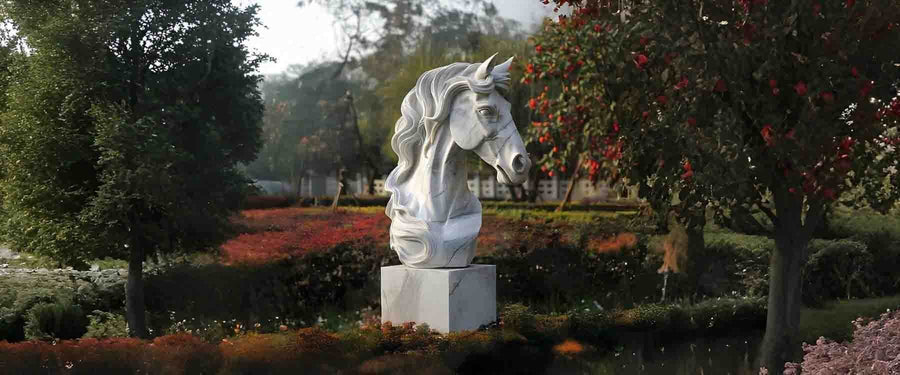
The single most popular category of resin garden statue. Realistic bears, gorillas, stags, eagles, horses, rabbits, foxes, and garden birds make up a huge proportion of the market. Quality animal sculptures anchor a garden with a sense of natural presence.
Our animal garden statues include bears, gorillas and more.
Contemporary & Designer Pieces
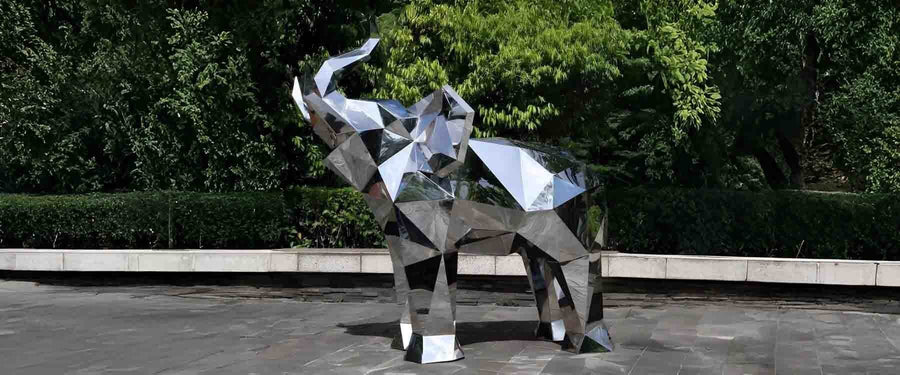
Modern designer sculptures — balloon dogs, abstract forms, geometric animals, pop-art-inspired pieces — have become major forces in contemporary garden design. These pieces read as art first and garden ornament second.
Classical Figurative Sculptures
Greek and Roman-inspired figures, reproduction classical statues, cherubs and figurative pieces. Once the dominant garden sculpture style; still popular in traditional English gardens and formal landscape design.
Eastern & Zen Garden Sculptures
Buddha statues, Japanese lantern reproductions, pagoda-style pieces, and Zen-garden-inspired sculptural forms. Popular for meditative garden corners and contemplative spaces.
Abstract & Modern Sculptures
Pure form pieces — spheres, abstract shapes, geometric sculptures, contemporary art. Works best in architectural modern gardens.
Fantastical & Whimsical Sculptures
Fairy-tale figures, gnomes, dragons, mythological creatures. More controversial in design terms — done well, they add character; done poorly, they become kitsch.
Size Guide: Choosing the Right Size for Your Space
Size is the single most important decision when buying a garden sculpture. The right piece in the wrong size is worse than no piece at all. Here's our guide.
Small Garden Sculptures (Up to 60cm)
- Best for: balcony gardens, courtyards, container gardens, small patios, tabletop outdoor settings
- Character: intimate, detailed, personal
- Placement: among plants, on patio tables, on pedestals, near doorways
- Typical pieces: small animal figures, abstract forms, decorative urns
Medium Garden Sculptures (60cm-120cm)
- Best for: standard UK gardens, patio focal points, border features
- Character: noticeable but not dominant
- Placement: mid-border, next to trees, beside seating areas, flanking entrances
- Typical pieces: medium bears, classical figures, geometric pieces, designer sculptures
Large Garden Sculptures (120cm-180cm)
- Best for: larger gardens, lawn centrepieces, driveway features, commercial landscaping
- Character: statement pieces that anchor a space
- Placement: isolated on lawns, in dedicated garden 'rooms,' at the end of sight-lines
- Typical pieces: large animal statues, classical figure sculptures, substantial contemporary pieces
Giant / Life-Size Garden Sculptures (180cm+)
- Best for: large gardens, estates, commercial spaces, hotels, parks
- Character: spectacular, transformative, defining
- Placement: as the anchor of a major view; never crowded by other elements
- Typical pieces: life-size bears, gorillas, horses, giant balloon dogs, major artwork
Explore our full large garden statues collection for substantial statement pieces.

How to Care for Resin Garden Sculptures
Quality resin sculptures need very little care to maintain their appearance for decades. Here's the practical guide.
Routine Care (Monthly)
- Wipe with a damp microfibre cloth to remove dust, pollen, and light debris
- For any stains: use warm water with a tiny amount of mild dish soap
- Rinse with clean water after cleaning
- Dry with a soft cloth or allow to air-dry in shade
Seasonal Care
- Spring: thorough clean to remove winter grime; inspect for any damage
- Summer: check that positioning doesn't get excessive direct sun if concern
- Autumn: brush off accumulated leaves; clear any debris from crevices
- Winter: no special care needed for premium UV-stable resin; brush off heavy snow accumulation
What to Avoid
- Pressure washers directly on the surface (can damage finish over time)
- Harsh chemicals: solvents, bleach, acid-based cleaners
- Abrasive cleaning pads or brushes
- Positioning under dripping tree branches long-term
Handling Damage
If your resin piece gets damaged:
- Small scratches: often buff out with careful polishing
- Chips: can often be filled with matching resin and touched up
- Colour fade: premium makers often offer refinishing services
- Structural damage: contact the maker; many offer repair services
For Giant Sculptures pieces, we offer post-purchase care advice and refinishing services for our sculptures.
Placement: Where to Position Resin Statues in Your Garden
Where you put a garden sculpture matters as much as what you buy. The right placement transforms a piece from ornament to anchor.
The Focal Point Rule
Every garden has sight-lines — views from key positions (the main doors, the kitchen window, the patio seating area, the path down the garden). A significant sculpture should sit at the terminus of one of these sight-lines. When you look from the kitchen, the sculpture should be there. When you walk down the main path, the sculpture should draw you forward. This 'focal point' placement makes the sculpture do real work in the garden design.
The Breathing Room Rule
Sculptures need space around them. A life-size bear crammed into a flower bed is lost. The same bear isolated on a simple gravel surround becomes powerful. Give each major sculpture empty space around it — minimum 1-2 metres of clear ground in all directions for larger pieces.
Scale Relative to Surroundings
A 30cm sculpture next to a 10-metre mature oak is invisible. A 2-metre sculpture in a small patio is overwhelming. Match piece scale to surroundings. For open spaces: go bigger. For enclosed or intimate spaces: smaller, more intricate pieces work better.
Background Matters
A dark sculpture against a dark hedge disappears. The same sculpture against a pale fence or sky backdrop pops. Think about what's behind your piece. Pale sculptures need dark backgrounds and vice versa.
Grouping vs Solitary
Solitary major pieces are powerful. Groupings of smaller pieces can also work — but beware cluttered collections. Three intentionally-grouped small animal pieces in a forest glade can be beautiful. Twelve assorted garden ornaments scattered across a lawn is visual noise.
Resin Garden Sculptures for Small Gardens
Limited space doesn't mean limited opportunity for garden sculpture. Small gardens benefit from careful sculpture choices just as much as large ones — often more so, because well-chosen pieces can transform a compact space.
Scale Down, Don't Skip
Small gardens work best with small-to-medium sculptures (30cm-80cm). Fight the temptation to skip sculpture entirely because 'there's no room' — a single intentional piece can redefine a compact garden. The key is choosing appropriately.
Vertical Thinking
In tight spaces, consider placement options beyond the ground: wall-mounted sculpture, pieces on pedestals or columns, hanging resin pieces, sculptures integrated with planters. Vertical placement maximises impact without eating floor space.
Multi-Purpose Pieces
Sculptures that serve double purposes — a resin sundial, a sculpted bird bath, a sculpted planter, a decorative water feature — make sense in small gardens where every element needs to earn its space.
Statement or Nothing
If you can only have one sculptural piece, make it count. A single striking small-to-medium designer sculpture anchors a small garden better than three mediocre pieces.
Zen & Modern Garden Resin Sculptures
Two particularly popular contemporary styles deserve specific attention: Zen-inspired garden sculpture, and modern/minimalist garden sculpture.
Zen Garden Resin Sculptures
Zen-influenced gardens emphasise simplicity, contemplation, and natural materials. Sculptural choices typically include:
- Buddha statues (various sizes and styles)
- Japanese stone lantern reproductions (in resin)
- Simple sphere or oval sculptures (representing the clean forms of Zen
- Pagoda-inspired pieces
- Natural forms — rock-inspired sculptures, organic shapes
Placement for Zen-influenced sculpture is particularly important. The piece should feel intentionally placed but unforced. It should have significant empty space around it. Gravel, moss, or simple plantings work better than busy flower beds.
Modern Garden Resin Sculptures
Modern/minimalist garden design pairs exceptionally well with contemporary resin sculpture:
- Balloon dog sculptures (the Koons influence — bright colours, glossy finishes)
- Abstract geometric forms
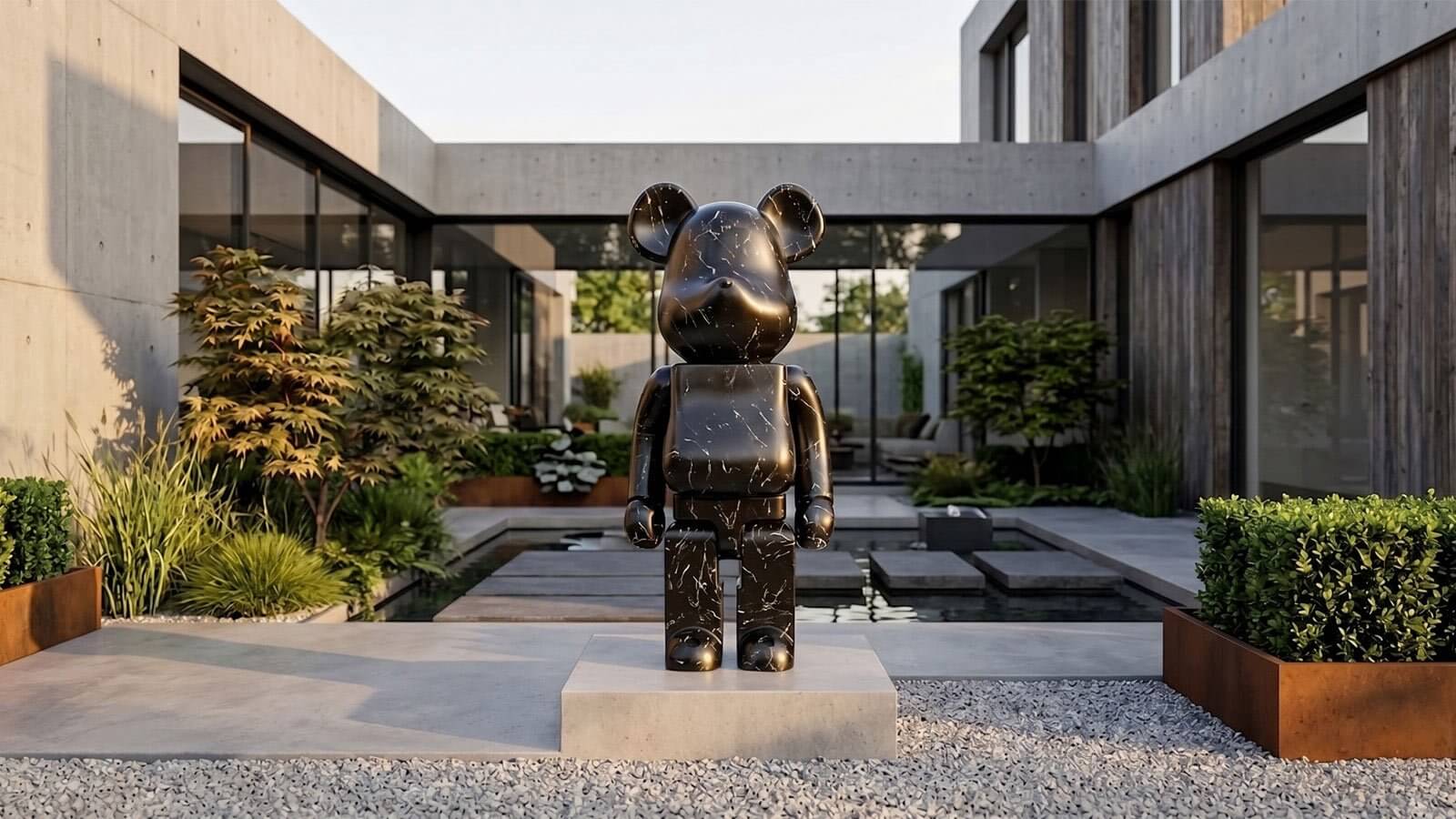
- Designer animal sculptures (stylised bears, geometric animals)
- Clean contemporary figurative pieces
- Pop-art inspired sculptures
For modern gardens, boldness beats subtlety. A bright red balloon dog on a simple gravel surface is more effective than a complex classical piece.
Wildlife & Animal Resin Garden Sculptures
Animal sculptures remain the most popular category of resin garden statue — for good reason. Nothing anchors a garden quite like a well-placed animal sculpture, which brings a sense of natural inhabitants and wildlife presence.
Most Popular Animal Garden Sculptures
- Bears — statement pieces, particularly at large and life-size scales
- Gorillas — powerful silverback sculptures for serious statements
- Stags and deer — classic English countryside aesthetic
- Horses — noble, commanding presence
- Rabbits — charm, especially for cottage-garden styles
- Foxes — contemporary British garden aesthetic
- Eagles and large birds — striking vertical elements
- Dogs — personal, pet-inspired pieces
- Cats — garden character pieces
Our full garden statues collection features wildlife and animal pieces across every size category.
Where to Buy Resin Garden Sculptures
Specialist UK Makers
UK-based specialist makers of resin garden sculpture produce premium-quality pieces in the styles and scales most appropriate for UK gardens. Look for:
- Hand-finished production (not mass-imported)
- UV-stable premium resin formulations
- Detailed craftsmanship and finishes
- Direct customer service and installation support
- Warranties on materials and finish
Giant Sculptures is a UK specialist in exactly this space — premium resin garden sculpture, hand-finished in the UK, shipped throughout the UK and internationally.
Garden Centres
National and independent garden centres stock resin garden statues. Quality and design vary enormously. Bigger garden centres often stock some premium pieces, but the range is usually limited and mass-market oriented.
Online Marketplaces
Amazon, eBay and similar platforms carry a vast range of resin garden statues — but quality is wildly inconsistent. Very cheap pieces are usually lower-grade resin that may fade, crack or degrade within 2-5 years. Premium pieces are available but require careful seller vetting.
Bespoke Commissions
For truly unique garden sculptures — specific sizes, custom finishes, one-off pieces — bespoke commissions from specialist makers are an option. This is higher-cost but allows you to get exactly the piece your garden needs. Giant Sculptures accepts bespoke commissions for substantial pieces.
Bringing Resin Sculpture to Your Garden
Resin garden sculptures offer what no other material can match at their price point: outstanding durability, detailed craftsmanship, finish flexibility, and genuine long-term value — at prices that make serious garden art accessible to most homeowners.
Whether you're looking for a statement life-size sculpture for a significant garden, a designer piece for a contemporary patio, or a smaller animal or character sculpture for a compact outdoor space, quality resin is the material to choose.
At Giant Sculptures, we specialise in premium resin garden statues and sculptures — hand-finished in the UK, designed to last decades outdoors, available in sizes from tabletop to life-size and beyond. Browse our garden statues collection, outdoor sculptures, resin sculptures, and large garden statues to find the right piece for your outdoor space.