






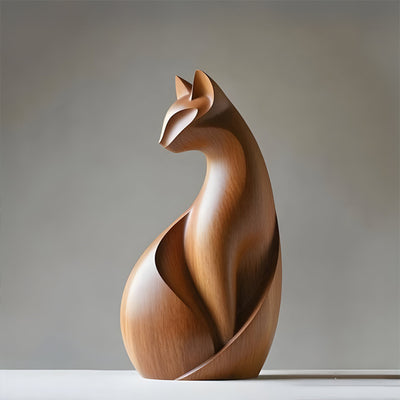
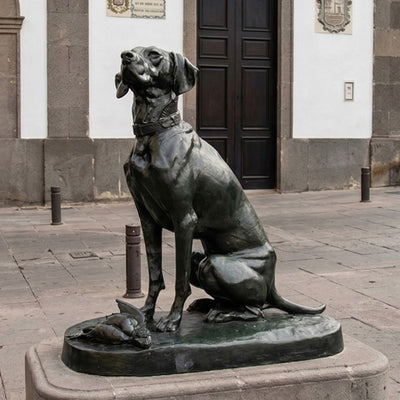


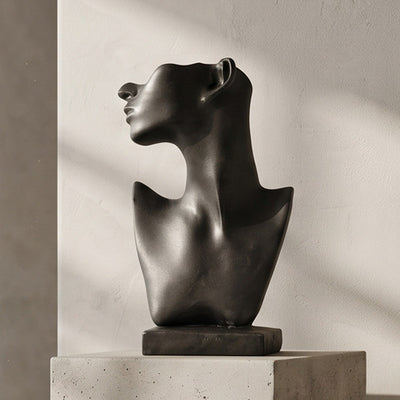

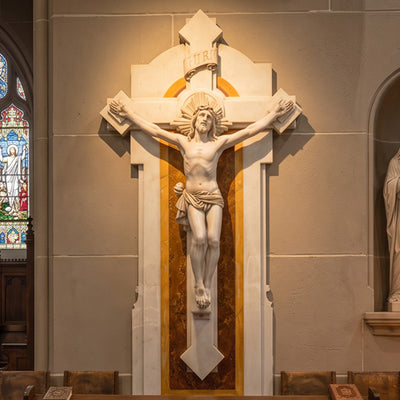



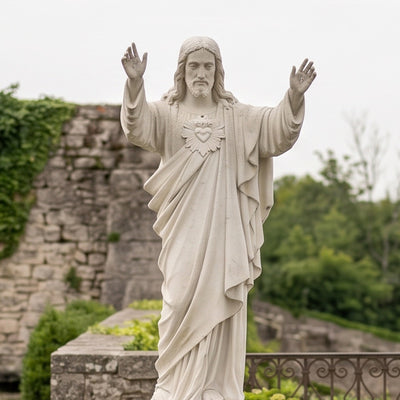
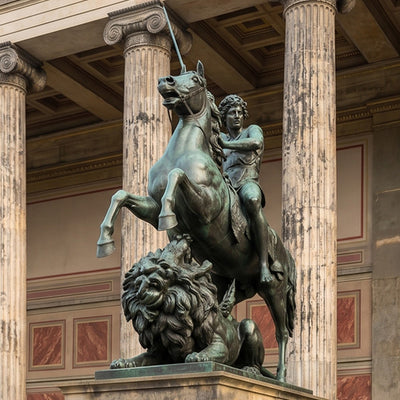


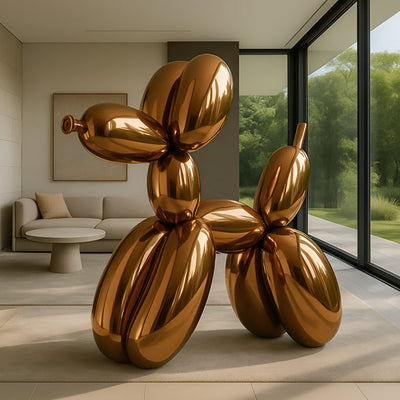

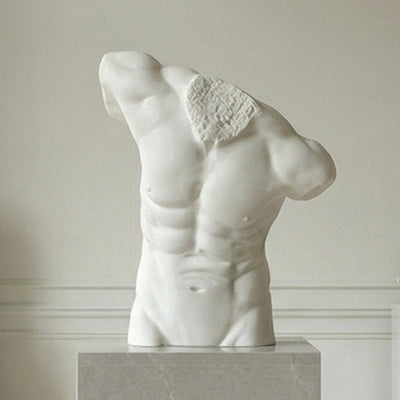
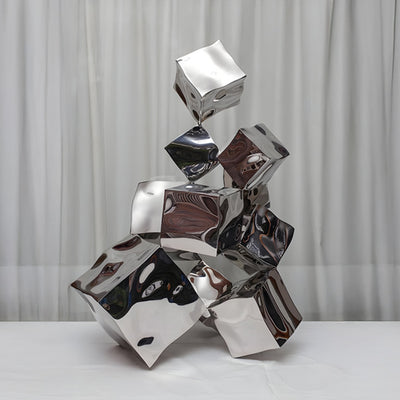


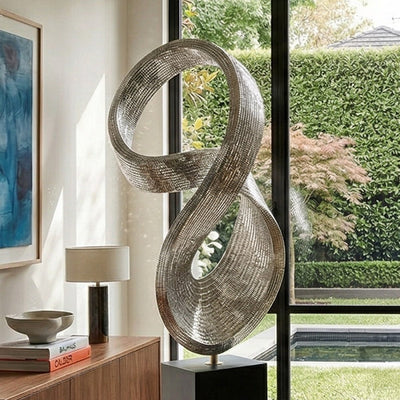
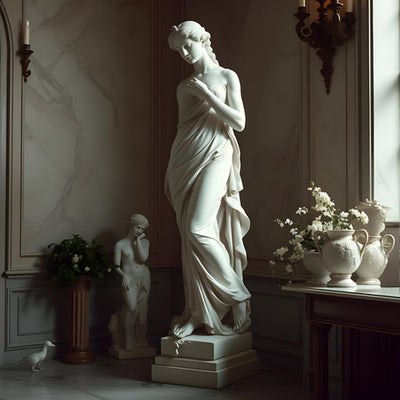
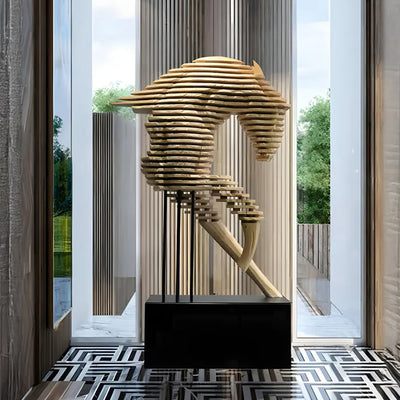



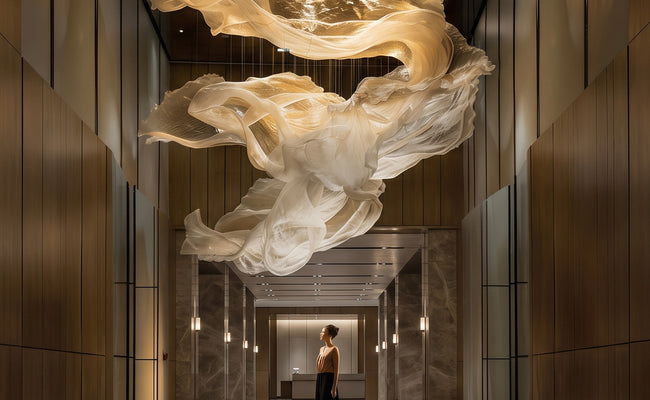

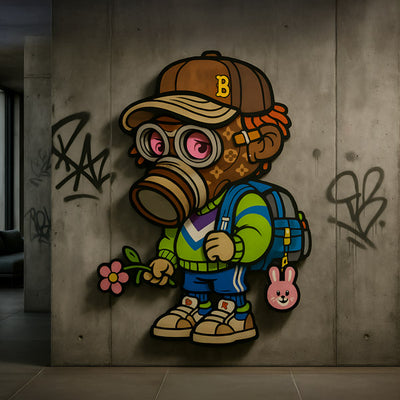
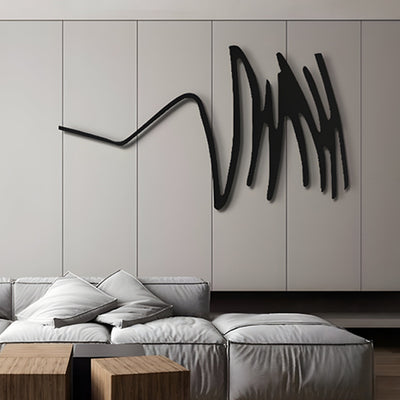

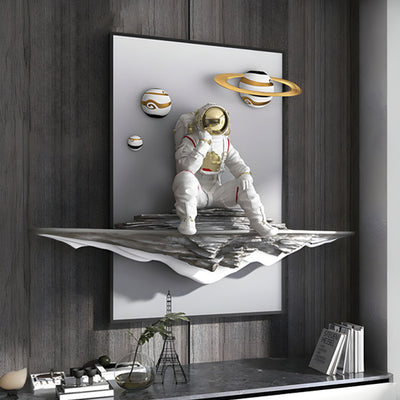

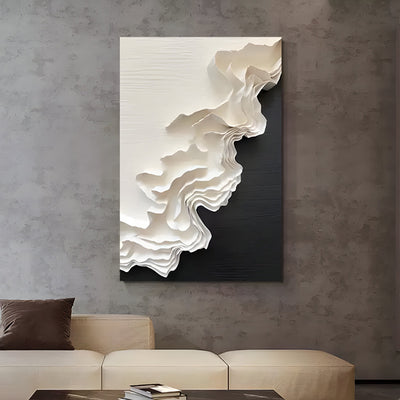
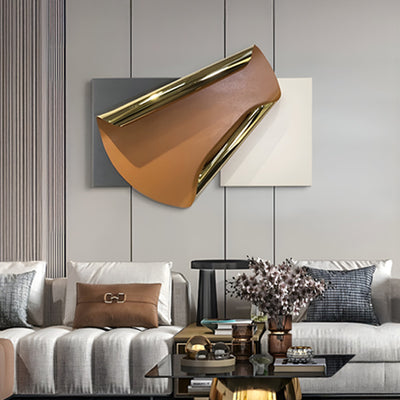

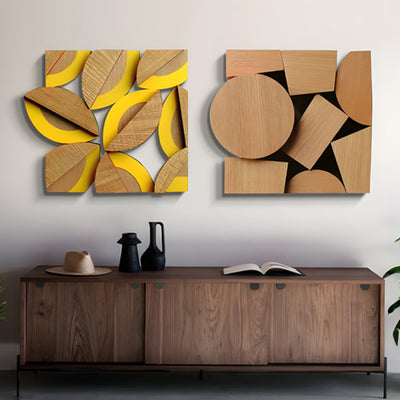

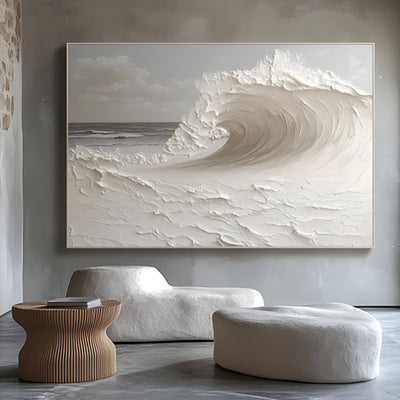
















A sculpture in a hotel forecourt or corporate plaza is doing more than decorating the space. It sets the first impression, anchors the architecture, and quietly tells visitors what kind of business they are walking into. That is a lot of pressure on one object, and it is exactly why outdoor commercial sculptures fail when they are treated as an afterthought rather than a considered part of the site.
Looking for the full range in this category? Browse our Garden Statues collection for every available finish, size, and configuration.
Getting it right means thinking about weather, scale, sightlines, and a maintenance cycle measured in decades. Get it wrong and you have a corroded, undersized, or awkwardly placed piece that draws the wrong kind of attention. This guide walks through the decisions that actually matter before you commission or buy outdoor commercial sculptures.
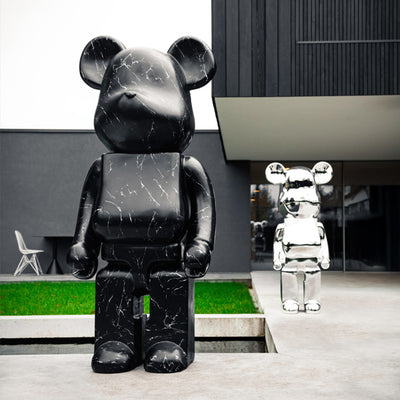
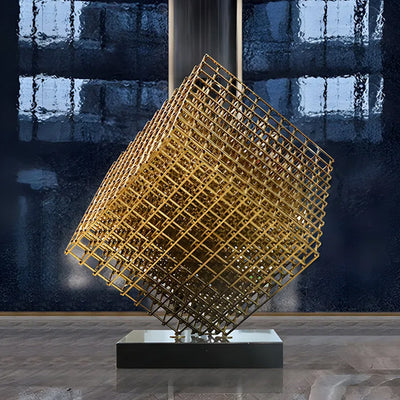
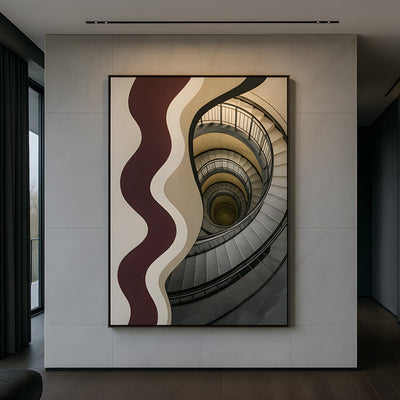
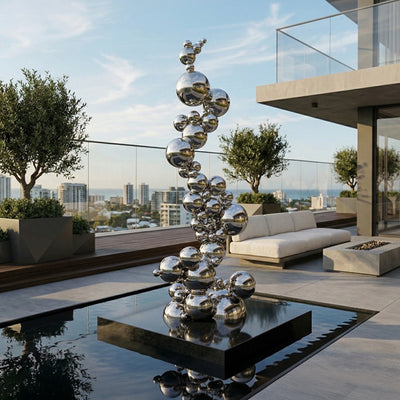
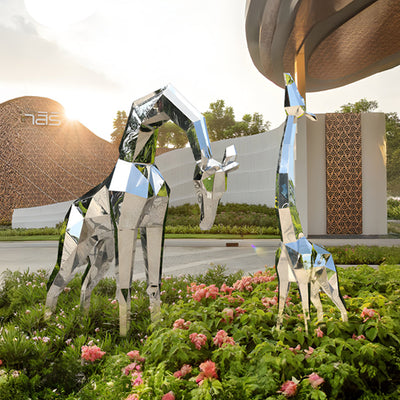
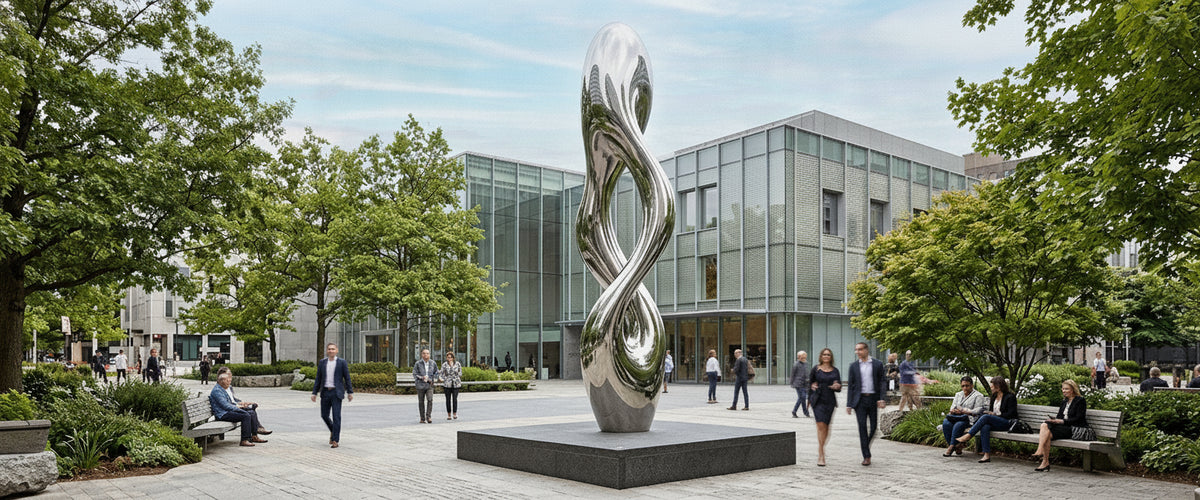
A well-scaled piece anchors a plaza and sets the tone before a visitor reaches the door.

Key Takeaways
Material comes first. Bronze, stainless steel, and Corten steel handle public outdoor life far better than resin or unsealed stone.
Scale is usually underestimated. A piece that looks big in a studio can vanish against a large facade or open plaza.
Placement is a design decision. Sightlines, approach paths, and evening lighting change how the work reads.
Budget depends on the build. Material, size, engineering, finishing, and installation all move the number; a tailored quote is the only honest figure.
Bespoke pays off in commercial settings where outdoor commercial sculptures need to reflect a brand, a site, or a story.

What Outdoor Commercial Sculptures Actually Means
The phrase covers any large sculptural work installed in a public or semi-public commercial setting: hotel entrances, corporate campuses, retail and mixed-use developments, resorts, wineries, hospitals, and civic plazas. What separates outdoor commercial sculptures from garden pieces is exposure. Commercial installations face constant foot traffic, curious hands, delivery vehicles, and the full weather cycle without the shelter a private garden often provides.
They are best for organizations that want a landmark. A developer trying to give a new plaza an identity, a winery that wants a signature at the cellar door, a lobby that spills onto a street-facing terrace: these are the situations where outdoor commercial sculptures earn their keep. If you need something that reads from a passing car and still rewards a close look, you are in the right category.

Materials, Finishes, and Scale Decisions
Material is the decision that determines how the piece survives its first ten years. For commercial outdoor work we keep returning to a short list of proven metals and stone, because they behave predictably outdoors and can be engineered for public safety.
Bronze is the classic choice for figurative and detailed work. It develops a patina over time, and that patina protects the metal underneath. A cast bronze figure or animal group holds fine detail beautifully and ages with dignity, which is why so many civic commissions still specify it. The Smithsonian's guidance on outdoor bronze care is a useful reference on how patina and coatings behave over the years (Smithsonian conservation notes).
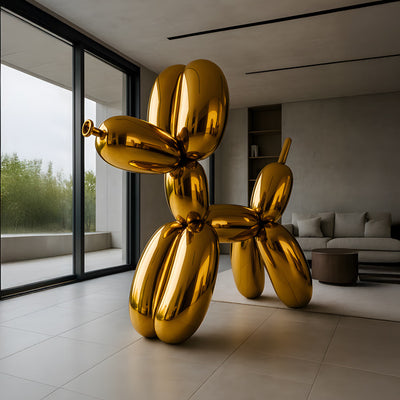
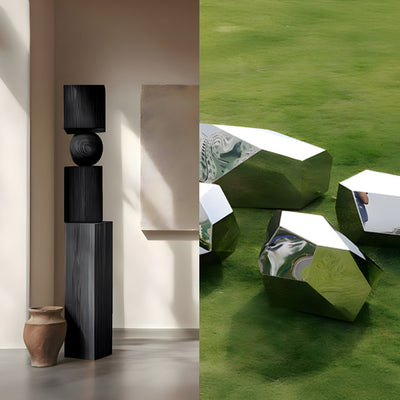
Stainless steel suits contemporary, reflective, and abstract forms. Marine grades resist corrosion in coastal and pool-adjacent settings, and a polished mirror finish plays with light and surroundings in a way that reads instantly modern. It is the material we reach for when a client wants something sculptural and clean against glass architecture, and it accounts for a large share of the outdoor commercial sculptures we ship.
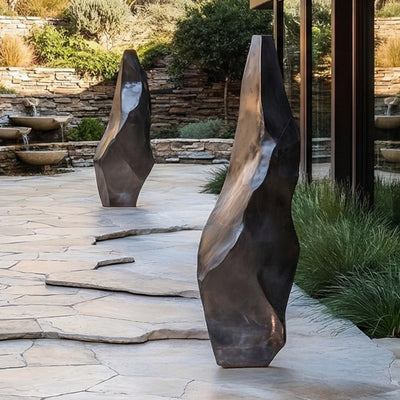
Corten (weathering) steel forms a stable rust-colored surface that seals itself against further corrosion. It gives warmth and mass, works especially well in planted landscapes, and needs almost nothing from a maintenance team once it has weathered in.
Stone and marble bring permanence and gravity, though they need the right stone for the local climate and correct sealing where freeze-thaw cycles are a factor.
Bronze, stainless steel, and Corten each behave differently outdoors and suit different briefs.
On scale: this is where most commercial buyers guess low. A figure that feels commanding indoors can look lost in an open forecourt. As a rough starting point, outdoor commercial sculptures meant to anchor a plaza usually need to stand well above human height, often 8 to 12 feet (2.4 to 3.7 m) or taller, before they hold the space. Weight follows scale fast; a large bronze or steel work can run into thousands of pounds, which pulls foundations and craneage into the conversation early. Measure your sightlines, then size up.

Where to Place These Landmark Pieces for Real Impact
For wider placement ideas, Bronze Garden Statues: How to Choose a Piece That Earns Its Spot is useful companion reading before finalising the setting and sightlines.
Placement is a design problem, not a spare-corner problem. The strongest installations of outdoor commercial sculptures reward a specific approach: the moment a visitor first sees the piece, walks toward it, and passes it.
Entrances and forecourts. A sculpture near a main entrance sets tone before anyone reaches the door. Give it breathing room; crowding it against a wall kills the effect. Reflective stainless steel works hard here because it picks up the building and the sky.
Plazas and courtyards. Central plaza placement lets people move around the work and read it from every angle, so choose a piece designed to hold up in the round rather than one with a clear front and dull back.
Water features and pool decks. Sculpture and water reinforce each other. Specify corrosion-resistant material and detailing here, especially in chlorinated or saline environments.
Arrival roads and gateways. For resorts and large campuses, a tall piece at the gateway becomes a wayfinding landmark. Think about how it reads at 30 mph as well as on foot.
Do not skip evening. Commercial sites are often busiest after dark, and outdoor commercial sculptures that are invisible at night are doing half a job. Uplighting or grazing outdoor lighting changes a piece completely; the Illuminating Engineering Society publishes solid guidance on exterior lighting practice worth handing to your lighting designer (IES).
Budget, Commissioning, and Delivery
The honest answer on cost is that it depends. A polished stainless abstract at plaza scale, a cast bronze figure group, and a Corten steel landmark are three very different builds, and each is driven by material, size, complexity, engineering, surface finishing, and installation. Anyone quoting a firm number without seeing your site and brief is guessing. Ask for a tailored quote against a real specification instead.
A few things reliably move the figure:
Size and weight. Bigger means more material, more fabrication time, and heavier lifting equipment on site.
Engineering. Public installations need proper structural design for wind loading, anchoring, and foundations. This is not optional and it is not the place to cut corners.
Finish. A hand-polished mirror surface or a specific bronze patina takes skilled hours.
Installation and access. Craneage, restricted access, and traffic management on a live commercial site all add up.
Shipping. We crate and ship worldwide, and for large works freight and handling deserve early attention, not a last-minute scramble.
Build lead time into your program. A bespoke commercial piece is fabricated, finished, and often engineered to a site survey, so the schedule is measured in weeks and months rather than days. Most bespoke commissions of this size start best while the surrounding hardscape is still on the drawing board.
A quick buyer checklist
Have you confirmed the material suits your climate and exposure?
Is the scale sized against actual sightlines, not a studio impression?
Has structural anchoring and foundation design been accounted for?
Is there an evening lighting plan?
Are access and craneage for installation realistic on your site?
Does the piece read well from every angle it will be seen?
How Giant Sculptures Helps With Bespoke Commercial Projects
We work with developers, architects, landscape designers, and venue owners on large-scale outdoor commercial sculptures from first concept through to installation. That means advising on material and finish for your specific climate, engineering the piece for public safety, and building it to a scale that actually holds your site.
Bespoke matters more in commercial settings than almost anywhere else, because the work usually has to carry a brand or a place. One project we shipped involved matching a sculpture's finish to a very particular architectural palette, the kind of detail that separates a considered commission from an off-the-shelf compromise. If you want to see the range of forms and materials we produce, our bronze sculptures and stainless steel sculptures collections are good places to start, and they map neatly onto the two most common briefs for outdoor commercial sculptures: figurative permanence and contemporary reflection.
The right piece will still be doing its job in thirty years. That is the standard worth commissioning outdoor commercial sculptures to, and it is the standard we build to.