





























A nine-foot bronze that looked commanding in the foundry can disappear the moment it lands on a wide Hamptons lawn. That gap between studio scale and garden scale is the single biggest reason large garden statues underperform once installed, and it is almost always fixable before the casting starts. The piece is not too small. The site is reading it wrong.
At Giant Sculptures we spend as much time on placement drawings and pedestal heights as we do on patinas. Below is the working logic we use with clients commissioning large statues for garden settings, whether the brief is a single bronze focal point on a Napa terrace or a pair of figures flanking a Texas motor court.

At a Glance: Getting Large Garden Statues Right
Scale the statue to the void, not the plinth. Open lawns swallow figures; courtyards amplify them.
Pedestal height changes the read. Eye-line, hip-line and above-head each tell a different story.
Backdrop matters more than the piece. Dark hedging, pale stucco and open sky each pull different details forward.
Indoors and outdoors are not interchangeable. Patina, weight loading and sightlines all shift.
Budget depends on material, scale, engineering and finish. Ask for a tailored quote rather than guessing from a category.
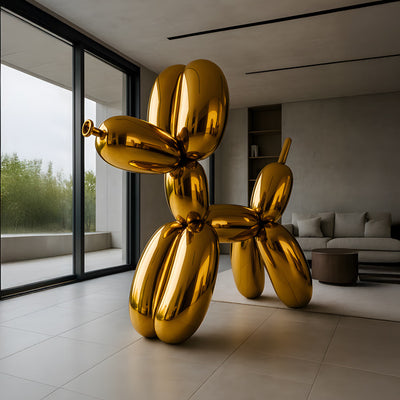
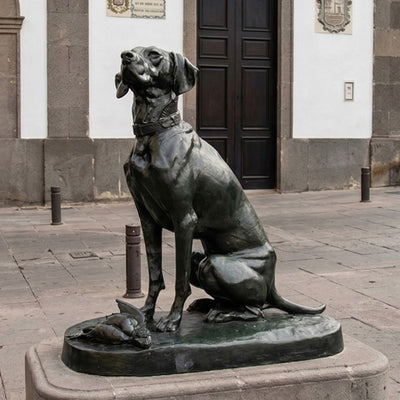
A low, long animal subject lifted just enough to clear surrounding planting.

What Large Garden Statues Actually Look Like in Real Settings
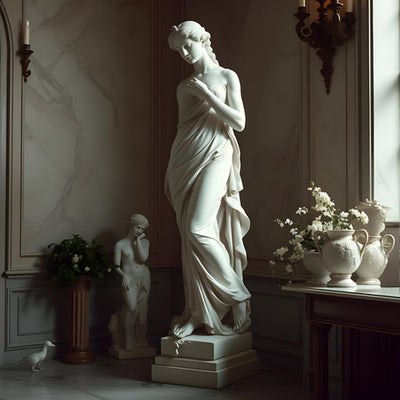
The phrase "large garden statues" covers a wide range. In our commissions a large garden statue usually measures between roughly 5 ft (1.5 m) and 14 ft (4.3 m) overall, in bronze, stone, marble or stainless steel, with weights from a few hundred pounds to well over a ton (450+ kg). Once you cross that 6 ft (1.8 m) threshold the piece stops being a garden ornament and starts behaving like architecture: it draws sightlines, casts real shadows, and asks the rest of the garden to respond to it.
In a walled Manhattan townhouse garden, a 7 ft (2.1 m) bronze figure on a low plinth reads as monumental because the walls press in around it. Drop the same piece into a five-acre Aspen meadow and it can look like a souvenir. The fix is rarely to buy bigger. With large garden statues, the answer is usually to bring the piece forward, frame it with planting, or sit it inside a gravel court that gives it a defined room of its own.
Animal subjects behave differently again. A crouched bronze like the Large Contemporary Stalking Cheetah Bronze Sculpture - 210cm sits low and long, so it works on a raised stone platform that lifts the silhouette above lavender or low grasses. A vertical piece such as the Large Contemporary Leaping Dolphins Bronze Sculpture - 300cm wants sky behind it, not foliage, because the negative space inside the bronze is half the design.
Scale, Sightlines and Pedestal Height
Three numbers decide whether a large garden statue feels right: the height of the piece, the height of the pedestal, and the distance from the primary viewing point. We sketch all three before recommending a size.
As a working rule, the main viewing distance should be roughly two to three times the total height of the statue plus plinth. A 9 ft (2.7 m) bronze on a 2 ft (0.6 m) base reads best from about 22 to 33 ft (6.7 to 10 m) away. Closer than that, you lose the silhouette. Further, and the modeling flattens.
Pedestal height is the lever most buyers underuse when placing large garden statues. Three options, three different feelings:
Ground level or low plinth (under 12 in / 30 cm): intimate, naturalistic, good for animal subjects and reclining figures.
Hip to chest height (24 to 48 in / 60 to 120 cm): the classical museum read. Suits portrait busts, mythological figures and contemporary abstract work.
Above head height (over 6 ft / 1.8 m): civic, theatrical, monument-scale. Reserve for pieces designed to be seen against sky.
Get this wrong and even an excellent bronze looks awkward. We had a client in Connecticut who had bought a fine figurative piece elsewhere and set it on a tall stone column near the pool. From the house, the viewer was looking straight up the figure's underside. We rebuilt the plinth at 28 in (71 cm), moved it 12 ft (3.7 m) closer to the main terrace, and the same statue read as a different work.
Indoor Versus Outdoor: When Each Wins
Plenty of large statues for garden use are equally good indoors, but the decision is not interchangeable. Outdoors, a bronze develops a living patina shaped by rain, sun and proximity to salt or chlorine. Indoors, that surface stays static, which suits collectors who want the piece to look the same in twenty years as the day it arrived. National Park Service guidance on outdoor bronze care notes that exposure changes the surface chemistry over time, which is part of the appeal but needs planning (NPS Conserve O Gram, outdoor bronze care).
Practical factors push the decision too. Indoor placement caps you on weight, doorway width and floor loading. Most residential floors handle a 400 lb (180 kg) bronze on a spread base, but a one-ton marble figure usually needs a ground floor with engineered support. Outdoors you gain freedom on weight but take on drainage, frost cycles and lightning grounding for very tall metal pieces.
Our quick test: if the piece needs sky, weather or distance to make sense, it belongs in the garden. If it rewards close inspection of tool marks, casting seams or fine detail, consider an entry hall, stair landing or double-height living room.
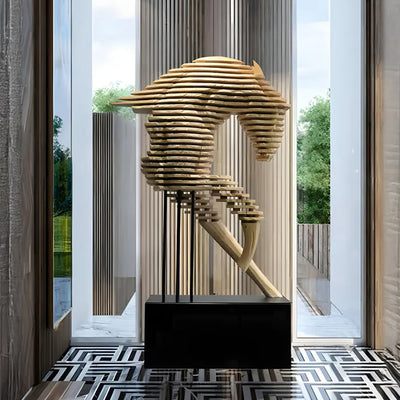
Vertical compositions need sky behind them so the negative space reads.
Light, Backdrop and Contrast
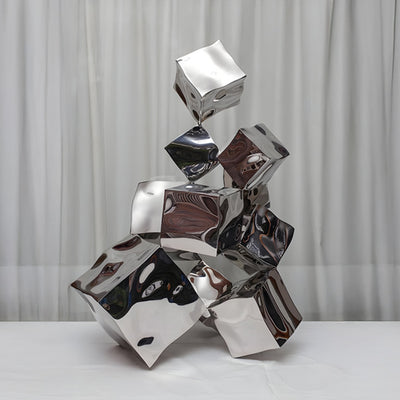
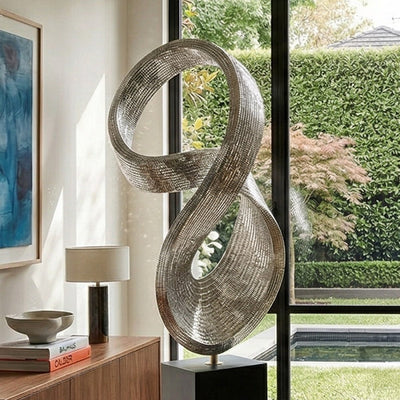
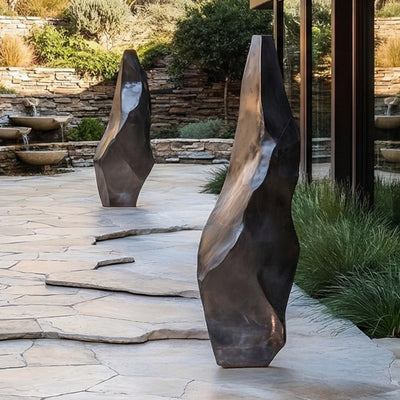
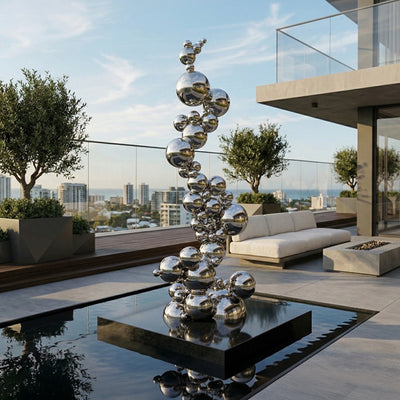
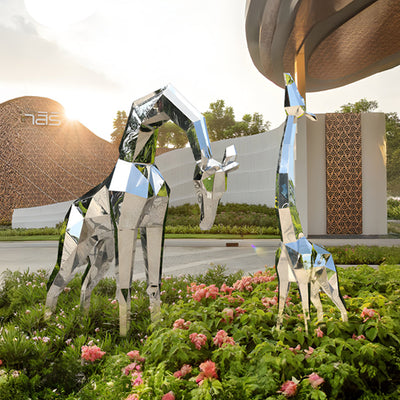
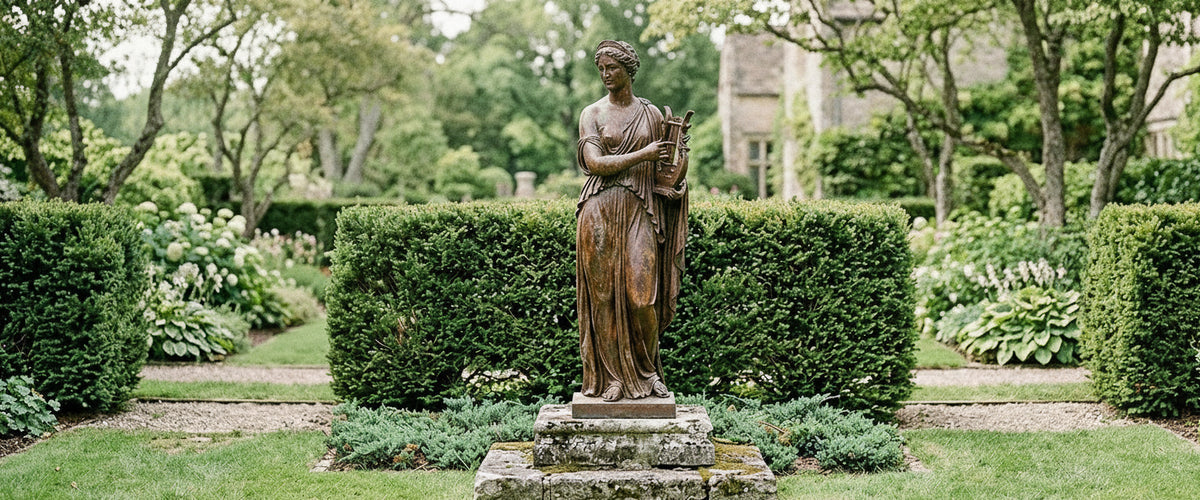
Material choice should follow the backdrop, not the other way around. Dark bronze against clipped yew or boxwood can vanish into the green; the same bronze against pale Indiana limestone or rendered stucco snaps into focus. Polished stainless steel does the opposite, dissolving into bright sky but reading sharply against dense planting. This is why two clients buying very similar large garden statues can end up with very different results.
Garden orientation matters more than most buyers expect. A south-facing position gives you strong modeling shadows for most of the day, which flatters figurative work. North-facing positions deliver soft, even light that suits abstract and reflective pieces. East and west positions get one strong show a day, at sunrise or sunset, which can be theatrical for a single hero piece on axis with the house.
Uplighting is the single best investment after the statue itself. Two warm 2700K fixtures, one at roughly 30 degrees off the front and one at 120 degrees behind, will give you depth without the flat "car park" look of overhead floods. The Illuminating Engineering Society publishes useful baseline guidance for landscape and accent lighting if you want to brief a lighting designer properly (IES standards library).
Placement Mistakes We See Most Often
For wider placement ideas, Angel Garden Statues: A Buyer's Guide to Scale, Stone and Placement is useful companion reading before finalising the setting and sightlines.
After several hundred commissions for large garden statues, the same six errors keep appearing. All of them are avoidable on paper.
Centering on the lawn instead of the sightline. A statue should anchor a view from the house, the dining terrace or the pool, not sit politely in the middle of the grass.
Matching the statue to the plinth instead of the garden. Buyers fall in love with a base they saw on Instagram and force the piece onto it.
Ignoring the four-season test. What looks framed in July may be exposed and lonely in February. Walk the position in winter before signing off.
Crowding water features. A fountain centerpiece such as the Large Traditional Elephant and Calf Bronze Fountain - 320cm needs a clear apron of paving or gravel; planting too close kills the reflection and the sound.
Under-engineering the foundation. Anything over 6 ft (1.8 m) tall in metal needs a reinforced concrete pad sized to its weight and wind load. Skip this and you get tilt within two seasons.
Forgetting the approach. The walk toward garden statues large enough to dominate a view is part of the experience. Hide a glimpse behind hedging, then reveal at 15 to 20 paces.
What About Large Fairy Garden Statues and Whimsical Subjects?
Buyers searching for large garden fairy statues, mythological figures or playful narrative subjects are usually working a different brief: charm and surprise rather than monumentality. The placement rules for large garden statues still apply, but scale tends to drop. A 4 to 6 ft (1.2 to 1.8 m) fairy or putti figure tucked into a fern bed at the end of a winding path reads better than the same piece on a formal axis. We commission large fairy garden statues regularly in cast bronze with a softer patina to keep the storytelling tone, and they sit alongside more serious work in the same garden without clashing. Clients hunting for large garden statues cheap enough to fill an entire estate often end up here too, because narrative figures at modest scale stretch a budget further than a single monumental bronze.
Commissioning With Giant Sculptures
Most of the outdoor pieces we ship are either selected from our existing catalog of large garden statues and finished to a client's preferred patina, or designed bespoke from a brief, mood board or maquette. The bespoke route lets us match scale to a specific site rather than working backward from a stock size. We can adjust the proportions of a leaping dolphin, alter the pose of a panther, or design a one-off figurative piece for a named position on a named property.
Lead times vary with material and complexity. Bronze and marble pieces at this scale are built, not picked off a shelf, so plan in months rather than weeks. Budget for garden large statues is shaped by material choice, finish, scale, engineering, crating and installation, which is why we quote each commission individually rather than publishing bands that would mislead more than they help. If you want a starting point, the large garden statues collection and the broader bronze garden statues range are the right places to anchor a conversation.
The honest summary on garden statues large enough to set the tone of a property: a monumental outdoor piece rewards planning. Sort the sightlines, the plinth and the backdrop first, and the right large garden statue becomes easier to choose, not harder.