























































































A sculpture that looks right in the showroom can fall apart in a Napa winter or bleach out under Texas sun, and the difference usually comes down to material chosen before anyone thought about weather. Picking the best materials outdoor is the single decision that determines whether your piece still looks deliberate in twenty years or starts to look neglected in its second season. Scale, light and placement matter too, but they all sit downstream of the material call.
Looking for the full range in this category? Browse our Bronze Fountains collection for every available finish, size, and configuration.
We ship large, bespoke pieces to private gardens and commercial sites across the US, and the questions that come up again and again are the same: what survives the climate, how big should it be, and where does it actually belong. Choosing the best materials outdoor starts with those three questions, so here is how we answer them.
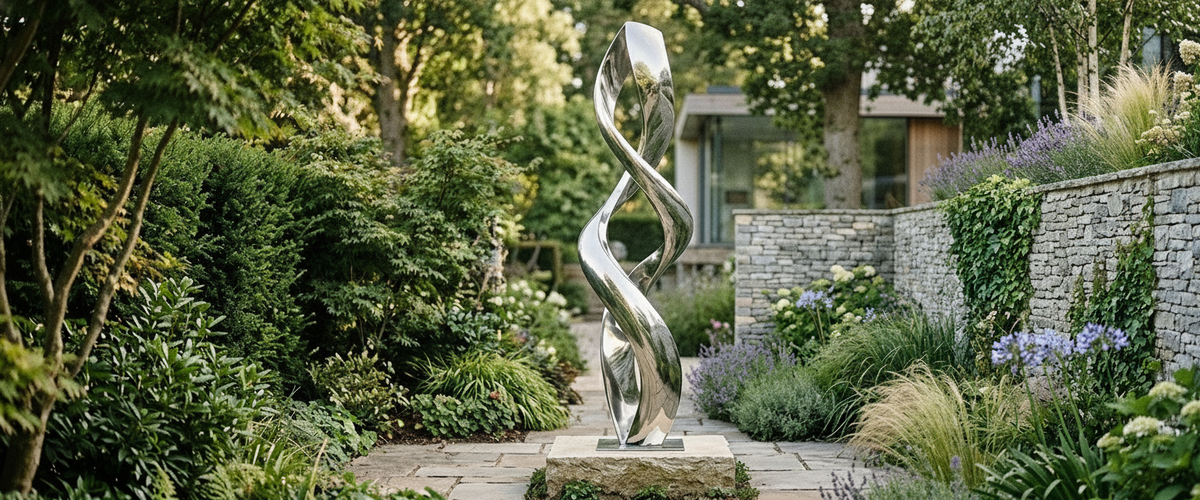
The four workhorse materials for long-term outdoor sculpture, each weathering differently.

Key Takeaways
Bronze, stainless steel, Corten steel and natural stone are the workhorses for long-term outdoor sculpture; each weathers differently, so the best materials outdoor depend on your site.
Marble is beautiful outside but needs a frost-aware approach and the right climate or a sheltered spot.
Scale and pedestal height change how a piece reads more than most buyers expect; a foot of base can rescue or ruin a sightline.
Light and backdrop decide visual impact as much as the sculpture itself.
Budget depends on material, scale, engineering and installation, so a tailored commission quote beats any rough number.

The Best Materials for Outdoor Sculptures and Their Weather Resistance
When buyers ask about the best materials outdoor and weather resistance, they usually want one name. There isn't one. The right answer depends on your climate, your maintenance appetite and the look you are after.
Bronze is the classical default for good reason. A properly cast bronze with a sealed patina handles rain, salt air and freeze-thaw cycles for generations. It develops a living surface; left unwaxed near the coast it will green over time, which some clients want and others fight with annual waxing. The American Institute for Conservation has good public guidance on caring for outdoor metal sculpture if you want to understand the chemistry before you commit (culturalheritage.org).
Stainless steel is the modern answer for gardens that want a clean, reflective, contemporary line. Marine-grade 316 stainless resists corrosion in coastal and pool environments where lesser grades pit. It throws light, picks up the color of the sky and the planting around it, and asks for very little beyond an occasional wash. For a sculptural focal point in a Hamptons garden near salt air, it ranks among the best materials outdoor and is often where we steer people.
Corten (weathering) steel is built to rust on purpose. The oxide layer stabilizes into a warm russet skin that protects the metal underneath. It suits naturalistic landscapes, gravel gardens and modern architecture, and it pairs well with grasses and stone. The one caution: run-off can stain pale paving in the first year or two, so plan the base accordingly.
Natural stone and marble carry a weight and history that metal cannot fake. A carved marble figure reads as permanent and serious. Marble does need respect outdoors; it is porous and vulnerable to acid rain and hard frost over long exposure. In a temperate or warm-dry climate it ages gracefully. For a commanding memorial or garden centerpiece, the Large Angel Marble Outdoor Sculpture (Arms Crossed) - 180cm carries that permanence well, though in a hard-freeze region we would talk through sheltered placement and sealing first.
Because each option weathers so differently, choosing the best materials outdoor is always a site-specific call: a coastal garden, a frost-prone valley and a warm-dry courtyard each reward a different choice. Browse the full range of weather-ready pieces in our outdoor sculpture collection to see how these materials read at different sizes.

Scale, Sightlines and Pedestal Height: The Choices That Change How a Piece Reads
The most common mistake we see is a sculpture bought too small for its setting. Outdoors, everything competes: mature trees, a wide lawn, a big sky. A 3 ft (90 cm) figure that looked generous in a studio shrinks to garden ornament across forty feet of Aspen meadow. As a rough starting point, a freestanding focal piece in an open garden wants to read at human scale or larger, and a long approach usually needs more height than your instinct suggests. Material scale and physical scale work together here, so weigh both before you settle on a size.
Pedestal height lifts the gesture to eye level, where the piece reads with the most presence.
Pedestal height does quiet, decisive work. Raising a piece even 12 to 18 inches (30 to 45 cm) lifts the face or gesture to eye level, which is where the human eye wants to meet a figure. Drop it too low and visitors look down at the crown of the head, which kills the presence. Set it too high on a slender plinth and it tips into monument territory, which is right for some sites and wrong for an intimate courtyard.
Sightlines matter more than dead-center symmetry. We ask clients to walk their actual approach routes, from the front door, the kitchen window, the end of the pool, and place the piece where the most-used view lands on its strongest angle. Where the gesture itself is the whole point, a piece like the Weeping Angel Marble Outdoor Sculpture (Wings Raised) - 150cm reads very differently from the side than head-on, so you want the daily view to catch the wings, not the back.

Indoor Versus Outdoor Placement: When Each Wins
For wider placement ideas, Angel Statues for the Garden: A Placement Guide for Serious Buyers is useful companion reading before finalising the setting and sightlines.
Some pieces earn their value outside, exposed to changing light and weather. Others deserve shelter. The deciding factors are material vulnerability and how much of the work depends on fine surface detail, which is exactly why the best materials outdoor question keeps coming back to the site.
Bronze and stainless steel are happiest outdoors, where movement of light across the day does half the work. Highly polished marble with crisp carving can lose its edges to decades of acid rain and grit, so a museum-grade marble piece sometimes belongs in an orangery, atrium or covered loggia where it still feels connected to the garden but stays protected. A weathered-fragment look, on the other hand, is meant to age; where the piece already wears the patina of time, such as the Male Marble Torso Sculpture (Weathered Fragment) - 100cm, outdoor placement only deepens the effect rather than spoiling it.
Indoors, you control the lighting and the backdrop completely, which suits intricate work and reflective metal. Outdoors, you trade that control for genuine scale and a sense of permanence that no interior can match. For most of our garden commissions, the best materials outdoor make that trade worth it.
Light, Backdrop and Contrast: What Actually Decides Visual Impact
A great sculpture in front of a busy backdrop disappears. The single biggest upgrade you can give an outdoor piece is contrast behind it. Pale marble glows against a dark yew hedge or a clipped green wall. Dark bronze needs a lighter ground, a gravel court, a rendered wall, or open sky behind it on a rise. Reflective stainless wants something worth reflecting: water, planting, a clean architectural line.
Track the sun before you commit a position. Morning and late-afternoon raking light models form and shadow; flat midday light flattens everything. A figure that faces east catches the dawn and silhouettes at dusk, which can be the daily moment you remember. We also recommend planning subtle uplighting from the start rather than retrofitting; the Illuminating Engineering Society publishes guidance on exterior lighting that helps you avoid glare and over-lighting (ies.org).
Color of the material against the planting palette matters too, and it is one more reason the best materials outdoor decision ties straight into placement. Corten's rust tone sings next to ornamental grasses and copper-leaved shrubs; it can clash with hot reds and pinks. Marble suits cool, green, structured planting. Spend ten minutes imagining the piece in each season, not just the day it arrives.
Common Placement Mistakes We See in Commissions and How to Avoid Them
Buying too small. The piece that fills your screen online can vanish in a wide garden. Mock up the footprint with a cardboard cutout or a stack of boxes at the real size before ordering.
Ignoring the base and ground. A heavy marble or bronze figure needs a proper foundation; soft ground and frost heave will shift an unanchored piece. Plan footings into the install.
Wrong material for the climate. Fine-carved marble in a hard-freeze valley, or non-marine stainless near salt spray, both age badly. Match the metal grade and stone choice to the actual site, and lean on the best materials outdoor for that climate.
Forgetting the backdrop. A pale piece against a pale wall reads as nothing. Build contrast in behind it.
Skipping the daily sightline. Place for the view you actually use, not the architect's plan-view symmetry.
No maintenance plan. Even low-care materials want an annual check; agree the routine before delivery, not after the first winter.
Commissioning a Piece That Belongs in Its Setting
Most of our large-scale work is bespoke, which means material, scale, pose and finish are decided around your specific site rather than pulled from stock. That is where the real value sits. We will talk through your climate, your sightlines, the foundation and the long-term care, and recommend the best materials outdoor for your conditions, before a single piece of metal is cast or stone is carved.
If you are weighing a memorial or garden centerpiece, the angel and figurative pieces in marble give a sense of the gesture and presence available. For a smaller courtyard or a planted niche where a full-height figure would overwhelm, a Kneeling Angel Marble Outdoor Sculpture (Enfolding Wings) - 80cm holds the same emotional weight at a more intimate scale. For contemporary gardens, the best materials outdoor are more often stainless or Corten commissions sized to the site.
Budget on a bespoke sculpture depends on material, scale, complexity, engineering, installation and finishing, so the honest answer is to request a tailored quote rather than work from a guessed range. Tell us the site, the climate and the feeling you want, and we will tell you what the best materials outdoor look like for your specific garden.