

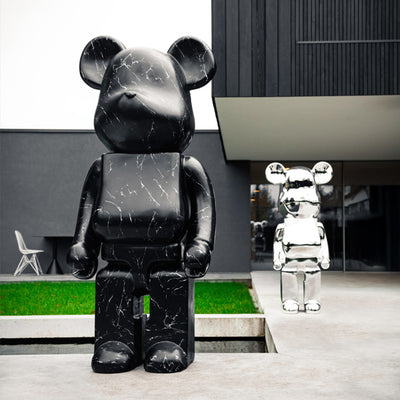

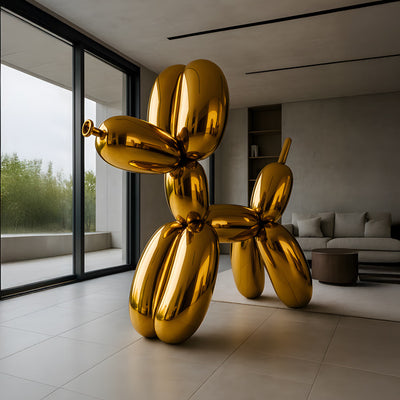
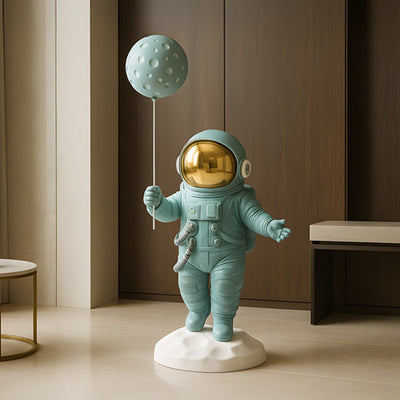














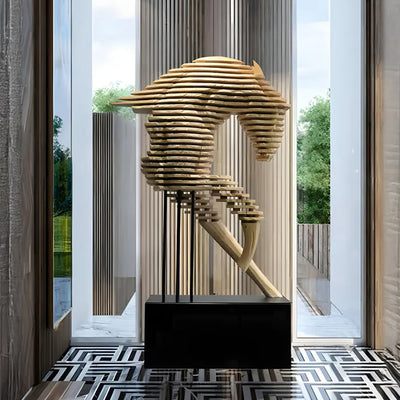
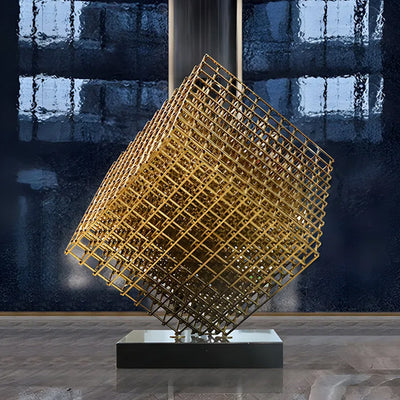
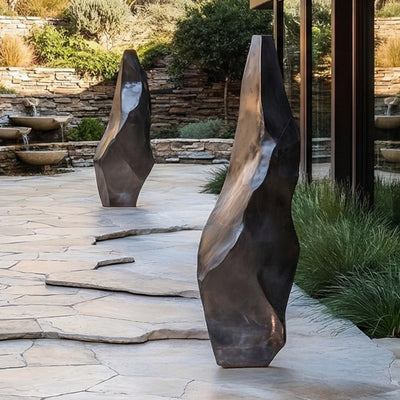






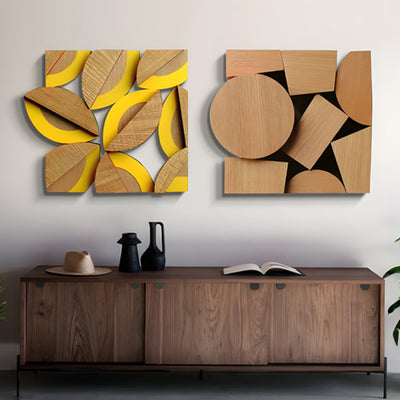

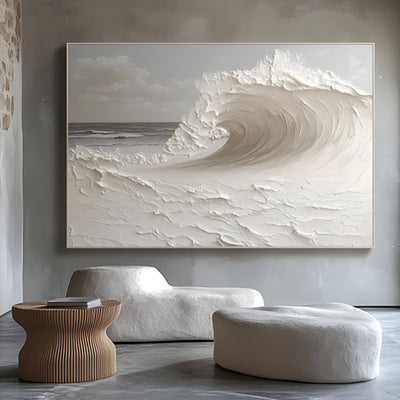
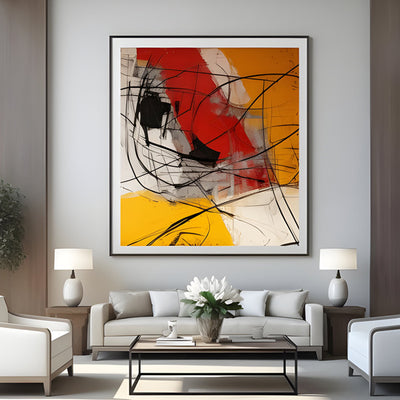
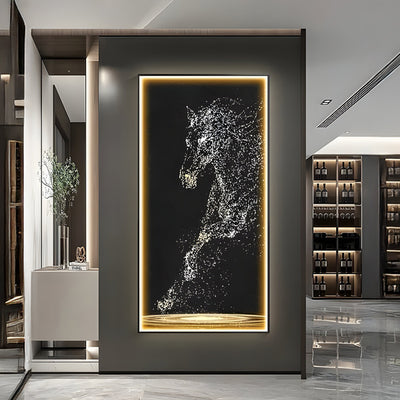










An abstract sculpture lives or dies by where you put it. Get the placement right and a 7 ft (2.1 m) bronze form will anchor a whole lawn; get it wrong and the same piece reads as garden clutter you keep meaning to move. After years of shipping abstract garden sculptures into private estates, hotel courtyards and design-led backyards across California, Texas and the Northeast, we have a strong view on what actually works with abstract garden sculptures.
Looking for the full range of abstract garden sculptures in this category? Browse our Abstract Sculptures collection for every available finish, size, and configuration.
This guide is the working version of advice we give clients before they commission abstract garden sculptures, written for buyers who want a piece that earns its place for the next thirty years. It is also the answer we give to clients searching for abstract garden sculptures for sale near me, who quickly discover that the right piece is rarely the one on a shelf in the next town.

Key Takeaways
Scale up, not down. Most gardens can comfortably take a sculpture one size larger than the buyer first considers.
Place for the long view first. Decide the primary sightline before the pedestal height.
Backdrop beats lighting. A clean hedge or sky behind the piece does more work than any spotlight.
Materials read differently outdoors. Polished stainless steel reflects sky; patinated bronze absorbs it. That choice changes the mood of any garden built around abstract garden sculptures.
Indoor abstract pieces want negative space. If a hallway or atrium cannot give the piece a clear three-foot halo, choose a smaller form.

What Abstract Garden Sculptures Look Like in Real Spaces
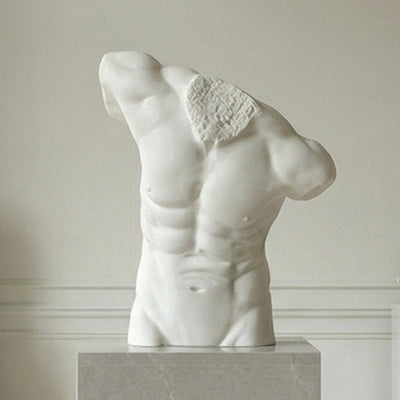
The phrase covers a huge range. At the smaller end of abstract garden sculptures you have tabletop and plinth-scale work, polished stainless forms in the 40 to 75 cm range (around 16 to 30 in), the kind of piece that sits on a console in a pool house or on a low stone wall by an entrance. At the upper end you have architectural commissions: a 12 ft (3.7 m) bronze arch closing a vista, or a trio of geometric figures grouped on a lawn so guests walk between them.
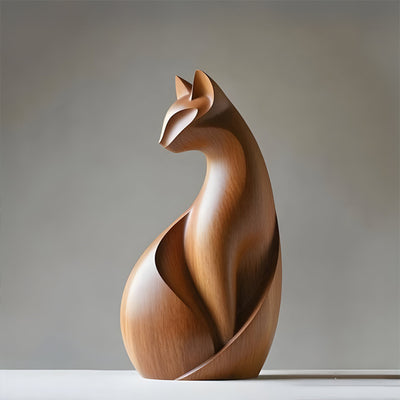
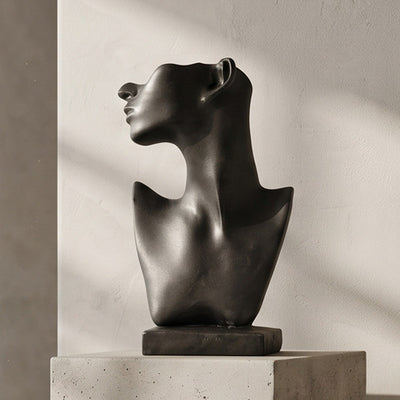
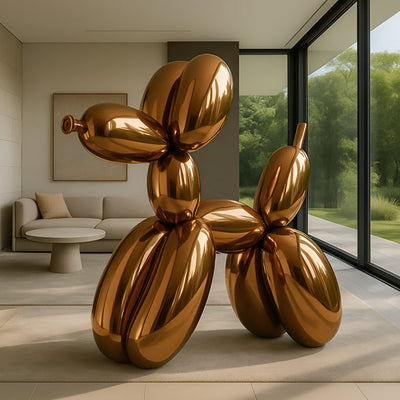
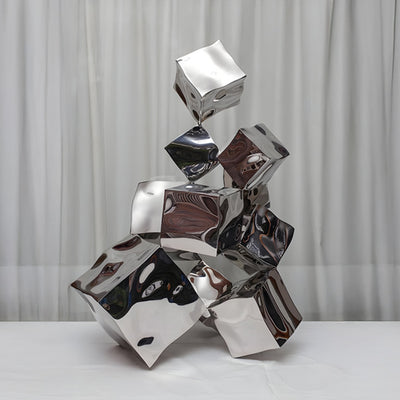
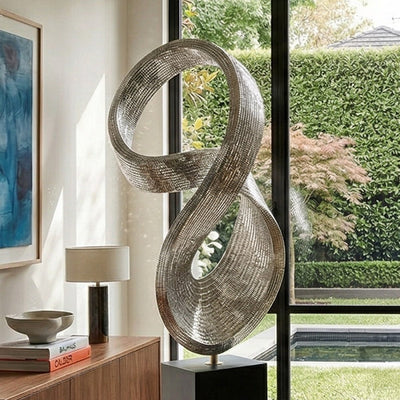
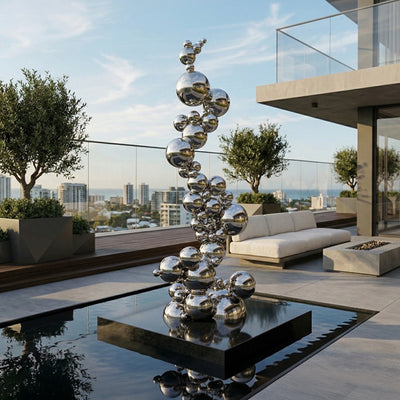
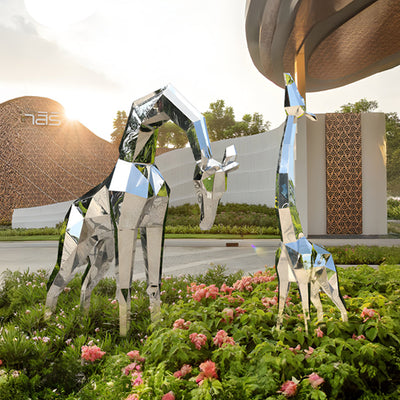
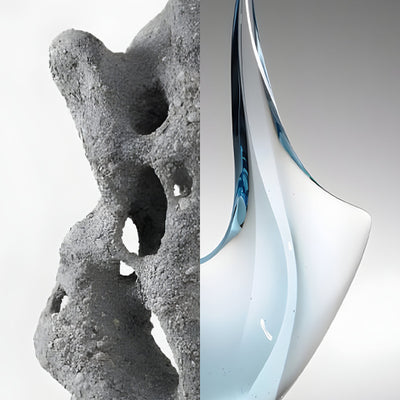
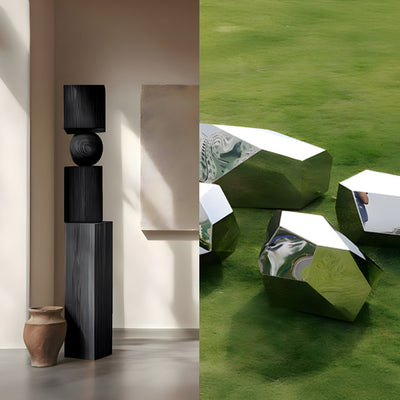
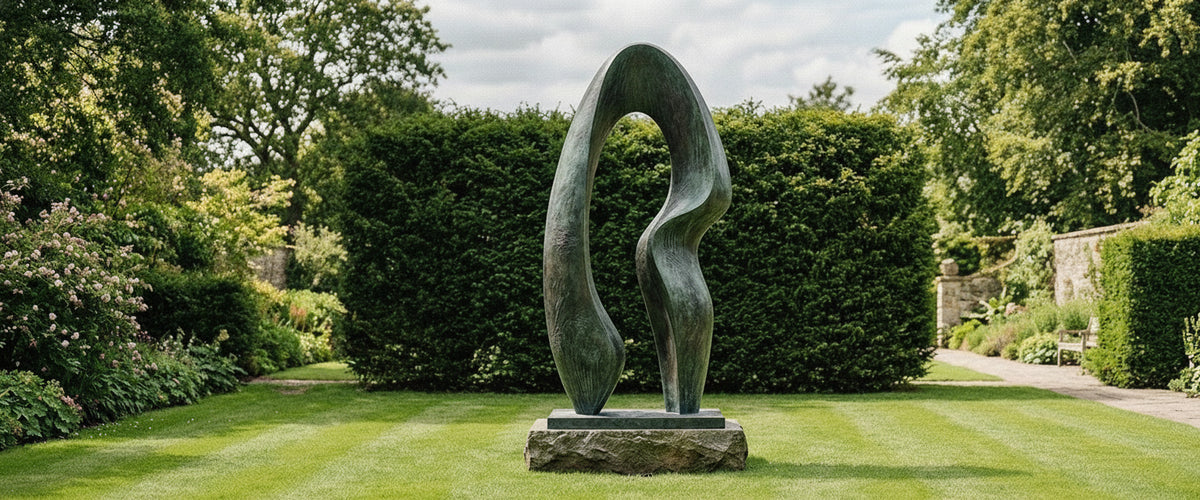
The mood of abstract garden sculptures depends almost entirely on form language. Biomorphic curves (think loops, leaves, pebble-like masses) feel warmer and pair well with planting. Geometric and architectural pieces (arches, stacked volumes, leaning slabs) feel cooler and sharpen up a contemporary build. Reflective surfaces double the sky and the garden back at you, which is why a polished stainless piece behaves very differently on a shaded patio versus a sun-struck terrace; the same form essentially becomes two sculptures across one day.
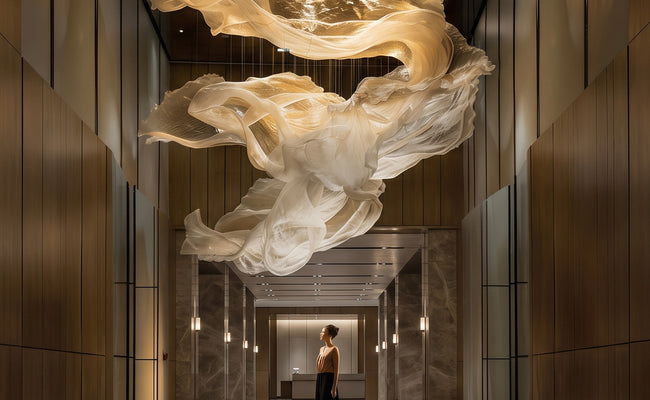
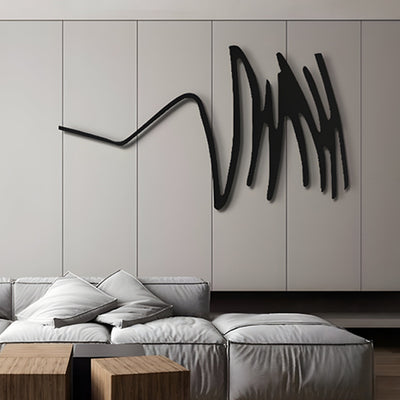
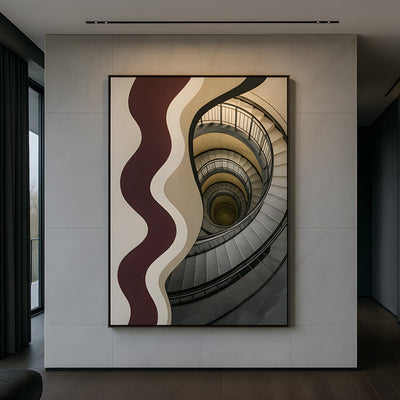
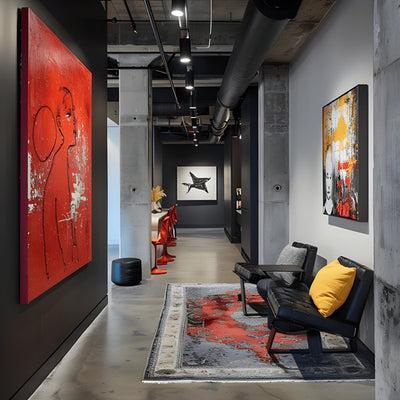
Indoors, abstract work tends to move toward feature walls, stair voids, and the dead corners of double-height rooms where figurative pieces would feel too literal.
Scale, Sightlines and Pedestal Height for Abstract Garden Sculptures
The single biggest mistake buyers of abstract garden sculptures make is choosing scale by floor area rather than by sightline. A garden is not a room. What matters is the distance from where people actually stand (kitchen island, dining terrace, pool lounger) to where the sculpture sits.
A rough working rule from the studio: the piece should occupy roughly 1/8 to 1/6 of the vertical height of whatever sits behind it from the main viewing point. If your back hedge is 8 ft (2.4 m), a sculpture of about 4 to 5 ft (1.2 to 1.5 m) including base reads as confident. Drop to 2 ft (0.6 m) on that same sightline and the piece looks accidental.
Pedestal height is the other lever, and it is widely misused. Default instinct is to lift the work to eye level. For abstract garden sculptures that is often wrong. A flowing biomorphic form usually reads better low, almost rising out of the ground plane, while a vertical geometric piece wants its weight grounded and its silhouette in clear sky. Once you cross into truly architectural scale, the pedestal question disappears: a piece like the Monumental Modern Abstract Arch Bronze Sculpture - 370cm at 370 cm (roughly 12 ft) needs no plinth at all, because the form is doing the work of architecture.
For grouped compositions, a staged sequence reads better than a symmetrical layout. Set the tallest piece on the longest sightline and stagger the others so the viewer reads them in order as they walk through. A clustered work such as the Monumental Modern Trio of Abstract Geometric Figures Bronze Sculpture - 250cm is designed around that kind of walk-through staging, which is why equal spacing on a flat lawn tends to flatten it; offsetting the three figures along a diagonal restores the rhythm.
Indoor Versus Outdoor: When Each Wins
Outdoor placement of abstract garden sculptures wins when the piece needs weather, light change and seasonal context to do its work. Patinated bronze deepens with rain. Corten develops the russet skin it was designed for. Polished stainless steel turns into a moving mirror as clouds pass. None of that happens in a foyer.
Indoor placement wins when the piece is intricate, highly reflective and small enough that weather would feel like overkill, or when the client wants the sculpture to anchor a specific room rather than the property as a whole. Stairwells, double-height entrances and gallery-style hallways suit abstract work because the form can be read from multiple levels. Where the setting needs a contemporary reflection rather than the weight of a bronze, a smaller polished form such as the Aurora Copper Organic Abstract Steel Sculpture - 74cm is closer to the right design language, especially on a covered terrace or pool house console where its surface can pick up moving light.
One practical note on crossing over: not every indoor abstract piece survives outside. Coatings, internal armatures and fixing methods are not interchangeable. If you are weighing a piece for a covered loggia or pool house, ask specifically how it has been engineered, what the fixing detail is, and whether the finish is rated for UV and salt air. At Giant Sculptures we specify outdoor-grade construction by default on commissions destined for gardens, because retrofitting weatherproofing later is rarely clean.
Light, Backdrop and Contrast
Abstract garden sculptures are read by silhouette before detail. That makes backdrop the most important design decision after scale.
The three backdrops that consistently work:
Dense evergreen hedge (yew, hornbeam, holly). Reads as a velvet curtain behind the form. Bronze, Corten and dark patinas pop hardest here.
Open sky. Place the piece on a rise or at the end of a lawn so the silhouette breaks the horizon. Best for vertical and arched forms.
Clean architectural wall. Render, limestone or board-formed concrete. Best for polished stainless and white marble, where you want the surface to take on the wall tone.
Backdrops to avoid behind abstract garden sculptures: mixed planting at the same height as the sculpture, garden buildings with busy rooflines, and anything with strong horizontal lines (fence panels, decking edges) crossing the piece at mid-height. The eye reads those lines as accidents cutting the form.
Lighting comes last, not first. A single warm uplight set roughly 3 to 4 ft (0.9 to 1.2 m) in front of the piece, angled to skim rather than flood, does more than a battery of fittings. For reflective work, light the backdrop, not the sculpture; the form will pick the light up on its own surface. The Illuminating Engineering Society publishes useful guidance on outdoor accent lighting if you want a technical reference before briefing a landscape lighting designer.
Common Placement Mistakes We See in Commissions
For wider placement ideas around abstract garden sculptures, Bronze Cranes Garden Statues: A Placement Guide for Real Gardens is useful companion reading before finalising the setting and sightlines.
These are the issues we flag most often when clients send us site photos:
Center-of-lawn syndrome. Dropping the sculpture in the geometric middle of the lawn rarely works. Off-center, on a clear sightline from the main room, almost always reads better.
Under-scaling for the property. A 1 m (3 ft) piece on a half-acre lot reads as an ornament. The same form at 2.5 m (8 ft) reads as a sculpture. Budget allowing, go up.
Fighting the architecture. A flowing biomorphic bronze in front of a sharp modernist facade can work as deliberate contrast, but only if the scale is right. Get the scale wrong and it just looks at war with the house.
Ignoring approach. How does the piece reveal itself as you walk or drive in? Abstract garden sculptures reward a sequenced reveal; place them so the silhouette changes as the viewer moves.
Treating the base as an afterthought. A beautiful bronze on a generic concrete paver looks unfinished. Match the base material to the architecture or recess the fixing so the piece reads as rising from the ground.
Lighting too cool, too bright. 2700K warm white at low intensity flatters bronze and marble. Cool LED at full output flattens everything.
A Quick Buyer's Checklist Before You Commission Abstract Garden Sculptures
Photograph the intended position from every primary viewing point, including upstairs windows.
Mark out the footprint with cardboard or stakes at the actual proposed height. Live with it for a week.
Decide on material before form: bronze, stainless steel, Corten and stone each commit you to a different long-term character.
Confirm ground conditions. Monumental pieces need engineered foundations, not just a paving slab.
Ask for finish samples in hand. Patinas and polishes look very different on screen.
Plan installation access. A 12 ft (3.7 m) bronze arriving on a private road in the Hamptons or a hillside lot in Napa needs route survey, crane access and sometimes temporary landscaping protection.
Where Giant Sculptures Fits
We design, cast and ship large-scale abstract garden sculptures as one-off commissions and as numbered editions, working primarily in bronze, stainless steel, Corten and stone. Most projects start with a site conversation rather than a product, because the placement questions above usually decide the brief. If clients arrive looking for abstract garden sculptures for sale near me, the conversation usually shifts quickly to commissioning, because a site-specific piece almost always outperforms whatever is locally available. To browse current work as a starting point, the wider garden statues collection and the broader sculptures catalog are good anchors; bring photos of the intended position and we can advise on scale, base detail and finish from there.
Budget on bespoke abstract garden sculptures depends on material, scale, engineering, finish and installation complexity rather than any standard tariff, so we quote per project. The conversations that lead to the best installations are almost always the ones that start with the site, not the sculpture.