

























































Most people who ask how to make fiberglass sculpture picture the fun part: someone laying glossy cloth over a mold and pulling out a finished form. In truth, most of the work happens before any resin gets mixed, and the pieces that fail outdoors almost always fail for reasons decided in that first week. Fiberglass is forgiving in some ways and unforgiving in others, and the difference between a piece that reads beautifully at 30 ft (9 m) and one that looks like a prop up close comes down to craft choices very few buyers ever hear about. Learn to make fiberglass sculpture the right way and those choices become second nature.
We build large-scale and bespoke work at Giant Sculptures, and this material has a real place in that mix, especially for pieces that need to be big and comparatively light. So here is an honest walk through how you make fiberglass sculpture that actually holds up, what changes the result, and what to interrogate before you sign anything.
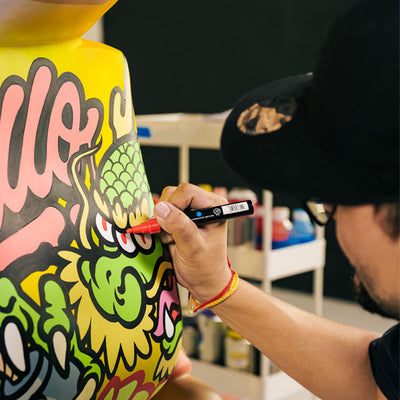
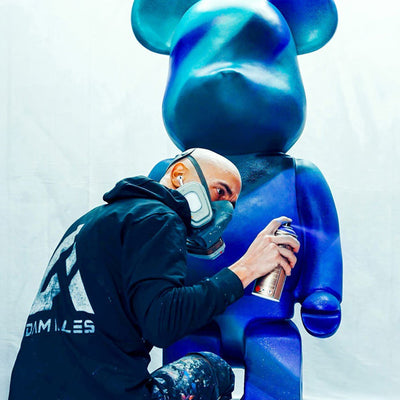
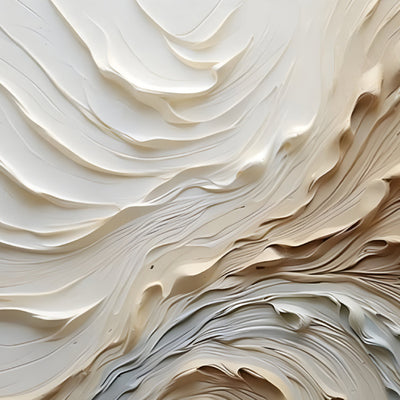
Laminating glass cloth and resin over the mold, the stage most people picture first.

Key Takeaways Before You Commission
Fiberglass earns its place on scale. It lets you go large without the weight or cost of a full bronze pour, which matters for rooflines, retail, and event work.
The finish is the product. A fiberglass resin sculpture lives or dies by its gelcoat, paint system, and UV protection, not by the laminate underneath.
Scale is a design decision, not a scaling slider. A form that works at 10 ft often needs its proportions redrawn to work at 30.
Ask about the armature and mounting. The internal steel and fixing detail decide whether the piece survives wind and years, not just how it looks on day one.
Budget depends on material, scale, complexity, engineering, installation, and finishing. Ask for a tailored quote rather than trusting a flat per-foot number.

What Sculptors Actually Think About Before Taking on a Commission
The first conversation in the studio is rarely about resin. When you set out to make fiberglass sculpture, it is about where the piece will live, how close people will get to it, and what it has to survive. A fiberglass garden sculpture destined for a Napa hillside faces sun, temperature swings, and irrigation overspray. A retail figure inside a Dallas mall faces fingers, cleaning crews, and the occasional shopping cart. Those two briefs produce completely different builds even if the shape is identical.
We also press on longevity early, because the material has an image problem it does not always deserve. Done cheaply, it chalks, fades, and cracks at stress points. Done properly, with a marine-grade laminate and a proper coating system, it holds for many years outdoors. The American Composites Manufacturers Association has long documented how glass-reinforced composites perform in demanding outdoor and marine settings, and the same engineering logic applies when you make fiberglass sculpture that has to stand in weather.
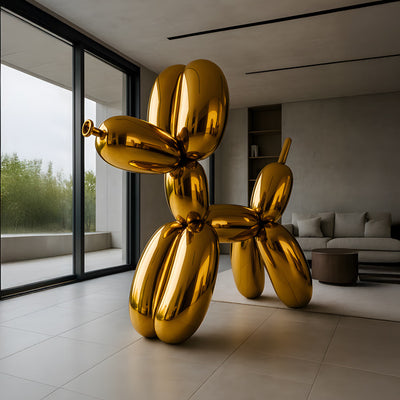
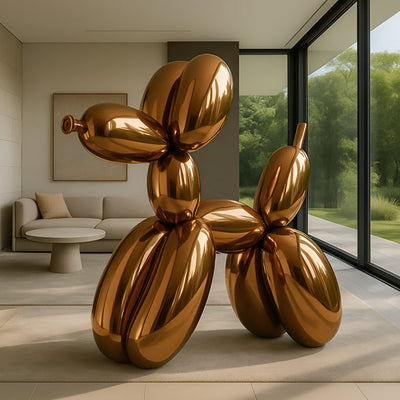
The honest trade-off is this: for permanent, museum-grade outdoor work you may still want bronze, stainless steel, or Corten. You make fiberglass sculpture when scale, weight, or a specific painted finish drives the brief. Anish Kapoor fiberglass sculpture pieces are a good reference point here; the material lets a form stay vast and visually weightless in a way cast metal simply cannot at that size.

Craft Decisions That Change the Final Result (and the Price)
Once the brief is set, a handful of decisions quietly steer both quality and cost when you make fiberglass sculpture at scale.
Laminate schedule. How many layers of glass, what weight of cloth, and where the reinforcement doubles up. A hollow figure that a person might lean on needs more material at the base and any thin projection than one mounted out of reach.
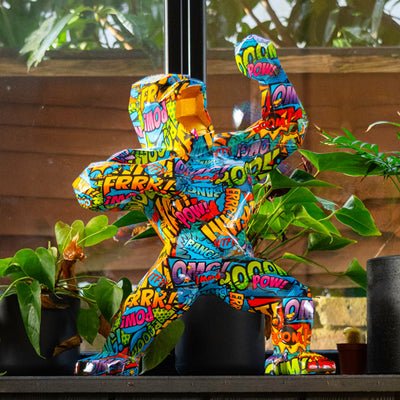
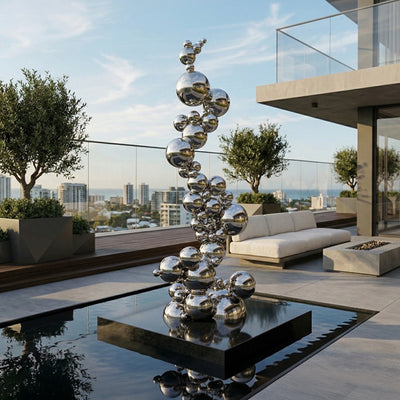
Gelcoat versus paint. A pigmented gelcoat is molded into the surface and is extremely durable, but color choice is locked in early. A painted finish over primer gives you far more control, including metallic and mirror-look effects, at the cost of a coating system that needs specifying properly.
Core and armature. Larger pieces get an internal steel frame, usually hot-dip galvanized or stainless, tied to the fixing points. This is invisible, and it is the single biggest factor in whether the sculpture survives a decade outdoors.
Seam strategy. Big forms come out of the mold in sections. Where those joints fall, and how they are bonded and dressed back, decides whether the finished surface reads as one clean object or a kit of parts.
Custom fiberglass sculptures live and die on that last point. A studio that hides seams in shadow lines and form breaks is thinking like a sculptor. One that runs a joint straight across a cheek is thinking like a factory.

Why Some Pieces Read Right at 10 ft and Wrong at 30
This is the lesson that catches out buyers and first-time fabricators alike. When you make fiberglass sculpture, enlarging a maquette is not a matter of pushing a slider. As a form gets bigger, the eye reads it from further away, at a steeper angle, and against a wider backdrop. Details that felt crisp at 10 ft (3 m) can vanish at 30 ft (9 m), while proportions that looked correct in the hand start to feel top-heavy or squat once they tower over a driveway.
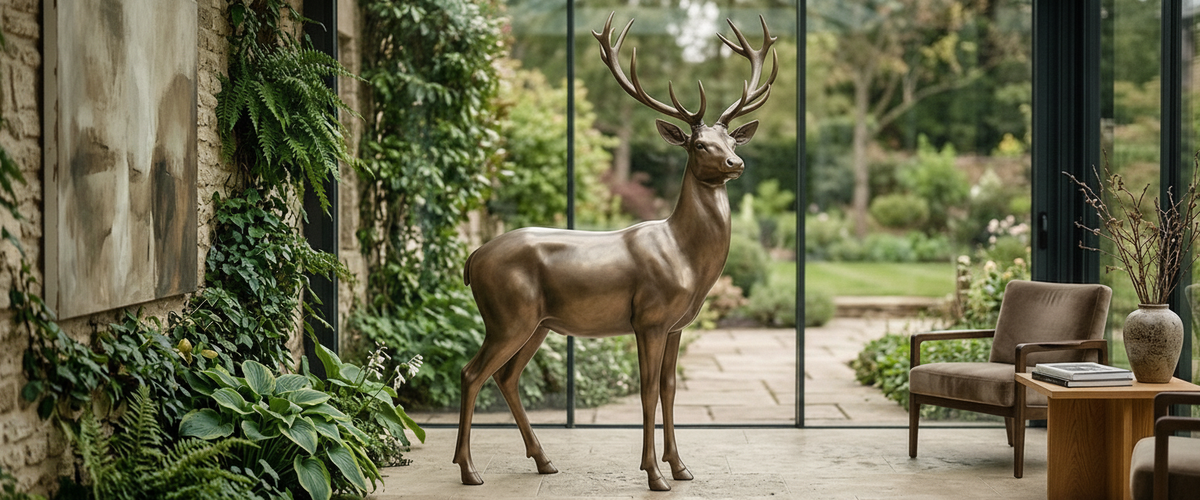
A full-height proportion review catches mass problems the maquette hides.
We learned this the hard way years ago on an animal commission that scanned perfectly at model size and looked oddly stumpy once it stood full height in a courtyard. The fix was to redraw the leg length and tilt the head a few degrees, changes that would have been invisible on the maquette. Now every time we make fiberglass sculpture at scale, the piece gets a full-height proportion review before molding, not after.
Fiberglass animal sculptures are especially sensitive to this because we all carry an instinctive sense of how a horse or a stag should stand. Get the mass wrong and viewers feel it before they can name it. The material makes big animals achievable; the drawing is what makes them believable.
Studio Process: Maquette, Sample, Fabrication, Install
Here is the sequence a serious fiberglass resin sculpture commission actually follows when you want to make fiberglass sculpture that lasts.
Maquette. A scaled model, sculpted or digitally modeled, that locks pose, proportion, and silhouette. This is where you make cheap mistakes instead of expensive ones.
Material and finish sample. A physical swatch of the intended gelcoat or paint system, ideally weathered or sun-tested, so color and gloss are approved before full production.
Mold making. Tooling is built from the enlarged pattern. This is the labor-heavy stage and a big part of why one-off pieces cost what they do.
Lamination and assembly. Layers are laid up, sections bonded, the armature fitted, and seams dressed. Filling and fairing bring the surface to its final smoothness.
Coating. Primer, color, and a UV-stable clear or protective topcoat, applied in controlled conditions.
Install. Base plates, anchor bolts, and, for tall work, engineered fixings sized for local wind loads.
The same discipline applies whether you make fiberglass sculpture as a garden centerpiece or a batch of fiberglass Christmas sculptures for a seasonal retail display; the finish spec just shifts toward indoor durability and easy storage. If you want to see the range of forms the material suits, our fiberglass sculptures collection is a useful starting point for shaping a brief.
How to Paint a Fiberglass Sculpture So It Lasts
Painting is where a lot of this work quietly goes wrong. The surface must be fully cured, degreased, and lightly abraded so primer can key to it. Skip the prep and the color peels within a season. For outdoor pieces we specify UV-stable topcoats, because raw pigment fades fast under strong sun; conservation guidance from bodies like the Getty Conservation Institute consistently points to ultraviolet exposure as a primary driver of surface degradation on painted and coated works.
For color that has to stay exact over years, a factory-applied automotive or marine coating system beats brushwork every time. And if the design calls for a mirror or metallic effect, that is a specialist spray process, not something to retrofit later.
Honest Red Flags Buyers Should Ask About
Before you commit to any studio to make fiberglass sculpture, put these questions on the table:
What is the laminate thickness and glass weight? Vague answers here usually mean a thin, brittle shell.
What is the armature made of, and is it corrosion-protected? A mild-steel frame with no galvanizing is a rust problem waiting to bleed through the surface.
Where do the seams fall, and how are they finished? Ask to see a previous piece up close, not just a hero photo.
What coating system, and what is the UV rating? No answer means no plan.
How does it mount, and who engineers the fixings? Tall outdoor work needs wind-load calculation, full stop.
What does repair look like in five years? Good composite work is repairable; ask how.
If a supplier gets cagey on any of these, walk. The build quality you cannot see is exactly the part that decides whether the piece is still standing proud a decade from now. For buyers weighing fiberglass against something more permanent, it is worth comparing directly with our stainless steel sculptures, which trade lightness for a different kind of longevity.
Fiberglass rewards planning and punishes shortcuts. When you make fiberglass sculpture with the drawing, the laminate, the armature, and the coating all specified with intent, you get a large, light, striking piece that holds its own on a Hamptons lawn or a commercial forecourt for years. If you are shaping a commission and want a candid read on whether to make fiberglass sculpture or choose metal for the brief, talk to us at Giant Sculptures; we would rather steer you to the right material than sell you the wrong one.
For wider placement ideas, How to Make a Fiberglass Sculpture That Actually Reads at Scale is useful companion reading before finalising the setting and sightlines.