
























































The choices that decide whether you make a fiberglass sculpture worth having happen weeks before anyone touches resin. People ask us how to build one as though it is a single technique, when really it is a chain of decisions about form, wall thickness, mounting and finish. Each one quietly sets the ceiling on how good, and how durable, the final piece can be. Get the sequence right and the work reads flawless in person, not just in a photo.
We build large-scale work in bronze, stainless steel, stone and engineered metal at Giant Sculptures, and fiberglass has its own place in that mix. Done well, it is light, it takes bold form well, and it can be painted in almost any color. It is also easy to do badly. Here is how the good ones get made, and what to ask before you decide to make a fiberglass sculpture of your own.
Layup is the craft heart of the job: glass mat and resin built up in measured layers.

Key Takeaways Before You Commission
Fiberglass suits big, bold, lightweight forms where weight or budget rules out solid bronze or stone.
The maquette and sample stage decides everything. Skip it and you are gambling.
Scale is not just "bigger." A shape that works at 10 ft (3 m) can fall apart visually at 30 ft (9 m).
Paint and gelcoat are structural, not cosmetic. UV protection is what keeps a fiberglass garden sculpture looking right for years.
Budget depends on material, scale, complexity, engineering, installation and finishing. Ask for a tailored quote before you decide to make a fiberglass sculpture.

What Sculptors Actually Think About Before Taking the Commission
Before we quote a piece, the first questions are not artistic. They are practical. Where is it going, indoors or out? What is the wind exposure? Will people touch it, climb on it, lean bikes against it? A gallery piece and a fiberglass garden sculpture in an exposed coastal yard are built to different standards even if they share a shape.
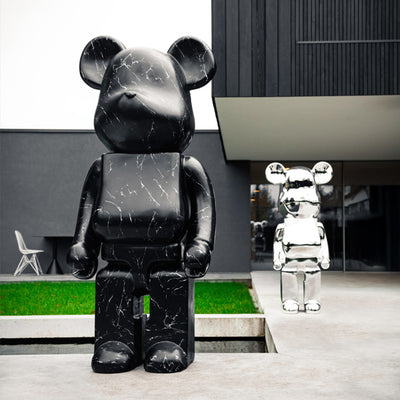
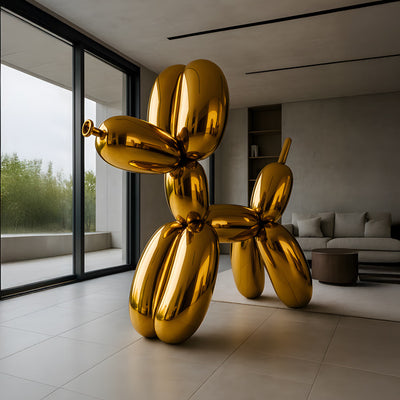
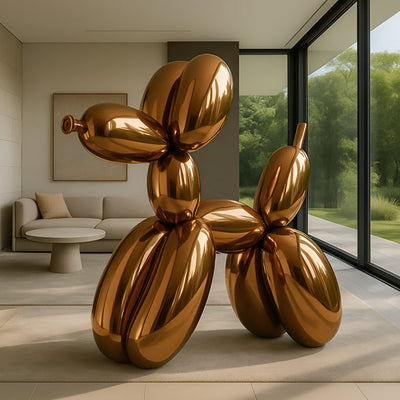
Fiberglass is a composite: glass fibers laid into a resin matrix, cured over a mold. That structure is strong for its weight, which is exactly why artists reach for it when they want to make a fiberglass sculpture that is large but movable. Anish Kapoor's fiberglass sculpture work is a useful reference point here; those saturated, seamless surfaces only hold up because the substrate underneath was engineered and finished with obsessive care. The mirror-smooth look is earned in the mold and the paint booth, not sprayed on at the end.
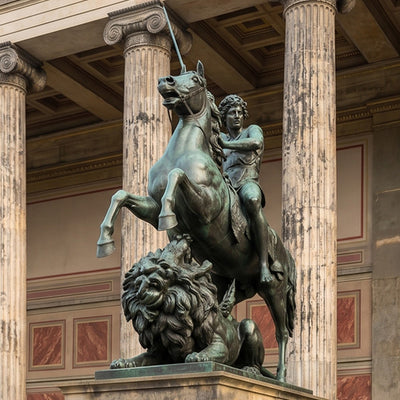
We also think hard about honesty of material. Fiberglass can imitate bronze or stone convincingly, but a client who really wants the weight, patina and cool touch of metal will be happier with the real thing. When someone comes to us wanting permanence and gravitas at civic scale, we often steer them toward our bronze sculptures instead. Matching material to intent up front saves everyone disappointment later, and it decides whether you make a fiberglass sculpture at all.

How to Make a Fiberglass Sculpture: The Studio Process
People searching for how to make fiberglass sculptures usually picture the fabrication stage. In practice that is the middle of the story, not the start. Here is the sequence we follow when we make a fiberglass sculpture on a serious commission.
1. Maquette
Everything begins with a scaled model, usually in clay, foam or 3D print. The maquette is where we settle proportion, silhouette and pose. It is cheap to change a form at 12 inches (30 cm) and expensive to change it at 20 ft (6 m). Clients who want custom fiberglass sculptures sign off on the maquette before we scale up, because that model becomes the reference for every later decision when we make a fiberglass sculpture.
2. The Master and Mold
The approved form is enlarged into a full-size master, often carved from high-density foam and coated to a hard surface. From the master we pull a mold. The mold's quality is the ceiling on surface quality; a wavy mold gives a wavy sculpture, and no amount of later sanding fully hides it. This is the step that separates people who make a fiberglass sculpture properly from those who cut corners.
3. Sample and Layup
Before committing to the full piece, we make a sample: a small section that proves the gelcoat color, the fiber layup schedule and the finish. Layup is the craft heart of the job. Glass mat and resin are built up in layers, with the number of layers and any internal ribbing or steel armature set by the size and stress the piece will face. This is where a fiberglass resin sculpture either gets the wall thickness it needs or gets rushed thin to save material, and where you truly make a fiberglass sculpture that can last.
4. Finishing, Paint and Seal
Once cured and demolded, the piece is filled, faired and sanded, then painted. We will come back to paint below, because it is where most cheap fiberglass fails, and where many people who try to make a fiberglass sculpture stumble.
5. Install
Large pieces are light but not weightless, and they catch wind like a sail. Baseplates, internal steel, and ground fixings are engineered so the piece stays put in a storm. When you make a fiberglass sculpture for an open site, expect the install crew to spend as long on the anchoring as on setting the sculpture itself. That is normal, not overkill.
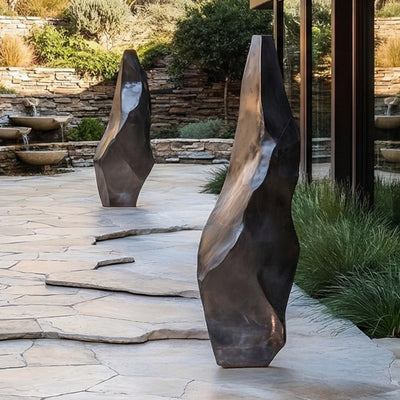
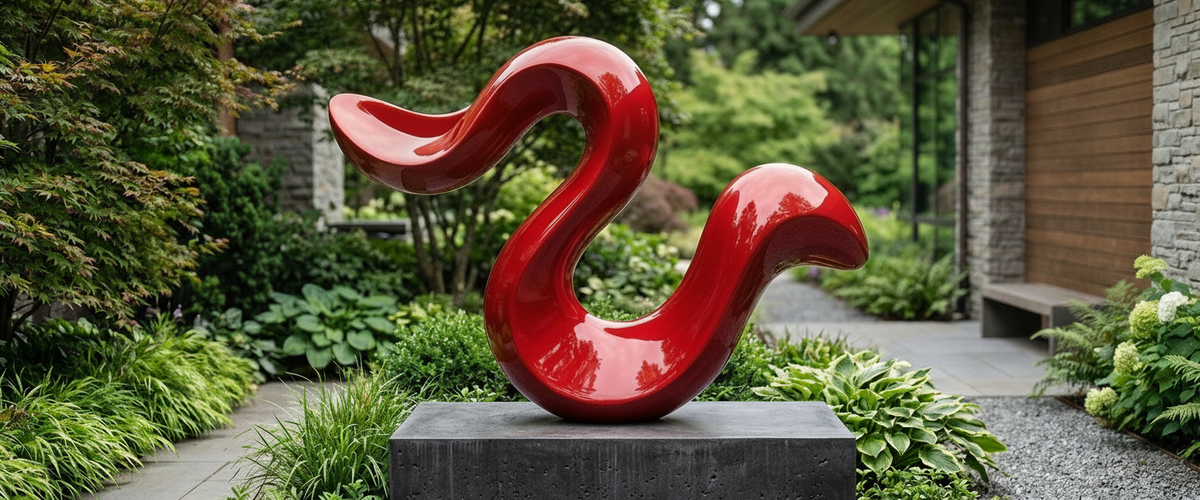
A large outdoor piece anchored and sealed against wind, water and UV exposure.

Why Some Pieces Read Right at 10 ft and Wrong at 30
Scale is the trap. A form that looks confident at 10 ft (3 m) can turn clumsy at 30 ft (9 m) because the eye reads it from farther away, against sky rather than a wall, with different shadow behavior. Detail that felt crisp up close disappears at distance, while lumps and asymmetries you never noticed suddenly dominate the silhouette. This is the part of learning how to make a fiberglass sculpture that trips up beginners.
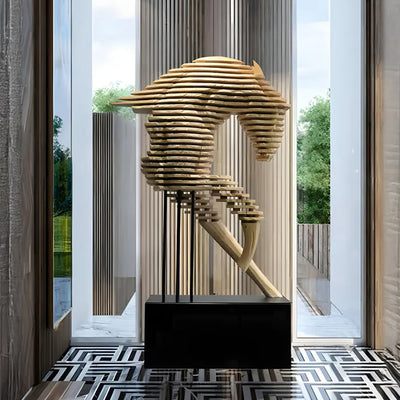
This is why we test big work as a silhouette first. If the outline does not carry from across a field, no surface finish will save it. Fiberglass animal sculptures are a good example: a horse or a stag needs its gesture and stance right at the profile level, because from 100 ft (30 m) that is all anyone sees. The nostrils and hooves are secondary. Get the line of the neck wrong and the whole animal looks dead, no matter how good the paint is.
Seasonal and event pieces play by the same rule. Fiberglass christmas sculptures for a mall atrium or a hotel forecourt are usually viewed from below and from a moving crowd, so the modeling is exaggerated deliberately to keep the form legible at that angle and distance. When you make a fiberglass sculpture for that setting, plan the exaggeration in from the maquette.
How to Paint a Fiberglass Sculpture So It Lasts
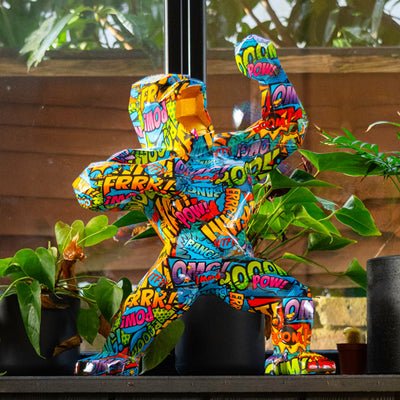
Paint is where indoor and outdoor fiberglass really diverge. Indoors, you have latitude. Outdoors, the enemy is ultraviolet light, which degrades unprotected resin and fades pigment over time. The US Environmental Protection Agency documents how UV radiation drives the breakdown of polymer and plastic materials outdoors (see the EPA guidance on UV radiation), which is why a proper finish system matters. Anyone who wants to make a fiberglass sculpture for the open air has to plan the finish around that.
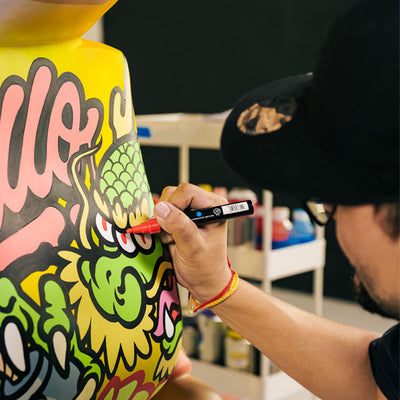
A durable finish on a fiberglass garden sculpture is built in layers: a pigmented gelcoat or primer, color coats, and an automotive-grade clear with UV inhibitors over the top. Marine and automotive systems are the benchmark because they are designed to survive sun, salt and rain. Skip the UV clear and even a well-made piece will chalk and dull within a couple of seasons. For a metallic or mirror look, the base has to be sanded to near perfection first, since a glossy topcoat magnifies every flaw underneath rather than hiding it. Nail this stage and you make a fiberglass sculpture that keeps its color for years.
How to Make a Large Fiberglass Sculpture Without It Failing
Scaling up multiplies every weakness. To make a large fiberglass sculpture that survives outdoors, three things have to be right: internal structure, drainage, and mounting. Big hollow forms need internal steel or ribbing so they do not flex and crack at stress points. Any piece that can trap water needs weep points, or freeze-thaw cycles will split it from the inside. And the base has to be engineered for wind load, not just to hold the weight. Plan all three before you make a fiberglass sculpture on this scale.
Panel joins are the other giveaway. Very large pieces are often molded in sections and bonded together. A good studio hides those seams so the surface reads as one continuous form. A rushed one leaves you a visible line down the piece that no one can unsee. Get this stage right and you make a fiberglass sculpture that holds together for decades.
Honest Red Flags to Ask About Before You Commit
Because fiberglass hides its shortcuts, ask direct questions before you pay a deposit and before anyone starts to make a fiberglass sculpture on your behalf.
What is the wall thickness and layup schedule? A vague answer usually means it will be built thin.
Is there internal steel or armature? Any large outdoor piece should have one.
What UV protection is in the finish? "We paint it" is not an answer; ask for the clear-coat system.
How is it anchored? Get the fixing detail for your specific ground and wind conditions.
Will I see the seams? Ask how sectional joins are bonded and finished.
What is the repair plan? Fiberglass can be repaired well, but only if the maker documents the color and system used.
If the answers are confident and specific, you are dealing with a real fabricator who can make a fiberglass sculpture properly. If they are breezy, walk. You can browse how finished pieces are presented in our fiberglass sculptures collection to calibrate what a resolved surface and form should look like before you commission one to make a fiberglass sculpture that meets that bar.
Is Fiberglass the Right Choice for You?
Choose fiberglass when you want a large, bold, lightweight form, a specific painted color, or a piece that has to move or ship without a crane. That is the case where it makes sense to make a fiberglass sculpture rather than commit to metal. Choose a heavier material when you want permanence, weight in the hand, and a surface that ages rather than degrades. For clients who want durability that improves with time, weathering steel is often the better long-term answer; our Corten steel sculptures develop a living rust surface that needs no repainting at all.
Whichever way you lean, the making is the point. When you make a fiberglass sculpture, it is only as good as the maquette it grew from, the mold it was pulled off, and the finish protecting it. Get those right and you own a striking, weather-ready piece. Get them wrong and you own a repair bill. If you are weighing whether to make a fiberglass sculpture at all, tell us the site, the scale and the look you are after, and we will advise on the material and process honestly, quote included.
For wider placement ideas, How to Make a Fiberglass Sculpture That Reads Right at Scale is useful companion reading before you finalize the setting and sightlines and commit to make a fiberglass sculpture for the space.