






















































































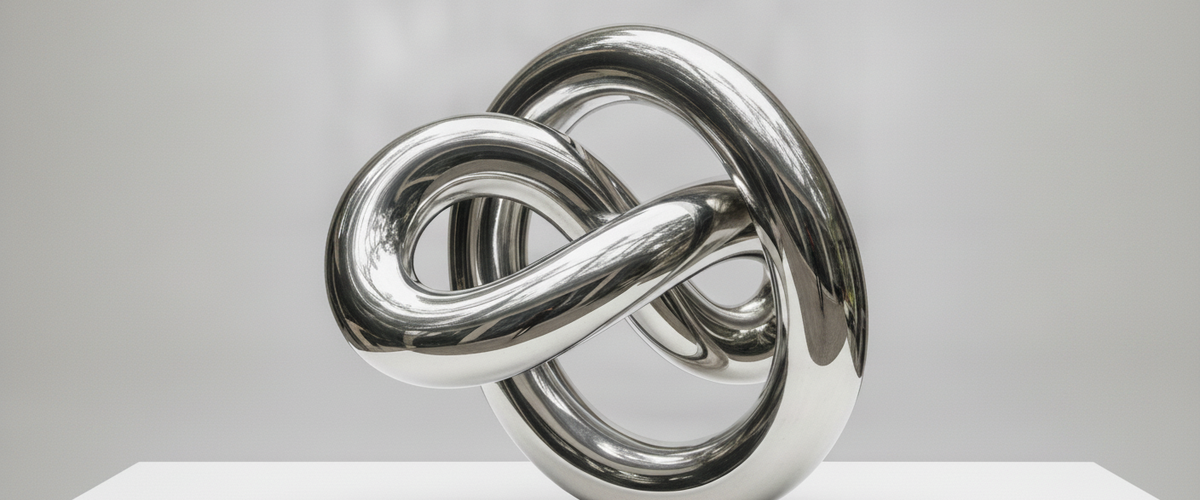

Contemporary sculpture made of bronze, stainless steel, Corten weathering steel, carved stone, or resin composite covers roughly 90 percent of the serious gallery and commissioned work sold today. A smaller share is contemporary sculpture made of mixed media: stitched leather over steel armatures, glass, industrial polymers. When buyers ask what is contemporary sculpture made of, the honest answer starts with those six materials and ends with where the piece will live. The material is half the work. The other half is sightlines, pedestal height, and what the eye sees behind the piece.
This guide covers both sides of that equation, drawn from commissions we have shipped from the Giant Sculptures studio to clients across the US, UK, Europe and the Middle East. Looking for the full range of contemporary sculpture made of premium materials in this category? Browse our Adam Illes Contemporary Sculptures collection for every available finish, size, and configuration.

Key Takeaways
Contemporary sculpture is most often made of bronze, stainless steel, Corten, stone or marble, and resin or composite; mixed-media work uses glass, leather, wood or industrial polymers.
Bronze and Corten dominate serious outdoor commissions; stainless steel dominates reflective architectural pieces; resin enables large-scale indoor and wall work.
Scale is decided by sightlines and ceiling height, not by floor area alone.
Outdoor pieces need to be read from three distances: 80 ft (24 m), 25 ft (7.6 m), and arm's length.
The most common buyer mistake is choosing a pedestal that is too short by 6 to 12 inches (15 to 30 cm).

What Is Contemporary Sculpture Made Of? The Six Core Materials
Contemporary sculpture is made of bronze, stainless steel, Corten weathering steel, stone or marble, and resin or composite, plus a smaller category of mixed media. Each material answers a different brief, and the choice is usually driven by where the piece will live and how close the viewer will get.
Bronze is still the workhorse. A good contemporary bronze sculpture, lost-wax cast and patinated by hand, will outlive the building it stands next to. Contemporary sculpture made of bronze suits figurative work, abstract work, and the distorted, gestural pieces that define much of current studio practice. Patina is where the contemporary look lives: bright greens, deep blacks, oxidized golds, sometimes a clear lacquer over raw metal so the casting marks stay visible. The Smithsonian's outdoor sculpture maintenance guidance explains why an annual wax matters more than people think. Typical weight: 600 to 1,200 lb (270 to 540 kg) for a 6 ft figure.
Stainless steel, especially mirror-polished 316 grade, is the language of modern contemporary sculptures that dissolve into their surroundings. The polish reflects sky, lawn, snow and the building behind it, and the piece changes hour by hour. Brushed or satin finishes read calmer and hide fingerprints, which matters for indoor lobby commissions where everyone wants to touch. 316 grade is specified for coastal and pool-side sites because of its chloride resistance.
Corten (weathering steel) is the choice for serious outdoor work in open landscapes: ranches in Texas, vineyards in Napa, contemporary builds in the Hudson Valley. Contemporary sculpture made of Corten rusts to a stable orange-brown crust and then stabilises. It needs gravel or stone under it; the runoff will stain pale paving.
Marble and stone still carry weight in contemporary work, particularly when an artist is pushing against the classical tradition. A contemporary art sculpture made of carved Carrara, basalt, granite or travertine behaves differently outdoors; marble is more porous than buyers expect and is happier under cover in most US climates.
Resin and composite pieces have a place for indoor sculpture, large wall-mounted work, and gallery-style commissions where weight is a constraint. We use resin when a bronze cast would be impractical at the scale a client wants, not as a cheaper substitute. A 50 in (127 cm) contemporary sculpture made of resin (a bear) we shipped to a Chicago penthouse last year weighed under 40 lb (18 kg); the bronze equivalent would have needed a structural sign-off on the floor.
Mixed media covers everything else: glass, wood, leather, neon, found steel, fibreglass shells over foam armatures. This is the area most associated with conceptual contemporary sculpture artists working outside the gallery edition system, and the category where the question of what contemporary sculpture is made of gets the most surprising answers.

Scale, Sightlines, and Pedestal Height
Floor area is a poor guide to scale. What matters is the longest unbroken sightline in the room or garden, and the height of the viewer's eye when they first see the piece.
Inside, a useful rule we use in commissions: the top of the sculpture should sit roughly at the eye level of a standing adult, around 5 ft 4 in (1.63 m), when the piece is the focal point of a seated room. For a double-height entrance hall, that climbs to 7 to 9 ft (2.1 to 2.7 m) of total composition, pedestal included. We once shipped a 6 ft (1.83 m) contemporary sculpture made of bronze (a figure) to a Tribeca loft where the client originally wanted 4 ft (1.22 m); the smaller version would have looked like a maquette under that ceiling.
Pedestals are where most placement goes wrong. A 36 in (91 cm) plinth feels generous in the showroom and looks short under a tall piece in a real room. For figurative or vertical abstract work indoors, we usually recommend a plinth that brings the visual center of the sculpture to chest or chin height. Outdoors, with a lawn underfoot and sky behind, you can go lower because the horizon does the work the ceiling would have done inside.

Indoor Versus Outdoor: When Each Material Wins
Some pieces are obviously one or the other. A polished marble nude is an indoor decision. A 12 ft (3.66 m) Corten arc is an outdoor decision. The interesting cases are the ones that could go either way.
Indoors wins when the piece relies on surface detail: chisel marks in stone, fine patina transitions in bronze, the soft sheen of a hand-finished resin. These reward close viewing and controlled light. A contemporary or modern sculpture with intricate surface texture loses half its language in full sun.
Outdoors wins when the work is about silhouette, mass and weather. A contemporary sculpture made of stainless steel in a garden picks up morning fog and evening gold in a way no gallery lighting can fake. Corten in snow is one of the great sights in contemporary art. If you are buying for a Hamptons garden, an Aspen lodge approach, or a Napa winery courtyard, lean into materials that want the weather.

Light, Backdrop, and Contrast
The single biggest predictor of whether a sculpture will look powerful in a space is the contrast between the piece and what sits behind it. A dark bronze in front of a charcoal wall disappears. A mirror-polished steel piece against a white plaster wall reads as a bright smear. Neither is the sculpture's fault.
For indoor placement, we ask clients to photograph the intended wall at three times of day and send the images over before we finalize the finish. A patina that sings against warm oak paneling can look muddy against cool gray limestone. For a contemporary wall sculpture, the wall is half of the artwork, and the lighting on that wall is the other half.
Outdoors, the backdrop is whatever you cannot move: a hedge, a treeline, a pool, the side of a barn. Plan the sculpture against the worst-case backdrop, usually winter when leaves are gone, not the summer day you happen to be on site choosing.

Common Placement Mistakes
For wider placement ideas, Contemporary Garden Sculptures That Earn Their Lawn is useful companion reading before finalising the setting and sightlines.
After several hundred commissions, the same handful of errors come up again and again, regardless of what the contemporary sculpture is made of.
Pedestal too short. Six inches changes everything. Always mock up with stacked boxes before committing.
Sculpture too close to a wall. A freestanding figurative piece needs to be walked around. Eighteen inches of clearance is not enough; aim for 3 to 4 ft (0.9 to 1.2 m) minimum.
Wrong finish for the light. High-gloss finishes in south-facing rooms flare out. Matte or satin reads better in strong direct light.
Outdoor piece sited on a lawn alone. Without a hard base (stone pad, gravel ring, paved circle), the piece will sink, lean, and the maintenance crew will resent you.
Ignoring weight. A 6 ft contemporary sculpture made of cast bronze can weigh 600 to 1,200 lb (270 to 540 kg). Suspended floors, roof terraces, and older Manhattan apartments need a structural check before delivery.
Commissioning a Bespoke Piece
Most of our work at Giant Sculptures is bespoke or scale-modified from an existing edition. A client sees a piece they like, wants it 30 percent larger, in a different patina, or adapted to suit a specific niche. That is normal, and it is how you end up with a contemporary sculpture made of the right material at the right scale for the room.
Budget on a bespoke commission depends on material, finished scale, structural engineering, finishing time, crating and installation. A 4 ft (1.22 m) contemporary sculpture made of mirror-polished stainless and a 4 ft cast bronze in the same pose are not the same job. Ask for a tailored quote rather than guessing from a category average; the spread is wide enough that any general number would mislead you.
If you are still circling the kind of work that suits you, browsing our contemporary and modern collection is a useful exercise. Note which pieces you keep coming back to, and what they share: are they all figurative, all abstract, all polished, all weathered? That pattern, along with what each contemporary sculpture is made of, is your brief.
Reading List for Serious Collectors
For anyone going deeper into the field, A Sculpture Reader: Contemporary Sculpture Since 1980 remains one of the better primers on how artists working today think about material and form. Kara Walker's A Subtlety, the sugar-coated sphinx installed in the old Domino refinery, is worth studying as a contemporary sculpture made of unconventional material that carries historical weight. The American Alliance of Museums resource library is a good starting point for reading further on care and display standards.