

























































































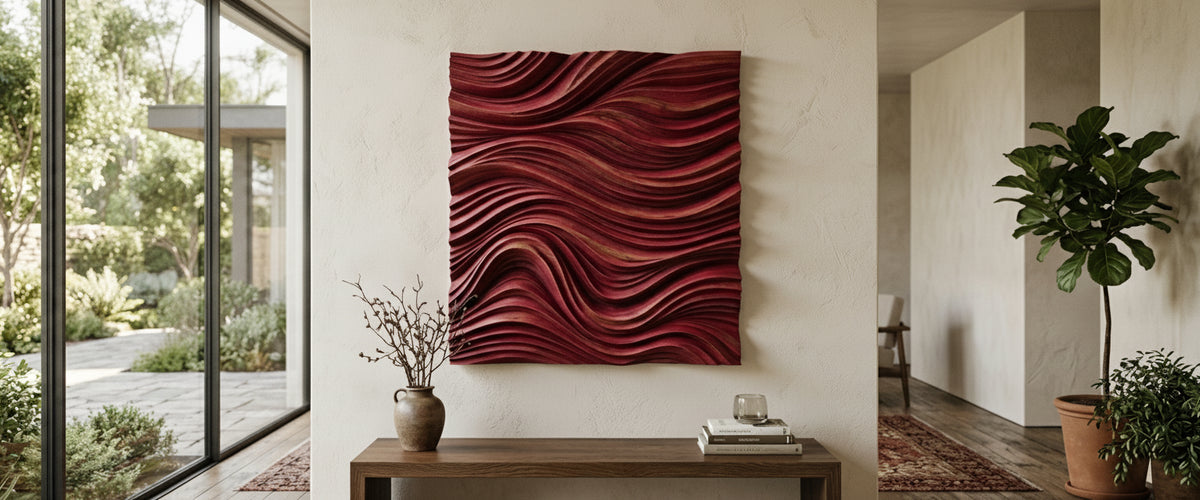

Most blank walls fail not because the owner picked the wrong piece, but because they picked the wrong wall. Unique wall art decor lives or dies on placement: the height it sits at, the light that hits it, the furniture it competes with, and the distance the eye gets to travel before it lands. Get those right and a single relief carving will do more work than a gallery wall of ten framed prints.
This is the version of the advice we give clients at Giant Sculptures when they ask why a piece that looked extraordinary in our studio is not landing in their living room. Usually the piece is fine. The wall is wrong, the lighting is flat, or the sofa is fighting it. Good unique wall art decor is a placement decision before it is a shopping decision.

Key Takeaways
Scale the piece to the wall, not the room. A 4 ft (122 cm) relief on a 16 ft (4.9 m) wall looks like a postage stamp.
Center the visual weight at roughly 57 to 60 in (145 to 152 cm) from the floor, lower when seating dominates the room.
Light from above at a 30 degree angle to bring out three-dimensional carving. Flat front light kills depth.
Outdoor unique wall art decor needs material discipline: aluminum, Corten, bronze, or sealed hardwoods, never decorative MDF.
One strong piece beats three medium ones almost every time.

What Unique Wall Art Decor Actually Looks Like in Real Rooms
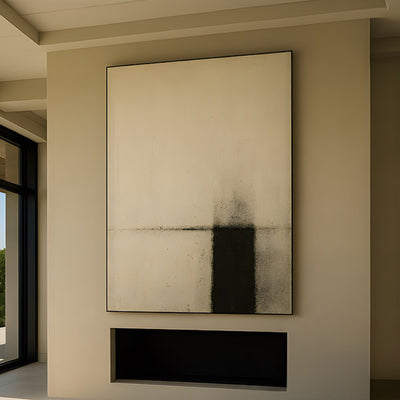
The phrase covers more ground than people assume. In a Napa hillside home we shipped to last year, unique wall art and decor meant a single carved sandstone relief above a 12 ft (3.7 m) limestone fireplace, lit from a recessed slot in the ceiling. In a Tribeca loft, unique wall decor art meant a layered wood carving running 9 ft (2.7 m) along a corridor that had nothing else on it. In a Houston restaurant it meant a sculpted bronze panel mounted to a back-bar wall, doubling as the room's only ornamentation.
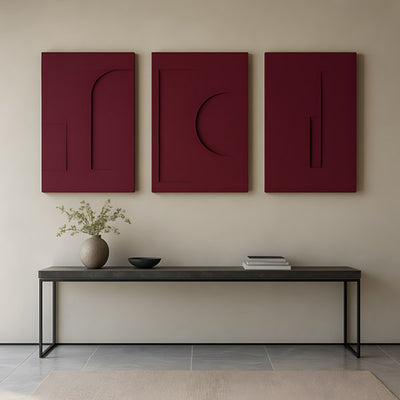
What ties those examples together is not style. It is the willingness to commit one wall, properly, to one piece. The Arcuza and Cascala series we produce, for example, are built to carry that kind of solo billing because the carving depth reads from across the room, not just up close. Above a low console where sidelight rakes across the wall, a layered relief like Cascala Crimson Layered Wood Carving throws shadow the way a flat canvas never can, which is the entire reason for choosing dimensional unique wall art decor over print.

Scale, Sightlines, and Pedestal Height for Wall Pieces
Unique wall art decor does not sit on a pedestal, but it has a height equivalent: the centerline of its visual mass. The museum standard is around 57 to 58 in (145 to 147 cm) from the floor to the center of the piece, which corresponds to average eye level for a standing adult. The American Alliance of Museums and most curatorial guides default to this number for a reason: it reads naturally to the eye.
Adjust it down when the room is built around seating. In a living room where the primary view is from a sofa, drop the centerline to 52 to 54 in (132 to 137 cm). Over a dining table, leave 8 to 12 in (20 to 30 cm) of clear wall between the top of the chair backs and the bottom of the piece. Over a console or credenza, leave 6 to 10 in (15 to 25 cm).
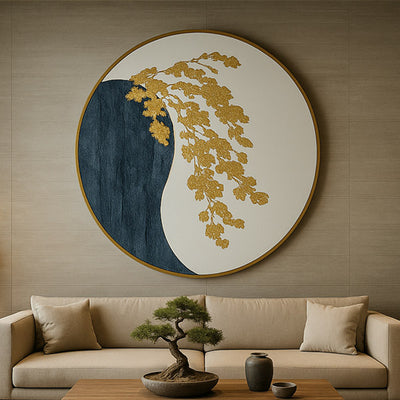
Scale is the other half of this. A reasonable starting point: unique wall art decor should occupy two thirds to three quarters of the wall width above the furniture below it. A 7 ft (2.1 m) sofa wants a piece roughly 5 ft (1.5 m) wide, give or take. Anything smaller and the wall swallows it. Anything wider and it visually shoves the furniture off its mark.

Indoor Versus Outdoor: When Each Wins
Indoor walls give you control. Stable humidity, predictable light, no UV punishment. That is where finer materials get to perform in unique wall art decor: sandstone reliefs, layered hardwoods, leather and acrylic composites, polished resin inlays. Where the brief calls for something more figurative and tactile against a calm interior wall, a leather-and-acrylic piece such as Edge Greige David Bust Leather & Acrylic 3D Wall Art is built specifically for that controlled environment and would not survive a poolside wall.
Outdoor walls are a different brief. Sun, rain, freeze-thaw cycles, and salt air from coastal sites all narrow the material list fast. For an exterior courtyard wall in Aspen or a Hamptons pool house, we steer clients toward powder-coated aluminum, Corten steel panels, cast bronze relief, or fully sealed teak. Anything porous needs serious sealing and a maintenance schedule. The outdoor wall art collection is grouped specifically around materials we are willing to warranty against weather, and it is where most of our exterior unique wall art decor commissions start.
Outdoor pieces also need to read at distance. A garden wall is usually viewed from 20 to 40 ft (6 to 12 m) away, not 6 ft (1.8 m). Fine surface detail disappears. Silhouette and relief depth are what carry the piece.
Light, Backdrop, and Contrast
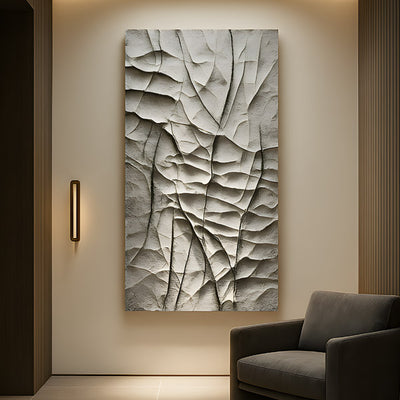
Three-dimensional unique wall art decor needs raking light: light that hits the surface at a shallow angle, somewhere between 25 and 35 degrees. That angle is what makes the carving cast shadow inside its own relief, which is the whole point of buying dimensional work in the first place. Flat ceiling downlights pointed straight at the piece flatten it back into a poster.
The fix is usually an adjustable track head, a picture light with an angled arm, or a recessed wall washer set forward of the piece, not directly above it. With a deeply layered carving such as Kora Night Horizon 3D Wall Art, properly raked light is the difference between a sculpted horizon line and a brown rectangle on the wall.
Backdrop matters too. Busy wallpaper kills dimensional work. So does a glossy lacquered wall that throws reflections back across the piece. Matte plaster, limewash, raw concrete, brushed timber, or a deeply saturated flat paint all give the carving somewhere to sit. Contrast does the rest: light piece on dark wall, dark piece on pale wall, warm wood against cool stone.
The Placement Mistakes We See Most Often
For wider placement ideas, Unique Wall Art Decor: A Placement Guide for Rooms That Deserve More is useful companion reading before finalising the setting and sightlines.
Five recur in nearly every commission consultation for unique wall art and decor.
Hung too high. Ceilings get taller, eye level does not. A 12 ft (3.7 m) ceiling does not mean you center the piece at 7 ft (2.1 m). It means you may want a taller piece, not a higher hang.
Wrong wall for the light. A wall facing south-facing glass in a Los Angeles living room will bake an unsealed wood relief and bleach a tinted resin within a year or two. Pick the wall after you have understood the light.
Furniture fighting the art. A patterned sofa under a layered carving creates visual noise. Either the wall hosts the statement or the furniture does, rarely both.
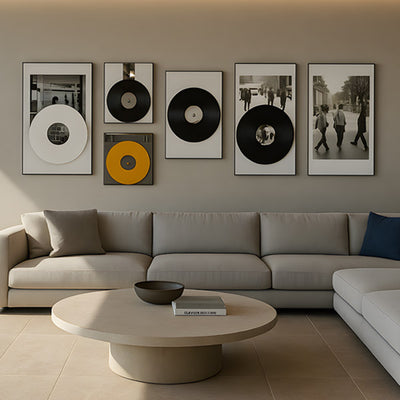
Too many small pieces. Gallery walls suit narrow hallways and stair runs. In a primary living room they read as indecision. One committed piece of unique wall art decor almost always wins.
No allowance for installation weight. A 60 lb (27 kg) sandstone relief needs proper anchors into studs or masonry, not drywall plugs. We supply install drawings with every shipped piece, and we still get calls about this.
Commissioning a Bespoke Piece
Off-the-shelf wall art and decor works when the wall is standard and the brief is open. Bespoke unique wall art decor makes sense when the wall is unusual: a double-height stairwell, a curved entry wall, a long narrow corridor, an outdoor courtyard with a specific sightline from inside the house. We have made pieces sized to specific window mullions, color-matched to existing stonework, and shaped to wrap a corner.
Budget on a commission depends on material, scale, carving depth, finishing, crating, and install support. We do not publish flat figures because the variables genuinely change the number; the honest answer is to send wall dimensions, photos, and a sense of style direction, and we come back with a tailored quote. What we will say is that one bespoke piece of unique wall decor sized correctly almost always outperforms three stock pieces hung to fill space.
A Quick Buyer Checklist
Measure the wall, the furniture below it, and the viewing distance before browsing unique wall art decor.
Photograph the wall at three times of day to understand the real light.
Decide indoor or outdoor first; it eliminates two thirds of the catalog.
Pick material before style. Wood, stone, metal, and composite all age differently.
Plan the lighting at the same time as the art. Retrofitting good light is harder than hanging the piece.
Ask about install hardware and wall type before you commit.
Browse the broader wall art and decor collection for indoor pieces, or the metal wall art range when the brief calls for outdoor durability or industrial backdrops. For most clients, the right answer is one well-placed example of unique wall art decor, properly lit, on a wall that earns it.