




















































































Most large abstract metal wall art fails for one reason, and it is almost never the design. It is placement. A panel that looked commanding on a screen ends up floating in a hallway, lost above a couch, or fighting a busy wall it was never meant to sit against. Search terms like large abstract metal wall art and 3d wall art panels pull up plenty of options, but the piece you buy is only half the decision. Where it goes, how high, against what, and under what light decides whether it holds a room or quietly disappears.
At our studio we spend as much time on siting advice as on the metalwork itself. A dimensional wall piece catches shadow, so the same large abstract metal panel reads completely differently at 9am versus dusk, and completely differently again on a matte gray wall versus glossy white. Here is what actually moves the needle.
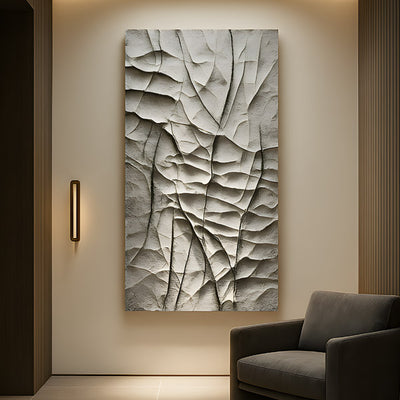
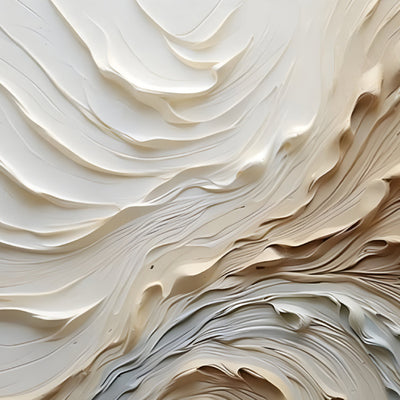
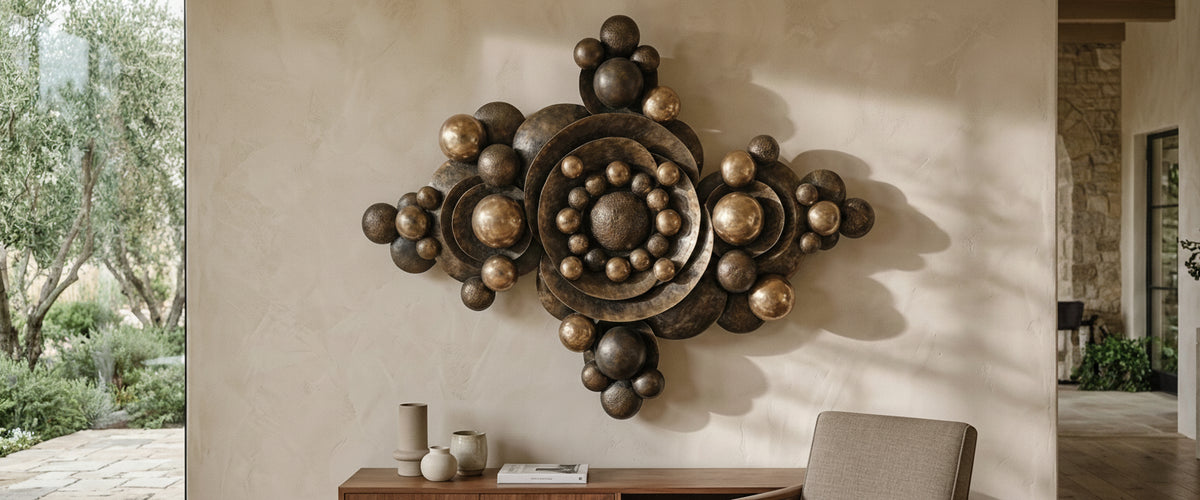
A large abstract metal panel set reading as relief sculpture under raking light.

Key Takeaways
Scale first: a large abstract metal panel needs roughly two-thirds the width of the wall or furniture line it anchors, not more.
Sightline height matters more than a fixed rule: center the visual mass to where people actually look, seated or standing.
Dimensional 3D metal art lives on light: raking light from the side reveals depth; flat frontal light kills it.
Backdrop contrast decides read: a polished piece wants a matte wall, a matte piece wants some sheen or tone behind it.
Outdoor placement changes the material conversation: think stainless, Corten or coated metal, not indoor finishes carried outside.

What Large Abstract 3D Metal Wall Art Looks Like in Real Rooms
Dimensional metal wall art is not a flat print. These 3d wall art panels stand off the wall, layer, and throw shadow, so they behave more like a shallow relief sculpture than a picture. That is the appeal and the risk. In a double-height entry, a wide multi-panel abstract large piece fills vertical air that framed art can never touch. In a low-ceilinged den, that same scale of ambition feels like it is pressing down on you.
Where a wall needs movement without color noise, a staggered sphere composition such as the Eclat Sphere Bronze Abstract Metal Wall Art earns its place, because the raised discs create their own micro-shadows. This is the kind of large abstract metal format that reads best up close. In a warm-toned great room, the bronze finish picks up the surrounding materials instead of shouting over them. Set the same warm piece against a cool gray concrete wall and it either pops beautifully or clashes, depending on how much of that gray you leave breathing around it.
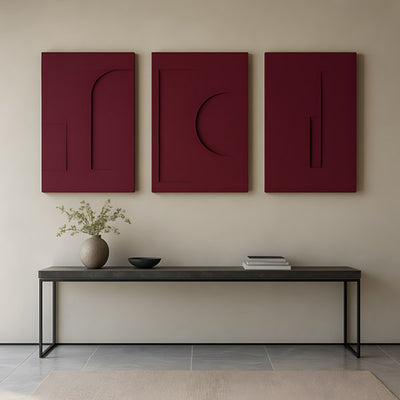
For a cooler, more graphic look, a modular set of 3d panel wall art gives you control over how mass spreads across the wall. The Modulus Neutral Toned Large Abstract Square Panels Set Wall Art lets you distribute the composition across a wide loft wall, then adjust the gaps to suit the run. That flexibility is exactly why designers reach for a wall art panel 3d layout when a single fixed piece would either be too small or too heavy for the wall.

Scale, Sightlines and Mounting Height
The most common briefing mistake we get is a client asking for a large abstract metal piece sized to the wall's total dimensions rather than the space it needs to anchor. A big blank wall does not need to be filled corner to corner. It needs a confident focal mass with air around it.
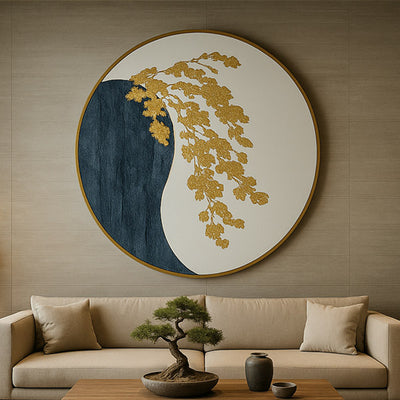
A working rule: the piece should span about two-thirds of the furniture line or architectural feature it sits above, whether that is a console, a sofa, a fireplace, or a stair run. Go much wider and it reads as wallpaper; go much narrower and it looks apologetic.
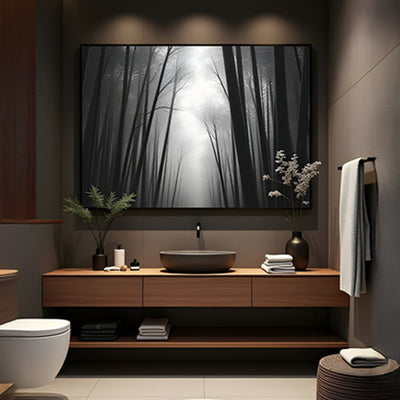
Aligning the visual center to the seated sightline rather than a fixed gallery number.
Height is where fixed rules break down. Gallery convention centers work at roughly 57 to 60 inches (145 to 152 cm) to the visual center, and that is a fine starting point for a standing viewer. But if the abstract large panel hangs above a low sectional where people are mostly seated, drop it. If it anchors a stairwell seen from below, the center of mass should sit higher and lean into the descent line. We always ask how the room is used before we sign off on a mounting height, because the number on the wall means nothing if it ignores where eyes land.

Indoor Versus Outdoor: When Each Wins
Plenty of buyers assume metal wall art is automatically outdoor-ready. It is not. Indoor decorative finishes, delicate coatings, and lighter-gauge metal will chalk, streak or corrode if you hang them on an exposed garden wall through a wet winter.
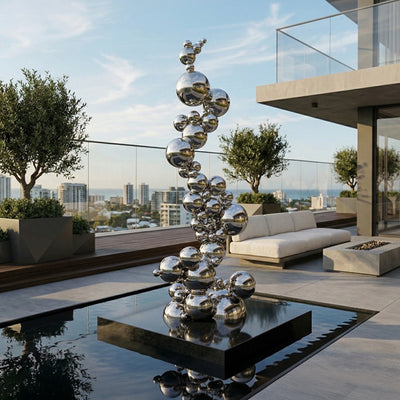
Indoor wins when you want fine finish detail, layered translucent color, or a large abstract metal piece that trades on reflective polish. Outdoor wins when you have a large blank facade, a pool wall, or a courtyard that needs a focal point across distance. For exterior work we steer clients toward marine-grade stainless steel or weathering steel (Corten), which forms a stable protective rust layer rather than degrading; the material guidance from resources like the American Institute of Steel Construction is worth reading before you commit a metal artwork to full weather exposure. If you love an indoor design and want it outside, that is a commission conversation about substrate, coating and fixings, not a straight swap.
Quick outdoor checklist
Confirm the metal and coating are rated for exterior use, not just described as "durable."
Use stainless or hot-dip galvanized fixings so the mount does not fail before the art does.
Leave a ventilation gap behind the piece so moisture is not trapped against the wall.
Check the wall substrate can carry the load, especially on rendered or hollow-block walls.
Plan for sun orientation; south-facing color finishes fade faster than shaded ones.
Light, Backdrop and Contrast
This kind of 3d art wall panels design is a light instrument. The whole point of the raised layers is the shadow they cast, so lighting decides whether you paid for depth you can actually see. A large abstract metal panel with real relief lives or dies here.
Aim for raking light: a source set to one side and slightly above, grazing across the surface. That angle rakes shadow into every ridge and makes a sphere composition or a folded panel read as sculpture. Flat, straight-on downlight flattens the same 3d wall panel art into a decal. If you are running track or accent fixtures, the Illuminating Engineering Society's guidance on accent lighting angles is a useful sanity check before your electrician commits to positions.
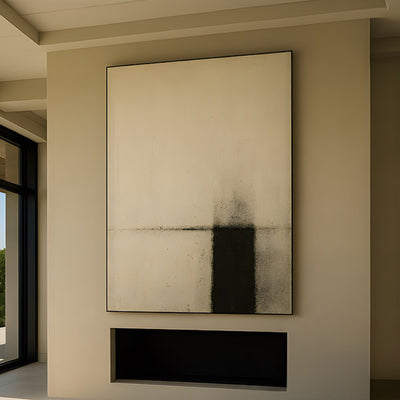
Backdrop is the other half. Where the design leans on high-gloss color, something like the Eclat Sphere Red Abstract Metal Wall Art finish wants a calm matte wall so the metal does the reflecting, not the paint. A matte or muted abstract large piece wants a little tone or sheen behind it to give the edges something to define against. When both the art and the wall are matte and mid-toned, the piece sinks. That is the single most common reason a client tells us a panel "looks smaller in person." It is not smaller. It has no contrast to push against.
Placement Mistakes We See on Commissions
For wider placement ideas, Large Abstract Wall Art: A Buyer's Guide to Scale, Materials and Placement is useful companion reading before finalizing the setting and sightlines.
A few patterns come up again and again with a large abstract metal wall art install:
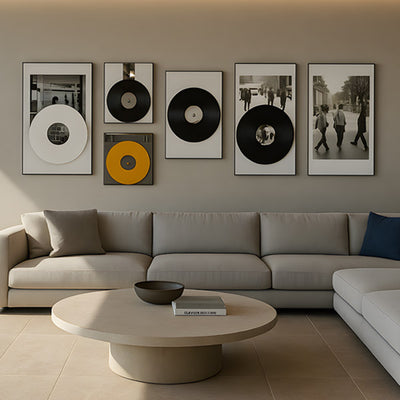
Hanging too high above a sofa. If there is a big gap between the top of the couch and the bottom of the art, the two stop reading as a group. Keep roughly 6 to 10 inches (15 to 25 cm) between furniture top and artwork.
Centering on the wall instead of the furniture. Align the piece to the console or bed below it, not to the architectural wall, unless the wall is genuinely freestanding.
Ignoring first sightline. Walk the approach path. The piece should reveal itself as you enter or turn a corner, not sit hidden behind an open door.
Under-lighting a dimensional piece. Buying textured art 3d wall panels and then lighting them flat wastes the whole design.
Wrong finish for the setting. A copper-toned abstract in a cool minimalist room, or a stark polished piece in a soft rustic room, fights the space instead of completing it.
If you are choosing between finishes and cannot decide, browse a full range like our abstract art collection with your wall color and light direction in mind, not just the design in isolation. And if none of the stock sizes suit a specific wall, that is exactly what a bespoke large abstract metal commission is for; we regularly rescale, recolor or reconfigure panel layouts to fit an architectural run rather than forcing a client to compromise.
Buying and Commissioning Guidance
Decide in this order: setting (indoor or outdoor), wall dimensions and furniture line, viewing distance, light direction, then finish and color. Get those settled and the shortlist for your abstract large piece narrows fast. Budget depends on material, scale, panel count, finish complexity, engineering and installation, so the honest answer on price is to request a tailored quote once the brief is clear rather than working from a generic figure.
For large statement walls, a single dramatic large abstract metal piece and a modular panel set solve different problems. A single piece gives you one clean focal point; a set gives you reach and adjustability across a wide or awkward run. Neither is better in the abstract. It depends on the wall in front of you and how people move past it.