

































Most disappointing sculptures fail at the brief, not the chisel. A buyer falls for a maquette online, ships it across the country, and discovers it is half the scale the courtyard needed, finished in a color that fights the building, weighing more than the plinth can carry. A proper sculpture commission avoids all of that by starting where the piece will live, then working backward through material, engineering and form.

What Is a Sculpture Commission?
A sculpture commission is a contract between a client and a studio to design and fabricate an original, one-of-one artwork to a specific brief, site and timeline, rather than buying a finished piece from existing stock. You are paying for the design process, the engineering, the studio hours and the finished sculpture as a single package, usually delivered in stages over several months from concept to installation.
In practice that means you supply the site, the scale, the subject and the feeling you want. The studio supplies sketches, a small maquette, a full-scale build, the finish, and the rigging to install it. The contract typically runs through staged payments tied to milestones (concept, maquette, full-scale model, fabrication, finishing, install) so neither side carries the whole risk at once.
A commission is not the same as buying an artist's existing edition or a catalog piece resized. The defining feature is that the work would not exist without your brief.
At a Glance: What a Sculpture Commission Involves
- What it is: a one-of-one artwork made to your brief, site and timeline rather than picked from existing stock.
- Who it suits: homeowners, designers, architects, landscape designers, hospitality groups and collectors who need a specific scale, subject or material.
- Typical timeline: several months from concept to install, longer for monumental bronze or stone.
- Budget drivers: material, scale, complexity, engineering, finish, crating and installation.
- What you should supply: site photos, dimensions, sightlines, climate, plinth or anchor details, and a clear reference mood.
Who a Sculpture Commission Is For
The buyers who get the most from a custom sculpture commission tend to fall into a few groups. Private collectors who already own art and want a centerpiece tuned to a specific room or garden. Architects and interior designers placing a focal piece in a project where nothing off-the-shelf hits the proportions. Hospitality and commercial clients (hotels, vineyards, corporate campuses) who need a recognizable landmark at the entrance. Estates and family homes marking a milestone, a memorial or a legacy piece.
If you only need something attractive at a predictable price, buy from a curated catalog. If the site, the subject or the scale is non-negotiable, commission. Commissioning sculptures rewards clients who can describe a site and a feeling, and frustrates clients who want to redesign every curve on a Tuesday afternoon.
Materials, Finishes and Scale: The Three Decisions That Shape Everything
Before anyone sketches anything, three choices set the tone of the whole project: material, finish and scale. Get these right early and the rest of the brief writes itself.
Material
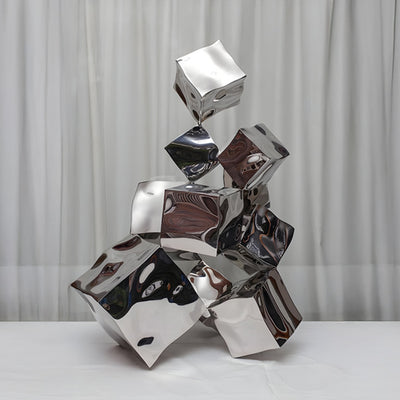
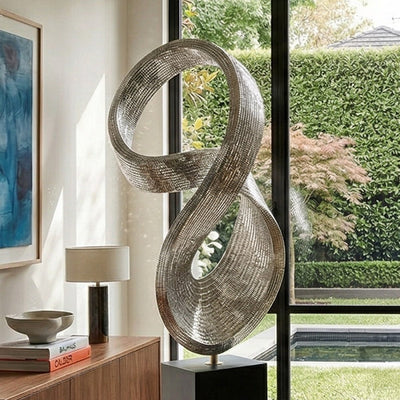
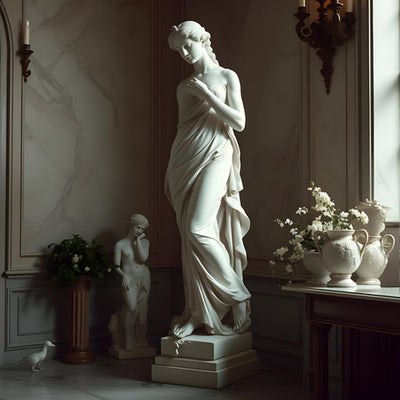
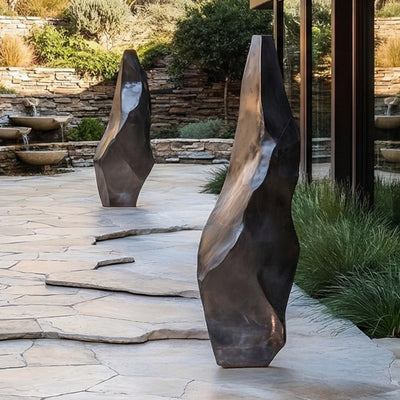
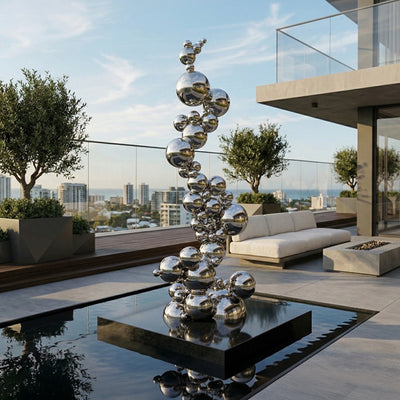
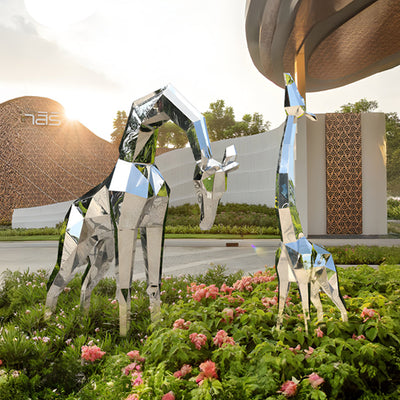
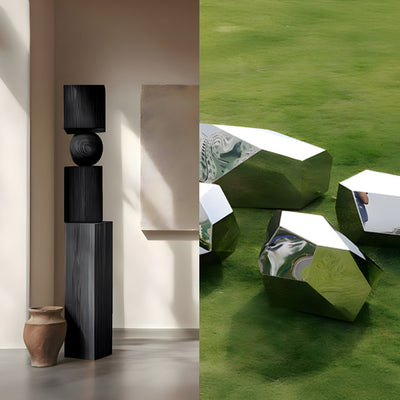
For outdoor work that needs to last generations, bronze remains the default for figurative and classical subjects, with a patina chosen to suit the surrounding stone or planting. Stainless steel reads contemporary and reflective, throwing sky and foliage back at the viewer; it suits modern architecture and minimalist gardens. Corten weathering steel develops a rust-toned oxide layer that stabilizes over time and pairs well with grasses, gravel and concrete. Stone and marble carry the deepest art-historical weight, but they ask more of the site (drainage, freeze-thaw, plinth engineering) than most buyers expect. The Smithsonian's guidance on outdoor sculpture care is worth reading before you commit to any material that will sit in weather year-round (Smithsonian Museum Conservation Institute).
Finish
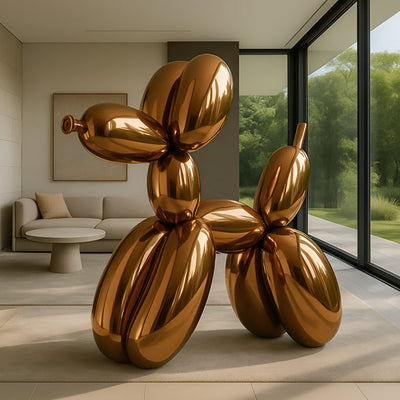
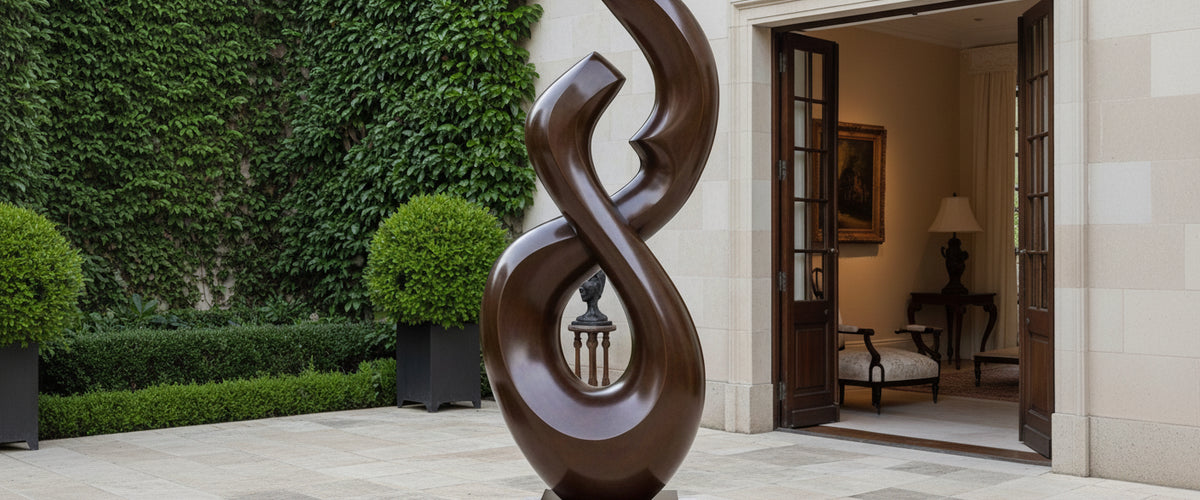
Finish changes the personality of a piece more than most clients realize. A mirror-polished stainless figure feels jewelry-like; a brushed satin finish on the same form feels architectural. On bronze, a dark chocolate patina reads traditional, a verdigris green leans classical-garden, and a warm golden-brown sits comfortably against modern stone. Always request finish samples on the actual alloy before signing off.
Scale
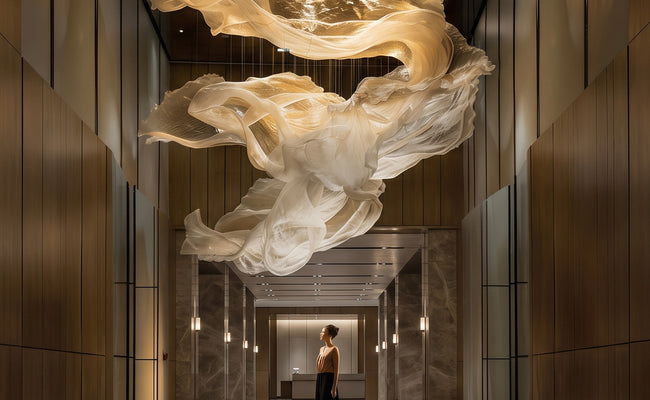
Scale is where most commissions go sideways. A piece that looks heroic in a studio photograph can vanish on a long lawn or crowd a tight courtyard. As a rough rule, an outdoor sculpture intended to anchor a view wants to read at roughly one third to one half the height of its backdrop (tree line, hedge, facade) from the primary viewing point. For a 20 ft (6 m) hedge, that points to a piece around 7 to 10 ft (2.1 to 3 m) tall on a low plinth. Always mock it up on site with a cardboard or timber stand-in before approving the final dimensions.
Where to Place a Sculpture Commission for Real Impact
For wider placement ideas, Sculpture Of Chief Crazy Horse: From Tabletop Bronze to Monument is useful companion reading before finalising the setting and sightlines.
Placement is half the artwork. The same bronze figure can feel monumental on axis at the end of a gravel walk and forgettable shoved against a wall. A few placement principles we apply on every commission:
- Anchor a sightline. Put the piece where the eye already wants to travel: the end of a pool, the turn in a drive, the framed view from the main living room window.
- Give it room to breathe. A figurative bronze needs negative space around it. Tight planting and competing objects flatten the silhouette.
- Mind the light. Reflective stainless changes hour by hour. Bronze and stone want raking morning or late-afternoon light to bring out modeling. Plan the primary viewing angle around that, not the other way around.
- Engineer the base. A large stainless steel piece can act like a sail in wind. Foundations, anchor bolts and plinth specifications are part of the commission, not an afterthought for your contractor.
- Consider the year, not the photograph. The piece will live with bare winter trees, summer growth, snow, salt air or pool chemistry. Specify accordingly.
For a sense of how scale and finish read in real settings, our stainless steel sculpture collection and bronze sculpture collection show how the same subject shifts character across materials.
Budget, Timeline and Delivery: What Actually Drives the Number
Clients almost always ask how much it costs to commission a sculpture before they have told us what they want made. The honest answer is that budget is a function of six variables, and changing any one of them moves the number meaningfully:
- Material: bronze and carved stone sit at the top; fabricated stainless and Corten depend heavily on complexity; mixed-media costs follow the most demanding component.
- Scale: doubling height typically more than doubles weight and material cost, and triggers heavier engineering, crating and lifting equipment.
- Complexity: a smooth abstract form is faster than a multi-figure narrative group with fine drapery and portraiture.
- Engineering: internal armatures, anchor systems, wind and seismic calculations on large outdoor pieces.
- Finish: hand-chased patinas, mirror polishing and bespoke colors all add studio hours.
- Logistics: crating, freight, customs, crane hire and installation, especially for international shipping.
Rather than quoting price brackets that mislead, we issue a tailored quote once the brief, site and rough dimensions are agreed. Expect a staged payment structure tied to milestones: concept approval, maquette sign-off, full-scale model, casting or fabrication, finishing, and final installation. Timelines typically run several months for mid-scale work and can extend to a year or more for monumental bronze or carved stone. Plan around the install date you actually need, not the one you hope for.
How to Commission a Sculpture: The Process Step by Step
Every studio runs commissions slightly differently. At Giant Sculptures, a typical bespoke project moves through these stages:
- Discovery. You send site photos, dimensions, references and a rough budget envelope. We discuss subject, material and scale, and flag anything the site will not tolerate.
- Concept and sketches. Two or three directions on paper, with indicative dimensions and material call-outs.
- Maquette. A small scale model, usually 12 to 24 in (30 to 60 cm), in clay or 3D-printed form. This is the moment to push back on proportions and gesture; changes here are cheap.
- Full-scale build. Armature, modeling, mold-making and casting for bronze; cutting, forming and welding for stainless or Corten; carving for stone.
- Finishing. Patina, polish, sealing, and quality inspection against the approved samples.
- Crating, freight and install. Custom crating, export documentation, white-glove freight, and on-site installation with the right rigging.
How Giant Sculptures Approaches Bespoke Projects
We work with private collectors, designers, architects and commercial clients across the US and internationally. Our focus is large-scale, durable work in bronze, stainless steel, Corten and stone, built to live outdoors for decades rather than seasons. We have shipped figurative bronzes to estates in the Hamptons, mirror-polished stainless pieces to lobbies in New York, and weathering steel forms to vineyards on the West Coast. Each one started with a site, a sightline and a conversation, not a catalog page.
If a piece in our existing range almost works but the scale or finish is wrong, that is often the cleanest route into a commission. We can adjust dimensions, change material, or reinterpret a subject entirely while keeping the engineering proven. Browse the garden sculptures collection for a sense of the forms and finishes we work in most often.
Common Mistakes to Avoid When You Commission Art
- Approving final dimensions from a rendering instead of a physical mock-up on site.
- Choosing material based on appearance alone, without considering climate, salt air or pool chemistry.
- Skipping the maquette stage to save time. It costs far more to change a full-scale piece.
- Forgetting the plinth. A great sculpture on a weak base looks like a great sculpture on a weak base.
- Treating installation as a contractor's problem. Rigging a multi-ton piece is its own discipline.
Get the brief right and a sculpture commission becomes the most personal artwork you will ever own. Get it wrong and you have an expensive lesson in scale. Spend the time at the start; the studio will repay you for it later.