



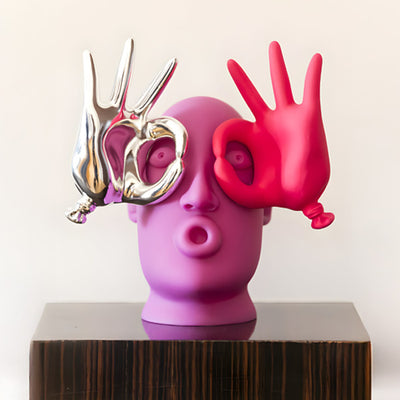


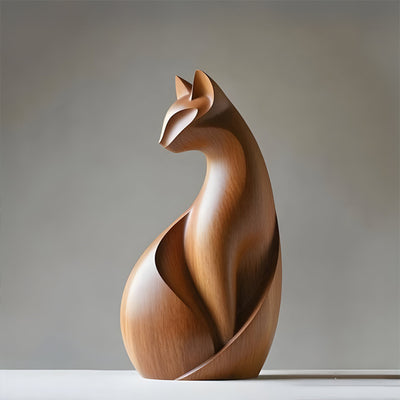
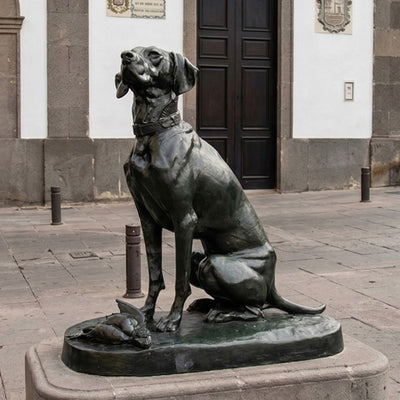


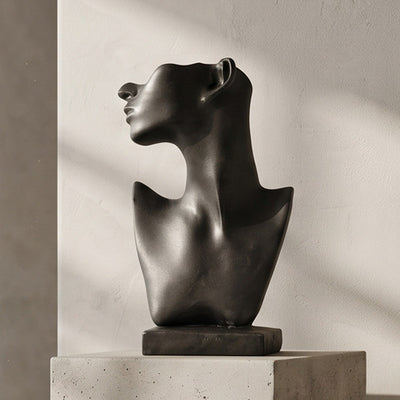


















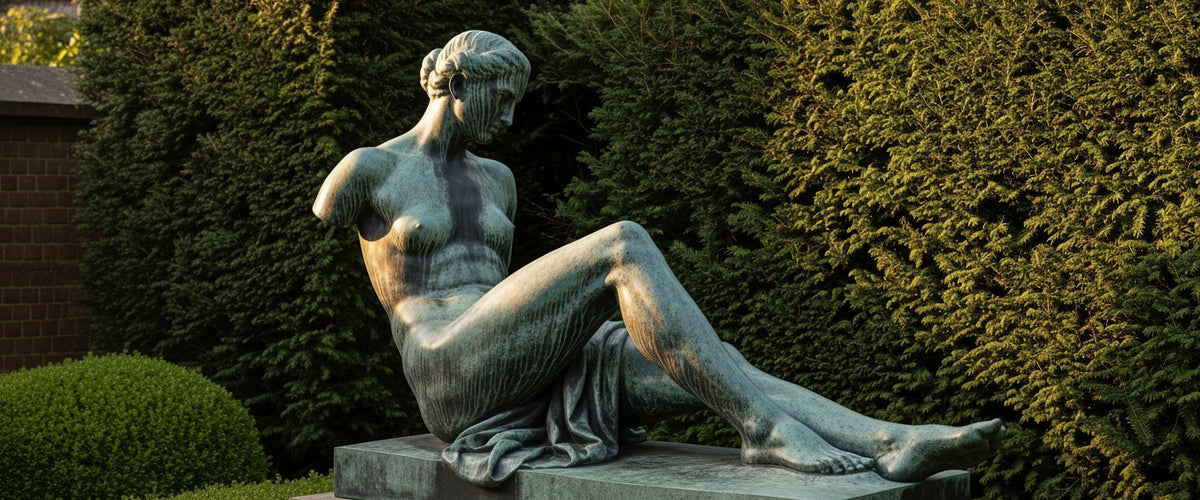

The hardest part of private sculpture commissions is rarely the carving or the casting. It is deciding where the piece will live, how tall it should read from the kitchen island, and whether the morning sun will flatten it or carve it into something with real presence. Get those calls right and a commissioned sculpture becomes the anchor of a room or garden for decades. Get them wrong and even a beautifully made bronze can sit awkwardly, ignored.
This guide is written from the buyer's seat. It draws on the choices we walk clients through at Giant Sculptures when a client commissions a sculpture for a Napa courtyard, a Tribeca loft, or a Texas ranch entrance. The thinking behind private sculpture commissions is the same whether the brief is a 9 ft (2.7 m) Corten abstract or a life-size figurative bronze in a stairwell.

Key Takeaways Before You Commission a Sculpture
Scale is decided by sightlines, not room size. Where the viewer stands matters more than square footage.
Pedestal height is part of the artwork. A few inches up or down changes how the face, hands, or silhouette read.
Outdoor commissions need a backdrop plan. Sky, hedge, or wall: each one rewrites the sculpture.
Material follows climate and use. Bronze, stainless steel, Corten, and stone each behave differently over 20 years.
Budget depends on scale, material, engineering, finishing, and installation. Ask for a tailored quote rather than relying on rough ranges.
What Private Sculpture Commissions Actually Look Like in Real Homes
A private sculpture commission is a one-off piece made for a specific client, site, and brief. It is not a stock edition pulled off a shelf. The process usually moves from concept sketches to a scaled maquette, then to full-size fabrication in the chosen material, then to crating, shipping, and on-site installation. Most commissioning sculptures projects take several months from sign-off to delivery; large bronzes or stone carvings can take longer.
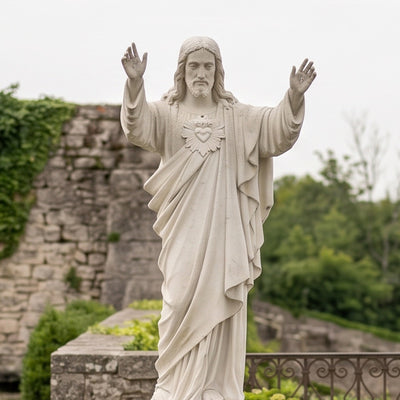
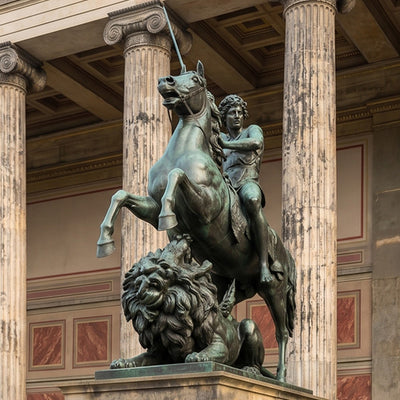
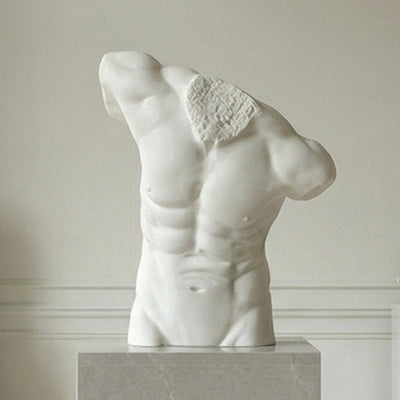
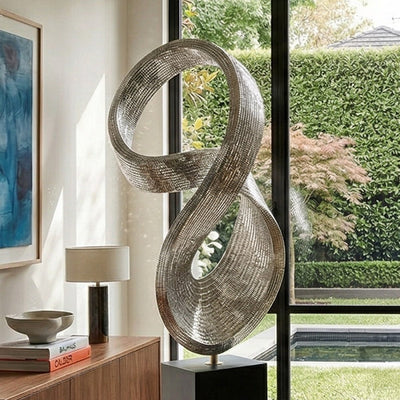
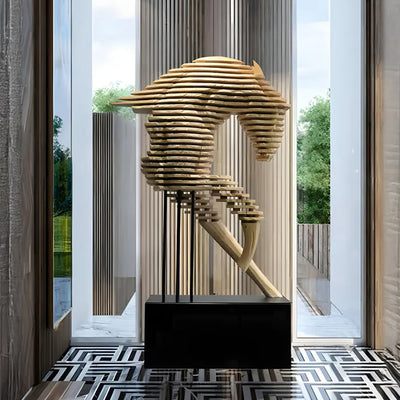
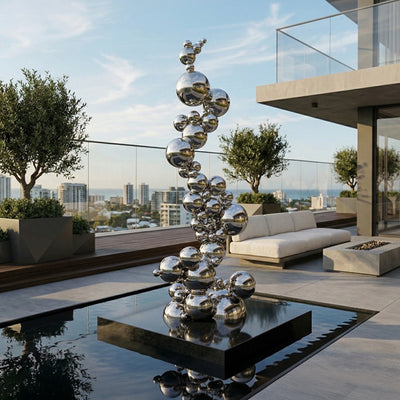
The private sculpture commissions we ship into homes tend to fall into a handful of placements. A figurative bronze in a double-height entry hall, sized so its head sits roughly at the eye line of someone descending the stairs. A polished stainless steel abstract on a pool terrace, oriented so the late sun catches one curve. A Corten steel form at the end of a long lawn, scaled to read from the main living room window 120 ft (37 m) away. A carved marble bust on a library plinth, positioned where a reading chair naturally faces. Each of these starts with the same question: where will the viewer actually stand?
Scale, Sightlines, and Pedestal Height
Scale is the single most common thing clients underestimate on a sculpture commission. A 5 ft (1.5 m) figure looks generous on a studio floor and modest in a 20 ft (6 m) garden. Outdoors, the sky eats mass. As a working rule we use in the studio, a freestanding outdoor piece often needs to be 25 to 40 percent taller than the client first imagines once it is set against open lawn or sky.
Sightlines decide the rest. Walk the route a guest takes from the front door, through the hall, into the main living space, and out to the garden. Mark every place the eye lands. The strongest commissioned sculptures sit on one of those natural stopping points, ideally at the end of a longer view. A piece tucked behind a sofa or off-axis from the main door is doing a fraction of the work it could.
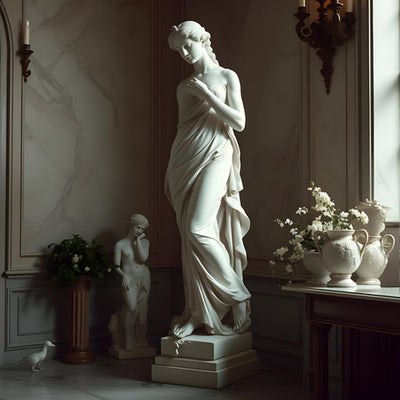
Pedestal height is the lever most buyers forget on a private sculpture commission. A figurative bronze with its face at 5 ft 6 in (1.68 m) feels companionable; the same piece lifted to 7 ft (2.1 m) becomes monumental and slightly distant. Neither is wrong, but they are different artworks. For a bust or head study, we usually aim for the subject's eyes to land within a few inches of the viewer's natural eye line when standing. For full figures, we drop the base so the contrapposto and gesture read at human scale.
Indoor Versus Outdoor: When Each Placement Wins
For wider placement ideas, Sculpture Of Chief Crazy Horse: From Tabletop Bronze to Monument is useful companion reading before finalizing the setting and sightlines.
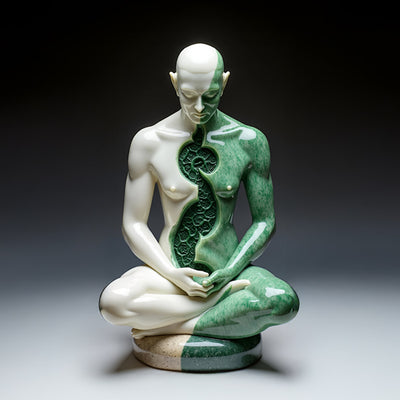
Indoor private sculpture commissions reward intimacy and detail. Marble veining, fine bronze patination, the tool marks on a carved hand: all of these need close viewing distance and controlled light. Stairwells, library corners, double-height entries, and the wall opposite a long dining table are the placements that consistently work. Our marble sculptures tend to live in these rooms because the material asks to be seen from 6 to 10 ft (1.8 to 3 m) away.
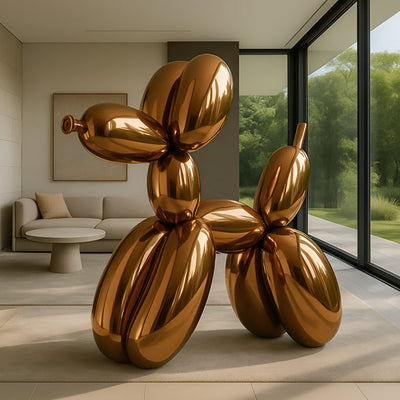
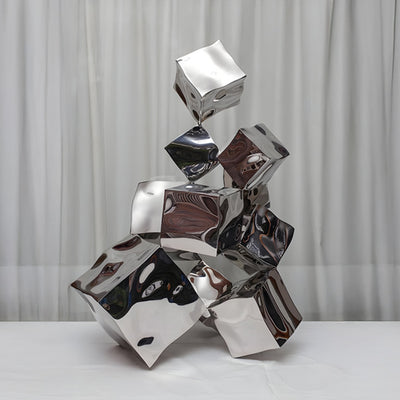
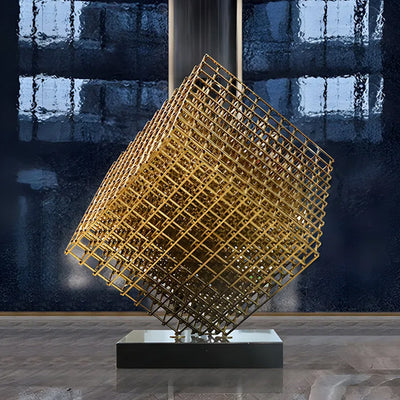
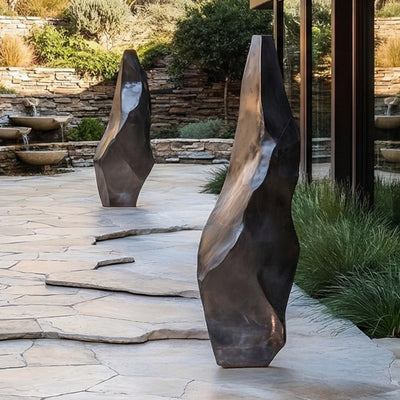
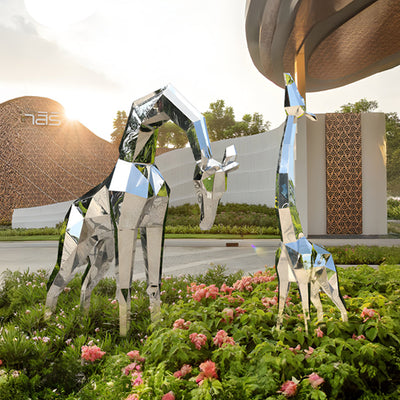
Outdoor private sculpture commissions trade detail for silhouette. From 50 ft (15 m) across a lawn, a viewer reads outline, mass, and how light moves across the surface. That is why stainless steel sculptures and Corten forms dominate the large garden briefs we take on. A mirror-polished stainless piece picks up sky and planting and changes through the day; Corten settles into a warm rust patina that reads beautifully against green or gray stone. Getty Conservation Institute guidance on outdoor sculpture is worth reading before committing to any material that will live with weather year-round.
The honest answer to indoor versus outdoor is often both. Several recent private sculpture commissions have placed a smaller figurative bronze inside, echoed by a larger abstract in the same material outside, so the eye travels from one to the other through a glass wall. That kind of paired commission is something to raise at the brief stage, not bolt on later.
Light, Backdrop, and Contrast
Light is the second invisible decision on any sculpture commission. A bronze positioned where it only ever sees flat overhead noon light will look dull no matter how good the patina. The same piece with raking morning or late afternoon light on it will show every plane. For outdoor work, we ask clients to photograph the proposed spot at 8 a.m., noon, and an hour before sunset across a week. The pattern that emerges usually decides orientation.
Backdrop matters as much as light. A pale stone figure against a white wall disappears; against a deep gray-green hedge or a charcoal plaster wall it gains depth. A polished stainless abstract in front of a busy planting scheme becomes visual noise; the same piece against a clipped yew hedge reads cleanly. When we plan a private sculpture commission, we ask for photos of the backdrop before we finalize material and finish, because the two decisions are linked.
Contrast also applies to texture. A highly polished surface next to rough stone paving creates tension that holds the eye. A matte patinated bronze on a smooth concrete plinth can feel inert. These are the calls a commissioning sculptor and the client make together once the maquette is in front of them.
Common Mistakes We See With Private Sculpture Commissions
A few patterns repeat often enough across private sculpture commissions to be worth naming.
Buying for the empty room, not the furnished one. A piece sized for a bare entrance hall vanishes once the console table, mirror, and lamps arrive. Plan with the full furniture layout in mind.
Ignoring the approach view. Garden sculptures are often briefed from the house window, then installed facing the wrong way for guests walking up the drive. Decide which view is primary.
Under-engineering the base. Large outdoor pieces need proper footings, not just a paver. We specify foundations as part of the commission, and it is worth budgeting for them from day one.
Choosing material on looks alone. A carved limestone figure that suits a dry California courtyard may suffer in a freeze-thaw climate. Match material to site, not just to taste.
Skipping the maquette stage. A scaled model, even a simple one, prevents expensive surprises. We rarely move to full fabrication on a commission art sculpture project without one.
Forgetting maintenance access. A bronze tucked into dense planting is hard to wax. Leave working room around outdoor pieces.
How the Commissioning Process Works at Giant Sculptures
For buyers new to commissioning sculptures, the sequence is straightforward. A first conversation about subject, scale, material, and site. Concept sketches or reference images. A scaled maquette for figurative or complex abstract work. Material samples and finish tests where relevant. Fabrication, which is where the months go. Crating, shipping, and installation, often coordinated with the client's landscape designer or architect.
Cost on a custom sculpture commission depends on scale, material, engineering complexity, finish, edition status, crating, and installation. A life-size bronze figure and a 12 ft (3.7 m) stainless steel abstract sit in very different places on the budget, and within each category the spread is wide. We give tailored quotes once the brief is specific enough to price honestly, rather than rough numbers that mislead. If you are at the early stage of planning a sculpture commission, browsing our bronze sculptures for scale and pose references is a useful way to sharpen the brief before that first call.
A Short Pre-Commission Checklist
Photograph the proposed site at three times of day across a week.
Mark the primary viewer position and the primary approach view.
Measure the longest sightline the piece will sit on.
Note the backdrop, both color and texture.
Confirm climate factors: freeze-thaw, salt air, irrigation overspray, UV exposure.
Decide whether the private sculpture commission is a solo statement or part of an indoor/outdoor pairing.
Build maquette approval and foundation work into the timeline from the start.
Private sculpture commissions are long conversations, not transactions. The buyers who end up happiest a decade later are the ones who treated placement as part of the artwork, not an afterthought once the crate arrived.