























































































Most people who call us about a custom sculpture commission start with a problem, not a picture. A courtyard in Austin that swallows anything under nine feet. A lobby wall in Manhattan that needs a focal point but no more furniture. A garden in the Hamptons where a stock piece would look apologetic. A custom sculpture commission is what happens when the right object does not exist yet, so you have it made.
That is a different exercise from browsing a catalog, and it rewards buyers who make a few decisions early. Here is how a custom sculpture commission runs, where the budget actually goes, and what collectors tell us after they have lived with a piece for a year or two.
Early fabrication of a bespoke bronze piece in the studio.

Key Takeaways for a Custom Sculpture Commission
Best for: specific sites, exact scale needs, a subject or form you cannot find off the shelf, or a piece meant to outlive its owner.
Material drives everything: bronze, stainless steel, Corten, stone and marble each behave differently outdoors and price differently to make.
Scale is a site decision, not a taste decision. The room or garden sets the floor for how big it needs to be.
Budget depends on material, scale, complexity, engineering, finishing and installation. Ask for a tailored quote rather than guessing from a stock price.
Lead time is real. Fabrication, patina and shipping take planning, especially for large-scale work going overseas.

What a Custom Sculpture Commission Means, and Who It Suits
A custom sculpture commission is designed and built to your brief rather than picked from existing stock. Sometimes that is a fresh design from a blank sheet. More often it is a variation: an existing form scaled up, re-posed, re-finished, or reworked in a different material to suit a particular setting.
A sculpture commission suits a few buyer types especially well. Collectors who want something singular. Architects and interior designers specifying to a plan, where a stock piece is either the wrong height or the wrong weight for the structure beneath it. Landscape designers building a garden around a single anchor. And venue owners, from hotels to wineries, who want a signature piece guests remember and photograph.
If your space is flexible and your taste is broad, a stock sculpture is often the smarter buy. Commission bespoke work when the constraints are firm: an exact height, a specific sightline, a subject that carries personal or brand meaning, or a load and wind rating that a generic piece will not meet.
Materials, Finishes and Scale Decisions
The material conversation shapes cost, longevity and mood more than any other, so we have it first in any custom sculpture commission.
Bronze is the traditional choice for figurative and organic work, and for good reason. It holds fine detail, ages with dignity, and a well-applied patina can be tuned warm or dark to suit the setting. The Getty's conservation notes on outdoor bronze are a useful primer on how patinas and protective coatings behave over decades (getty.edu). Bronze is a serious investment to cast, but it is also the material most likely to still look right decades from now.
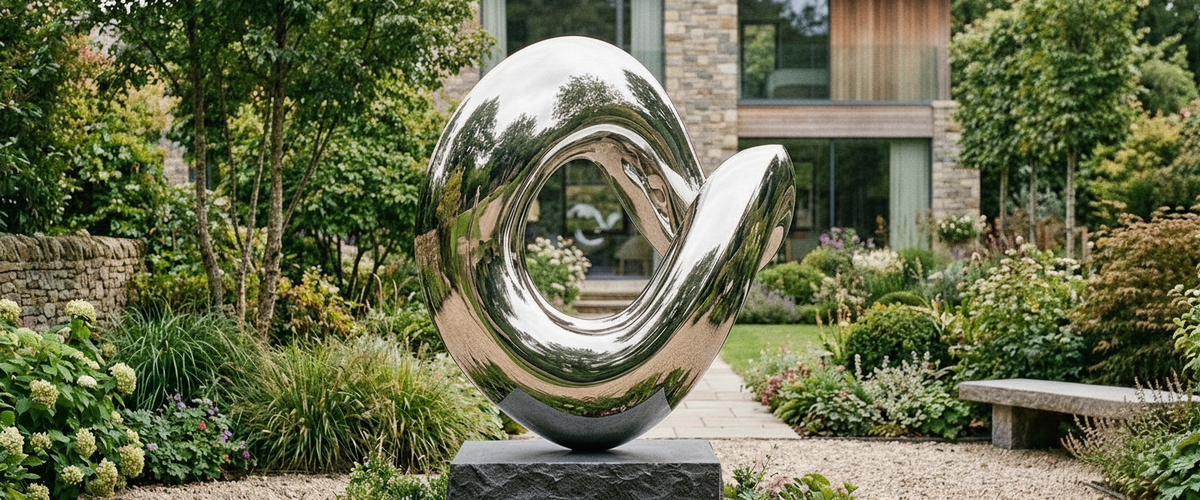
Stainless steel reads modern and reflective, and it thrives in contemporary architecture and coastal sites where salt air is a factor. Marine-grade 316 stainless resists corrosion far better than 304, which matters within reach of the ocean. Polished, brushed and satin finishes each throw light differently, so the finish is a design decision, not an afterthought.
Corten weathering steel gives you that deep russet skin that suits Napa vineyards and desert modern homes. It forms a stable oxide layer that protects the steel beneath, though runoff staining on pale paving is worth planning around. Stone and marble bring weight and permanence to classical and abstract forms alike, with the caveat that some marbles are more weather-sensitive than buyers expect.
A polished stainless piece sited to catch morning and evening light.
Scale is where a custom sculpture commission most often goes wrong for first-time buyers, and it goes wrong in the same direction: too small. A piece that looks large in a studio can shrink to nothing in a double-height lobby or an open lawn. As a rough guide, an outdoor sculpture needs to read from the primary viewing distance, so a garden seen from a terrace fifty feet (about 15 m) away wants real height and mass to hold that space. Our team can mock up scale against your site photographs before anything is committed, which saves the most expensive mistake in the whole process.
Where to Place a Bespoke Piece for Real Impact
For wider placement ideas, 3D Wall Art Panels: How to Choose, Place, and Commission Them is useful companion reading before finalising the setting and sightlines.
The strongest placements give a piece one job and a clear sightline. A single sculpture at the end of an axis, framed by a doorway, a path or a run of hedging, will always out-perform three good pieces scattered without hierarchy.
Indoors, think about the approach. A lobby piece should be visible on entry and reward a second look up close. Reflective stainless works hard in glass-heavy interiors because it picks up and redistributes light through the day. If you are choosing between a figurative and an abstract form for a commercial space, our abstract sculptures collection is a good place to see how geometry and negative space behave at scale before you brief a bespoke sculpture.
Outdoors, work with the sun. A piece that catches low morning or evening light will look alive twice a day. Water nearby doubles the effect through reflection. For gardens, a large figurative or animal piece can anchor a lawn where a fountain would be too fussy; buyers building around wildlife themes often start by browsing our animal sculptures to settle on subject and pose before commissioning a scaled garden sculpture. Whatever the setting, plan the foundation early. Large pieces need a proper base and, outdoors, engineering for wind load; this is not something to improvise on install day.
Budget, Commissioning and Delivery
The honest answer on cost is that a custom sculpture commission is priced from the work involved, not from a shelf tag. Material, finished size, structural complexity, the finishing process (casting and patina versus fabrication and polishing), foundation engineering and delivery all move the number. A tall polished stainless form with an internal armature is a different proposition from a solid stone carving of the same height. The right move is to send us the brief and site details and get a tailored quote rather than anchor on a stock price.
A custom sculpture commission itself runs in stages. A design conversation and reference gathering. Concept sketches or a maquette. Sign-off on material, finish and scale. Fabrication or casting. Finishing and patina. Then crating, shipping and installation. We ship worldwide, and for large-scale sculpture going to the US from our UK studio, sea freight and customs planning are part of the timeline, not an afterthought. Build in lead time; rushing patina or a foundation pour is how good projects pick up avoidable flaws.
A Short Commissioning Checklist
Confirm the exact site: height clearance, viewing distances, floor or ground load, and access for delivery.
Decide indoor or outdoor, then let that steer material and finish.
Set the scale against the space, not against the studio floor.
Agree a finish sample or patina reference in writing before fabrication.
Plan the base and, outdoors, any wind and drainage engineering.
Ask about crating, freight, customs and install so the full delivered cost is clear.
What Collectors Say About Commissioning Custom Sculptures
The consistent theme in what collectors tell us about a custom sculpture commission is that the piece ends up meaning more than a bought object, because they were part of shaping it. Several have said the maquette stage was the moment it became real: seeing a small version in hand made the scale decision obvious in a way that photographs never did.
The most common regret we hear comes from people describing pieces they bought elsewhere years earlier, usually the same complaint. They wish they had gone bigger. Once a large piece is in place and correctly lit, buyers rarely say it is too much; they say it settled the whole space. That is the single most useful thing prospective commissioners can take from other collectors before starting their own sculpture commission.
How Giant Sculptures Handles Bespoke Projects
Giant Sculptures works as a bespoke sculpture supplier specialising in large-scale, durable work. We handle each custom sculpture commission end to end: brief, design, material selection, fabrication in bronze, stainless steel, Corten, stone and engineered metalwork, finishing, and worldwide delivery. Because large statement pieces are our core, the practical questions (weight, foundations, freight, install access) are part of the first conversation, not a surprise at the end.
If you are weighing a custom sculpture commission against an existing piece, start by browsing the range to calibrate scale and material, then send us the site. We would rather advise you into the right decision, stock or bespoke, than sell you the nearest thing to hand.