





































































































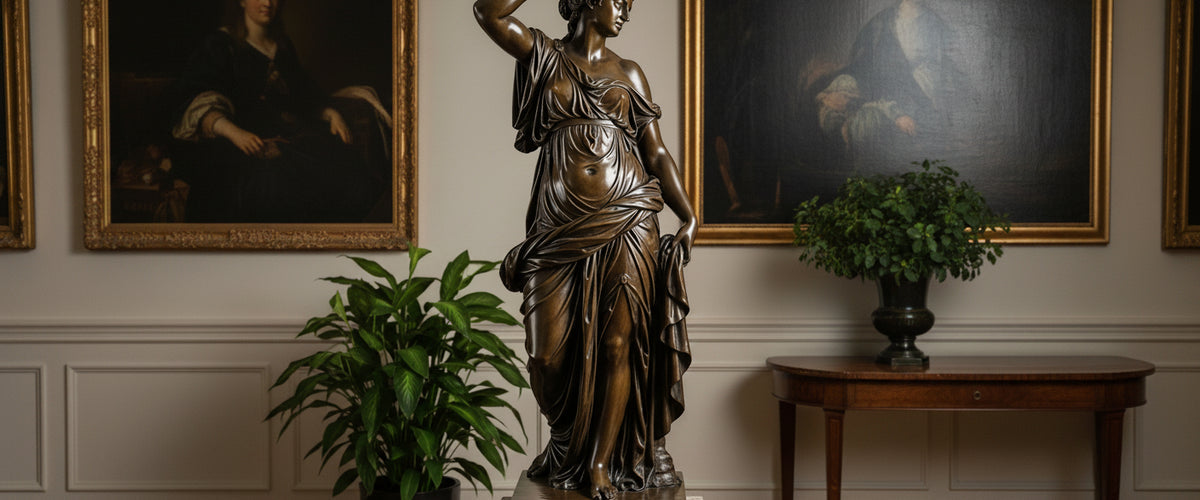

A bronze sculpture is meant to outlive you. Get the care right and it will. Get it wrong, and within a few seasons you can watch a five-figure commission turn streaky, blotchy, or chalk-white where the patina used to sing. Bronze sculpture maintenance is not difficult, but it is specific, and most of the problems we see at the studio come from well-meaning owners using the wrong products or the wrong intervals.
This guide on bronze sculpture maintenance is written for buyers who already own a bronze, or are about to commission one, and want a straight answer on how to look after it. Whether your piece lives in a Napa courtyard, a Manhattan penthouse, or a Hamptons garden facing the Atlantic, the principles are the same. The salt, sun, and sprinkler patterns are what change.

Key Takeaways
Indoor bronze sculpture maintenance needs a soft dusting routine and a wax refresh every 12 to 24 months.
Outdoor bronzes need washing, drying, and rewaxing once or twice a year, more often near coastlines.
Never use acidic cleaners, vinegar, abrasive pads, or pressure washers on patinated bronze.
Green or white powdery spots are active corrosion ("bronze disease") and need prompt attention.
For monumental or heritage pieces, bring in a conservator rather than experimenting.
Routine waxing is the heart of long-term bronze care.

What Bronze Sculpture Maintenance Actually Means
Bronze sculpture maintenance is not the same as restoration. The goal is to protect the patina (the colored surface layer that gives the metal its character) and stop moisture, chlorides, and pollutants from reaching the alloy underneath. A well-cared-for piece develops gracefully. A neglected one corrodes from the surface in.
Patinas are chemically induced finishes applied at the foundry. Dark brown, liver, verdigris green, golden, and the matt contemporary tones found on pieces such as Flame III Matt Bronze Abstract Steel Sculpture - 130cm are all the result of controlled chemistry and heat. Aggressive cleaning strips that work back to raw metal. Once it is gone, only a foundry or conservator can rebuild it.
For collectors who want a low-effort piece, indoor bronze sculpture maintenance is far more forgiving. Outdoor bronze sculpture maintenance is where the discipline matters, because the weather is doing chemistry to your sculpture whether you are paying attention or not.

Indoor Bronze Care: The Light-Touch Routine
Indoor bronze sculpture maintenance in a climate-controlled home is the easy case. Dust the piece weekly with a clean, dry microfiber cloth or a soft natural-bristle brush. Pay attention to undercuts, drapery folds, and the negative space around figures, where dust settles and traps humidity.
Once or twice a year, give the piece a light wipe with a barely damp cloth using distilled water only. Dry it immediately with a second soft cloth. Then apply a thin coat of microcrystalline wax (Renaissance Wax is the conservator's standard, used by institutions including the British Museum) with a soft cloth, working in small sections, and buff to a low sheen with a clean cloth.
Do not use furniture polish, silicone sprays, brass cleaners, or anything labeled "metal polish." These are designed for unpatinated brass and will eat through a patina fast. On textured figurative pieces, where surface relief holds dust in every recess, careful brushwork beats wet cleaning every time; a bust like the Bronze Textured Male Bust Resin Head Sculpture - 52cm is a good example of a finish that rewards a soft brush over a damp cloth.

Outdoor Bronze Sculpture Maintenance
Outside, your sculpture is dealing with rain, UV, pollen, bird droppings, irrigation overspray, lawn chemicals, and (in coastal climates) salt aerosols. Each of these wants to react with the metal. Your job in outdoor bronze sculpture maintenance is to remove them on a schedule before they do.
An annual wash and dry is step one for any garden bronze.
The Annual Wash
Once a year in spring, ideally on an overcast day so the surface stays cool, wash the sculpture top to bottom with clean water and a soft brush. A long-handled natural-bristle brush helps on tall outdoor work; on a monumental piece such as the Monumental Modern Abstract Arch Bronze Sculpture - 370cm at over 12 ft, the upper sections are simply not reachable by hand and need to be planned around. If the surface is greasy or heavily soiled, add a few drops of pH-neutral soap (the kind sold for handwashing wool is ideal). Rinse thoroughly. Avoid pressure washers; the force will drive water into seams and strip wax.
Drying Matters More Than Washing
Once washed, dry the piece completely. Compressed air on a low setting helps for tight crevices. Any standing water that sits in a fold overnight will leave a mark.
Rewaxing
Apply hot wax in summer when the metal is warm to the touch (around 75 to 95°F, or 24 to 35°C). The warm surface helps the wax flow into pores. Use microcrystalline wax, work small areas at a time, and buff with a clean cloth. In benign inland climates, one coat a year is fine. Coastal sites need two. The Smithsonian's conservation guidance on outdoor bronze sculpture maintenance recommends a similar regime, with extra attention to horizontal surfaces where water pools.
Mid-Season Check
Walk around your piece in late summer. Look for green streaks running from rivets or seams, white powdery spots, or any area where the wax has burned off and the surface looks dull. These are the early warning signs that bronze sculpture maintenance is overdue.

Reading the Warning Signs
Three problems come up repeatedly in bronze sculpture maintenance:
Streaking. Vertical green or black runs, usually from rainwater carrying corrosion products down the figure. Cosmetic, but tells you the wax has failed in that area.
Bronze disease. Bright, light-green powdery spots that look almost fuzzy. This is active chloride corrosion and it will eat into the metal if ignored. The American Institute for Conservation has clear technical notes on identifying and stabilizing it.
White bloom. A dull whitish haze, often from hard-water sprinklers hitting the bronze repeatedly. Move the sprinkler. Then clean and rewax.
If any of these appear on a significant piece, stop and call a conservator or your foundry. Home remedies from gardening forums are how good bronzes get ruined.

Materials, Finishes, and Why Scale Changes the Job
Solid cast bronze, hollow lost-wax cast bronze, and bronze-resin composites all behave differently, and each shifts the bronze sculpture maintenance routine. A solid cast piece can take more vigorous cleaning than a resin-bronze. Mixed-media works are the trickiest case, because each material has its own tolerances; on a piece like the Teal Resin Wave & Bronze Fisherman Sculpture - 120cm, the bronze figure can take a careful wax routine while the cast resin wave wants nothing more than a damp microfiber, since solvents and abrasives that are safe on metal will fog or scratch the resin.
Scale changes the practical reality of bronze sculpture maintenance. A 24 inch (60 cm) tabletop bronze can be lifted into a sink. A life-size figure such as the Life-Size Contemporary Kneeling Archer Bronze Sculpture - 260cm at 8 ft 6 in (260 cm) needs ladders, drop cloths, and a half-day commitment. Monumental work needs scaffolding or a lift. Plan the upkeep into the install: if you cannot reach it safely, you will not clean it.
Placement Decisions That Reduce Maintenance
For wider placement ideas, Garden Sculptures Inspired by Nature: Organic Forms You’ll Love is useful companion reading before finalising the setting and sightlines.
Half of outdoor bronze sculpture maintenance is decided before the piece arrives. A few placement principles save a lot of work later:
Avoid direct irrigation. Reposition sprinkler heads so no spray pattern hits the sculpture.
Keep at least 3 ft (1 m) of clearance from heavy foliage to allow airflow and prevent sap stains.
Set the piece on a plinth or pad that drains; bronze feet sitting in wet mulch will corrode at the base first.
For coastal homes, position with the prevailing salt wind across the work, not slamming directly into the most detailed face.
Account for sun. South-facing pieces in Texas or Arizona heat up to temperatures that can soften wax; you may need to rewax more often.
For garden buyers shortlisting pieces, browsing the bronze garden statues collection by scale first, then by patina, makes the placement conversation easier. Water features need their own thinking; the bronze fountains collection involves continuous water contact, so bronze sculpture maintenance there includes pump care and water chemistry alongside the metal itself.
Budget, Commissioning, and Long-Term Ownership
Owners often ask what bronze sculpture maintenance costs over the life of a piece. Materials are cheap; a tin of microcrystalline wax and a set of brushes will see you through several years. The real cost is time, or a specialist's day rate if you outsource it. For collectors with multiple pieces or a monumental commission, an annual conservation visit is the sensible model.
If you are at the commissioning stage, ask the foundry three questions: what patina chemistry was used, what wax was applied at finishing, and what they recommend for your specific climate. A bronze made for a dry Aspen garden is finished differently from one destined for a Miami waterfront, and the bronze sculpture maintenance schedule should reflect that. Budget for sculpture varies widely with material, scale, engineering, installation, and finishing, so request a tailored quote rather than working from a generic figure.
How Giant Sculptures Supports Long-Term Ownership
We make and ship large bronze and mixed-media work worldwide, and we stay involved after delivery. Every commission leaves the studio with bronze sculpture maintenance notes specific to its patina and finish. For collectors with major outdoor pieces, we can introduce conservators in the US and advise on annual schedules. If a piece needs repatination after years outside, that work happens at the foundry, not in your yard.
Bronze rewards owners who treat it like a long relationship rather than a purchase. A few hours of bronze sculpture maintenance a year, the right wax, and a sensible placement decision are usually all that stands between a sculpture that looks tired in a decade and one that looks better in fifty years than the day it arrived.