






























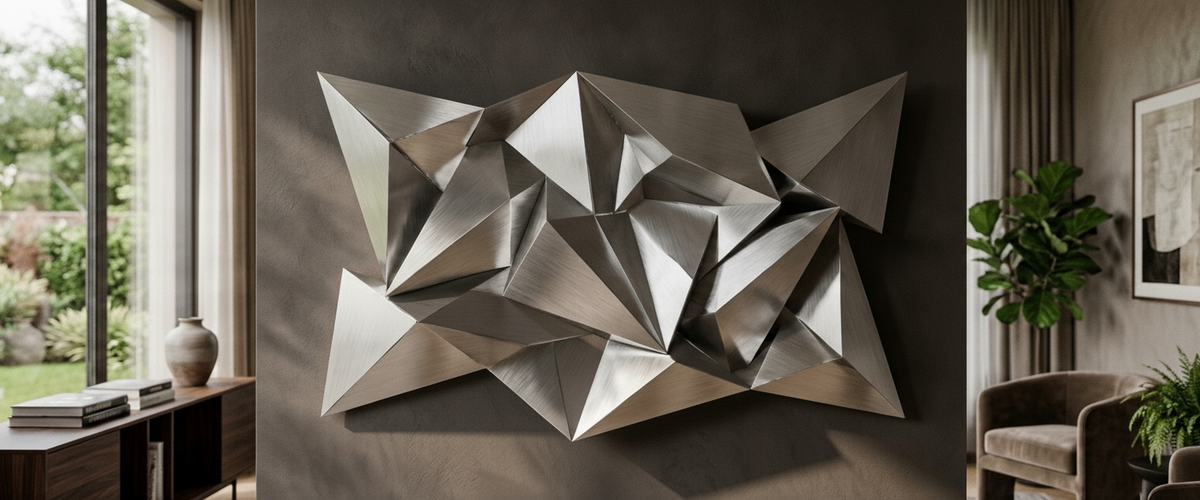

Most metal wall sculptures fail on the wall, not in the workshop. The piece looks sharp in a photo, arrives beautifully finished, then hangs flat and lifeless because nobody thought about how it would read from across the room or how the afternoon light would rake across it. Getting metal wall sculptures right is a set of decisions made before a single sheet of steel is cut, and it is where a specialist studio earns its keep.
Looking for the full range in this category? Browse our Metal Sculptures collection for every available finish, size, and configuration of metal wall sculptures.
At Giant Sculptures we build large-scale and bespoke work for homes and commercial spaces, so a wall piece is never treated as a flat picture. It is an object with depth, shadow, weight, and a fixing plan. Here is how we think through a commission for metal wall sculptures, and what you should be asking before you commit.

Key Takeaways
- Read distance drives everything: a design that sings at 10 feet (3 m) can collapse at 30 feet (9 m), and vice versa.
- Material choice sets the mood and the maintenance: bronze, stainless steel, and Corten each behave differently indoors and out.
- Geometric designs live or die on depth and shadow, not just the pattern.
- A proper process runs maquette, then sample, then fabrication, then install; skipping steps is where problems hide.
- Budget for metal wall sculptures depends on material, scale, complexity, engineering, and installation, so ask for a tailored quote rather than trusting a flat rate.

What Sculptors Actually Think About First
Before we talk finish or pattern, we ask where the piece lives and how people move past it. A wall-mounted metal work in a stairwell is seen at an angle, in motion, and mostly in raking light. One above a fireplace in a great room is viewed head-on, from a fixed seating line, under warm interior lighting. Those two briefs produce completely different metal wall sculptures even if the client shows us the same reference image.
Orientation matters more than people expect. On an exterior wall in full sun, the light tracks across the surface all day, so relief depth needs to earn its shadows morning and evening. Indoors, you are usually lighting the piece deliberately, which means we can push finer detail and trust it will be seen.
Then there is the wall itself. Solid masonry, timber stud, or a glass curtain wall each dictate the fixing method and the maximum safe weight. We would rather have that conversation on day one than redesign a piece because the wall cannot carry it.

Craft Decisions That Change the Result and the Price
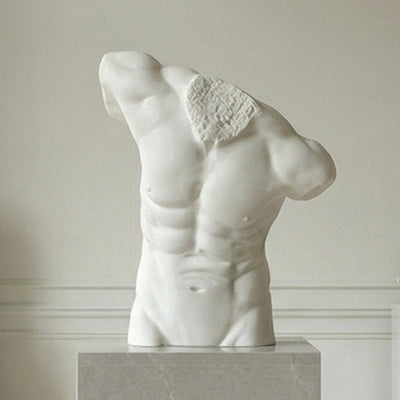
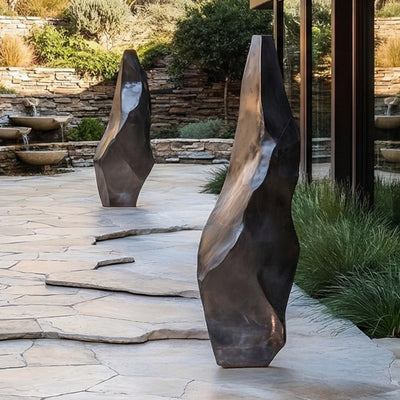
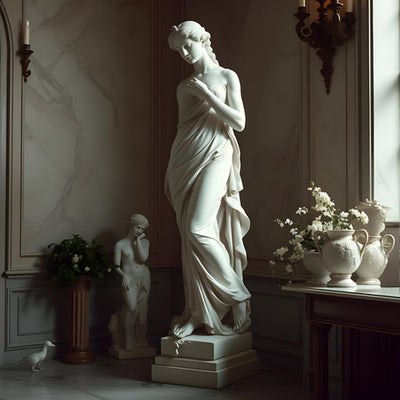
Material is the first fork in the road. Bronze gives warmth, a traditional patina, and a surface that ages gracefully; it suits figurative and classical work. Where a client wants that cast-form warmth on an interior wall, a piece such as the Classical Figural Torso Wall Sconce Bronze Sculpture - 90cm lets the modeling and the play of light do the talking in a way flat steel never will. Stainless steel reads modern and reflective, holds crisp edges, and shrugs off weather. Corten steel develops a stable rust-toned surface that landscape designers love against greenery, and it carries scale beautifully outdoors.
The fabrication method is the second fork, and it changes both look and cost. Metal wall sculptures can be cut and folded from sheet, welded up from multiple planes, cast, or forged. Laser or waterjet cutting gives clean geometry; hand-welded assembly gives you depth and layering you cannot get any other way. More layers and more welds mean more labor, more finishing, and a higher figure on the quote.
Finish is the third. Brushed, mirror-polished, powder-coated, patinated, or left raw to weather all send a different signal and demand different care. The American Institute for Conservation notes that outdoor metals need a maintained protective layer, whether that is wax on bronze or a coating on steel, to slow corrosion over decades (culturalheritage.org). That is not a detail to leave until after install.

Metal Wall Sculptures With Geometric Designs
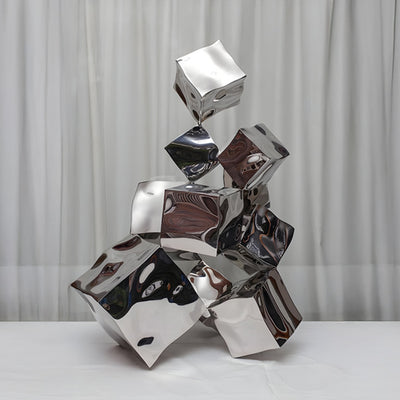
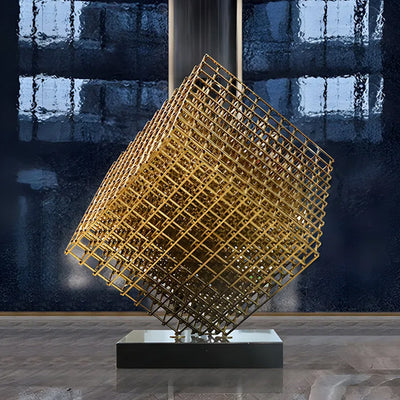
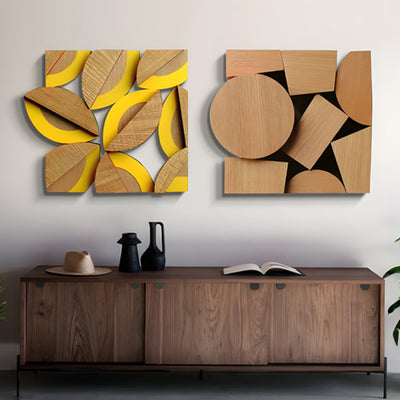
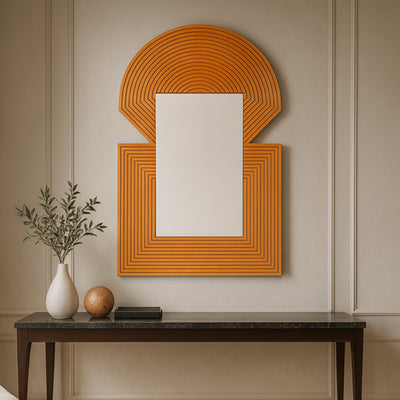
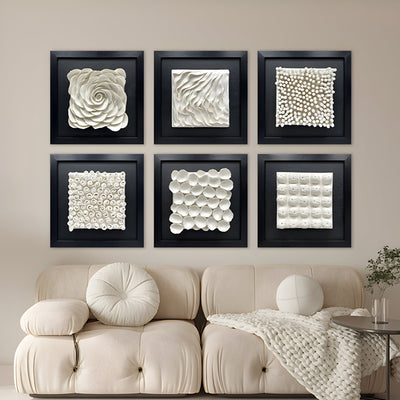
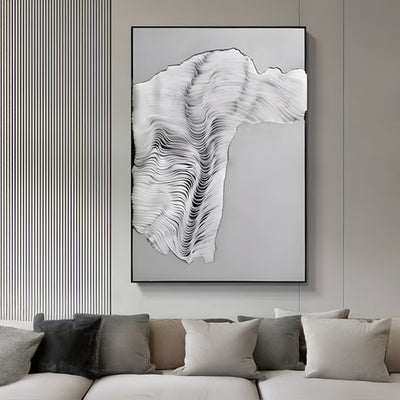
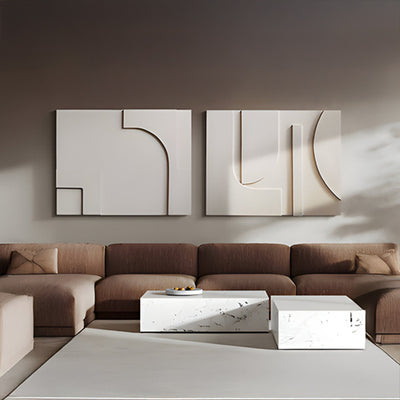
Geometric work is where amateurs and specialists separate fastest. A flat pattern of triangles or hexagons printed on a panel is graphic design, not sculpture. What makes metal wall sculptures with geometric designs actually work is depth: facets that catch light at different angles, planes that step off the wall, edges that throw real shadows as the light moves.
So what is geometric sculpture, properly speaking? It is three-dimensional work built from clean geometric forms, angular planes, faceted surfaces, and repeating modules, rather than organic or figurative shapes. An abstract geometric sculpture leans on rhythm and proportion instead of subject matter. Get the proportion right and a geometric abstract sculpture holds a wall on its own; get it wrong and it reads as busy wallpaper.
To describe metal wall sculptures geometrically, we talk in terms of primitives and relationships: the base forms (cubes, wedges, planes), how they repeat or rotate, the depth of relief off the wall, and the angle of each face relative to the primary light source. That vocabulary is exactly how a maquette gets translated into cutting files and weld maps.
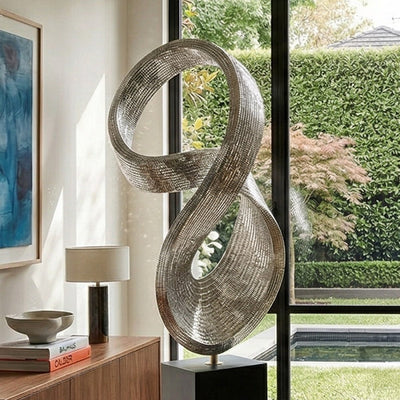
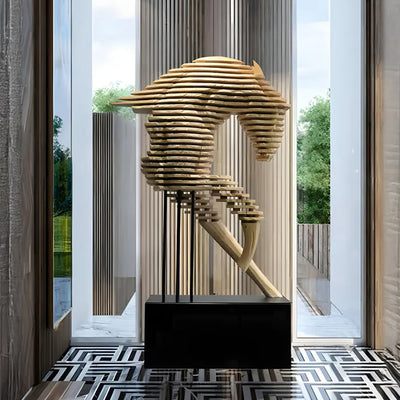
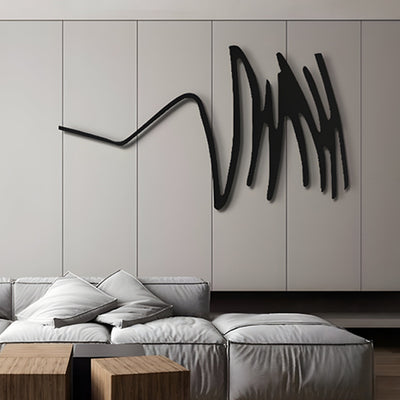
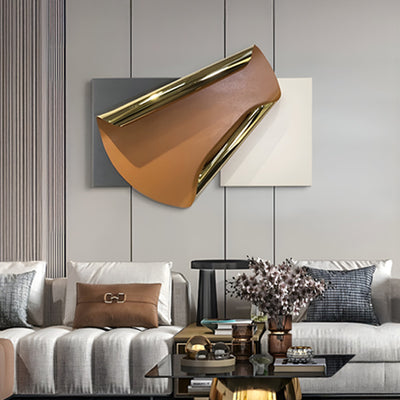
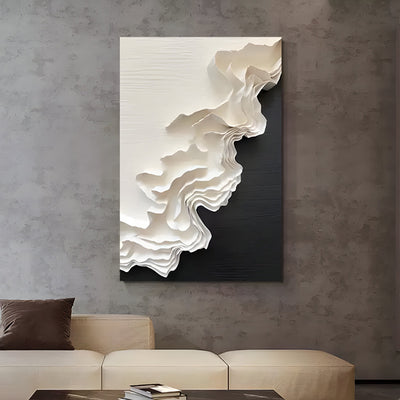
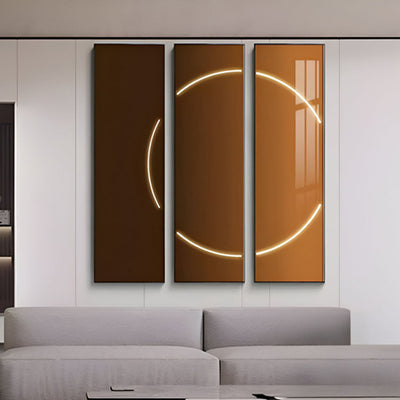
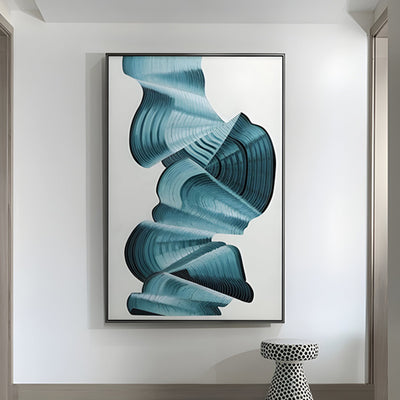
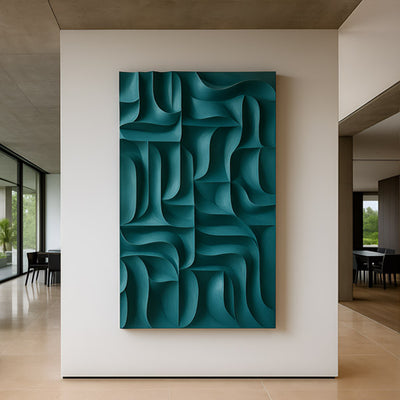
Layered metalwork like the Strata Long Copper Abstract Steel Sculpture puts the principle to work: overlapping planes create a shifting read as you move, so the piece never looks the same twice across a day. Where the setting calls for something more fluid than strictly faceted, a curved form such as the Cyclone Abstract Organic Steel Sculpture is closer to the right design language, letting sweeping planes catch light rather than throw hard-edged shadow.
Why a Piece Reads Right at 10 Feet and Wrong at 30
Scale is not just size. Metal wall sculptures tuned for close viewing pack in fine detail, tight facets, and delicate edges that reward a viewer standing a few feet away. Push that same design onto a double-height lobby wall and the detail dissolves into noise; the eye cannot resolve it from 30 feet (9 m), so the piece looks fussy and weak.
The reverse is just as common. Big bold planes designed for a hotel atrium can look crude and empty in a domestic hallway where you pass within arm's reach. On one stairwell commission the client wanted a design scaled up from a tabletop maquette; on the physical sample we had to almost double the relief depth so the shadows still worked at the real viewing distance. That is the kind of correction you only catch by testing at scale, not on screen.
The practical rule: tell your studio the primary viewing distance and the sight lines before design starts. It changes facet size, relief depth, and often the material of your metal wall sculptures.
Studio Process: Maquette, Sample, Fabrication, Install
A serious commission for metal wall sculptures moves through clear stages, and each one exists to kill a specific risk.
- Maquette. A scaled model, physical or 3D, that proves the composition and proportion before money goes into full-size material. This is where geometry gets locked.
- Sample. A finish sample or a section at full depth, so you approve the real color, texture, and shadow behavior rather than a render.
- Fabrication. Cutting, forming, welding, and finishing the full piece, with the fixing points engineered in from the start.
- Install. Delivery, wall assessment, and mounting to a fixing plan matched to the wall type and the piece's weight.
For buyers curious about method, the classic way to learn geometric form is to build cubic clay sculptures first: block out simple cubes and wedges in clay, cut clean faces, and study how shadow falls on each plane. It teaches the same thinking we use in metal wall sculptures, minus the fabrication cost. When people ask how to make a geometric sculpture at any real scale, the honest answer is that the clay stage or the maquette is where the design is actually made; the metal just executes it.
Honest Red Flags to Raise Before You Commit
- No maquette or sample offered. If a studio wants to go straight to full-size fabrication on a bespoke piece, you are carrying all the risk.
- Vague fixing plan. Ask specifically how it mounts, what the finished weight is in pounds (and kilograms), and what wall type it needs. A heavy relief on plasterboard is a call to a repair contractor waiting to happen.
- No care guidance. Outdoor metal needs a maintenance rhythm. If nobody mentions re-waxing, coating, or inspection, ask why.
- One flat price with no breakdown. Cost for metal wall sculptures tracks material, scale, complexity, engineering, finish, and install. A tailored quote should reflect those; be wary of a single number with no logic behind it.
- Renders only, no physical proof. Screens flatter geometry. Insist on seeing depth and finish in the real material.
Where to Start Your Own Commission
If you are gathering ideas, browse the metal wall art collection to see how different materials and depths behave, and the wider wall art and wall decor range for scale references. Note which of these metal wall sculptures hold your attention from across the room versus close up; that instinct is the single most useful thing to bring to a first conversation with our studio. From there, a maquette turns your reference images into metal wall sculptures actually engineered for your wall, your light, and your viewing distance.
For wider placement ideas, Metal Abstract Wall Art: What Sculptors Weigh Before They Cut a Single Sheet is useful companion reading before finalizing the setting and sightlines for your metal wall sculptures.