






































































































Most people fall for a piece of metal abstract wall art on screen, then hang it and feel let down. The colors were flatter, the depth was gone, and the whole thing looked like a print of the thing they thought they were buying. That gap almost always traces back to decisions made long before fabrication: scale, finish, and how the surface catches light. Get those right and a metal abstract wall art panel can hold a double-height entrance in a Napa home. Get them wrong and it reads like a coaster blown up to five feet.
We build large statement pieces at Giant Sculptures, and the questions we ask a client at the start are the same ones a good sculptor asks themselves. Here is what actually happens before anyone cuts a sheet.
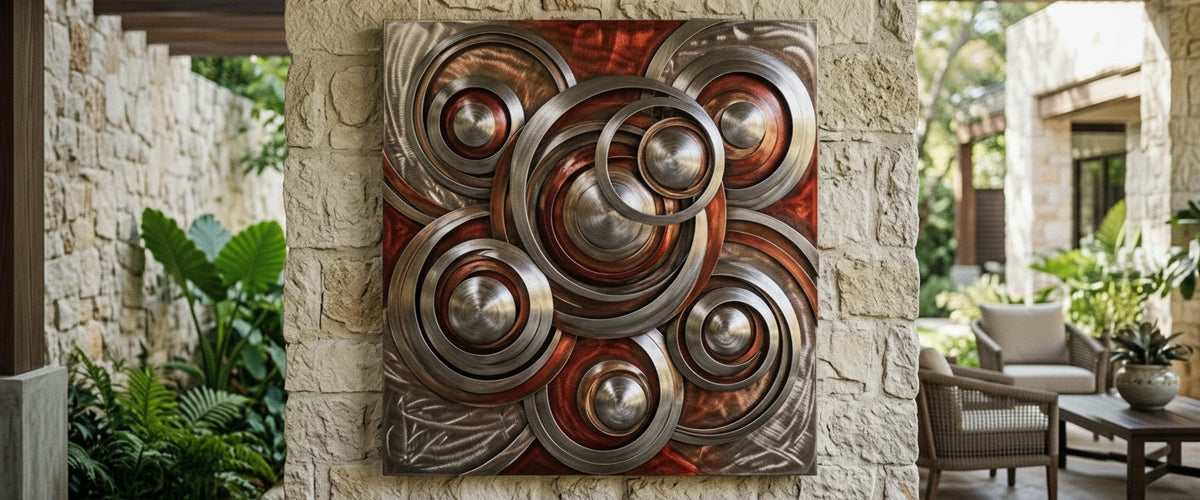
Finishing hours, not the cut, are where a metal abstract wall art panel earns its depth.

Key Takeaways Before You Commission
Viewing distance decides depth. A piece read at 10 feet needs different relief than one read across a 30-foot lobby.
Finish outranks color. Brushed, mirror, patinated, or powder-coated surfaces change how light behaves far more than the paint chip does.
Material drives longevity. Stainless steel, Corten, brass, and aluminum age very differently, especially outdoors.
Weight and fixing matter early. A large multi-layer panel needs the wall and mounting planned before, not after, fabrication.
Budget follows complexity. Size, layers, finishing hours, and install all move the number. Ask for a tailored quote rather than a headline price.

What Sculptors Think About Before Taking On a Commission
The first thing a maker looks at is not the design. It is the wall. Interior or exterior, plaster or concrete, how much light crosses it during the day, and how far back the viewer usually stands. A composition that sings in a gallery with raking light can go dead on a matte north-facing wall with flat overhead downlights.
Then comes intent. A good piece of metal abstract wall art earns its keep by controlling mood and movement rather than telling a literal story, so we ask what the metal wall art has to do in the room. Draw the eye up a stairwell? Soften a hard corporate reception? Give a quiet study a single point of focus? Those answers shape everything downstream, from panel count to whether the metal stays cool and brushed or warms up with a bronze or copper tone.
Scale is the third question, and the one buyers most often underestimate. A wall that looks busy in a photo is usually far larger in person, and a piece of abstract metal wall art sized to a phone screen shrinks visually once it is on a real wall with furniture around it.

Craft Decisions That Change the Result and the Price
Every choice in metal wall abstract art carries a cost in hours, and hours are where the budget lives. A single flat cut panel is one thing. A layered piece with floating standoffs, hand-ground swirl finishes, and a multi-tone patina is another entirely.
Here are the decisions that move both the look and the quote:
Material. Stainless steel holds a mirror or brushed finish and shrugs off weather. Aluminum is lighter for very large indoor spans. Corten is built to rust to a stable, warm skin outdoors. Brass and copper bring genuine warmth but need sealing if you want to hold their tone.
Layering and relief. Flat art reads as graphic. Multi-layer art with standoffs throws real shadows that shift through the day, which is what gives good metal abstract wall art its sense of depth.
Finish. A ground swirl finish scatters light and hides fingerprints. Mirror polish is dramatic but shows every mark. Powder coat gives flat, even color and strong outdoor durability.
Color strategy. A saturated red or teal reads very differently in metal than in paint because the finish underneath keeps moving. Where a room can carry a warm focal accent, a piece like the Eclat Sphere Red Abstract Metal Wall Art works because the red sits over a worked metal surface, so the color has motion rather than sitting flat.
Testing the same metal abstract wall art composition in a cooler register is one of the most useful things you can do before committing to a bespoke palette; the Eclat Sphere Teal Blue Abstract Metal Wall Art shows how far a single design shifts in feel with nothing changed but the tone.
Deep, layered relief is how a panel reads at distance and still rewards a close look.

Why Some Pieces Read Right at 10 Feet and Wrong at 30
This is the mistake we correct most often. A metal abstract wall art design built for close viewing packs fine detail and tight linework. Push that same piece into a 30-foot lobby and the detail dissolves into visual noise; the eye can no longer resolve it, so the composition collapses into a gray smudge.
The reverse fails too. A bold, wide-gesture panel made for a big atrium looks crude and empty when you stand three feet from it in a hallway. Relief depth, line weight, and the size of each element all have to be tuned to the distance the piece will actually be seen from.
We had a client outside Austin who wanted a piece sized for a stair landing but viewed mostly from the entry hall below, roughly 25 feet away and at an angle. The first instinct was a detailed multi-layer panel. What worked was fewer, deeper layers with stronger shadow lines, so the metal abstract wall art stayed legible from the door and still rewarded a closer look on the landing. That is the kind of judgment a maquette resolves before any metal is committed.
The Studio Process: Maquette, Sample, Fabrication, Install
A bespoke commission runs through four stages, and skipping any of them is where projects go sideways.
Maquette. A scaled model or detailed digital layout proves the composition and scale against your actual wall dimensions and viewing distance.
Sample. A finish sample on the real material. This is the step buyers most want to skip and most regret skipping, because a brushed swatch under your own light tells you more than any render.
Fabrication. Cutting, forming, layering, and finishing. Timelines depend on size and complexity, so we build in the finishing hours honestly rather than promising a date we cannot hold.
Install. Fixing method, wall type, and weight distribution planned in advance. Large multi-panel work often ships with a mounting system and a layout guide so the installer is not improvising on a ladder.
Where the wall calls for a defined silhouette rather than an open field of color, a piece of wall art metal abstract in feel, like the Astrid Metallic Abstract Silhouette Wall Art, holds its outline across distance in a way a busy field never will, which matters when a single piece has to anchor a large flat wall.
Honest Red Flags to Ask About Before You Commit
Not every supplier of metal abstract wall art works to the same standard. Before you sign off, ask these questions and listen for a straight answer.
What exact material and gauge? Thin sheet on a large panel can oil-can (ripple) over time. A real answer names the metal and thickness.
How is the finish protected? Ask about lacquer, wax, or clear coat, and how it should be maintained. Brass and copper especially will change without sealing.
Indoor or outdoor rated? Outdoor work needs corrosion-resistant fixings and a finish built for weather. Not every indoor piece survives a Hamptons garden wall. For durable outdoor character, Corten develops a protective oxide layer rather than corroding away, which the USDA Forest Service research on weathering steels and industry data both support.
Do I get a sample? If the answer is no, that is a flag.
How is it mounted? Standoffs, cleats, or a subframe should be specified with the weight in pounds (and kilograms) so your wall is up to it.
How to Approach Making or Commissioning a Piece
If you want to make metal wall art abstract in style yourself, the honest version is that the design is the easy part and the finishing is the craft. Cutting a shape is accessible; controlling a consistent brushed grain across a large panel, welding without warping thin sheet, and sealing a patina so it holds are the skills that take years. For a small experimental piece, that learning curve is part of the fun. For a large statement wall of metal abstract wall art that has to look right for decades, it is usually work for a studio.
Whichever route you take, start from the wall and the viewing distance, choose the material for the environment, and treat the finish as a decision equal to the color. Browse the full metal wall art range to see how scale and finish play out across finished pieces, or the wider abstract art collection if you are still settling on a direction.
For wider placement ideas, Metal Abstract Garden Sculpture: What Sculptors Weigh up Before They Cast a Single Piece is useful companion reading before finalising the setting and sightlines.