

























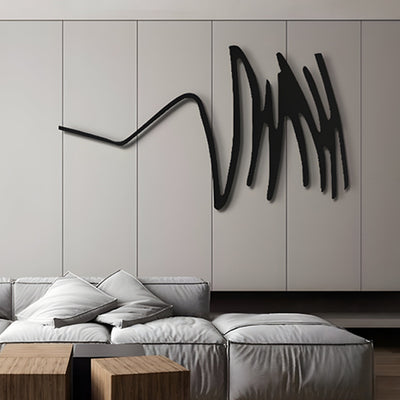

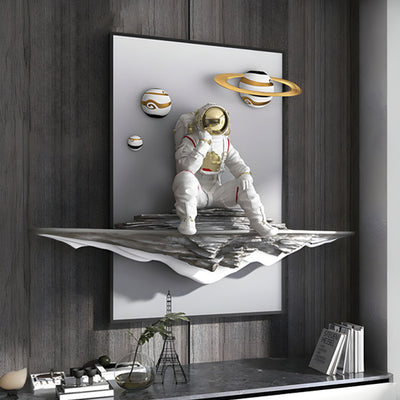

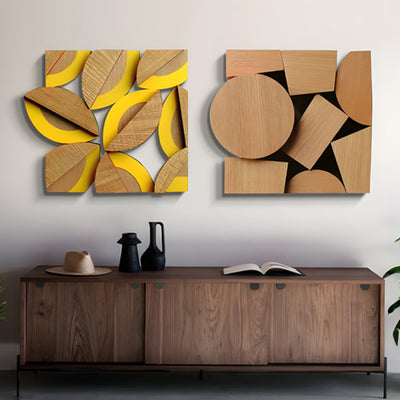
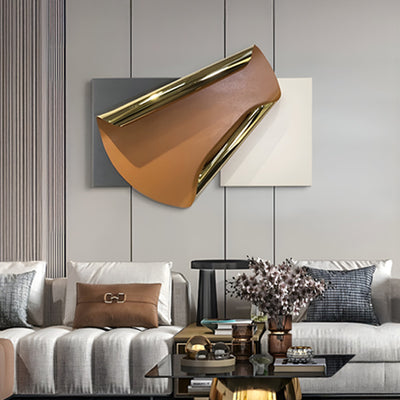
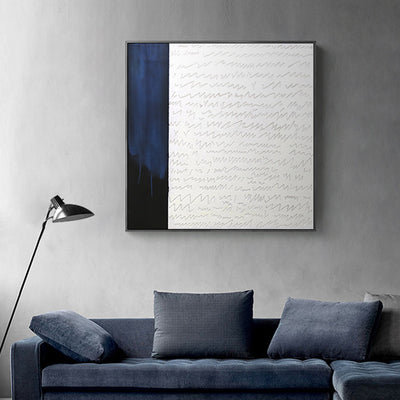
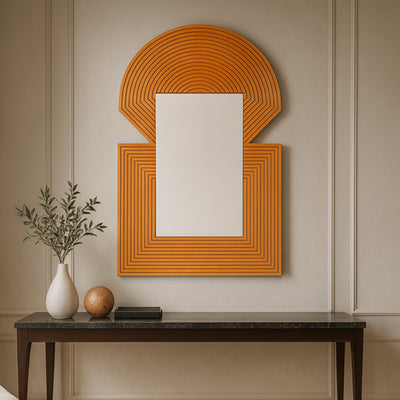
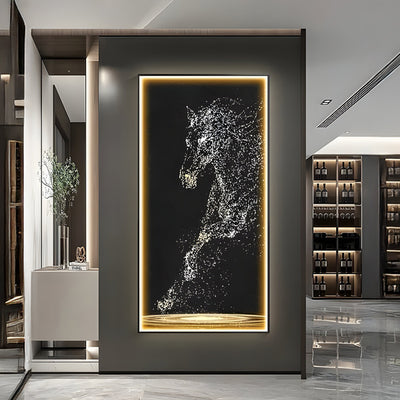
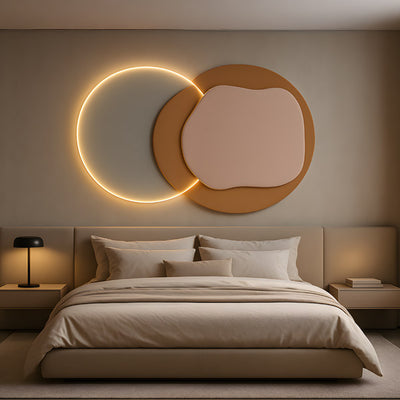
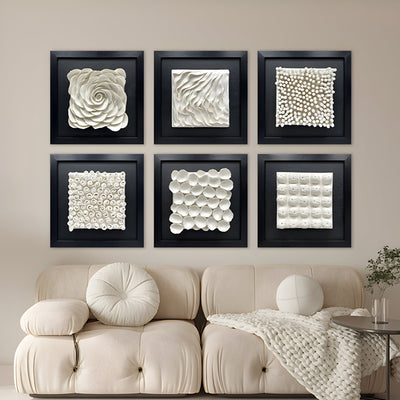
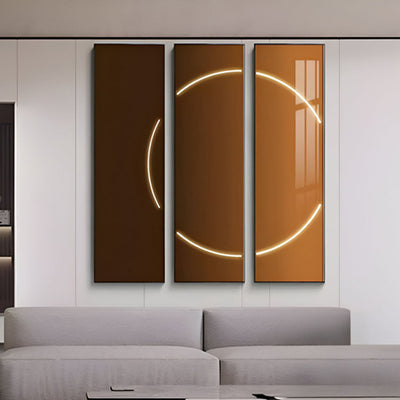
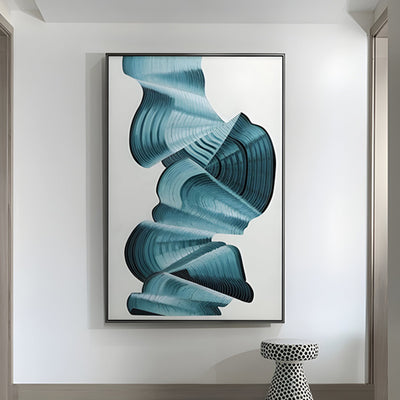
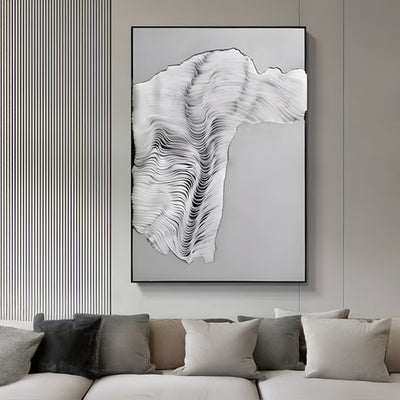
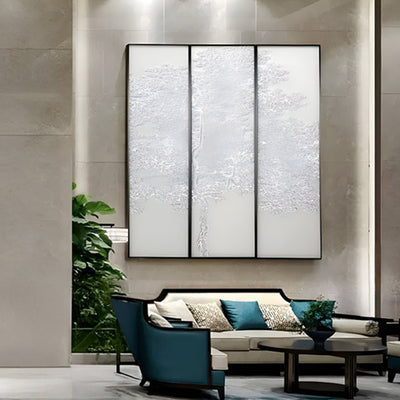
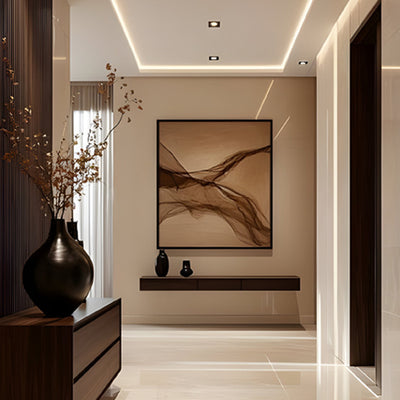
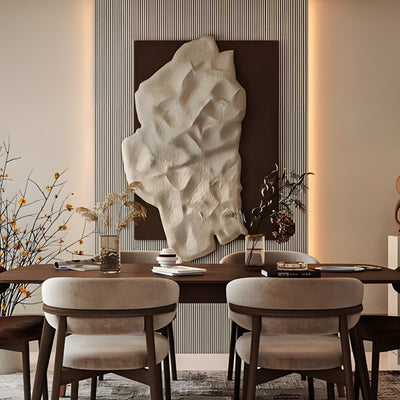


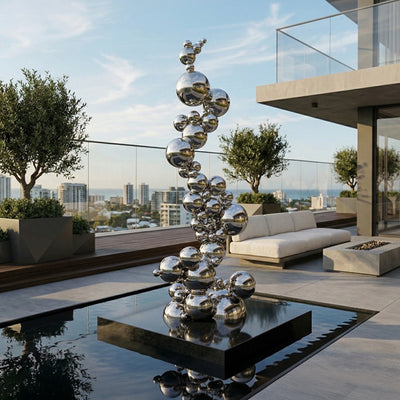







A piece of metal wall art that looks crisp in a 4 inch web thumbnail can disappoint badly once it is bolted to a 20 foot atrium wall. The relationship between metal, scale, light and viewing distance is where most projects quietly go wrong, and it is the first thing a working sculptor thinks about long before any steel gets cut. Buyers tend to start with color and shape. Makers start with how the piece will behave on the wall it is actually going to live on.
This is a look at metal wall art from our side of the studio: what gets decided, why it changes the result, and the questions worth asking before you commit to a commission.
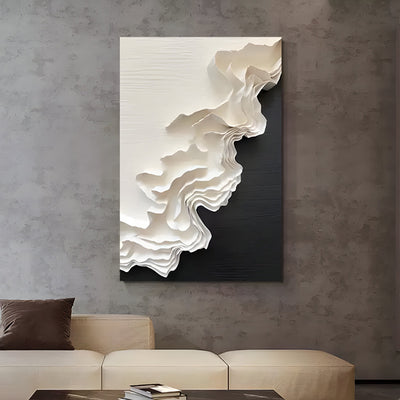
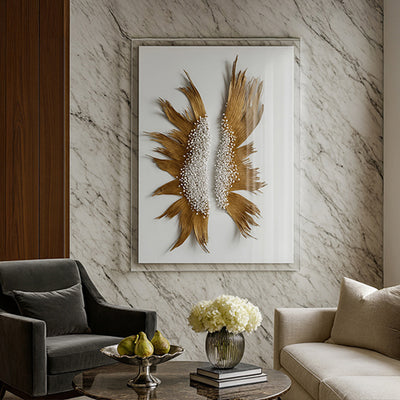
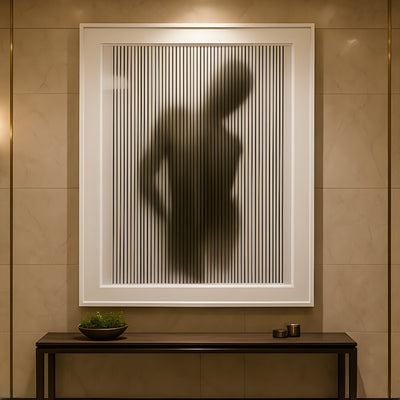
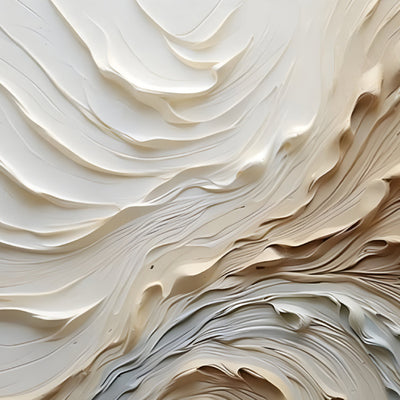
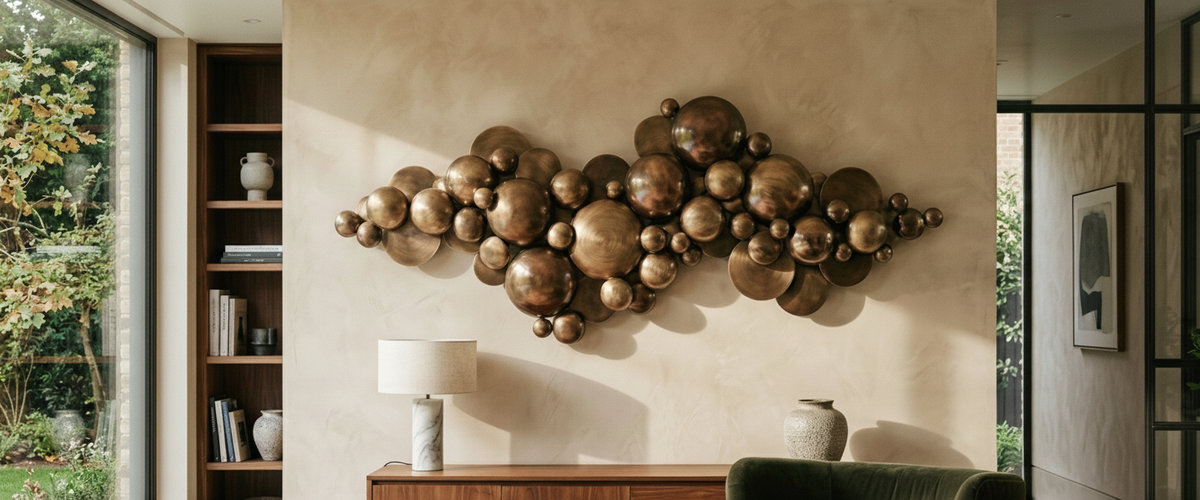
Raking light across a layered panel is what gives metal real depth at distance.

Key Takeaways
Viewing distance drives everything. A design that works at 10 feet can read flat or busy at 30. Depth, layering and relief are how you fix that.
Material is a longevity decision, not just a look. Indoor decor and exterior metal wall art are two different engineering problems.
Scale changes the build, not just the size. Larger pieces need hidden structure, panelization and a real hanging plan.
A good studio shows its work. Maquette, material sample, then fabrication. If a maker skips straight to finished render, ask why.
Budget depends on material, scale, complexity, engineering and install. Ask for a tailored quote rather than a flat price.

What Sculptors Actually Think About Before Taking on a Wall Art Metal Commission
Before we talk finishes, we ask where the piece lives. A sheltered double-height living room is a calm environment. A coastal terrace, with salt air and direct sun, is not. The same wall art metal design might be built in two completely different ways depending on that single answer.
Then comes the wall itself. Drywall over timber studs, a poured concrete feature wall, brick, or an exterior render coat each carry weight differently. We have shipped large pieces to clients who assumed any wall would hold them, only to find the mounting points needed blocking added behind the plaster. Knowing the substrate early saves a frustrating site visit later.
The third question is light. Raking light across a textured surface is what makes metal sing; flat frontal light kills relief and turns a sculptural panel into a sticker. For interiors we ask about windows and fixtures. For outdoor wall art and decor, we ask which way the wall faces, because a south-facing piece reads differently morning to evening than a shaded north wall that stays cool and even all day.

Craft Decisions That Change the Final Result (and the Price)
Most of the cost and character in metal wall art sits in choices the buyer never sees listed.
Material. Mild steel takes color beautifully and is forgiving to work, but it needs a proper coating system if it goes outside. Stainless steel holds a polished or brushed face and resists corrosion, which makes it a strong choice for exterior metal wall art near pools or the coast. Corten weathering steel develops a stable rust-toned patina and suits gardens where you want the metal to feel landed and earthy. Bronze is the long-game material; it ages slowly and gracefully, and it is what we reach for when a client wants a piece their grandchildren will still hang.
Corten, brushed stainless and bronze age very differently, indoors and out.
Gauge and relief. Thin sheet is cheaper and lighter, but it can oilcan, that slight rippling you see when light grazes a large flat panel. Heavier gauge and built-up layers give real shadow and depth. A piece such as the Eclat Sphere Bronze Abstract Metal Wall Art works because the layered spheres throw genuine shadow rather than printed-on highlights, and that dimensionality is exactly what carries across a room.
Finish. Powder coat, automotive lacquer, raw sealed steel, mirror polish and patina all age at different rates and ask for different care. A high-gloss color reads bold indoors and shows fingerprints; a brushed or matte finish hides handling and sits more quietly in a calm interior.
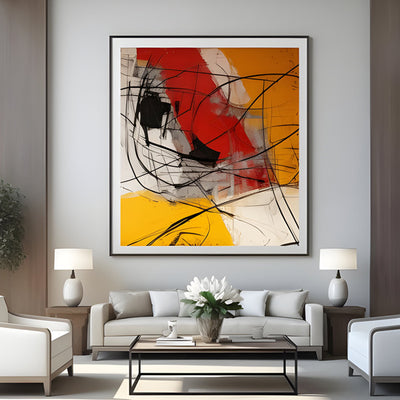
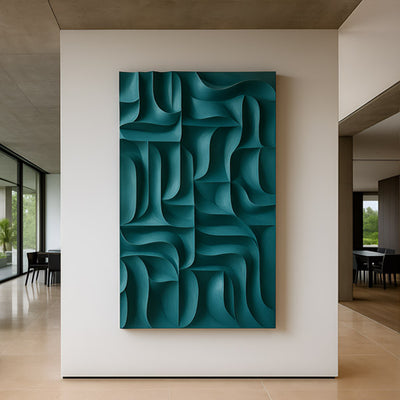
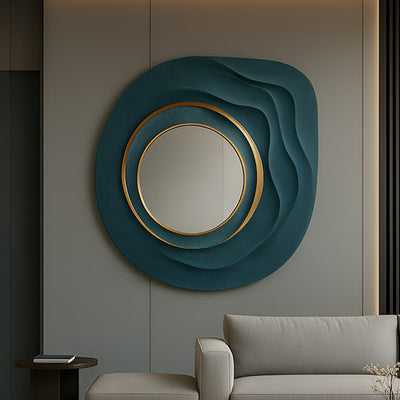
Color is its own decision. A saturated red commands a wall and pulls focus, while teal or navy recede and play well with planting or art around them. We build the same form in several colorways for exactly this reason: where a scheme needs the form to sit back rather than dominate, the Eclat Sphere Teal Blue Abstract Metal Wall Art is the calmer choice, whereas the red version is built to be the focal point of the wall.

Why Some Metal Wall Art Reads Right at 10 ft and Wrong at 30
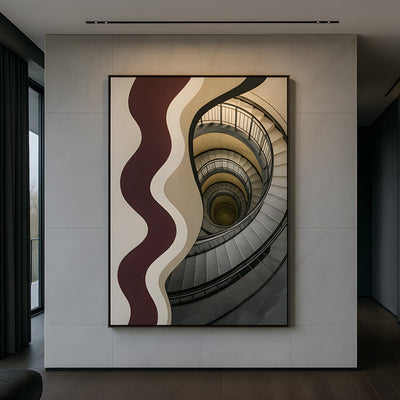
This is the failure mode buyers never anticipate. A detailed, fine-line design looks intricate up close. Step back to 30 feet across a hotel lobby and that same detail collapses into visual noise, or worse, into a gray blur. Large metal wall art has to be designed for its real viewing distance, not for the photo.
The fix is hierarchy. A big piece needs a strong primary silhouette that reads from across the room, a secondary layer of form that rewards a closer look, and only then fine detail for people standing right at it. When we scale a small abstract panel up to feature-wall size, we do not just enlarge it; we re-cut the proportions so the negative space and relief still work at distance.
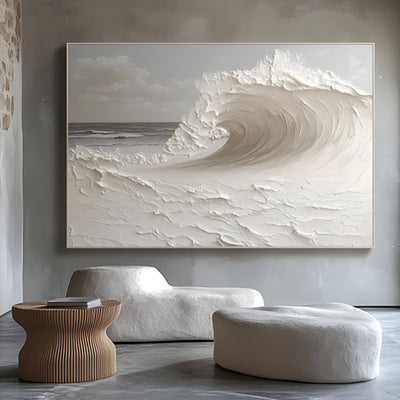
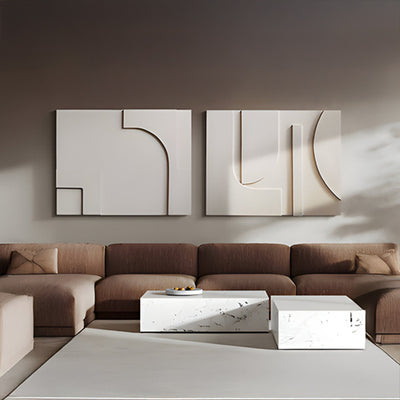
Depth matters here too. Flat graphic panels can look thin on a tall wall. Layered, dimensional work like the 3D wall art range holds presence because the shadows shift as you move, which gives the eye something to track. On large exterior walls, that moving shadow is doing half the work, because the sun changes the piece all day.
Studio Process: Maquette, Sample, Fabrication, Install
A commission worth its quote follows a sequence, and skipping steps is where projects go sideways.
Maquette. A scaled model or detailed digital mockup placed against your actual wall dimensions and ceiling height. This is where you catch a piece that is too tall or a center point that lands awkwardly behind a sofa.
Material sample. A physical swatch of the chosen metal and finish, in your light. Reds and metallics in particular look different on screen than on a panel held up in your room.
Fabrication. Cutting, forming, welding, finishing. For large pieces this often means building in panels that align on site, because a single 12 foot (3.7 m) panel rarely fits through a door or onto a truck cleanly.
Install. A hanging system matched to the wall and the weight, with concealed cleats or a French cleat rail for heavier work, and structural blocking where the substrate needs it.
We treat the install plan as part of the design, not an afterthought. A heavy multi-panel piece that arrives without a clear mounting scheme becomes the client's problem, and that is exactly the experience a good studio is paid to prevent.
Honest Red Flags to Ask About Before You Commit
If you are commissioning metal wall art decor or a large bespoke panel, these questions separate a serious maker from a drop-shipper.
What is the metal and gauge, exactly? Vague answers usually mean thin sheet that will oilcan on a big wall.
How is it finished for my environment? An interior powder coat is not a marine-grade system. For coastal or poolside walls, the coating spec should change.
How does it hang, and how much does it weigh? You want a real figure in pounds (and kilograms) and a mounting method, not "it comes with hooks."
Is it one piece or panelized? For anything genuinely large, panelization is normal and usually smarter for delivery and install.
Can I see a maquette and a sample first? A studio confident in its work will say yes.
What care does the finish need over ten years? Outdoor steel asks for occasional inspection of the coating; the answer should be specific.
For outdoor work in particular, ask how the coating system handles UV and moisture over time. Industry guidance on protective coatings for steel, such as the technical resources published by SSPC, the protective coatings association, makes clear that surface preparation and the right primer matter as much as the topcoat for longevity in exposed conditions.
A Quick Note on Don Quixote and Figurative Metal Panels
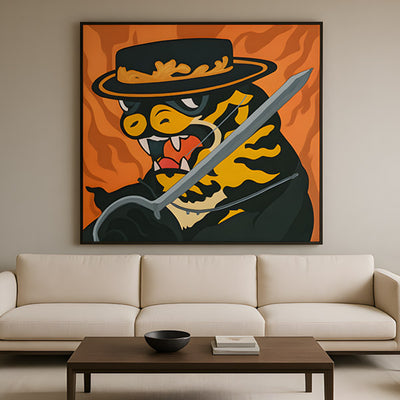
People often search for specific motifs like Don Quixote metal wall art, and figurative line-and-relief panels are a natural fit for the medium because the silhouette carries so well. The same scale logic applies: a recognizable figure needs a clean primary outline to read from across a room, with finer linework reserved for the close view. If you want a particular subject, that is a bespoke conversation rather than an off-the-shelf pick, and it is the kind of brief Giant Sculptures handles as a commission.
Where to Start
If you are weighing options, browse the metal wall art range first to get a feel for scale, form and color, then bring us the wall. The most useful thing you can send is a photo of the space with rough dimensions and a note on the light. From there we can tell you honestly whether a stock piece sized up will work, or whether your wall genuinely calls for a bespoke build. Either way, the goal is a piece that reads as well at 30 feet as it does in the photograph.
For wider placement ideas, Metal Wall Art Decor: What Sculptors Weigh Before Saying Yes is useful companion reading before finalising the setting and sightlines.