


























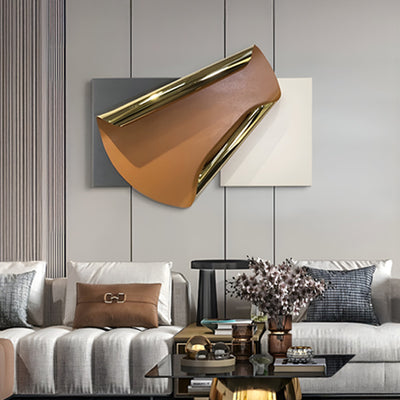
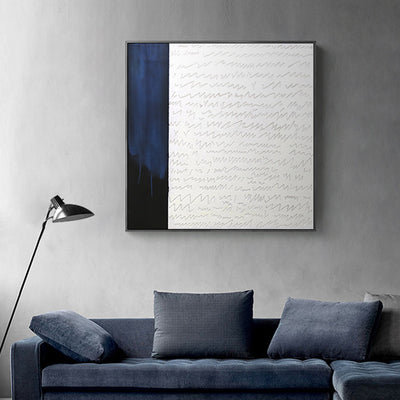
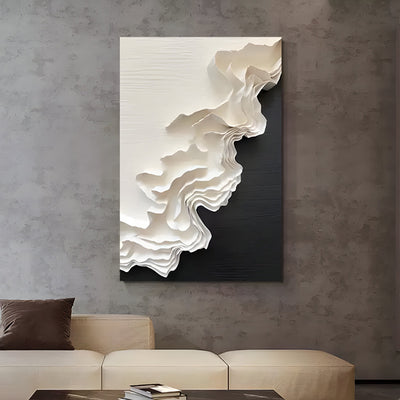
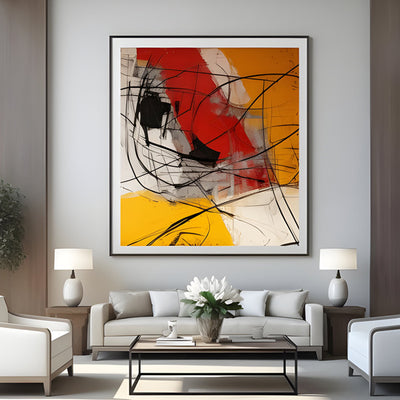
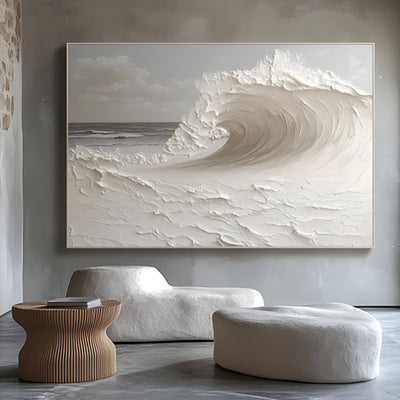
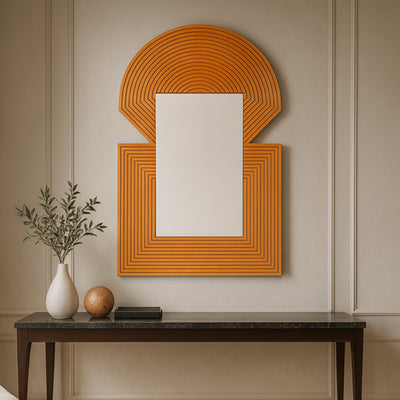
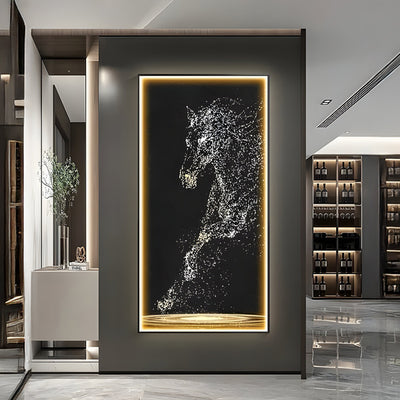
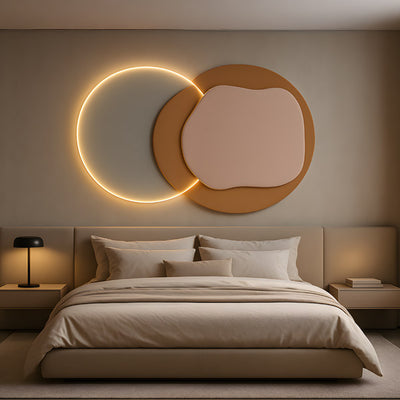









The first thing a sculptor does when a metal wall art decor brief lands on the bench is not sketch. It is read the wall. How tall, how far back does the viewer stand, what light hits it at 4pm in July, is there a radiator under it, is the drywall hollow or is there steel behind it. Most of the disappointments we see with metal wall art happen because someone fell for an image online and never asked any of those questions. The piece looked right in a 1,200 pixel photo. It looked wrong above a 14 ft fireplace in Aspen.
This is a behind-the-bench guide to how serious metal wall art decor commissions get made at Giant Sculptures, and what you should be asking before you commit to large metal wall art, outdoor metal wall art, or an abstract metal wall art piece that will live with you for decades.

Key Takeaways
Scale is decided by viewing distance, not wall width. A 6 ft piece can read small from 30 ft away.
Material drives metal wall art decor cost more than size. Stainless, Corten, brass and powder-coated steel behave very differently outdoors.
A good studio will insist on a maquette or full-size mockup before cutting metal.
Mounting hardware is part of the artwork, not an afterthought. Ask to see the bracket drawing.
Bespoke timelines for serious commissioned pieces usually run 8 to 20 weeks, longer for patinated or hand-finished work.

What Sculptors Actually Think About Before Taking the Commission
Before pricing, before sketches, a sculptor weighing a metal wall art decor brief is running a mental checklist. Is the wall structural or stud? What is the orientation: north light flattens texture, south light kills it. Will the piece face weather, chlorinated pool spray, salt air from a coastal house, or the dry heat of a desert courtyard. Each of those answers rewrites the metal spec.
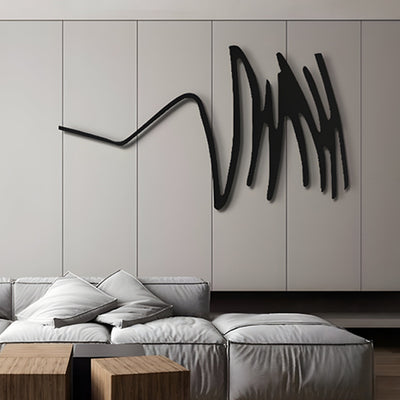
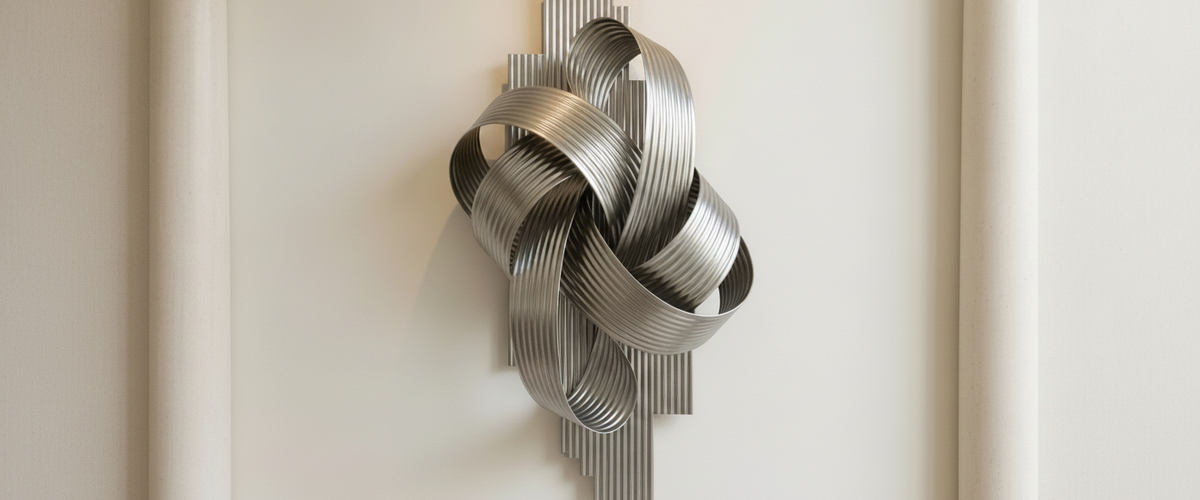
We also ask what the piece is competing with. A busy stone fireplace wants quieter wall art. A flat plaster void in a double-height loft wants something that throws shadow. Clients sometimes arrive certain they want a hammered copper sunburst and leave with a brushed stainless ribbon, because the room was already warm and needed coolness, not more of the same.
The other question, asked early and bluntly: who is the work for. A collector buying metal wall art decor for themselves accepts a slower, more idiosyncratic piece. A developer commissioning lobby art for a hotel needs a result that photographs well, survives cleaning crews, and reads from the revolving door. Same material, different brief.
Craft Decisions That Quietly Change the Final Result
Most buyers of metal wall art decor focus on shape and color. Sculptors focus on the things that decide whether a piece ages into something or just ages.
Gauge of metal. A 1.5 mm sheet will oil-can (ripple under its own weight) at four feet square. Step up to 3 mm and you double the rigidity, the shipping weight, and the welding time. For large metal wall art you usually want a thicker substrate with cutouts, not a thinner sheet trying to look heavy.
Edge treatment. A laser-cut edge is sharp and slightly oxidised. A hand-finished edge is rounded, softer in the light, and roughly three times the labor. Walk up close to a piece and you can immediately tell which one you are looking at.
Finish. Brushed stainless, mirror polished, bead blasted, powder coated, patinated, raw mill scale sealed under matte lacquer. Each has a personality. Mirror finishes show every fingerprint and every weld defect, so they demand more underlying perfection. Brushed finishes forgive, which is why so much hospitality metal wall art decor uses them.
Joining method. TIG welds dressed flush disappear. MIG welds left proud become part of the texture. Riveted assemblies read industrial. None of these is wrong; they just need to be a decision, not an accident.
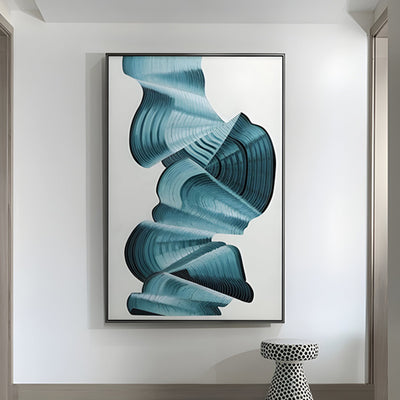
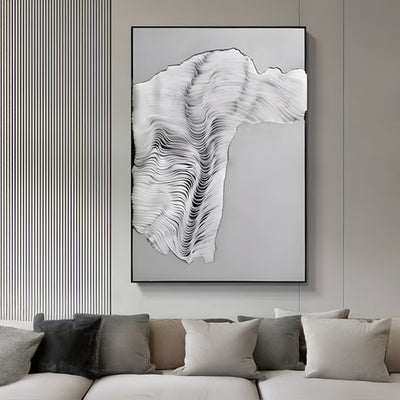
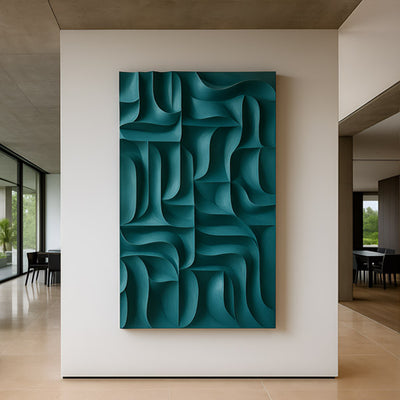
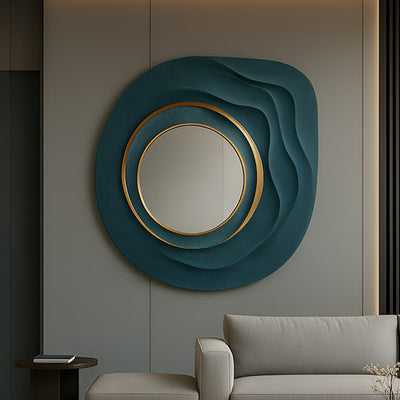
Where a room is already warm in palette and the brief calls for cooler, layered movement, a piece like Waverno Blue & Green Flow shows what cut-and-stack construction does in practice: the depth you cannot fake with a flat panel, and the reason a 3D abstract metal wall art decor piece costs more than a single-sheet design at the same footprint. Run the same form in a darker, earthier palette such as Waverno Ember & Graphite Flow Metal 3D Wall Art and the piece reads as architectural shadow rather than light, which is often the better call against pale plaster or limestone.
Why Some Pieces Read Right at 10 ft and Wrong at 30
This is the mistake we see most often with metal wall art decor. A client buys a piece sized for the wall and forgets to size it for the room. A 5 ft sculpture above a console in a small den is generous. The same 5 ft sculpture in a 35 ft great room looks like a postage stamp. The rough rule we use in the studio: the piece should occupy roughly 60 to 75 percent of the visual zone the eye lands on, not the wall, the zone.
Detail density matters too. Fine filigree disappears past 15 ft. A heavily detailed mandala that took 90 hours to cut reads as a gray smudge from across the lobby. If the primary viewing distance is long, the form must be bold and the negative space generous. Save the intricate work for pieces people walk up to.
Light direction is the third variable. A wall lit only from ceiling spots will exaggerate vertical shadow and flatten horizontal form. A piece designed for raking side light will look dead under direct downlight. Ask the studio how the piece is meant to be lit, and if you cannot match that, ask for a redesign.
The Studio Process: Maquette, Sample, Fabrication, Install
A bespoke metal wall art decor commission at Giant Sculptures typically moves through four gates.
Brief and concept. Two or three thumbnail directions, not twenty. We would rather develop the right idea than show you a catalog of half-ideas.
Maquette or scaled rendering. For pieces over about 4 ft, we build a scaled physical maquette or a full-size paper mockup taped to your wall. Photograph it, live with it for 48 hours, then sign off.
Material sample. A hand-finished swatch of the proposed metal, the proposed finish, the proposed patina if any. Approved in the light it will live in, not under studio fluorescents.
Fabrication and install. Cutting, forming, welding, finishing, crating. For international shipments to the US we crate to ISPM-15 standard and prepare customs paperwork; for installs we provide a bracket drawing and, where the piece is large or heavy, an installer-led mount.
Skipping the maquette to save two weeks is the most expensive shortcut a metal wall art decor buyer can take. The cost of changing a 7 ft brushed steel piece after it is welded is not a conversation anyone enjoys.
Outdoor and Exterior Metal Wall Art: The Extra Layer
Outdoor metal wall art lives a harder life. Rain finds every horizontal ledge. Salt eats coatings. UV chalks paint within a few summers if the spec was wrong. For exterior metal wall art we generally specify 316 marine-grade stainless near the coast, Corten weathering steel where the client wants the orange-brown patina (and is happy with the rust runoff onto whatever sits below it), or aluminium with a high-grade architectural powder coat for color work that needs to stay color-stable.
The American Galvanizers Association publishes useful technical guidance on coating life expectancy in different atmospheric conditions; it is worth a read before you commit to a finish for a coastal house. See the AGA service-life resource for expected coating life by environment.
Browse the full outdoor wall art collection if you want a sense of what holds up well in real weather, and the broader metal wall art catalog for interior metal wall art decor context.
Honest Red Flags to Raise Before You Commit
Questions a serious metal wall art decor studio will welcome, and a thin operation will dodge.
Can I see a finished sample of this exact finish? Renders lie. Metal does not.
What is the gauge and the substrate? If they cannot tell you in millimetres, walk.
Who does the welding and where? A studio that subcontracts everything is a logistics company, not a sculptor.
What is the mounting system? French cleat, standoff, recessed Z-bar. There should be a drawing.
What weight will the wall carry? A 6 ft layered steel piece can run 40 to 90 lb (18 to 41 kg). Stud walls need blocking.
What does the warranty cover, and for how long outdoors? A vague "lifetime" answer is worth less than a specific 10-year coating warranty.
Will you patina the sample under the same conditions as the install site? Patina chemistry changes with humidity.
On budget: a fair metal wall art decor commission depends on material, scale, complexity, engineering, finishing and installation. Anyone quoting a flat number before they have asked about your wall is guessing. Ask for a tailored quote against your actual brief.
A Note on Mixed-Material Wall Art
Not every metal wall art decor piece is pure metal. We work on hybrids: metal frames with resin inlays, acrylic with brushed steel surrounds, layered shadow-box pieces. For a covered terrace or a coastal entry where a fully exposed steel piece would be a maintenance burden, a mixed-material work such as the Black Circular Lighthouse Silhouette Resin & Metal Wall Art - 71cm pairs a structural metal ring with a resin image plane, which is a more forgiving combination than a single-material outdoor sculpture at the same scale. Different conservation rules apply: resin needs UV protection outdoors, metal needs coating maintenance, and the join between them is where most failures happen. The American Institute for Conservation has accessible guidance on caring for mixed-material works.
The takeaway across all of this: metal wall art decor is a craft object, not a wall accessory. Commission it like one. Ask the awkward questions early. Insist on the maquette. Get the sample in your own light. And size it for the room you actually live in, not the photo you saw on a screen.
For wider metal wall art decor placement ideas, Bring the Outdoors In: Transform Your Walls with Nature-Inspired 3D Art is useful companion reading before finalising the setting and sightlines.