





















































The resin is the least interesting part. When you set out to make a fiberglass sculpture, you picture a bucket of catalyst and a brush; the reality is that the form is won or lost weeks earlier, in clay and foam, long before the first layer goes down. This article walks through what happens before that first coat: the armature, the maquette, the mold choices and the finish decisions that decide whether a piece holds its shape for years or fails at the seams. Get those right and the shape stays faithful. Get them wrong and no amount of gelcoat saves it. That is the honest version of how you make a fiberglass sculpture that lasts.
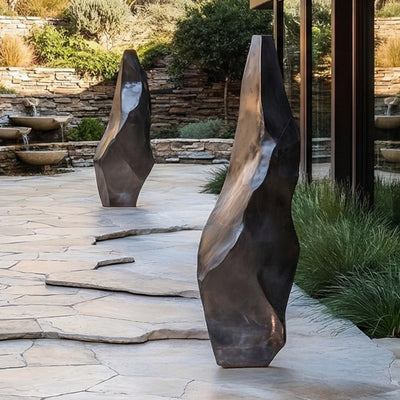
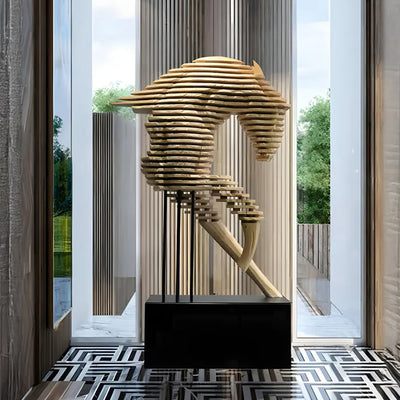
The armature and full-size pattern are where the form is really decided when you make a fiberglass sculpture.
We build large-scale and bespoke work in several materials, and fiberglass earns its place for a specific reason: it lets you go big without going heavy. A 12 ft (3.7 m) figure in bronze is a crane job and a foundry bill. The same figure in fiberglass can be moved by a small team and installed in a day. That is the trade every buyer weighs when they decide to make a fiberglass sculpture instead of casting metal.

Key Takeaways Before You Commission
Fiberglass is a layup material, not a cast metal. Strength comes from how the glass and resin are built up over a core, not from mass.
The maquette decides everything. Scale, pose and read at distance are locked at the small-model stage before you make a fiberglass sculpture full size.
Finish is a separate craft. Paint, faux-metal and gelcoat color all behave differently outdoors.
Budget depends on scale, complexity, mold count, engineering and finish. Ask for a tailored quote rather than a headline number.
UV and edge detailing are the honest red flags. Cheap work fails at the seams and fades in the sun.

What Sculptors Think About Before Taking On the Commission
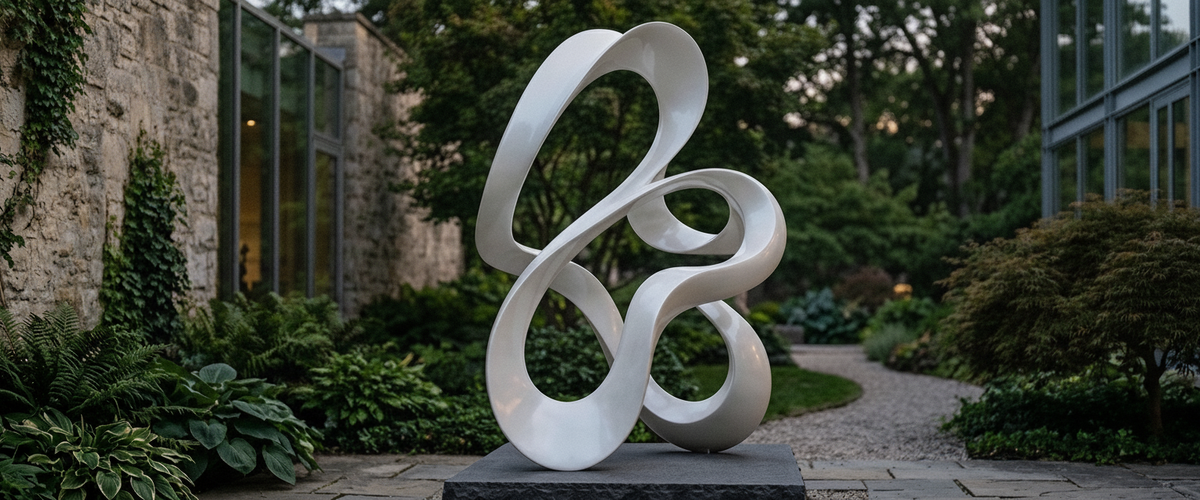
The first questions in the studio are rarely artistic. They are structural. Where does this live, how tall is it, and what is the wind and weather doing to it? A fiberglass garden sculpture in a sheltered courtyard has a very different specification from the same piece exposed on a coastal lawn where salt air and gusts hit it year round. That site read shapes every later decision when you make a fiberglass sculpture.
Weight distribution matters more than people expect when you make a fiberglass sculpture. Fiberglass is light, which sounds like an advantage until a 20 ft (6 m) piece behaves like a sail. We design internal steel armatures and ballasted bases precisely so a light shell stays put. That engineering is invisible in the finished work and central to whether it survives a decade.
The other early decision is whether the piece is genuinely one of a kind or part of an edition. Because you make a fiberglass sculpture from a mold, you can produce a run of custom fiberglass sculptures from a single master. That is efficient for a hospitality group ordering matching pieces across venues; it is beside the point for a collector who wants a unique object. Say which you are early, because it changes how we make the mold.

Craft Decisions That Change the Result and the Price
Here is where the process to make a fiberglass sculpture stops being one path and becomes a set of choices. Each one moves the quality and the cost.
Mold Complexity
A simple, near-cylindrical form might come out of a two-part mold. A figure with undercuts, extended limbs or deep drapery needs a multi-part mold, sometimes six or eight sections, each of which has to key back together perfectly. Mold count is one of the largest hidden drivers of price on any fiberglass resin sculpture.
Layup Thickness and Reinforcement
More glass is not automatically better when you make a fiberglass sculpture. The right build is matched to span and load: ribs and localized reinforcement where stress concentrates, thinner skin where it does not. Over-building adds weight and cost without adding life. Under-building is how you get flex cracks at the ankles of a large figure.
Surface and Finish
Gelcoat color runs through the surface layer, so scratches read far less than on paint.
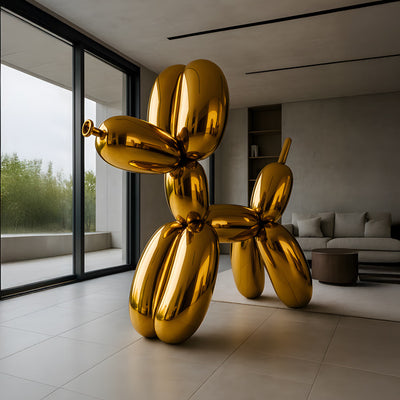
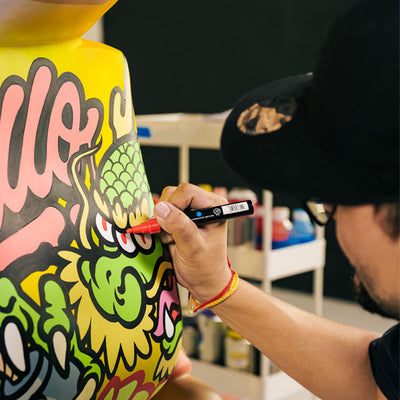
This is the choice buyers underrate when they make a fiberglass sculpture. A pigmented gelcoat gives color that runs right through the surface layer, so a scratch is far less visible than on painted work. A painted finish opens up faux-bronze, faux-Corten and high-gloss automotive looks that gelcoat cannot match. If you want the mirror-clean, color-saturated surfaces associated with an Anish Kapoor fiberglass sculpture, that is a paint-and-clearcoat discipline, and it demands a near-perfect substrate underneath. Every ripple shows.

Why Some Pieces Read Right at 10 ft and Wrong at 30
Scale is not a slider. A form that looks resolved as a 3 ft (0.9 m) model can fall apart at 30 ft (9 m) because detail that carried the eye up close becomes noise at distance, and proportions that felt elegant small look thin when you triple them. Anyone who plans to make a fiberglass sculpture at that size has to test the form at the size it will be seen.
We learned this the hard way on an animal commission years ago. The maquette of a big cat read beautifully on the studio bench. Scaled up, the tail, correct on the model, disappeared against a busy hedge from across the lawn. We thickened and re-angled it so it held from the driveway approach, which was the only viewpoint the client would ever use. That is the difference between sculpting for the hand and sculpting for the site.
Fiberglass animal sculptures live or die on silhouette. From 30 ft your eye reads the outline before any texture, so the profile has to work as a flat shape first. The same logic applies when you make a fiberglass sculpture for the calendar: fiberglass Christmas sculptures for a shopping center are seen from an escalator or across an atrium, so they are designed for the long view, with bold masses and simple readable forms rather than fine surface fuss.
The Studio Process, Step by Step
This is how we make a fiberglass sculpture from first sketch to installed piece.
Maquette. We build a scaled model to lock pose, proportion and sightlines. This is signed off before anything full size begins.
Full-size pattern. The form is enlarged in clay over an armature, or carved and shaped in high-density foam, then refined by hand until the surface is true.
Mold making. We take a multi-part mold off the pattern, keyed so it registers exactly on reassembly.
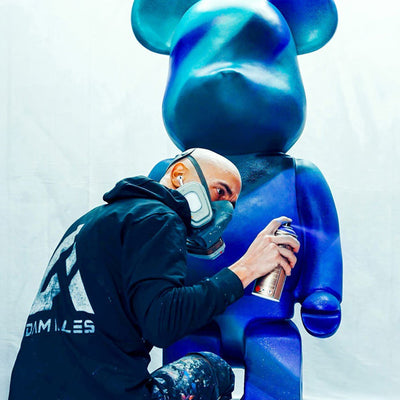
Layup. Glass and resin are built up inside the mold sections, with steel armature and localized reinforcement designed for the span and the site.
Assembly and seam work. Sections are joined, then the seams are filled, faired and sanded until they vanish. This stage separates good work from cheap work.
Finish. Priming, then gelcoat color or a painted and clearcoated finish, with UV-stable topcoats for anything living outdoors.
Install. We handle base engineering, fixing and delivery, including crated shipping worldwide.
If you want to see the range of forms that suit this method before you brief us on a plan to make a fiberglass sculpture of your own, our fiberglass sculptures collection is the clearest starting point for scale and style.
Honest Red Flags to Ask About Before You Commit
A polished quote can hide thin work. Before you agree to make a fiberglass sculpture with any studio, ask these questions and listen for specifics rather than reassurance.
What is the internal structure? If the maker cannot describe the armature and how the piece is ballasted, walk. A hollow shell with no core is a future insurance claim.
How are the seams finished? Run a hand along the joints in any sample. Ridges you can feel now are cracks you will see in two years.
What UV protection is on the finish? Uncoated pigments and cheap topcoats chalk and fade. Marine and automotive-grade clearcoats resist it. The American Coatings Association has good background on how UV exposure degrades coatings over time (paint.org).
Can I see a physical sample of the finish? Screens lie about gloss and color. Insist on a swatch in the actual specified finish.
How is it fixed on site? A light sculpture needs proper anchoring. Ask exactly how it meets the ground or plinth.
On the maintenance side, once you make a fiberglass sculpture it is forgiving but not maintenance-free. A wash with mild soap and water a couple of times a year, plus an occasional wax on glossy finishes, keeps the surface bright. Conservation guidance from museum bodies on plastics and composites is a useful reality check on long-term care; the Smithsonian's conservation resources cover how these materials age (si.edu/mci).
How to Make a Large Fiberglass Sculpture Without Regret
The short answer to how to make a large fiberglass sculpture is that you plan the last 10% first. Access, fixing, finish and viewing distance should be settled before a single layer of glass goes down, because retrofitting any of them is expensive and usually visible. Get that order right and you make a fiberglass sculpture that ages well.
Giant Sculptures builds this way as a matter of course. We treat the job to make a fiberglass sculpture as an engineering problem with an artistic answer, which is why our pieces travel worldwide and stay standing. If you have a site, a brief, or just a rough idea sketched on the back of something, that is enough to start a conversation about a bespoke commission to make a fiberglass sculpture of your own.
For wider placement ideas, How to Make a Fiberglass Sculpture: What Happens Before the First Coat is useful companion reading before you make a fiberglass sculpture and finalize the setting and sightlines.