






















































































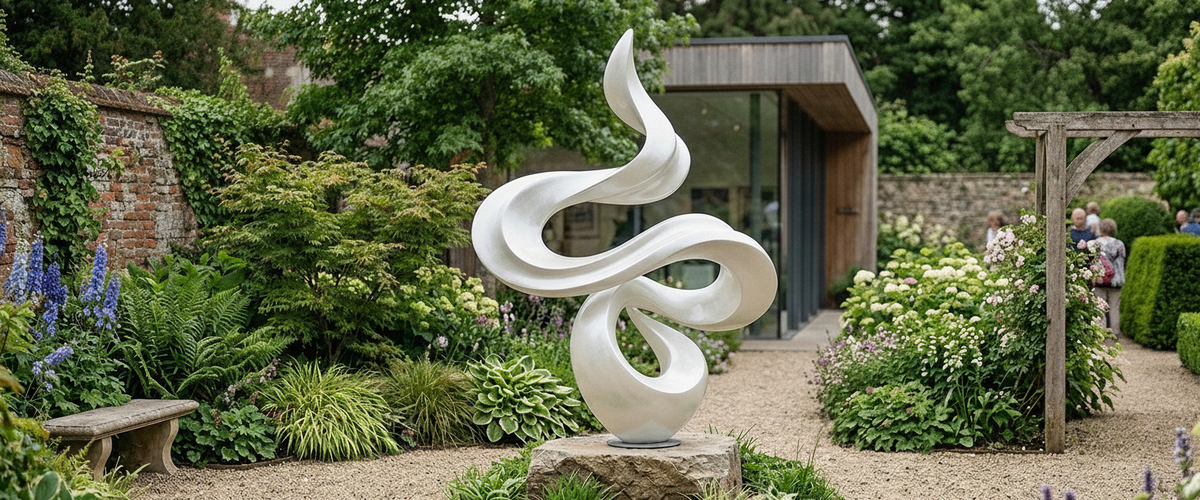

Deciding to make a fiberglass sculpture is easy; getting one that survives a decade outdoors is not. A piece can look flawless in a studio and fall apart on a lawn within two summers. The difference is almost never the concept. When you set out to make a fiberglass sculpture that lasts, it comes down to the laminate schedule, the internal armature, and whether the maker really understood how the work would sit in real weather at real size. That gap between a nice render and a durable piece is where most attempts to make a fiberglass sculpture go wrong.
We build large-scale work in bronze, stainless steel, Corten, stone, and engineered composites, so we come at fiberglass without romance. It is a genuinely useful material for certain briefs. It is also the material buyers most often get sold badly. Here is how the people who make fiberglass sculpture well actually do it, and what to ask before you sign anything.

Key Takeaways Before You Commission
Fiberglass earns its place when you want big scale, complex form, and manageable weight, not when you want an heirloom that outlives the house. That is the first thing to weigh when you make a fiberglass sculpture.
The laminate and armature matter more than the surface. A pretty gelcoat over thin, under-braced glass is the classic failure to avoid when you make a fiberglass sculpture.
Scale changes everything. A form tuned for 10 ft (3 m) rarely reads right at 30 ft (9 m) without redrawn proportions.
UV and paint system decide longevity. Outdoor pieces need proper coatings, not decorative paint that chalks.
Budget depends on material, scale, complexity, engineering, install, and finishing. Ask for a tailored quote rather than a headline number before you make a fiberglass sculpture on commission.

What Sculptors Actually Think About Before Taking the Job
The first question in the studio is rarely "what does it look like." It is "where does it live and for how long." Anyone who sets out to make a fiberglass sculpture for full afternoon sun writes a completely different specification than for an indoor lobby piece. Sun exposure, salt air, freeze-thaw cycles, and how often a person might lean on it all change the build.
The second question is honesty about the material. Glass-reinforced plastic, closely related to what people call fiberglass resin sculpture, is light for its size and holds fine detail beautifully. That is why theme parks, retailers, and event designers lean on it, and why fiberglass Christmas sculptures and fiberglass animal sculptures are so often made this way. It molds crisp antlers and fur texture without weighing a ton. But it is not a lifetime outdoor material in the way bronze is. If a client wants something to still look sharp for their grandchildren, we will usually steer them toward metal or stone and say so plainly.
The third is intent. Some of the most talked-about large composite pieces, including the mirror-polished forms associated with an Anish Kapoor fiberglass sculpture aesthetic, live or die on surface perfection. That level of finish is a fabrication discipline in itself, and it is worth knowing whether your maker can actually make a fiberglass sculpture to that standard before you fall in love with the reference image.

Craft Decisions That Change the Result and the Price
Every choice below moves both quality and cost. None of them are visible in a quick quote, which is exactly why buyers should ask about them before anyone starts to make a fiberglass sculpture on their behalf.
Laminate Schedule
This is the number of glass layers, their weight, and how they are oriented. Thin single-skin work flexes, cracks at stress points, and telegraphs every knock. A serious outdoor piece uses a considered layup, often with a cored or ribbed structure so large flat areas do not "oil-can" (flex like a tin lid). Ask how many layers, what weight cloth, and whether the piece is cored before anyone builds a fiberglass sculpture for you.
Internal Armature
Large composite forms are hollow, so the internal steel or aluminum frame does the real load-bearing work. A tall figure or a rearing animal needs an engineered armature tied to the mounting points. We have seen imported pieces where the armature was a few tack-welded bars; the first strong wind found every weak joint. Nobody should make a fiberglass sculpture at height without solving this first.
Resin and Gelcoat System
Polyester resin is common and cost-effective. Vinylester and epoxy cost more and resist water ingress and UV better. When you make a fiberglass sculpture that stays outside long-term, the resin choice and a UV-stable gelcoat are not optional extras. The American Coatings Association has useful background on how coatings and UV exposure interact if you want to understand why cheap systems chalk and fade (paint.org).
Finish and Paint
Automotive-grade two-pack systems, proper primer, and a clear UV topcoat are what separate a piece that stays crisp from one that goes dull in a season. Metallic and mirror finishes demand near-perfect substrate prep, because glass is unforgiving of any wave underneath. It is one of the fussiest steps when you make a fiberglass sculpture with that kind of surface.

Why Some Pieces Read Right at 10 ft and Wrong at 30
Scale is the trap that catches even experienced buyers. A form that looks balanced as a 10 ft (3 m) figure can look thin, stretched, or top-heavy at 30 ft (9 m). Human eyes read large objects differently: sightlines flatten, details you loved up close vanish, and silhouette becomes everything. This is why so many teams who set out to make a fiberglass sculpture at height get the proportions wrong on the first pass.
When we scale a design up, proportions get redrawn, not just enlarged. Limbs thicken, negative space opens, and surface detail gets exaggerated so it survives the viewing distance. A fiberglass animal sculpture meant to be seen from a highway needs bolder masses than the same animal designed for a courtyard. Enlarging a small maquette by percentage alone almost always produces something that feels slightly wrong and nobody can quite say why.
This is also where material honesty returns. At very large scale, wind loading and self-weight rise sharply, and the armature and mounting engineering become the whole ballgame when you make a fiberglass sculpture this big. If you are browsing our fiberglass sculptures for ideas, use them to gauge how form and scale interact before you commit to a bespoke height.
Studio Process: Maquette, Sample, Fabrication, Install
To make a fiberglass sculpture properly, a commission moves through clear stages, and each one is a checkpoint where you can still change course.
Maquette. A small-scale model, physical or digital, that settles form, pose, and proportion. This is the cheapest place to make changes, so make them here.
Material and finish sample. A test panel or small section showing the actual color, gloss level, and texture. Approve the finish on a sample, never on a screen.
Mold and layup. The mold is built, then the laminate is applied to the agreed schedule over the armature. This is where you actually make the fiberglass sculpture, and where quality is won or lost, invisible once the piece is closed up.
Finishing. Filling, fairing, priming, painting, and topcoat. Slow work, and rushing it shows.
Install. Base design, fixings, and handling. Big hollow pieces are light for their size but awkward, and a bad lift can crack a finish in seconds.
Custom fiberglass sculptures live or die on how disciplined this sequence is. When a maker wants to skip the sample stage or start layup before the maquette is signed off, that is a warning, not a time-saver, and a poor way to make a fiberglass sculpture.
How to Paint a Fiberglass Sculpture So It Lasts
Painting is where a lot of DIY and budget work falls down. The short version: prep beats product. The surface has to be cleaned, sanded, and often wiped to remove any mold release before primer. Skip that and the paint peels regardless of how good it is. Anyone learning to make a fiberglass sculpture should treat this step as non-negotiable.
For an outdoor piece, use a high-build primer, a durable two-pack topcoat rated for exterior use, and a UV-resistant clear over color. Water-based decorative paint made for interior walls will not survive weather; the Smithsonian's conservation guidance on outdoor sculpture explains why exposure management matters so much for longevity (americanart.si.edu). A well-placed fiberglass garden sculpture still needs this discipline, and anyone hoping to make a fiberglass sculpture for a wet climate should plan for it early. Indoor pieces have more freedom, but even then a proper topcoat protects any fiberglass sculpture against handling and cleaning.
Honest Red Flags Before You Commit
Use these as your commissioning filter before you let anyone make a fiberglass sculpture for you. A confident maker will answer all of them without flinching.
Vague on the laminate. If they cannot tell you how many layers and what structure, they may not know how to make a fiberglass sculpture that lasts.
No armature engineering for large or dynamic forms. Ask specifically how the piece resists wind and its own weight before they make a fiberglass sculpture on your behalf.
Consumer paint on an outdoor piece. A red flag for a finish that will not last, and a common mistake among people who make fiberglass sculpture on the cheap.
No sample stage. Approving finish only from renders is how buyers get surprised.
Silence on repairability. Fiberglass can be repaired well, but only if the build documents color, gelcoat, and layup.
Overselling lifespan. Anyone promising a composite piece will outlast bronze outdoors is selling, not advising.
Choosing to make a fiberglass sculpture is a smart move for a specific set of briefs: big impact, complex shapes, event and seasonal work, and interiors where weight matters. When the brief is a permanent centerpiece for a garden or a public plaza, we often recommend metal or stone instead, and we would rather tell you that upfront than sell you the wrong material. Giant Sculptures will make a fiberglass sculpture across all of them, so the material advice is not steered by what we happen to have in stock.
For wider placement ideas, How to Make a Fiberglass Sculpture That Actually Reads at Scale is useful companion reading before you finalize the setting, the sightlines, and your fiberglass sculpture commission.