






















































































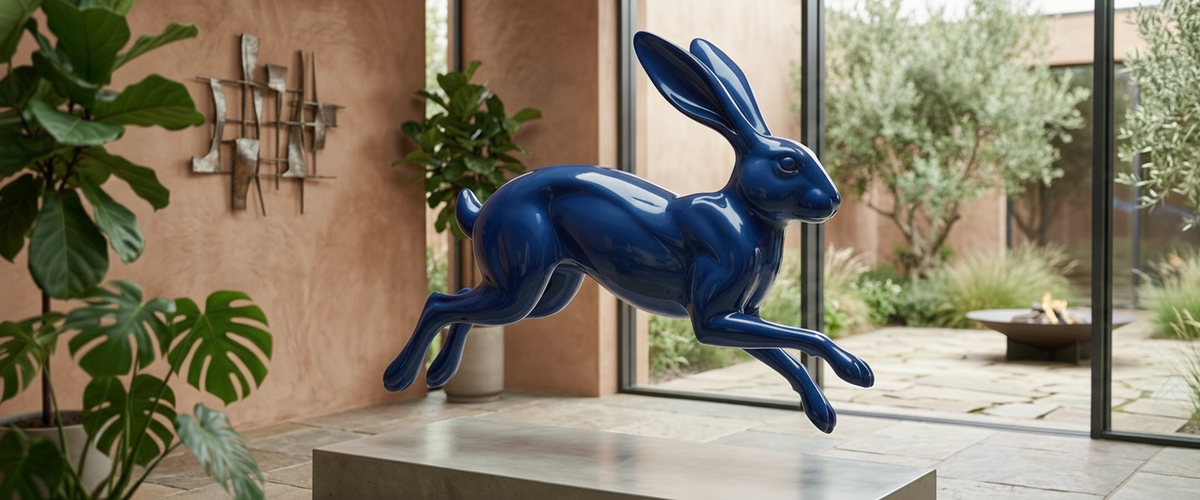

When you set out to make fiberglass sculpture, you reach for the material people choose when they want a piece that goes big without weighing a ton. A nine-foot bronze hare costs a fortune and needs a crane; the same form in fiberglass can be lifted by two people and shipped flat-packed across an ocean. That is the appeal, and it is real. But that smooth surface hides a lot of craft underneath, and the gap between a good fiberglass sculpture and a poor one is wider than most buyers expect. Knowing how studios make fiberglass sculpture is the surest way to spend well.
We field this question often at Giant Sculptures, usually from designers who have fallen for the look of a large piece and want to understand what they are actually buying. So here is the honest version of how to make fiberglass sculpture: what sculptors weigh before they take the job, what changes the result and the price, and the questions worth asking before you sign.

Key Takeaways Before You Commission
Fiberglass wins on scale-to-weight. It is the practical choice for large garden sculpture, animal forms, and seasonal display pieces that would be impossible in solid metal or stone.
The surface is everything. A fiberglass sculpture lives or dies on its gelcoat, paint system, and finishing. Cut corners there and it shows within a season.
Scale is a design decision, not a slider. A form that reads beautifully at 10 ft (3 m) can look wrong blown up to 30 ft (9 m). Good studios plan for the viewing distance when they make fiberglass sculpture at size.
Budget depends on the brief. Material, size, complexity, mold work, and finishing all move the number. Ask for a tailored commission quote rather than trusting a flat rate.

What Sculptors Think About Before Taking a Fiberglass Commission
The first thing a serious studio asks before agreeing to make fiberglass sculpture is not "can we build it" but "where will it stand and who walks past it." A piece destined for a vineyard entrance, viewed from a slow-moving car at 40 ft (12 m), is engineered differently from a fiberglass animal sculpture a child can touch in a courtyard. Touch range demands a tougher laminate and a more forgiving finish, because hands find every weak edge.
Next comes the form itself. Fiberglass loves smooth, flowing volumes. That is partly why so much contemporary work in the material reads as sleek and clean; think of the mirror-bright, swelling shapes that made Anish Kapoor fiberglass sculpture so recognizable, where the surface has to be flawless because there is nowhere for a blemish to hide. Sharp undercuts, deep recesses, and fine surface detail are all possible, but each one adds mold complexity and hand-finishing hours. That is the honest link between ambition and cost.
Weight and wind load matter too. A tall, broad fiberglass form is essentially a sail. To make fiberglass sculpture for outdoors, you need an internal armature, often steel, and a base or ground-fixing plan that accounts for the worst gust the site will ever see. We have shipped large outdoor work to coastal sites where the fixing engineering took longer to agree than the sculpting did.

How to Make a Fiberglass Sculpture: The Studio Process
The route from idea to installed object follows a fairly consistent path when you make fiberglass sculpture, whether the piece is a leaping hare or a custom corporate logo.
1. Maquette
Everything starts small. A maquette is a scale model, often a foot or two high, that lets everyone agree on proportion, pose, and silhouette before real money is spent. This is the cheapest place to change your mind, so use it hard. Walk around it. Photograph it from the angle your visitors will actually see.
2. Pattern and Mold
The full-size form is built up, traditionally in clay or sculpted foam, sometimes digitally milled from a 3D scan of the approved maquette. From that master, the team takes a mold. Mold-making is the unglamorous heart of any plan to make fiberglass sculpture; a careful, multi-part mold is what lets the finished skin pull clean with crisp edges.
3. Lamination
This is the part most people picture when they think about how to make fiberglass sculptures. Glass fiber matting is laid into the mold and saturated with resin, layer by layer, building a shell that is strong but hollow. The American Chemical Society has a good plain-language explainer on how polyester and composite resins cure into a rigid laminate, which is the chemistry doing the work here. A gelcoat layer, applied first against the mold face, becomes the outer surface and carries the color or the base for paint.
4. Finishing and Paint
The raw casting comes out of the mold needing work: seam lines filled, surface faired smooth, primer built up. Then comes the finish. How you paint a fiberglass sculpture decides whether it looks like art or like a theme-park prop. The best results use automotive-grade or marine paint systems with a UV-stable topcoat, because raw fiberglass and cheap paint both chalk and fade in strong sun. For pieces heading to Texas or southern California, UV resistance is not optional.
5. Install
Large fiberglass resin sculpture is light enough to handle without heavy plant, but it is also rigid and awkward, so installation still wants planning. Ground fixings, hidden bolts, and a level base do most of the work. We always confirm access routes early; a beautiful piece is no use if it will not fit through the garden gate.

Why Some Pieces Read Right at 10 ft and Wrong at 30
Scale is where amateur fiberglass work falls apart. A form sculpted at a comfortable human size carries detail that simply vanishes at distance, while proportions that looked elegant small can turn clumsy when enlarged. A face that charms at 6 ft (1.8 m) can look hollow and staring at 25 ft (7.6 m) because the eye reads the whole silhouette before any detail.
Good studios adjust the geometry as the piece grows. Volumes get simplified, edges get exaggerated so they survive the viewing distance, and surface detail gets re-cut to match how far away people will stand. This is craft judgment, not a setting on a machine. It is the single biggest reason to hire a sculptor to make fiberglass sculpture rather than scale up a small model and hope.
Where Fiberglass Earns Its Place
For wider placement ideas, How to Make a Fiberglass Sculpture: An Insider Look at Studio Craft is useful companion reading before finalizing the setting and sightlines.
Fiberglass is the right call when you want presence without mass. A fiberglass garden sculpture can stand on a roof terrace or a suspended deck where the floor loading would never take stone. Seasonal and event work leans on it too; large fiberglass Christmas sculptures for a hotel forecourt or a retail atrium need to be moved, stored, and reused, and no one wants to lift a bronze reindeer twice a year.
Animal forms suit the material especially well. The smooth, muscular volumes of a horse, a stag, or an oversized hare translate cleanly into laminate, which is why so many fiberglass animal sculptures look so confident. Custom fiberglass sculptures also let a brand or a collector get an exact form that does not exist off the shelf, from a heraldic creature to an abstract centerpiece.
If you are weighing the look against more permanent materials, it is worth browsing our fiberglass sculptures alongside heavier options in the large garden statues range to feel the difference, on screen at least. For exposed sites, our wider outdoor sculptures collection shows how material choice shifts with the weather a piece has to face.
Honest Red Flags to Ask About Before You Commit
A few questions separate a studio that can make fiberglass sculpture well from one that will disappoint.
What is the laminate thickness and is there an internal armature? A thin, unsupported shell flexes, and flexing cracks paint. For anything large or touchable, ask directly.
What paint system and UV protection? "We will paint it" is not an answer. You want a named topcoat rated for outdoor exposure if the piece lives outside.
How are seams and joins handled? Multi-part pieces have join lines. Ask to see how they are hidden on previous work.
Who owns the mold? For a custom piece, clarify whether the mold is stored, who can reproduce from it, and whether you get an exclusive form.
What is the repair plan? Fiberglass is repairable, which is a genuine strength, but only if the maker documents the gelcoat color and paint codes so a chip can be matched years later.
That last point is the one buyers forget. The Getty Conservation Institute has long argued that the documentation around an object matters as much as the object for long-term care, and the same logic applies to a commissioned sculpture. Keep the paint codes. Keep the maker's contact. A well-finished piece can look good for many years, but only if someone can touch it up when life happens to it.
The Short Version
To make fiberglass sculpture is to run a chain of decisions: form, mold, laminate, finish, and fixing, each one capable of carrying or sinking the result. The material rewards smooth, bold shapes and large scale, and it gives you presence that stone and bronze cannot match for the weight. Get the surface and the engineering right and you have a piece that holds a garden or a forecourt with ease. Get them wrong and you have an expensive prop. The difference is craft, and craft is exactly what you pay for when you commission a studio to make fiberglass sculpture rather than buy off the shelf.