

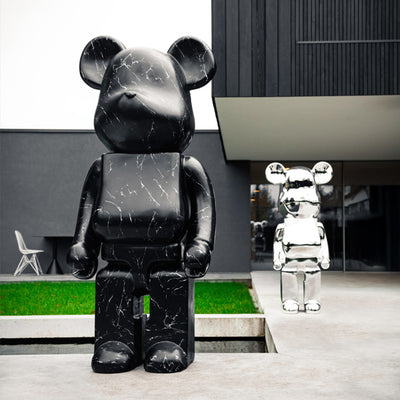

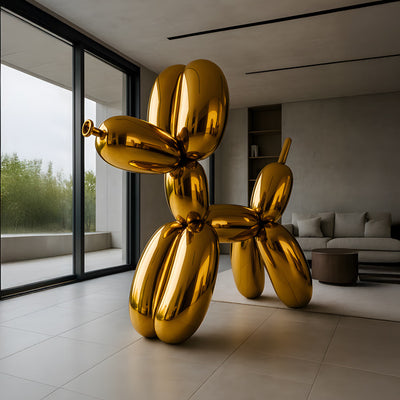
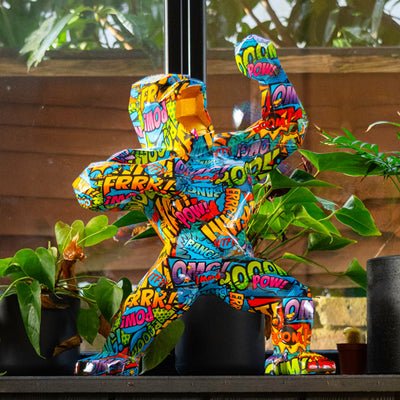
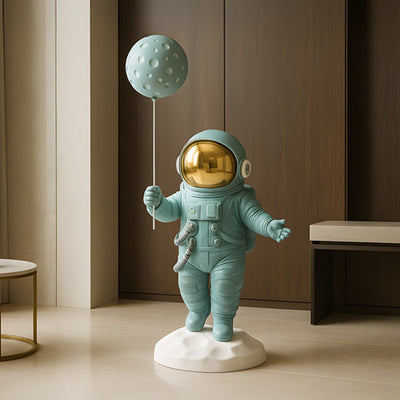
















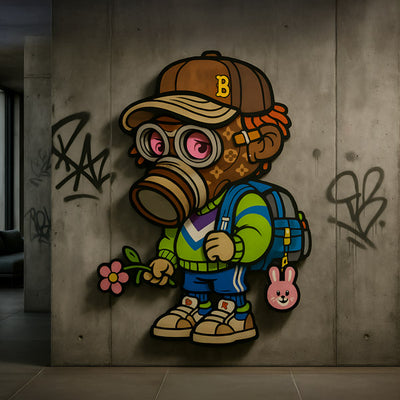

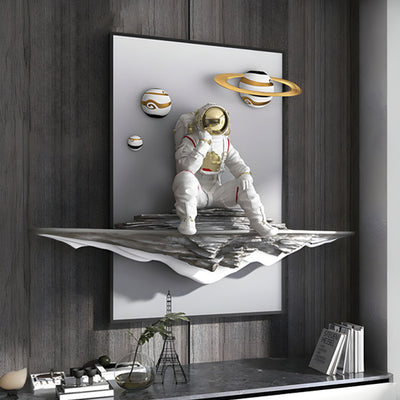

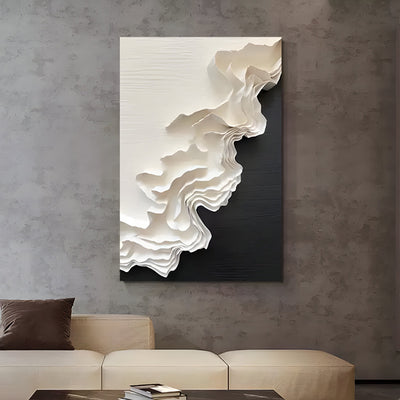
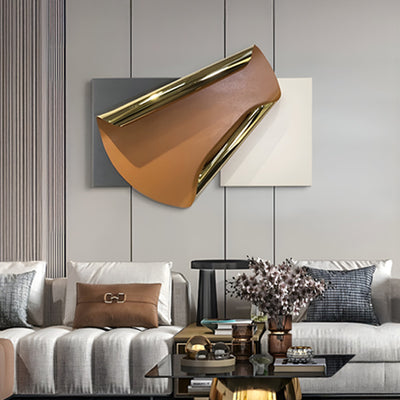
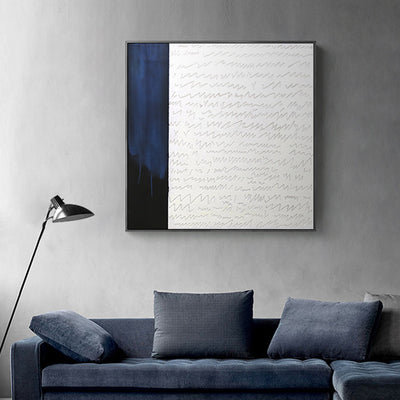
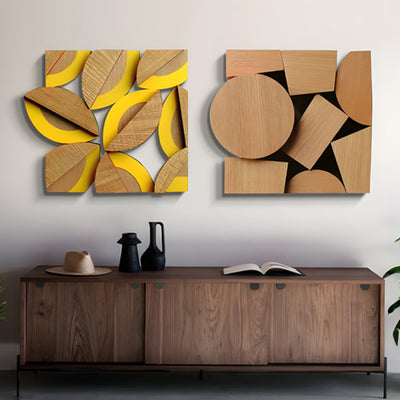

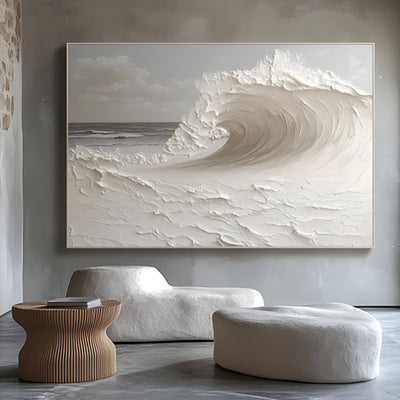
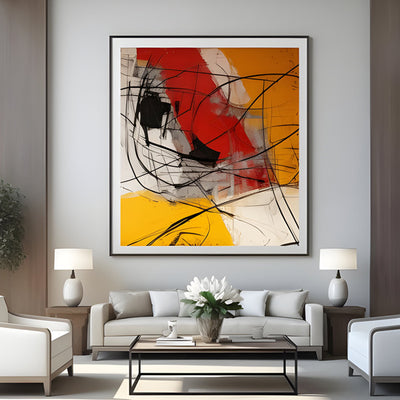
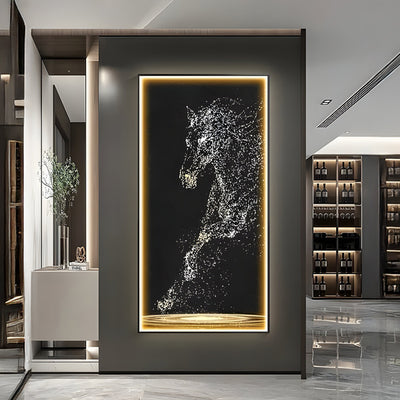
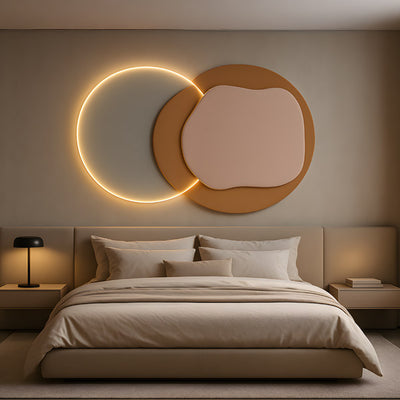
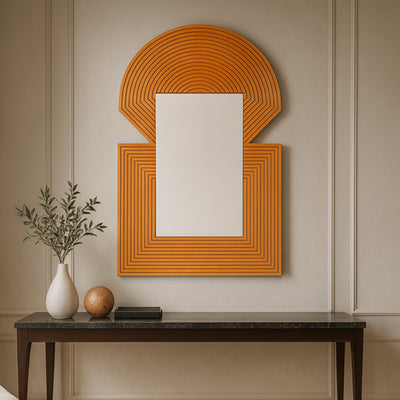
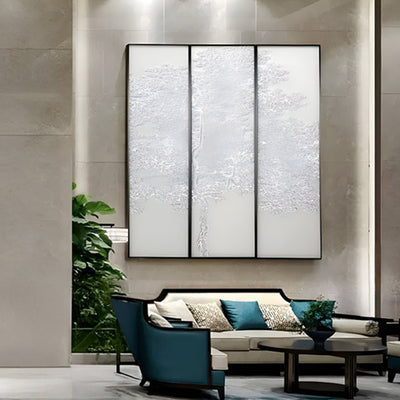
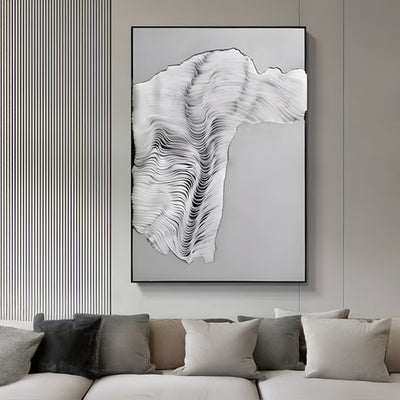
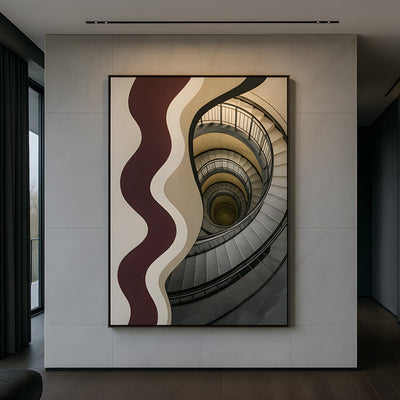
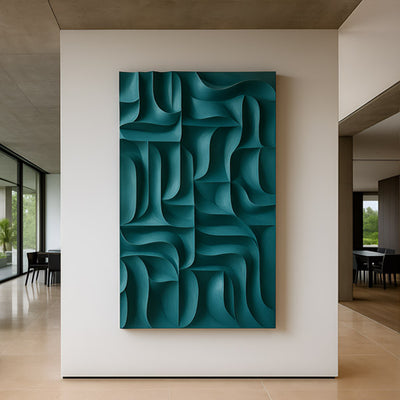
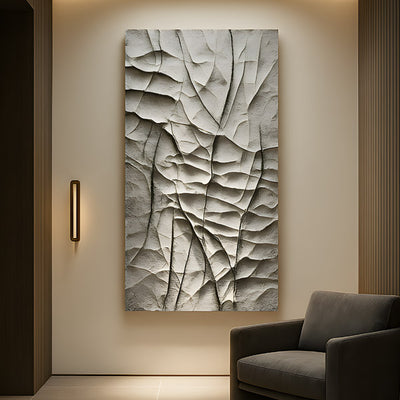
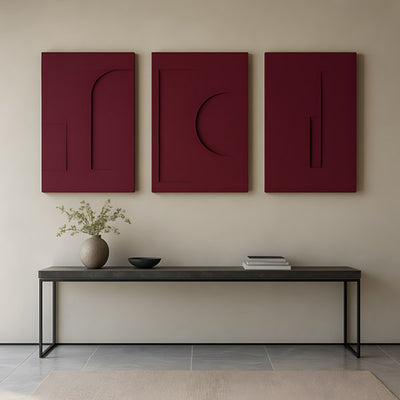
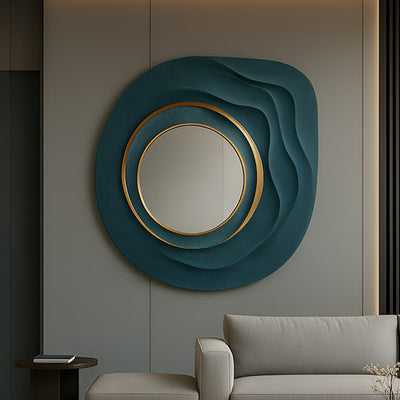
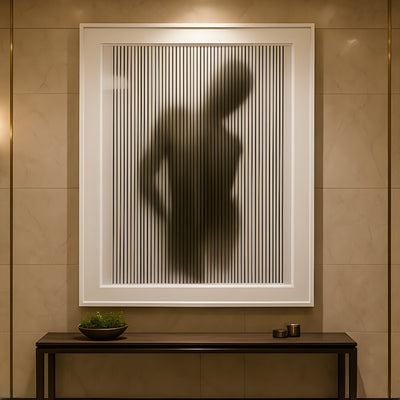
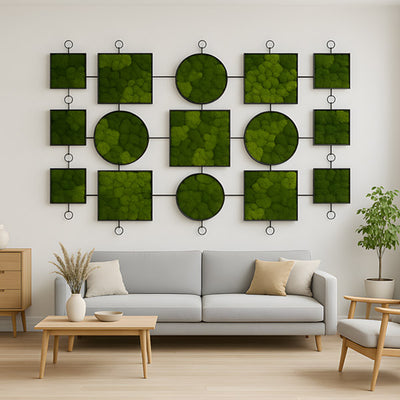
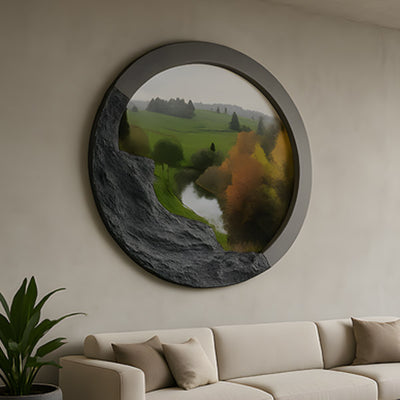
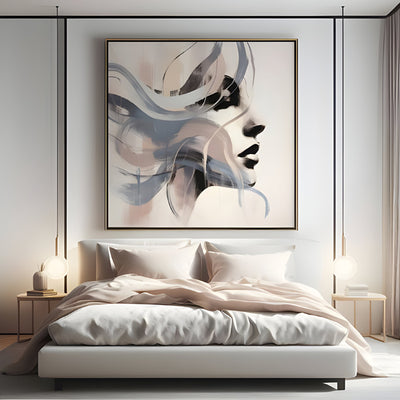
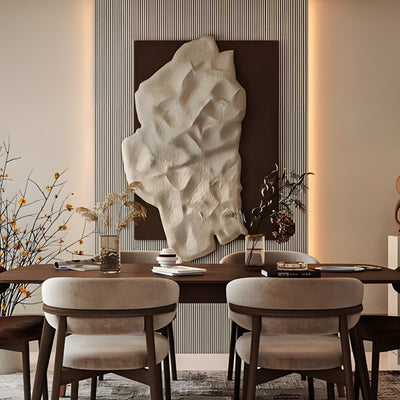
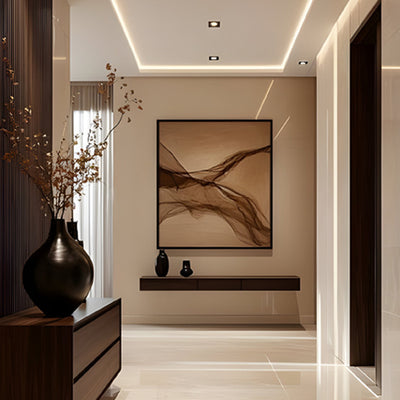
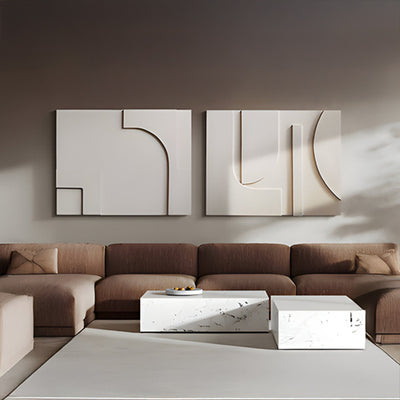







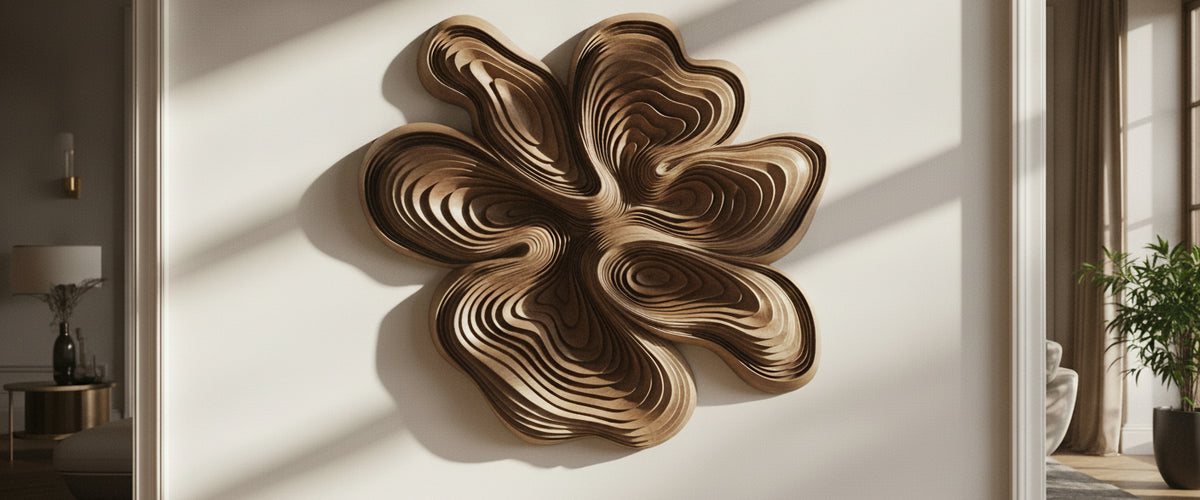

A flat painting forgives a lot. A 3D wall sculpture forgives almost nothing. The moment a piece projects off the plaster, every shadow, every weld seam and every clumsy edge starts arguing with the architecture around it. That is why the briefs we accept for 3D wall sculptures get more scrutiny at the front end than almost any other format we work on at Giant Sculptures, and why the conversation with the client looks very different from a freestanding bronze.
Looking for the full range in this category? Browse our Wall Art and Wall Decor collection for every available finish, size, and configuration.
Below is the honest version of how this work gets made: what we think about before quoting, the craft calls that shift the final result, and the questions buyers should ask any studio before signing.

At a Glance: 3D Wall Sculptures, the Quick Read
- Format reality: 3D wall art sculptures live somewhere between relief carving, fabricated metalwork and architectural installation. The wall is part of the piece.
- Scale rules differently: a wall 3D sculpture that sings at 10 ft viewing distance can look thin or fussy at 30 ft. Projection depth, edge contrast and silhouette matter more than detail.
- Material drives cost: hand-carved hardwood, cast bronze, laser-cut and formed steel, acrylic and mixed media all sit at very different price points. Budget depends on material, scale, complexity, engineering, finish and install method, so ask for a tailored quote.
- Install is half the job: mounting hardware, wall substrate and lighting plan should be agreed before fabrication starts, not after delivery.

What Sculptors Actually Think About Before Taking the Brief
The first thing we ask is not what the client wants the 3D wall sculpture to look like. It is where it is going and who will stand in front of it. A lobby wall in a Manhattan office tower with 18 ft ceilings and raking downlight is a completely different commission to a double-height great room in Aspen lit by a south-facing clerestory. The same drawing will read as confident in one and overcooked in the other.
Three structural questions get answered before we sketch anything serious:
- Substrate: is the wall plasterboard on metal stud, solid masonry, concrete, or a feature panel of timber or stone? That decides anchor type, weight ceiling and whether we can hide a French cleat or need surface fixings.
- Viewing geometry: closest viewer distance, furthest viewer distance, and the angles people approach from. A piece seen mostly in profile from a staircase needs different relief depth than one viewed head-on from a sofa.
- Light: natural, fixed architectural, or a dedicated art wash. Shadow is the material of relief sculpture. If the lighting is wrong, no amount of carving rescues the piece.
If a client cannot answer those three, we slow down. Quoting a 3D sculpture wall installation without them is how studios end up rebuilding pieces on site, which nobody enjoys.

Craft Decisions That Change the Final Result
Once the brief is real, the craft calls begin. These are the choices that separate a forgettable wall panel from something that holds a room.
Relief Depth and Projection
Low relief (under about 1 in / 25 mm of projection) reads as drawing in material. High relief (3 to 6 in / 75 to 150 mm) starts to behave like a half-emerged sculpture. Anything beyond that becomes architectural and needs serious engineering. We pick the depth from the viewing distance, not from a mood board. A piece destined for a 25 ft atrium wall almost always needs more projection than the client first imagines, because shadow gets eaten by ambient light.
Material and Construction Method
Hand-carved hardwood (walnut, oak, lime, teak) gives warmth and a tactile, almost handwritten quality. Cast bronze gives permanence and the deepest tonal range under directional light. Fabricated steel, whether mild steel patinated, stainless polished or Corten left to weather, gives clean geometry at large scale. Acrylic and mixed-media constructions trade mass for translucency and color depth, and a layered piece like Horizon Jade Mist Mountain Acrylic 3D Wall Art shows how translucent planes can build pictorial depth without the weight or anchor load of a carved panel at similar size.
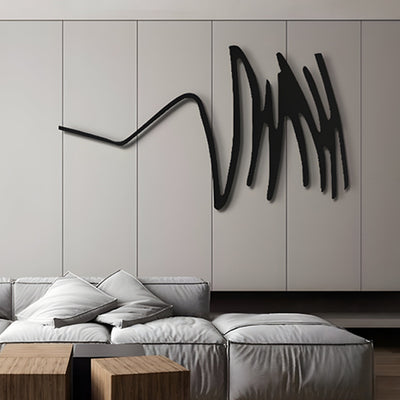
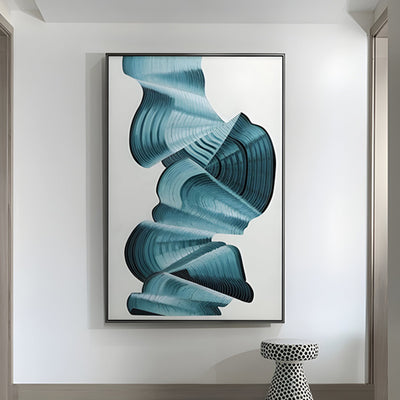
For flowing, gestural compositions at scale, formed metalwork often makes more sense than carving. Where a long sightline needs movement rather than mass, Waverno Blue & Green Flow Metal 3D Wall Art is closer to the right design language than a deep timber relief, which would weigh too much and lose its rhythm at that scale.
Edge Treatment and Finish
This is the detail most buyers never ask about and most studios under-deliver on. A crisp chamfer reads as architectural. A soft, hand-finished edge reads as sculptural. Mixing the two without intent looks unresolved. Patina on bronze, brushed versus mirror on stainless, oiled versus lacquered on timber: all of it changes how the piece behaves under the room's actual lighting, not the showroom's.

Why a 3D Wall Sculpture Reads Right at 10 ft and Wrong at 30
Scale failure is the single most common complaint we hear when buyers describe pieces they regret. The composition was designed close-up, on a studio bench, then mounted on a wall that is viewed from across a room or from a mezzanine. Detail that felt rich at arm's length disappears. Silhouette that looked busy on the bench becomes noise from distance.
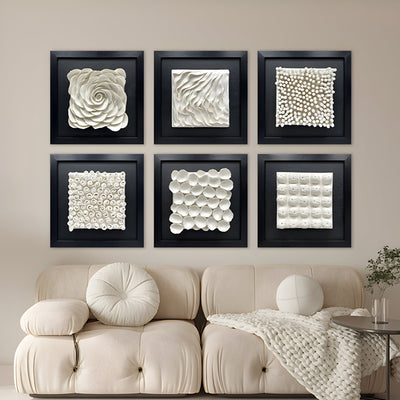
The fix is boring and unglamorous: design from the viewer's actual position. We pin full-size paper or foam mockups to the destination wall (or a photographic equivalent) and walk every sightline before committing to fabrication. This matters most for compositions built from many small relief elements; a piece like Minara Indigo Twilight Pagoda 3D Button Wall Art only resolves into a single architectural gesture from the right distance, and falls apart into pattern noise if the viewer sits closer than the design assumed.
Three practical rules we use:
- If the furthest viewer is more than 20 ft away, push relief depth and edge contrast harder than instinct suggests.
- If the piece will be seen from below, lean into the lower half of the composition; gravity flattens the top under most ceiling washes.
- If natural light moves across the wall through the day, design for the worst-lit hour, not the best.

Studio Process: Maquette, Sample, Fabrication, Install
A bespoke commission for 3D wall art sculptures usually moves through four stages. Skipping any of them is where projects go sideways.
1. Concept and Maquette
We start with drawings, then a scaled physical maquette, typically at 1:5 or 1:10. The maquette is not decorative. It is a working object we photograph against simulated lighting to test shadow behavior before any final material is cut or cast. Clients who only sign off on renders often get surprised by the real piece; clients who handle a maquette rarely do.
2. Material Sample
For carved work, a sample block in the actual species, with the actual finish, gets sent or shown. For metal, a swatch of the patina or brushed finish under the lighting type planned for the install. This step kills the wrong material early, when changing course is cheap.
3. Fabrication
Hand carving, casting, forming, welding, finishing. For larger pieces we build in sections that can fit through a standard freight door and a standard residential doorway, then resolve the joints on site. Engineering the seams to disappear under directional light is part of the carver's or fabricator's job, not an afterthought.
4. Install
Mounting hardware is specified to the substrate. For heavier work we provide a steel sub-frame that fixes to studs or masonry, with the sculpture hanging on concealed cleats. The lighting plan, ideally a dedicated wash from above at roughly 30 degrees, gets confirmed before the install team leaves.

Honest Red Flags to Ask About Before You Commit
Most disappointments in this category are predictable. Ask any studio, including ours, these questions before signing:
- Can I see a maquette or full-size mockup before fabrication? If the answer is no, you are buying a render.
- What is the mounting system and what wall substrate is it engineered for? Vague answers here cause expensive site visits later.
- Who specifies the lighting? A studio that hands off lighting entirely to the client's electrician is leaving half the piece's performance to chance.
- How is the piece transported and uncrated? Large 3D wall sculptures get damaged at the door more often than in transit. Crate design matters.
- What is the long-term care expectation? Bronze patinas develop. Timber moves with humidity. Steel finishes need re-coating on schedule. Get a written care note. Conservation bodies like the American Institute for Conservation publish useful general guidance on caring for sculptural and decorative objects.
- Who signs off the finish in person? Color and sheen on a screen are not the same as color and sheen on the wall. Insist on a physical sign-off where the budget allows.
The studios worth working with welcome these questions. The ones that bristle are telling you something useful.
Where 3D Wall Sculptures Earn Their Keep
Done well, a 3D wall sculpture does work no other format can. It anchors a double-height entry without taking floor space. It softens a hard architectural axis. It gives a long hallway a reason to exist. In commercial spaces, it carries brand without resorting to signage. In private homes, particularly the larger Texas and California builds we ship to, it solves the problem of walls that are too big for paintings and too important for nothing.
Browse the wider 3D wall art collection or the broader wall sculptures range to see how different materials and scales handle the same architectural job. If you are weighing a bespoke commission, send us the wall, the sightlines and the lighting plan. The rest of the conversation gets a lot easier from there.
For wider placement ideas, Metal Wall Art Decor: What Sculptors Weigh Before Saying Yes is useful companion reading before finalising the setting and sightlines.