


























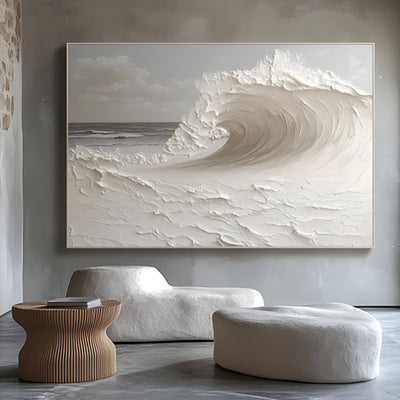
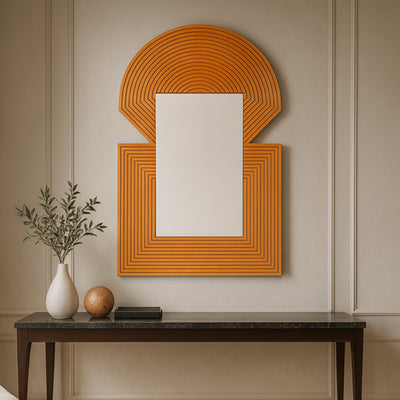
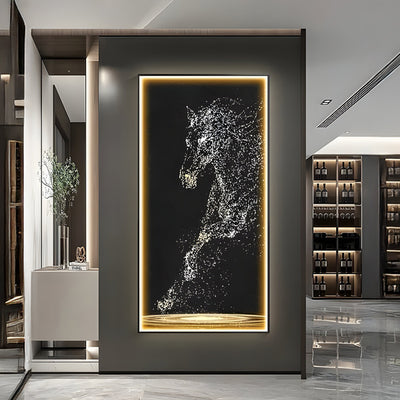
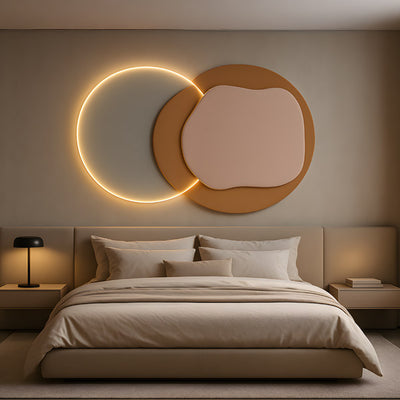










Most metal wall art fails for one of three reasons: it is too small for the wall, the finish fights the room, or it was bought as decoration rather than as a piece of work. Get those three right and a single panel can carry an entire double-height entrance hall, a Napa pool house, or the back wall of a Manhattan loft without needing a single accessory near it. This guide is for buyers who want metal wall art that reads as sculpture, not as wallpaper with texture.

At a Glance: What Actually Matters
- Scale first, subject second. A piece should occupy roughly two-thirds of the available wall width, or it will look stranded.
- Match the finish to the light. High-shine metallics need controlled light; matte and oxidized finishes forgive harsh sun and downlights.
- Interior or exterior changes everything. Outdoor metal wall art needs sealed welds, marine-grade fixings, and a finish rated for UV and moisture.
- Weight drives the fixing plan. Anything above roughly 25 lb (11 kg) needs to hit studs, masonry plugs, or a French cleat rated for the load.
- Bespoke is often the right answer. If your wall is over 6 ft (1.8 m) wide, a commission usually costs less stress than forcing a stock panel to fit.

What Metal Wall Art Actually Means
The phrase covers a lot of ground. At one end you have hammered copper discs and laser-cut steel silhouettes. At the other you have layered 3D wall sculptures with welded armatures, applied patina, and a finish process that can run to a dozen steps. Giant Sculptures sits firmly at the second end. When we talk about metal wall art, we mean dimensional pieces with real depth, real weight, and a finish that has been built up by hand rather than sprayed on in one pass.
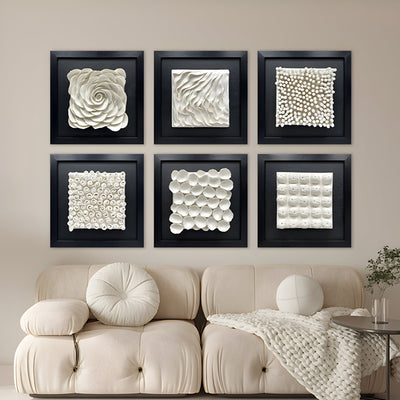
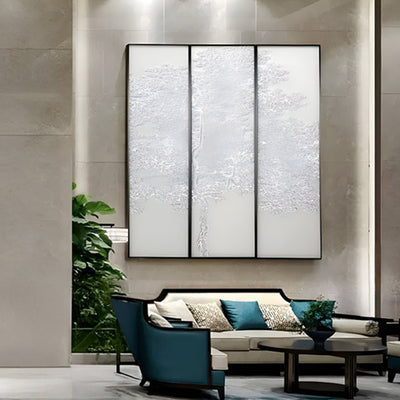
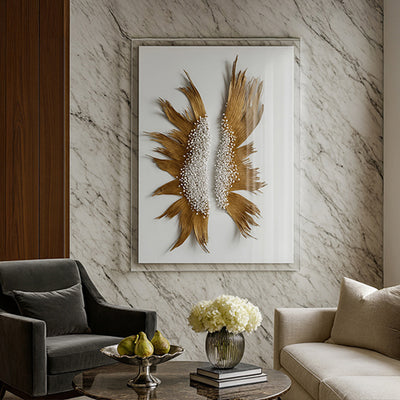
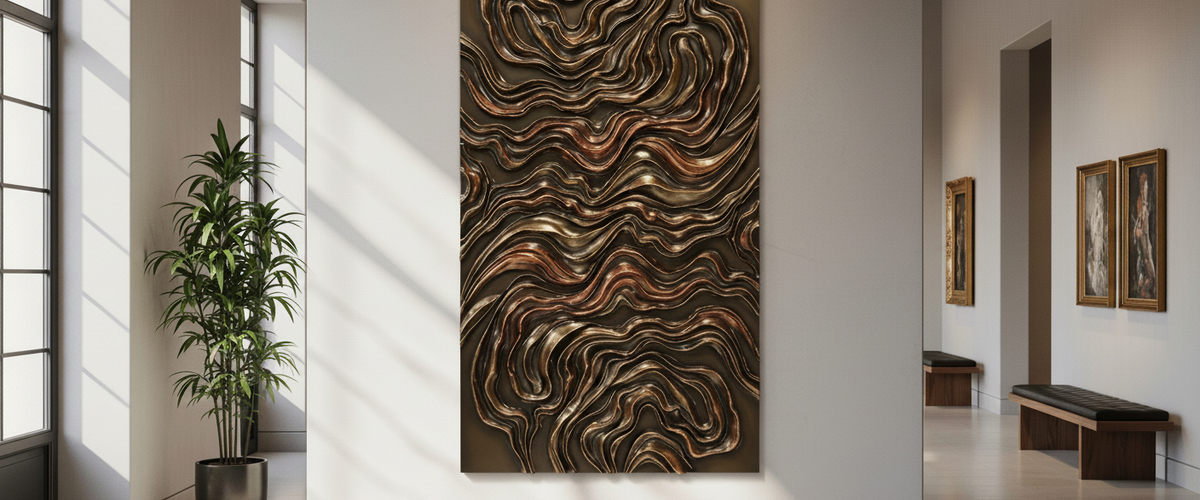
That distinction matters because it changes how the piece behaves on the wall. A flat printed panel reads the same from every angle. A genuine 3D wall sculpture catches light differently as you walk past it, which is why it holds a room. Our 3D wall art collection is a good place to see how shadow depth changes the read of a piece.

How to Compare Metal Wall Art Options Before You Buy
Before you fall for a specific piece, run it through four filters.
1. Wall Dimensions and Sightlines
Measure the wall, then measure the viewing distance. A 4 ft (1.2 m) panel that looks generous in a showroom can disappear on a 14 ft (4.3 m) wall viewed from 20 ft (6 m) away. For double-height spaces, think in terms of tall ceiling wall decor metal wall art that runs vertically rather than horizontally. A piece roughly 6 to 8 ft (1.8 to 2.4 m) tall will hold a stairwell or atrium far better than two stacked smaller works.
2. Finish Against Surrounding Materials
Bronze tones warm up cool stone and gray plaster. Silver and steel finishes sharpen warm wood and travertine. Deep greens and oxidized coppers work hard against pale limestone and white render. If your room already has strong metallic accents in lighting or hardware, pull the wall art finish in the same family rather than introducing a third metal.
3. Subject and Composition
For wider placement ideas, Metal Wall Art That Earns Its Place on a Big Wall is useful companion reading before finalising the setting and sightlines.
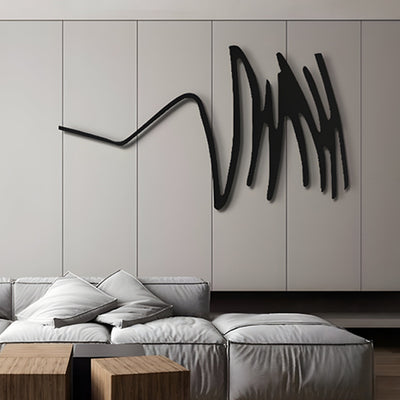
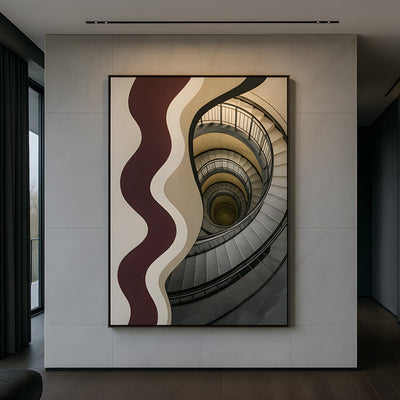
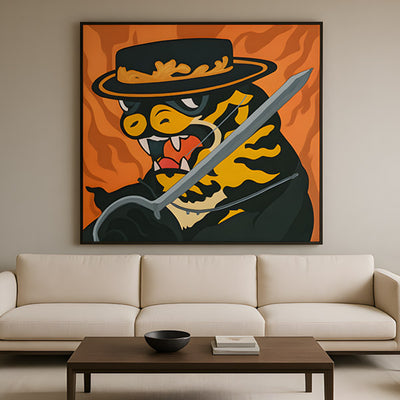
Abstract metal wall art is the safer commercial choice because it does not date and it does not impose a narrative on the room. Figurative work, including pieces like the Don Quixote metal wall art silhouettes that come up often in client briefs, is stronger in spaces with a clear theme: a library, a wine cellar, a study. If you are furnishing for resale or for a rental property, abstract usually wins.
4. Indoor or Outdoor
Exterior metal wall art is a different product category, not just an indoor piece taken outside. It needs sealed seams, drainage where water could pool, stainless or galvanized fixings, and a coating system rated for UV. If you are buying for a covered loggia in Texas or an exposed pool wall in the Hamptons, ask specifically about the outdoor specification before you commit.

Materials, Finishes, and Scale Decisions
Most of our metal wall art is built on a steel or aluminum substrate with a multi-layer applied finish. Aluminum is lighter, which matters for very large panels and for drywall fixings. Steel holds welded relief better and is the right choice for deep 3D work. For large exterior metal wall art, we usually specify marine-grade stainless or Corten, depending on whether the client wants a stable finish or a deliberately weathering one.
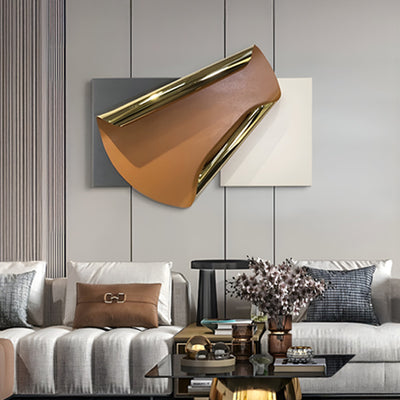
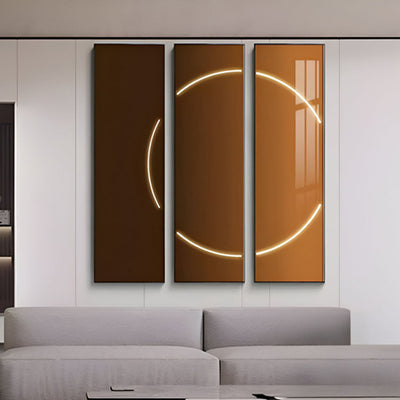
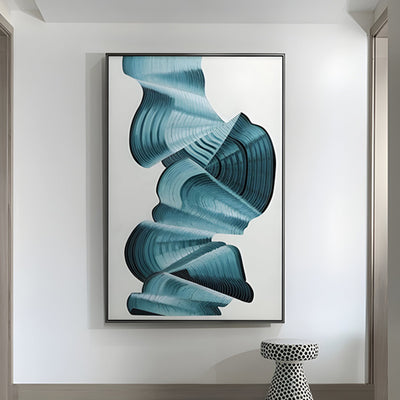
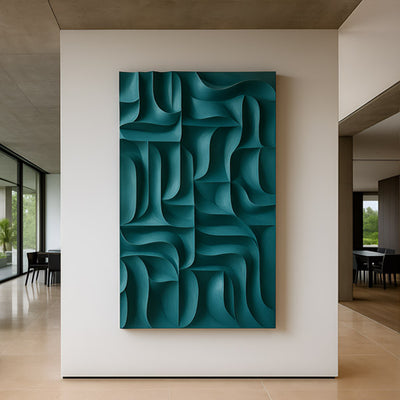
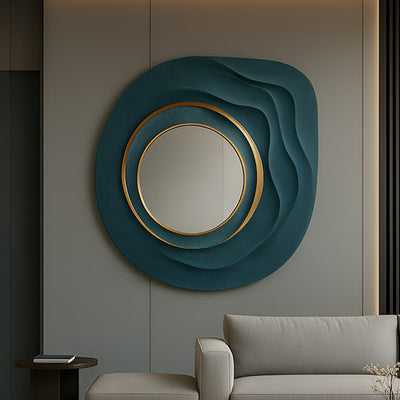
Finish is where the personality lives. Where a room runs warm and the lighting is soft, a layered bronze panel such as Metallura Bronze Metallic Flow Abstract 3D Wall Art shifts from warm copper in lamplight to a darker patina under daylight. Swap the same sculpted relief into the Metallura Deep Green Metallic Flow Abstract 3D Wall Art and it reads almost like oxidized verdigris on a heritage building. Same form, different room.
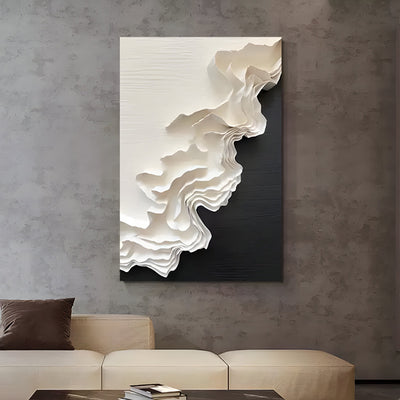
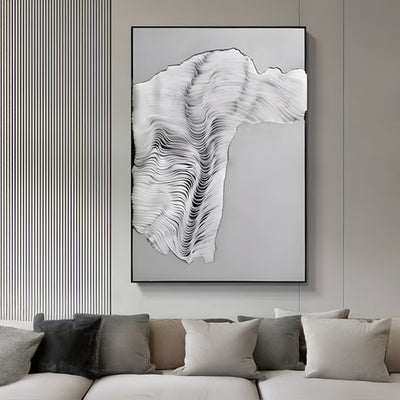
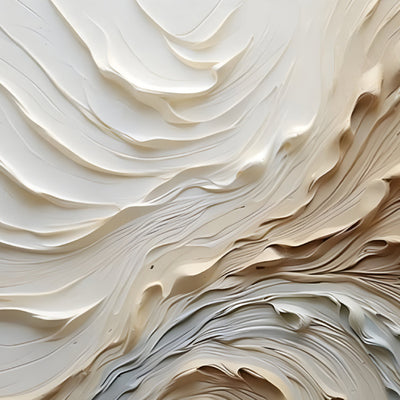
Texture is the other lever. For a wall that takes raking light from a window or a wall washer, a heavily built-up surface like Terranica Metallic Crust is closer to the right design language than a smoother flowed finish; on a flat-lit wall, the same piece loses half its depth. Match the surface to how the light actually moves across the wall, not to how the piece photographs in a showroom.

Where to Place Metal Wall Art for the Strongest Impact
The best metal wall art decor is placed where it has room to breathe and a reason to be seen.
- Entrance halls. First and last thing guests see. Go large; this is not the place for restraint.
- Above a fireplace or console. Leave 6 to 10 in (15 to 25 cm) between the top of the furniture and the bottom of the piece. Any closer and it looks crowded.
- Stairwell walls. Vertical compositions work best. Center the piece on the mid-landing sightline, not on the wall itself.
- Dining rooms. Hang lower than you think. The piece should be in conversation with seated guests, not floating above their heads.
- Outdoor courtyards and pool walls. Treat the piece as a focal point on a single wall, ideally one that gets morning or late afternoon light rather than flat overhead sun.
- Commercial lobbies and hospitality. A large abstract panel sets the tone faster than any signage. Allow at least 18 in (45 cm) of clear wall on either side.
For exterior projects, browse the outdoor wall art and decor collection rather than starting from indoor pieces. The construction is different from the first weld onward.

Hanging, Fixings, and Practical Install Notes
Knowing how to hang metal wall art comes down to weight, wall build-up, and access. For pieces under about 15 lb (7 kg), heavy-duty drywall anchors are usually enough on a stud wall. For anything heavier, find the studs or use masonry fixings rated for at least twice the actual weight of the piece. Most of our larger panels ship with a French cleat or a hidden batten system, which spreads the load and lets you level the piece by hand after install.
A few hard-won notes from pieces we have shipped:
- Mark the cleat position with a laser level, not a spirit level. Long pieces will telegraph any tilt.
- On plaster over masonry, drill slowly and let the bit clear; do not punch through, or the plaster face will spall.
- For outdoor installs, isolate dissimilar metals with a nylon washer or a smear of dielectric grease. Bare aluminum on stainless steel will eventually corrode at the contact point.
- Use two people for anything over 5 ft (1.5 m). One to hold, one to engage the cleat. Do not improvise this alone.
- For exterior pieces, leave a small drainage gap behind the panel. Trapped moisture is the single most common cause of premature finish failure, according to guidance from AAMA on architectural metal finishes.
Budget, Commissioning, and Delivery
Pricing for metal wall art varies more than almost any other category we sell. A small textured panel and a 10 ft (3 m) commissioned wall sculpture are different products with different engineering behind them. Cost depends on substrate, scale, finish complexity, the number of layered passes in the surface, structural backing, crating, and freight. The honest answer to "what does it cost" is that we quote per project once we know the wall, the brief, and the install conditions.
For do it yourself metal wall art instincts, we would gently push back if the piece is going on a signature wall in a high-value home or a commercial venue. The fixing is usually fine to handle in-house with a competent contractor; the design and fabrication is where shortcuts show. A bespoke commission costs less than re-doing a wall that did not work.
How Giant Sculptures Approaches Bespoke Metal Wall Art
Most of the metal wall art we ship to the US is either oversized, color-matched to a specific interior, or both. A typical commission starts with the wall photo, the dimensions, and a finish reference from the client's existing materials. We work up two or three composition options, agree on the relief depth, then build a sample finish panel before committing to the full piece. That sample step is the one buyers skip when they go off-the-shelf, and it is the one that makes the biggest difference to whether the finished piece sits right in the room.
If you are starting from a blank wall, the full metal wall art collection is the right entry point, and the wall sculptures collection is useful when you want more dimensional depth than a flat panel offers. For everything else, send us the wall.
For general conservation principles, Canadian Conservation Institute outdoor object care is a useful external reference, though the final care routine should always follow the material and finish specified for the individual commission.